 flip
flipRoasted Haunch of Venison with Cameline Sauce
Roasted Haunch of Venison with Cameline Sauce
Why this dish? Deer hunting is the privilege and exercise of the knight. Returning from a ride in the forest of Bénoïc, Lancelot honors his hosts with venison, a noble meat reserved for lords, coated with the cameline sauce that reigned on princely tables of his time.
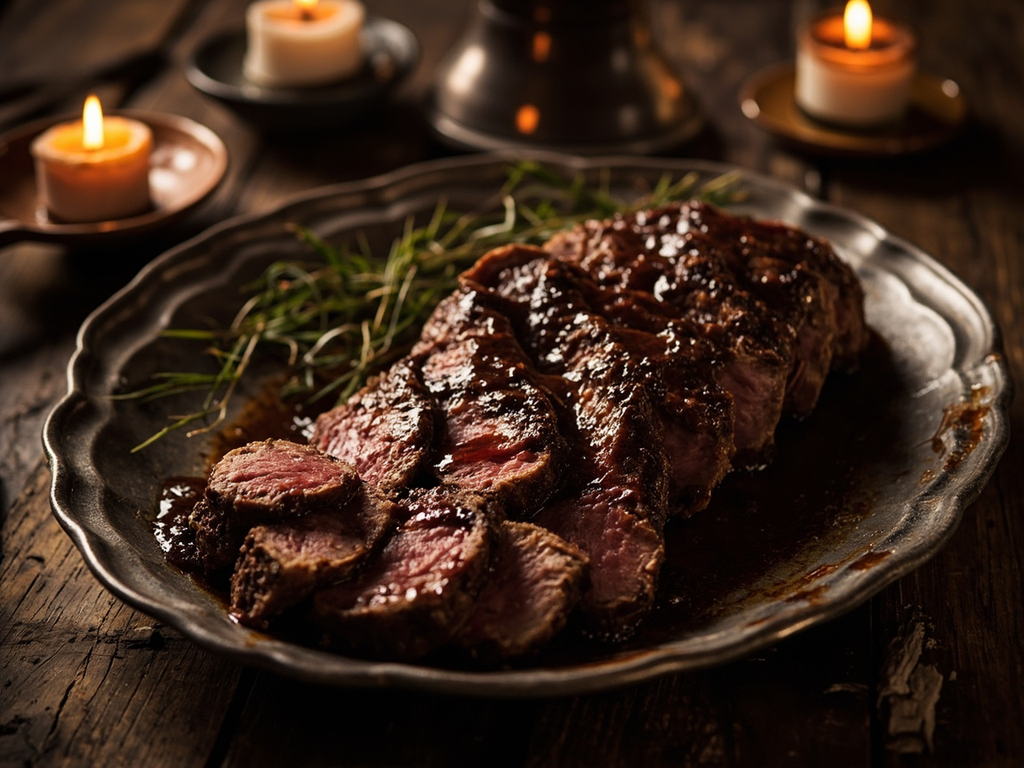
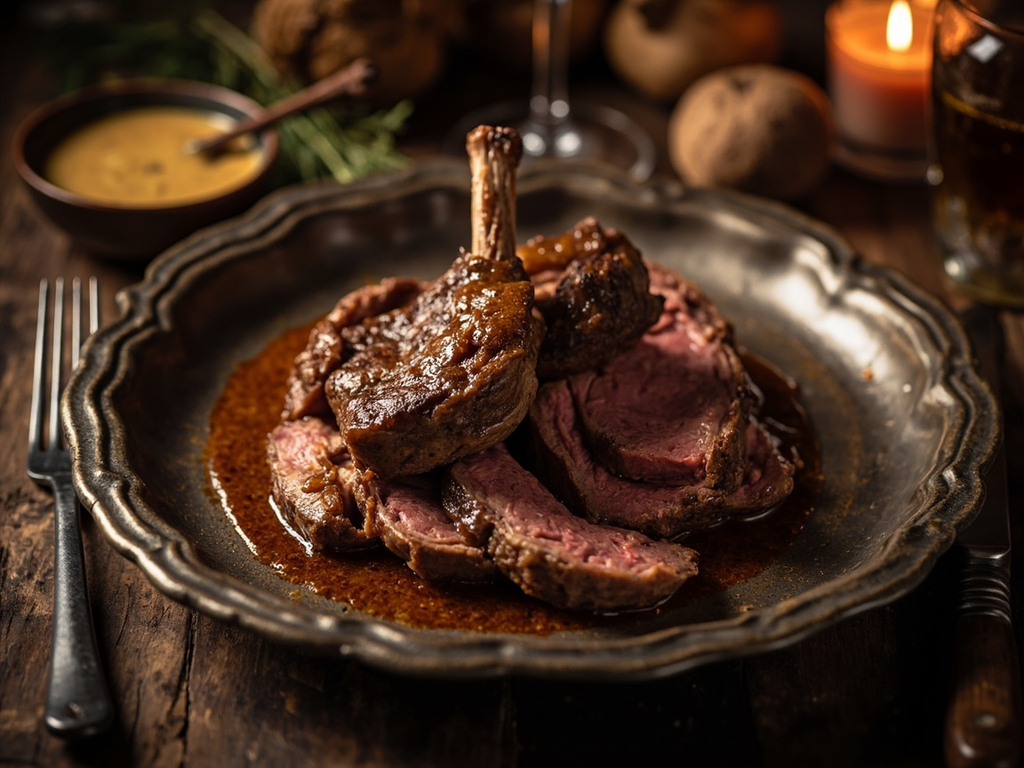
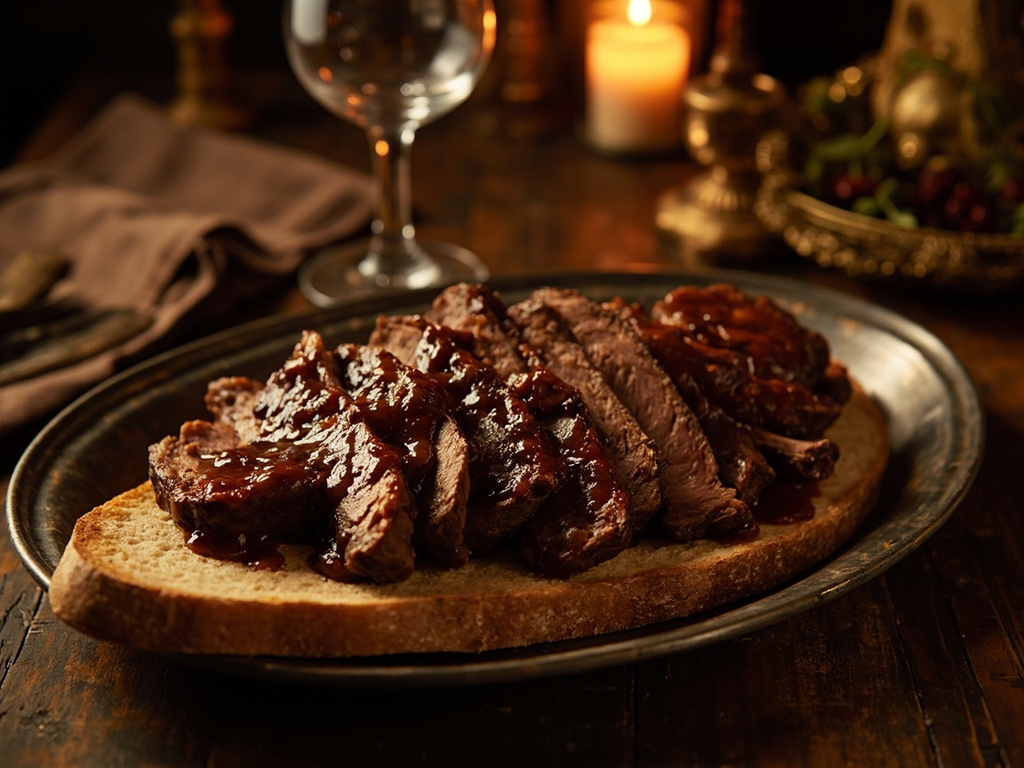
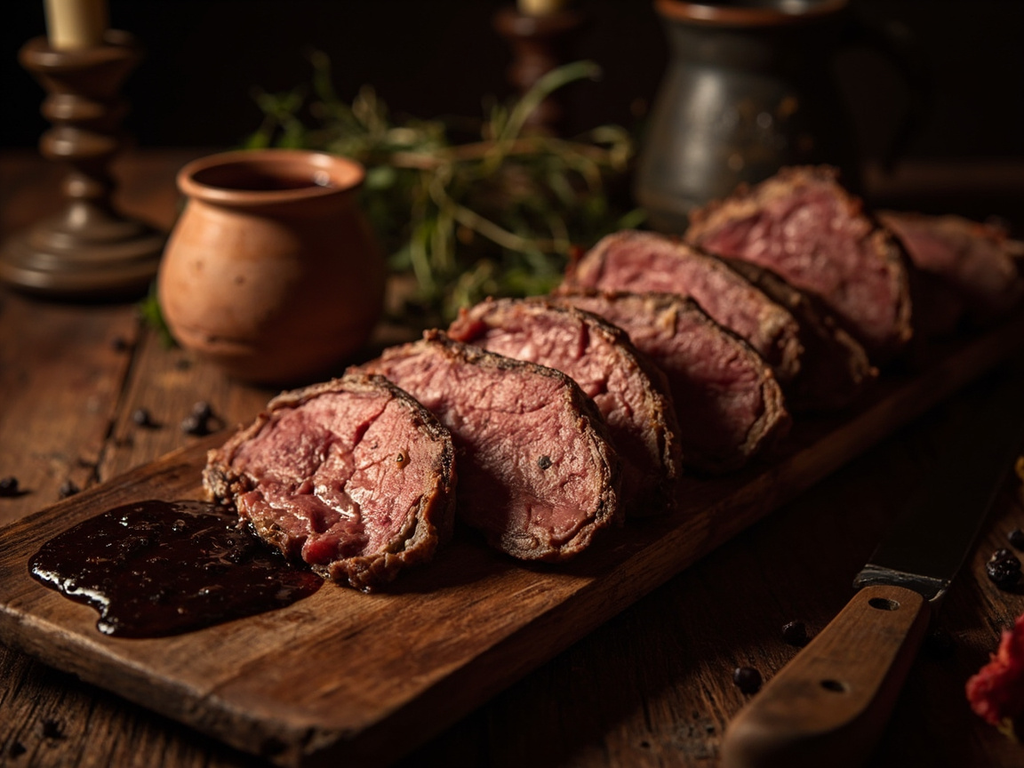
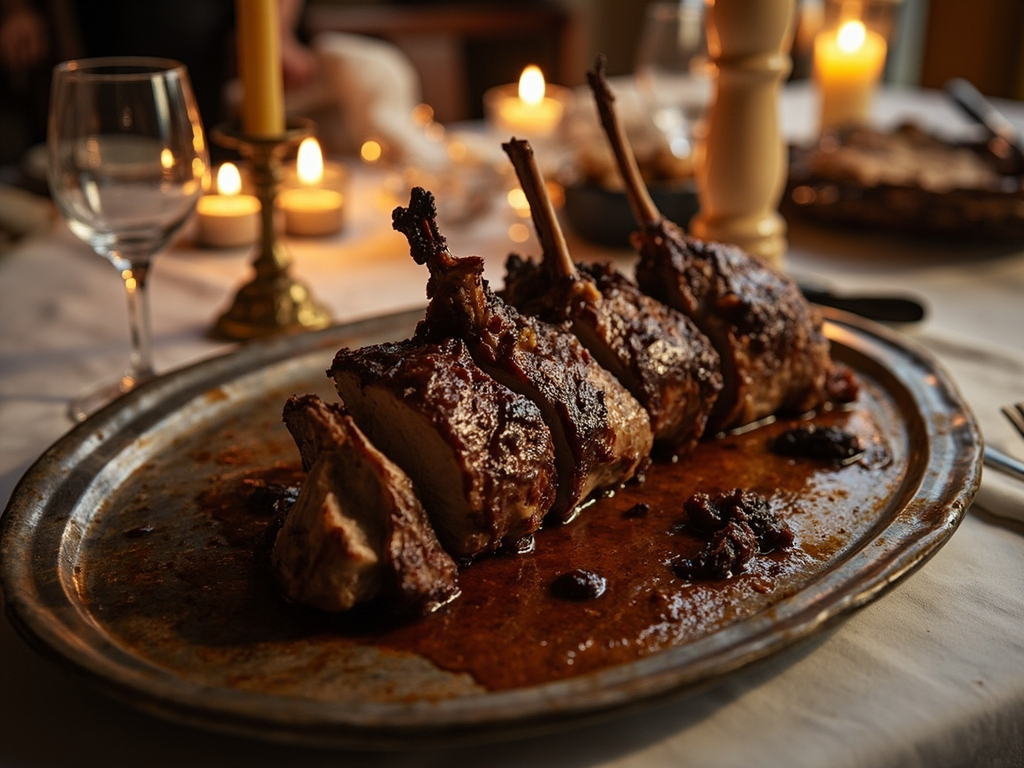
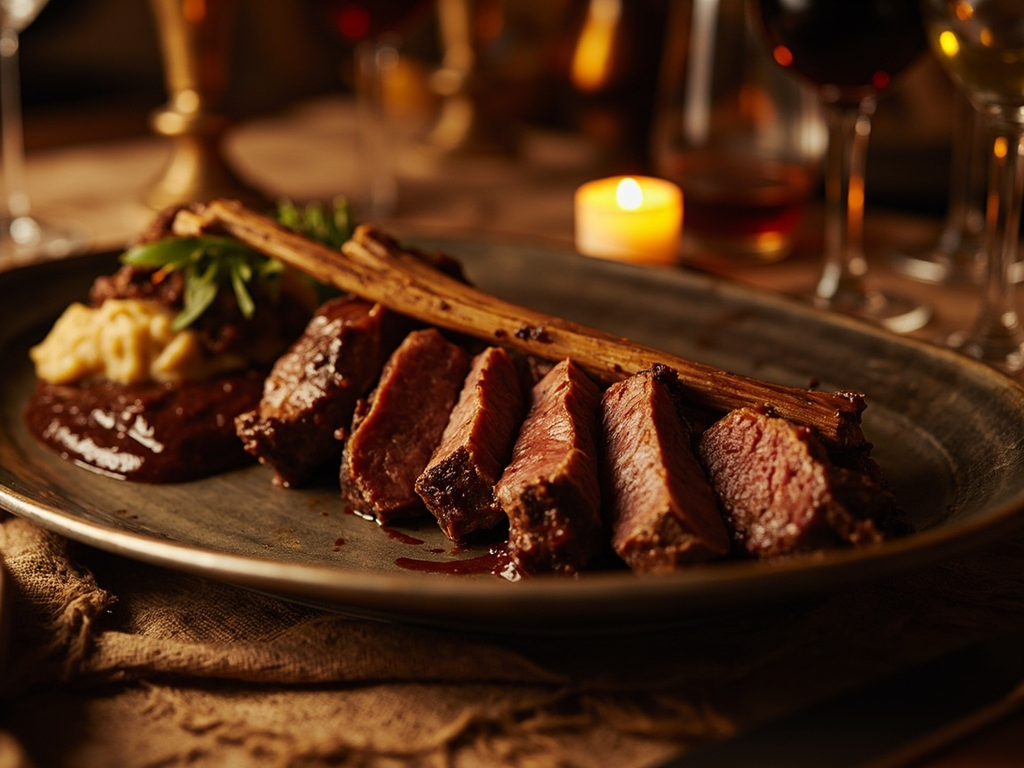
A piece of venison roasted on a spit, served sliced and drizzled with a cold brown sauce, tangy and fragrant with spices from the East — the ultimate showpiece dish of the chivalric banquet.
Gentle reader, does any meat befit a knight better than the flesh of the deer he himself has hunted under the boughs? I have my venison roasted on the spit until the juices bead, then I cover it with this cameline sauce that my cooks grind in the mortar: browned bread, cinnamon, ginger, and good vinegar. Believe me, no dish so gladdens the heart of a brave knight returning from the forest. Eat of it, and may God keep you in joy.
- •Haunch or leg of venison — one piece for the table (noble game meat)
- •Fat bacon — a few slices (to lard and moisten the flesh)
- •Toasted brown bread — two slices (thickener for the sauce)
- •Cinnamon, ginger, clove — to taste (cameline spices)
- •Verjuice or wine vinegar — a good splash (acidity)
Roasted Haunch of Venison with Cameline Sauce
A piece of venison roasted on a spit, served sliced and drizzled with a cold brown sauce, tangy and fragrant with spices from the East — the ultimate showpiece dish of the chivalric banquet.
Why this dish? Deer hunting is the privilege and exercise of the knight. Returning from a ride in the forest of Bénoïc, Lancelot honors his hosts with venison, a noble meat reserved for lords, coated with the cameline sauce that reigned on princely tables of his time.
Gentle reader, does any meat befit a knight better than the flesh of the deer he himself has hunted under the boughs? I have my venison roasted on the spit until the juices bead, then I cover it with this cameline sauce that my cooks grind in the mortar: browned bread, cinnamon, ginger, and good vinegar. Believe me, no dish so gladdens the heart of a brave knight returning from the forest. Eat of it, and may God keep you in joy.
Ingredients (period version)
- Haunch or leg of venison — one piece for the table (noble game meat)
- Fat bacon — a few slices (to lard and moisten the flesh)
- Toasted brown bread — two slices (thickener for the sauce)
- Cinnamon, ginger, clove — to taste (cameline spices)
- Verjuice or wine vinegar — a good splash (acidity)
Ingredients
- Roast venison (doe or deer) — 1.2 kg (main meat)
- Thin bacon slices — 100 g (to lard the roast)
- Stale country bread — 60 g (thickener)
- Ground cinnamon — 1 tsp (signature spice)
- Ground ginger — 1/2 tsp (spice)
- Ground clove — 1 pinch (spice)
- Red wine vinegar — 5 tbsp (acidity)
- Verjuice (or green grape juice + a splash of vinegar) — 10 cl (mild acidity)
- Salt — to taste (seasoning)
Method
- Bring the meat to room temperature, season with salt, and lard with bacon. Let the roast rest outside the fridge for 30 minutes.
- Roast in the oven at 220 °C for 15 minutes, then at 180 °C, basting, until an internal temperature of 52-55 °C (pink). Let rest 10 minutes under foil.
- For the cameline sauce, toast the bread, then soak it in vinegar and verjuice until soft.
- Blend the soaked bread with cinnamon, ginger, clove, and salt until a smooth brown sauce forms; thin with a little water if needed (serve cold).
- Slice the meat, arrange on a platter, and generously coat with the cameline sauce.
How it was made : In the Middle Ages, large game was roasted on a spit in front of the hearth, the spit turned by a servant. The cameline sauce, described in the 'Viandier' attributed to Taillevent and in the 'Ménagier de Paris', was an uncooked cold sauce thickened with toasted bread and vinegar: sauces were not mounted with butter as today, but thickened with bread or almonds.
The contemporary twist : Serve the cameline as a quenelle beside the meat sliced into thin slivers, 'venison au sautoir' style, so each person can dose their own spice.
Sources : Taillevent (attr.), Le Viandier, 14th century · Le Ménagier de Paris, c. 1393
Lancelot du Lac · Charactorium