 flip
flipRoast Venison with Cameline Sauce
Roast Venison with Cameline Sauce
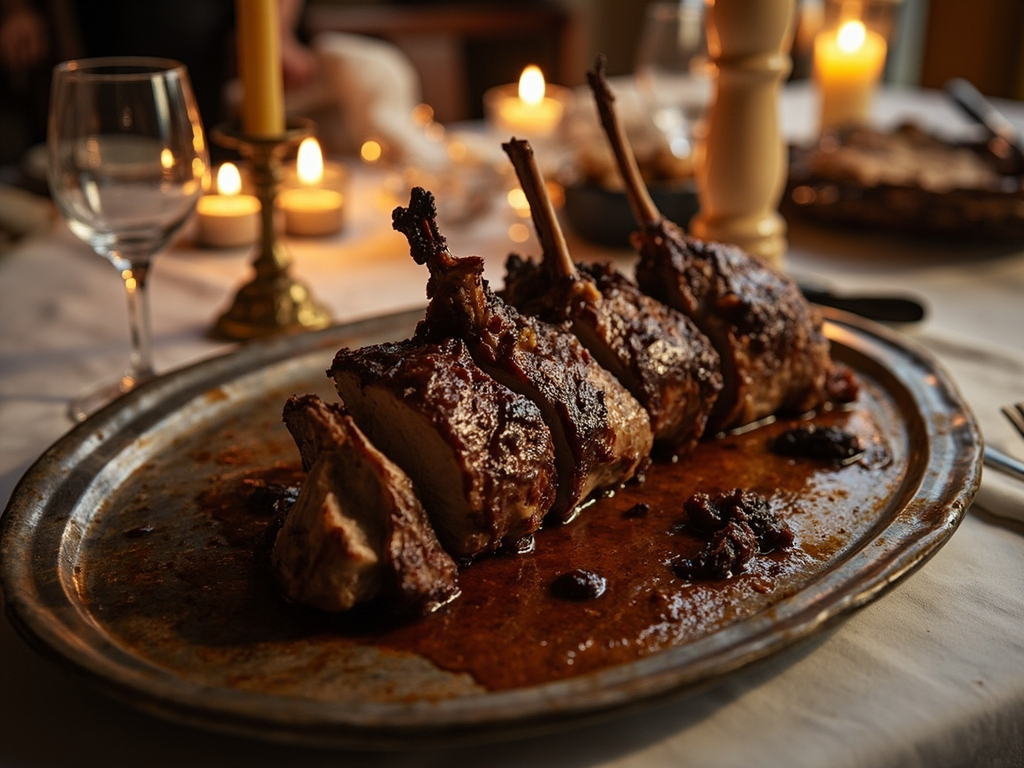
Why this dish? Venison — deer or roe deer from royal hunts — was the showpiece dish of Capetian banquets. Served at Adèle's court on great occasions, it was accompanied by cameline sauce, reddish-brown and fragrant with cinnamon, the pride of princely kitchens.
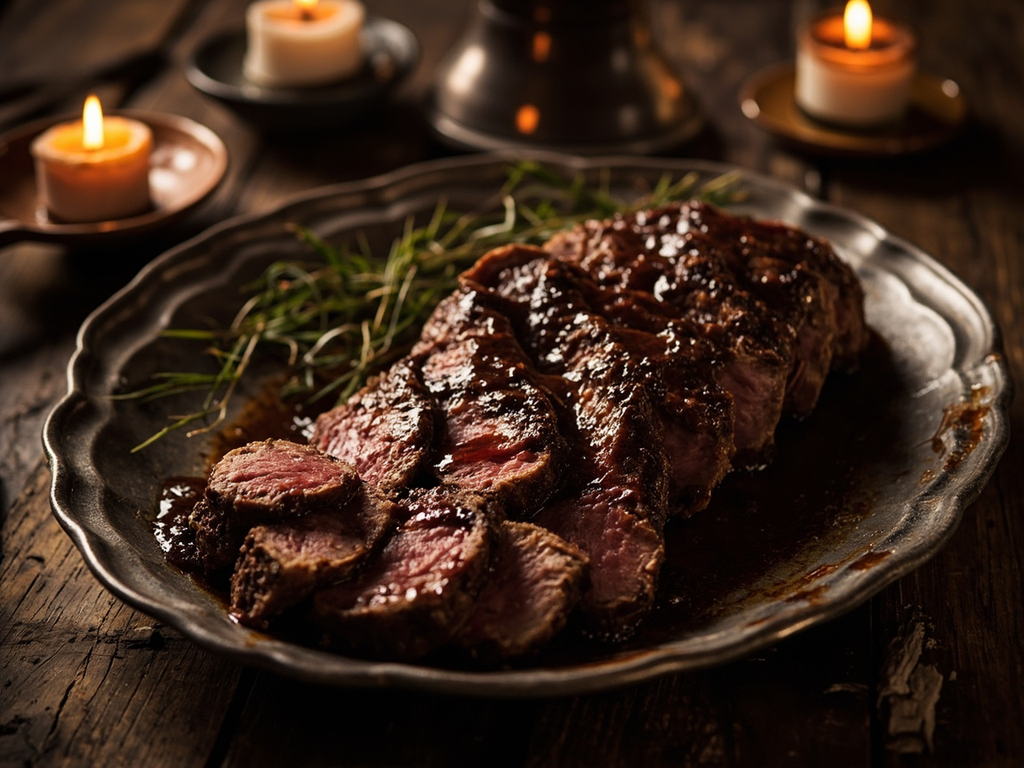
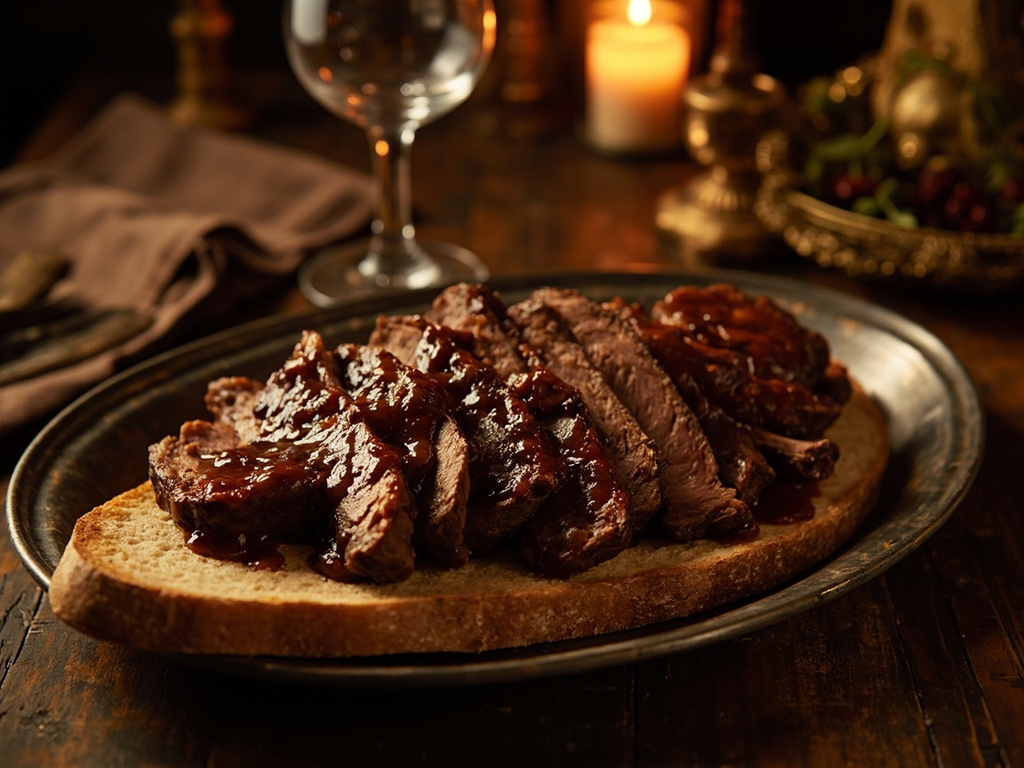
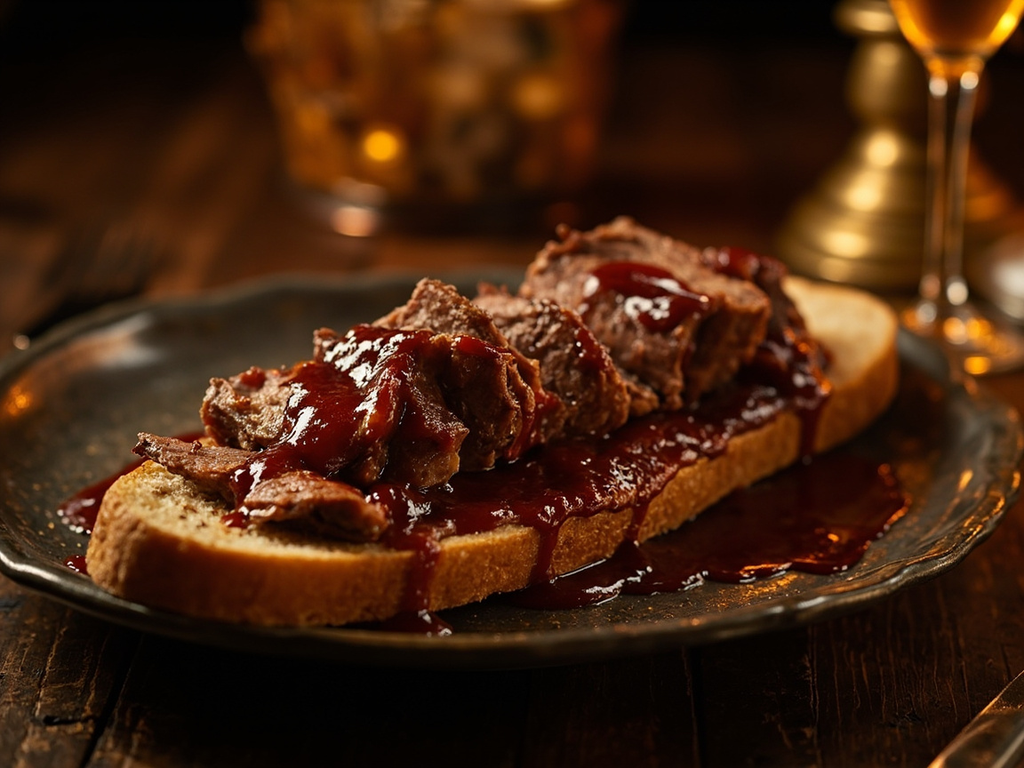
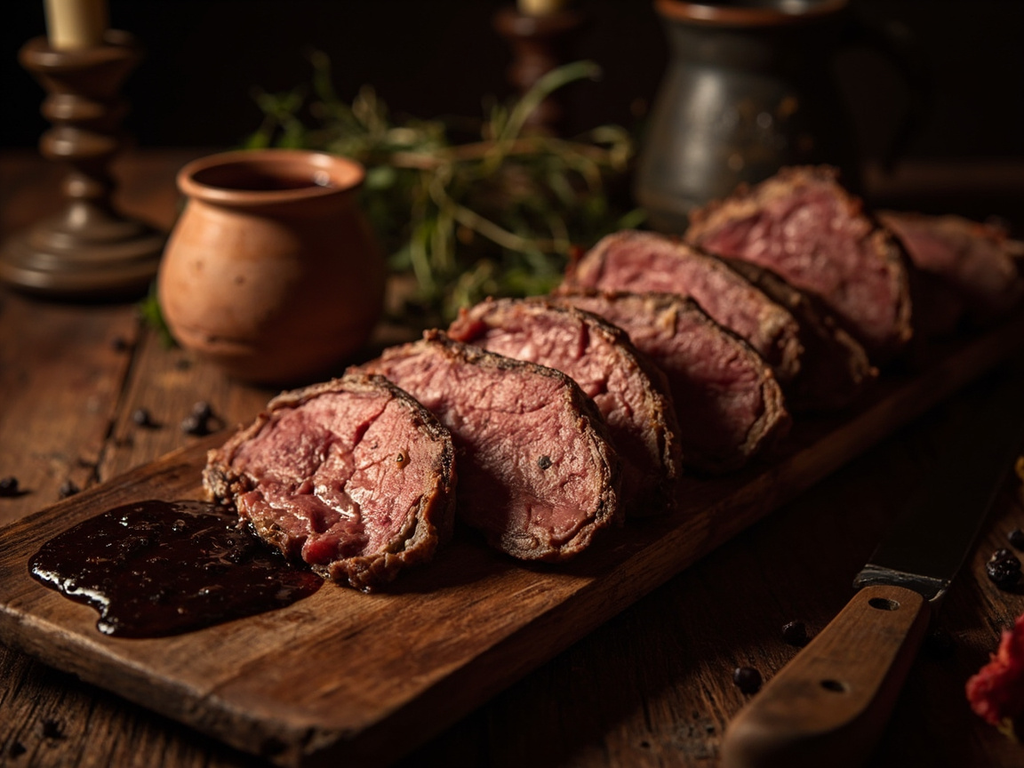
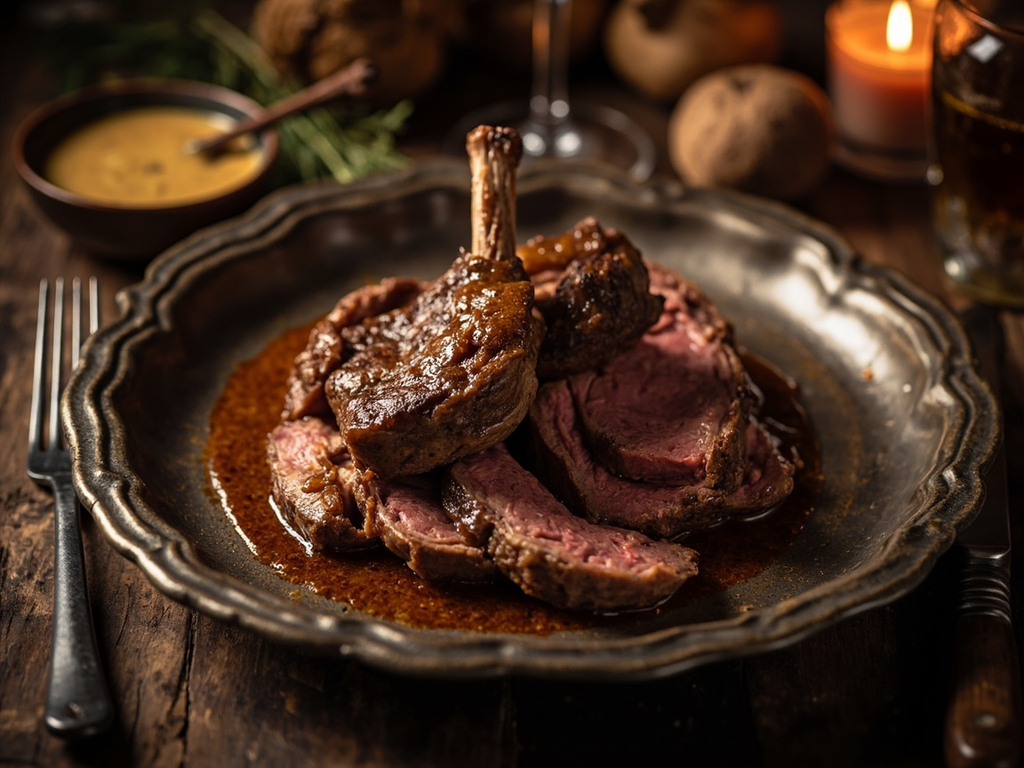
A roast of roe deer served with the famous cameline sauce: grilled bread, cinnamon, ginger, and grains of paradise bound with vinegar and verjuice. The spiced acidity cuts the richness of the game — this is the grand taste of medieval feasts.
Here is the roast that honors a feast, and no queen can receive without game from her forests. I want the meat seared before the flame, golden outside and pink within. But it is the cameline sauce that gives the dish its nobility: bread toasted on the embers, ground with cinnamon, ginger, and grains of paradise, moistened with vinegar and verjuice. It should be pungent and fragrant all at once, brown like a deer's coat. Dip your meat in it, and you will taste what a king's table tastes like.
- •Haunch of deer or roe deer — one piece (feast meat)
- •Bread grilled on embers — two slices (sauce base)
- •Cinnamon — one crushed stick (signature spice)
- •Grains of paradise — a pinch (aromatic pungency)
- •Ginger — a pinch (warm spice)
- •Vinegar and verjuice — equal parts (binding acidity)
Roast Venison with Cameline Sauce
A roast of roe deer served with the famous cameline sauce: grilled bread, cinnamon, ginger, and grains of paradise bound with vinegar and verjuice. The spiced acidity cuts the richness of the game — this is the grand taste of medieval feasts.
Why this dish? Venison — deer or roe deer from royal hunts — was the showpiece dish of Capetian banquets. Served at Adèle's court on great occasions, it was accompanied by cameline sauce, reddish-brown and fragrant with cinnamon, the pride of princely kitchens.
Here is the roast that honors a feast, and no queen can receive without game from her forests. I want the meat seared before the flame, golden outside and pink within. But it is the cameline sauce that gives the dish its nobility: bread toasted on the embers, ground with cinnamon, ginger, and grains of paradise, moistened with vinegar and verjuice. It should be pungent and fragrant all at once, brown like a deer's coat. Dip your meat in it, and you will taste what a king's table tastes like.
Ingredients (period version)
- Haunch of deer or roe deer — one piece (feast meat)
- Bread grilled on embers — two slices (sauce base)
- Cinnamon — one crushed stick (signature spice)
- Grains of paradise — a pinch (aromatic pungency)
- Ginger — a pinch (warm spice)
- Vinegar and verjuice — equal parts (binding acidity)
Ingredients
- Roe deer roast (or tenderloin, or failing that duck breast/beef roast) — 800 g (feast meat)
- Grilled country bread — 2 slices (sauce base)
- Ground cinnamon — 1 tsp (signature spice)
- Grains of paradise (or pepper) — 1/4 tsp (pungency)
- Ground ginger — 1/2 tsp (spice)
- Red wine vinegar — 4 tbsp (acidity)
- Verjuice or grape juice — 4 tbsp (mild acidity)
- Salt, oil for searing — as needed (cooking and seasoning)
Method
- Bring meat to room temperature, salt it. Sear quickly on all sides in a very hot pan, then finish in the oven at 180°C until pink (about 15-20 minutes depending on thickness). Let rest.
- Grill the bread until well-toasted, almost blackened on the edges (this gives the cameline color).
- Blend the grilled bread with cinnamon, ginger, grains of paradise, vinegar, and verjuice.
- Thin with a little water or broth to obtain a coating but punchy sauce; adjust salt and acidity.
- Slice the venison and serve napped — or accompanied — with the cameline sauce cold or warm.
How it was made : Cameline sauce (from the Latin for its "camel" color, tawny brown) is one of the most famous medieval sauces, found across Europe. It contains no fat and is not cooked: it is a cold emulsion of grilled bread, spices, and acid, halfway to our chutneys. Game, reserved for the nobility by hunting rights, was its prestigious accompaniment.
The contemporary twist : Serve the cameline in a small pot on the side, like an artisanal condiment, and name the dish "Roe Deer, Cameline of Champagne" on your festive menu.
Sources : Le Viandier de Taillevent · Le Ménagier de Paris (1393), recipes for medieval sauces · Bruno Laurioux, Une histoire culinaire du Moyen Âge, Honoré Champion, 2005
Adela of Champagne · Charactorium