 flip
flipMead of the Banquets of Camelot
Mead of the Banquets of Camelot
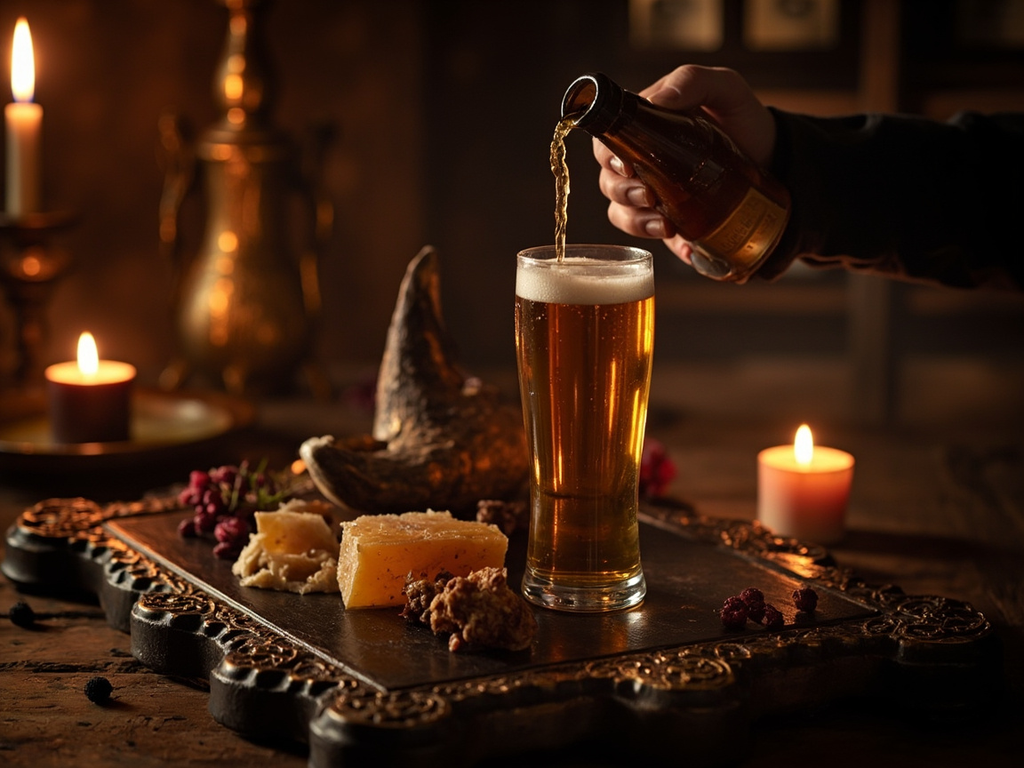
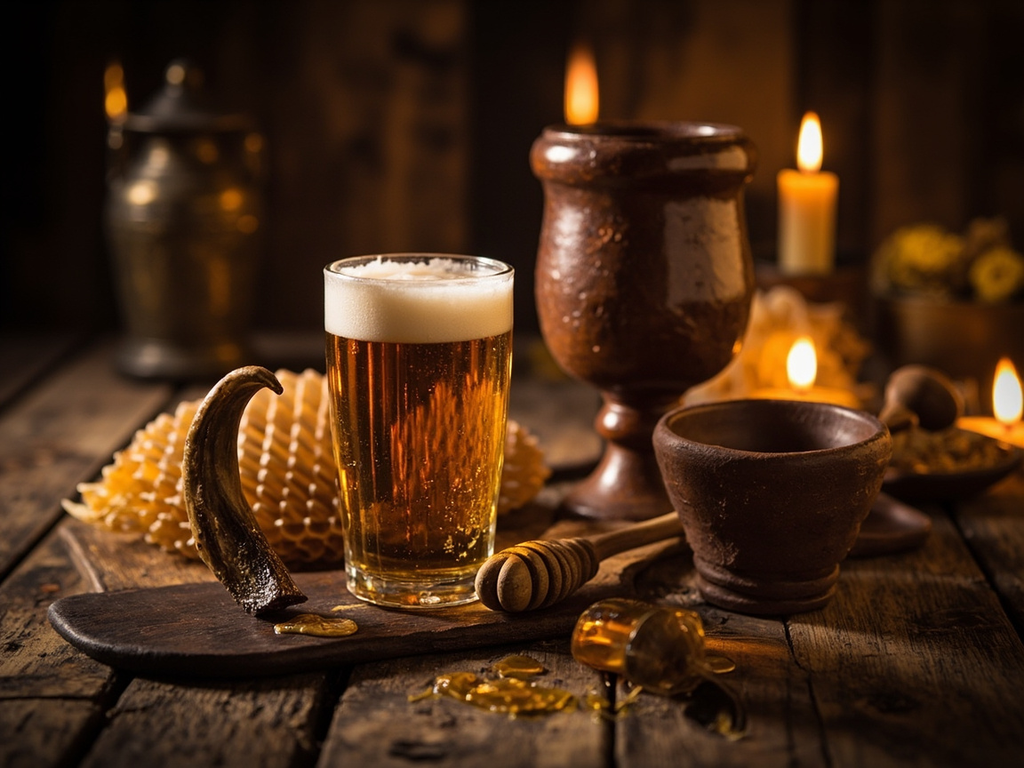
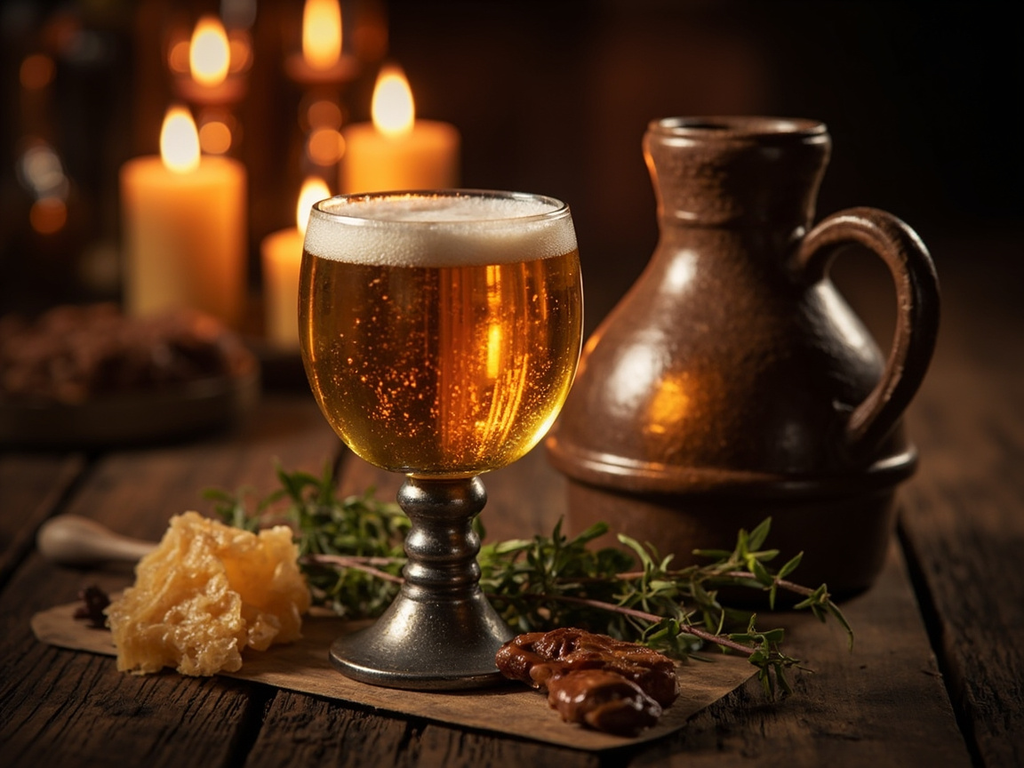
Why this dish? Mead, the wine of honey, was the drink of Celtic heroes long before imported wine. In the Matter of Britain, the banquet halls ring with the clinking of hanaps: Arthur and his companions seal oaths and brotherhoods with a hanap of mead in hand. It is the ritual drink of warrior friendship.
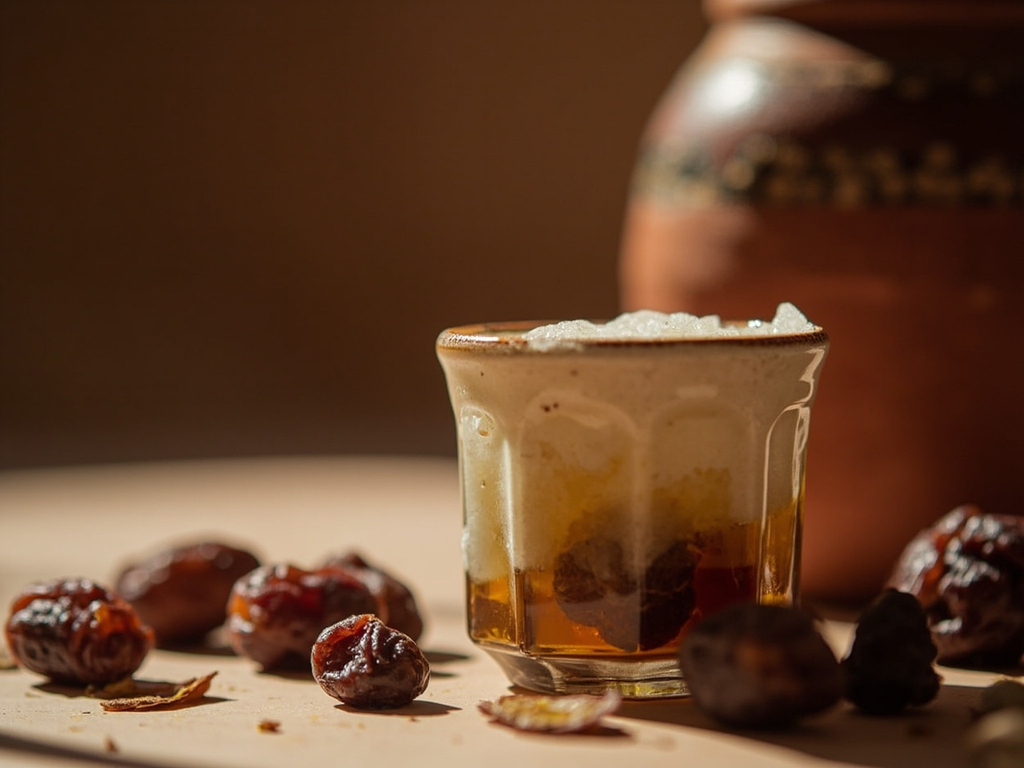
A fermented beverage made from honey and water, scented with herbs, sweet and slightly tangy. The "quick mead" presented here is a short version (a few days) to discover the ancestral taste without a cellar or long waiting.
Raise this hanap with me, companion, for no oath holds unless sealed with honey. Here is the mead that the honeycombs of my hives have given me, fermented until it gently bites the tongue. My fathers drank it in the great hall before wine came from distant ships; it is the drink of the brave and of faithful friends. Drink slowly, and let your word be as good as mine.
- •Honey — generously (fermentable sugar, soul of the drink)
- •Spring water — in proportion (base)
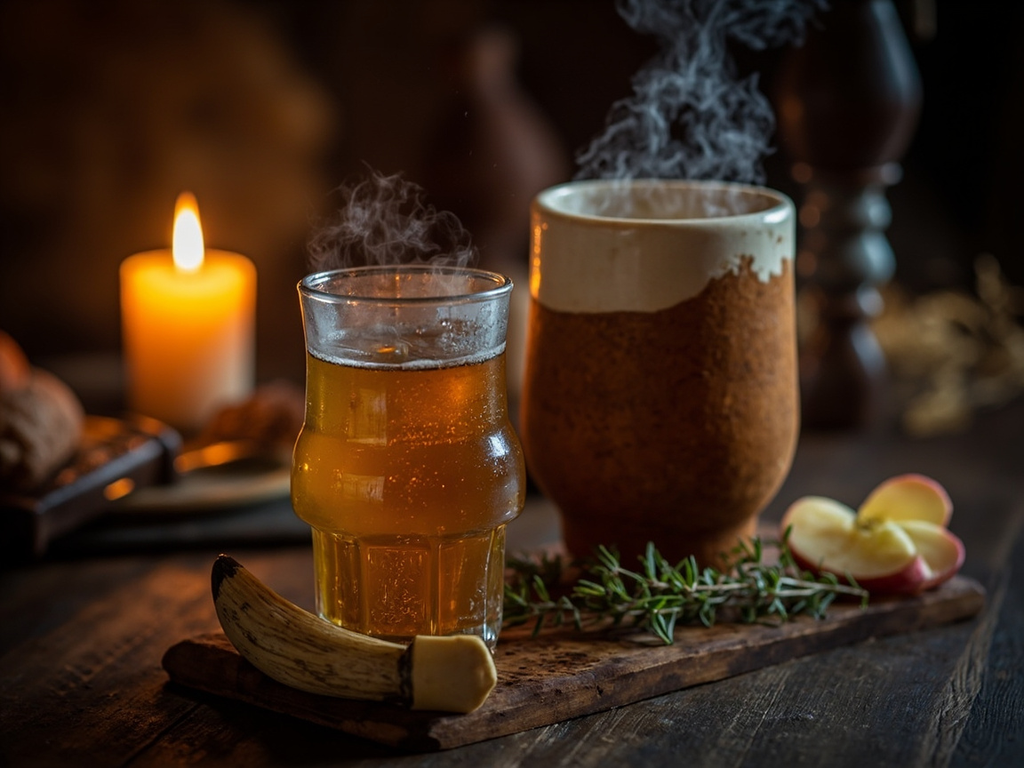
- •Herbs (lemon balm, rosemary, elderflower) — a bundle (perfume)
- •Natural yeast from fruit — as needed (fermentation)
Mead of the Banquets of Camelot
A fermented beverage made from honey and water, scented with herbs, sweet and slightly tangy. The "quick mead" presented here is a short version (a few days) to discover the ancestral taste without a cellar or long waiting.
Why this dish? Mead, the wine of honey, was the drink of Celtic heroes long before imported wine. In the Matter of Britain, the banquet halls ring with the clinking of hanaps: Arthur and his companions seal oaths and brotherhoods with a hanap of mead in hand. It is the ritual drink of warrior friendship.
Raise this hanap with me, companion, for no oath holds unless sealed with honey. Here is the mead that the honeycombs of my hives have given me, fermented until it gently bites the tongue. My fathers drank it in the great hall before wine came from distant ships; it is the drink of the brave and of faithful friends. Drink slowly, and let your word be as good as mine.
Ingredients (period version)
- Honey — generously (fermentable sugar, soul of the drink)
- Spring water — in proportion (base)
- Herbs (lemon balm, rosemary, elderflower) — a bundle (perfume)
- Natural yeast from fruit — as needed (fermentation)
Ingredients
- Honey (wildflower or heather) — 250 g (sweet base)
- Water — 1 L (dilution)
- Juice of half a lemon or fresh unwashed grapes — 1 (acidity and wild yeasts)
- Baker's or wine yeast — 1 g (optional, reliable fermentation) (ferment)
- Sprig of lemon balm or rosemary — 1 (aromatic)
Method
- Warm (do not boil) the water and dissolve the honey; let cool to room temperature.
- Pour into a large clean jar, add lemon juice, herb and yeast.
- Cover with a cloth secured by an elastic band (let it breathe) and place away from light.
- Let ferment for 3 to 5 days: bubbles appear, the taste becomes tangy and less sweet. Stir once a day.
- Strain, refrigerate and drink within a few days (very low alcohol if short fermentation).
- For adults and a real vintage: bottle and let ferment slowly for 4-6 weeks.
How it was made : Mead (Welsh medd, whence English "mead") is one of the oldest fermented drinks in Europe, central to Celtic and Germanic culture. The great Welsh poem Y Gododdin (circa 6th-7th century), close to the supposed era of Arthur, describes warriors drinking mead in the lord's hall before battle.
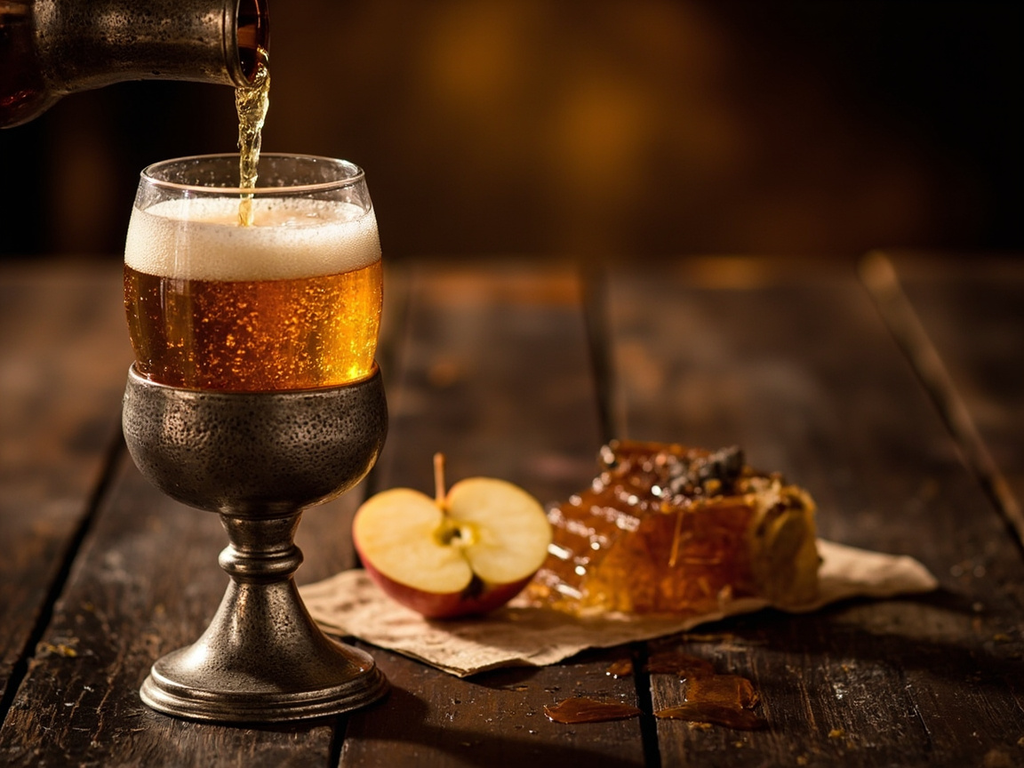
The contemporary twist : Served very cold with an apple slice, quick mead becomes a golden festive lemonade; in the adult version, it is the "medieval" aperitif that dethrones kir.
Sources : Y Gododdin (ancient Welsh poetry) · M. Montanari, La faim et l'abondance (1993)
King Arthur · Charactorium