 flip
flipFlatbrauð: barley flatbread on the stone
Flatbrauð: barley flatbread on the stone
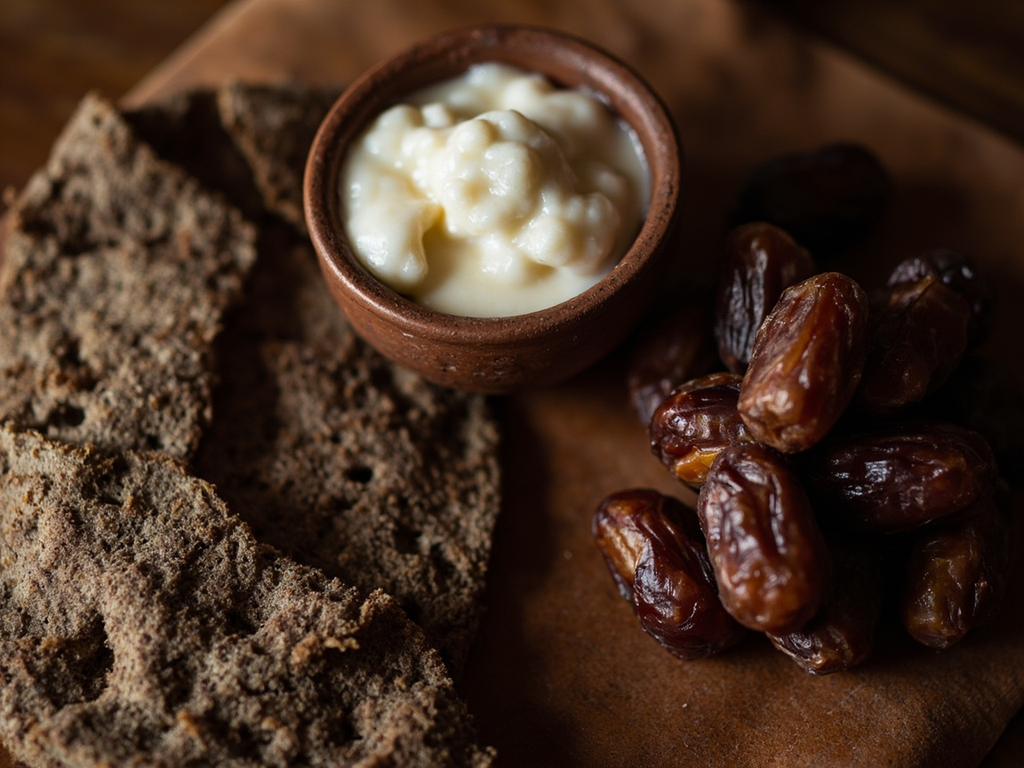
Why this dish? Imported or laboriously cultivated barley was precious in Leif's Greenland. Without a bread oven, flatbreads were baked on a stone or iron plate placed on the embers — the everyday bread, which accompanied skyr, stew, and dried fish, and was also taken to sea.
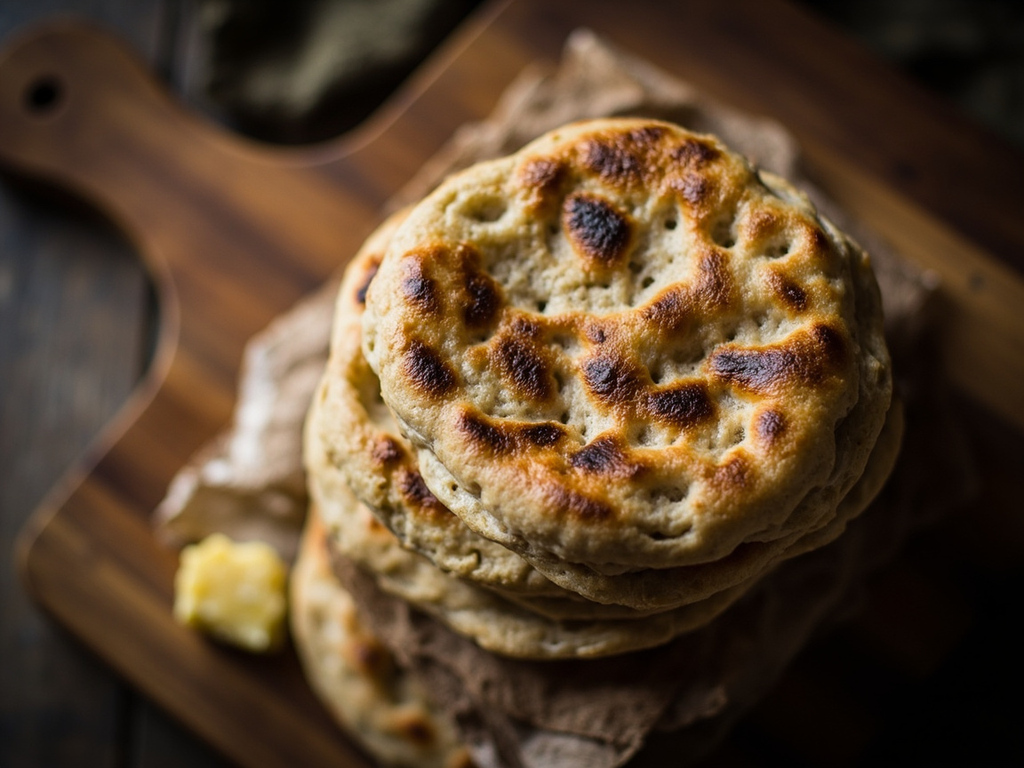
Flat, dense, unleavened bread made from ground barley and a little water, baked on a hot stone. Slightly toasted, it keeps for a few days and goes with everything: butter, skyr, stew, or fish.
Wheat? Keep it for the southern lords. Here, we grind barley between stones, and from that coarse flour we make flatbreads baked right on the hot hearthstone. Turn it as soon as it puffs, otherwise it burns. Fold it around a piece of dried fish and you have the sailor's meal — simple, but it has already taken you farther than you think.
- •Stone-ground barley flour — two handfuls (base)
- •Water — as needed (binder)
- •Sea salt — a pinch (seasoning)
Flatbrauð: barley flatbread on the stone
Flat, dense, unleavened bread made from ground barley and a little water, baked on a hot stone. Slightly toasted, it keeps for a few days and goes with everything: butter, skyr, stew, or fish.
Why this dish? Imported or laboriously cultivated barley was precious in Leif's Greenland. Without a bread oven, flatbreads were baked on a stone or iron plate placed on the embers — the everyday bread, which accompanied skyr, stew, and dried fish, and was also taken to sea.
Wheat? Keep it for the southern lords. Here, we grind barley between stones, and from that coarse flour we make flatbreads baked right on the hot hearthstone. Turn it as soon as it puffs, otherwise it burns. Fold it around a piece of dried fish and you have the sailor's meal — simple, but it has already taken you farther than you think.
Ingredients (period version)
- Stone-ground barley flour — two handfuls (base)
- Water — as needed (binder)
- Sea salt — a pinch (seasoning)
Ingredients
- Barley flour — 200 g (base)
- Rye or wheat flour (for structure) — 50 g (optional binder)
- Warm water — 120-150 ml (binder)
- Salt — 1 pinch (seasoning)
Method
- Mix the flours and salt, add warm water little by little until a soft, non-sticky dough forms.
- Divide into balls and roll out very thinly into round flatbreads.
- Heat a cast-iron plate or a dry stone strongly, without fat.
- Cook each flatbread for 1 to 2 minutes per side, until it blisters and browns in spots.
- Stack under a cloth and serve warm with butter, skyr, or stew.
How it was made : Viking bread was most often unleavened flatbread, baked on a plate (helle, flat stone, or iron plate) over the fire, as bread ovens were rare on farms. Barley dominated, sometimes mixed with rye, oats, or pea flour; bread with added bark or seeds has even been found in times of scarcity. In Greenland, cereals had to be imported and remained a luxury.
The contemporary twist : Served in a stack on a board, slightly charred on the edges, with homemade churned butter — a Nordic flatbread perfect for sopping up the juniper stew.
Leif Erikson · Charactorium