 flip
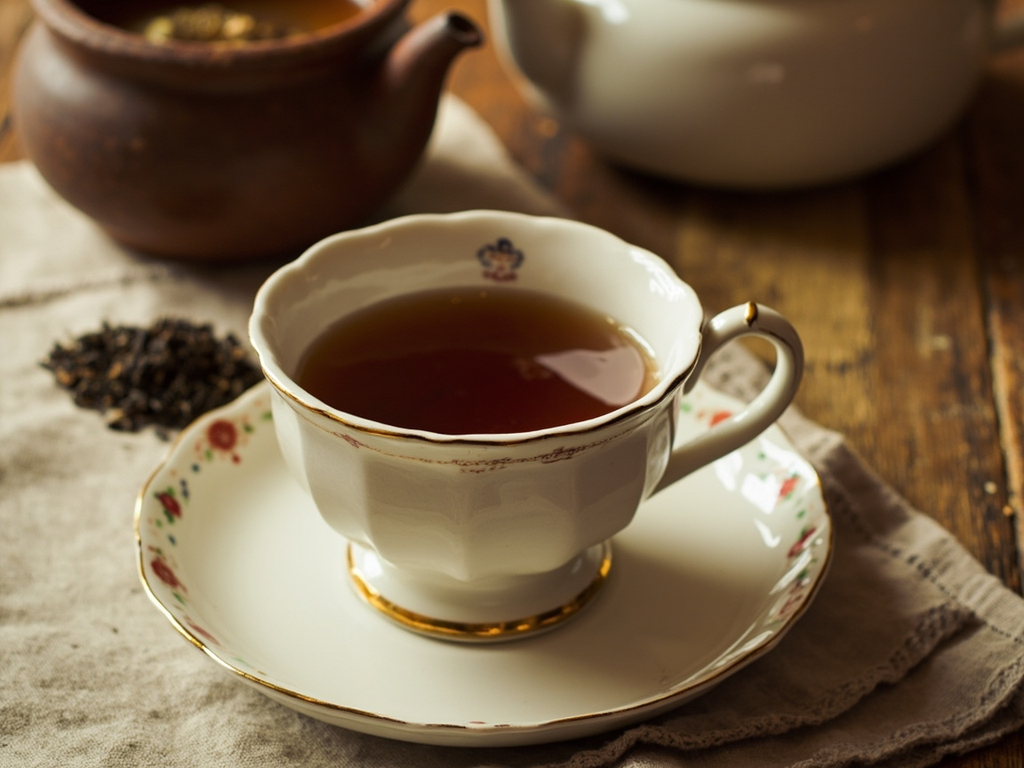
flipBlack Tea with Milk, at the Exact Hour
Black Tea with Milk, at the Exact Hour
Why this dish? Born into a wealthy English family in Lancashire, Carrington kept the daily ritual of tea all her life, even in Mexico — an anchor drink that connected her to her childhood at Clayton Green, even in the heart of surrealist Mexico.
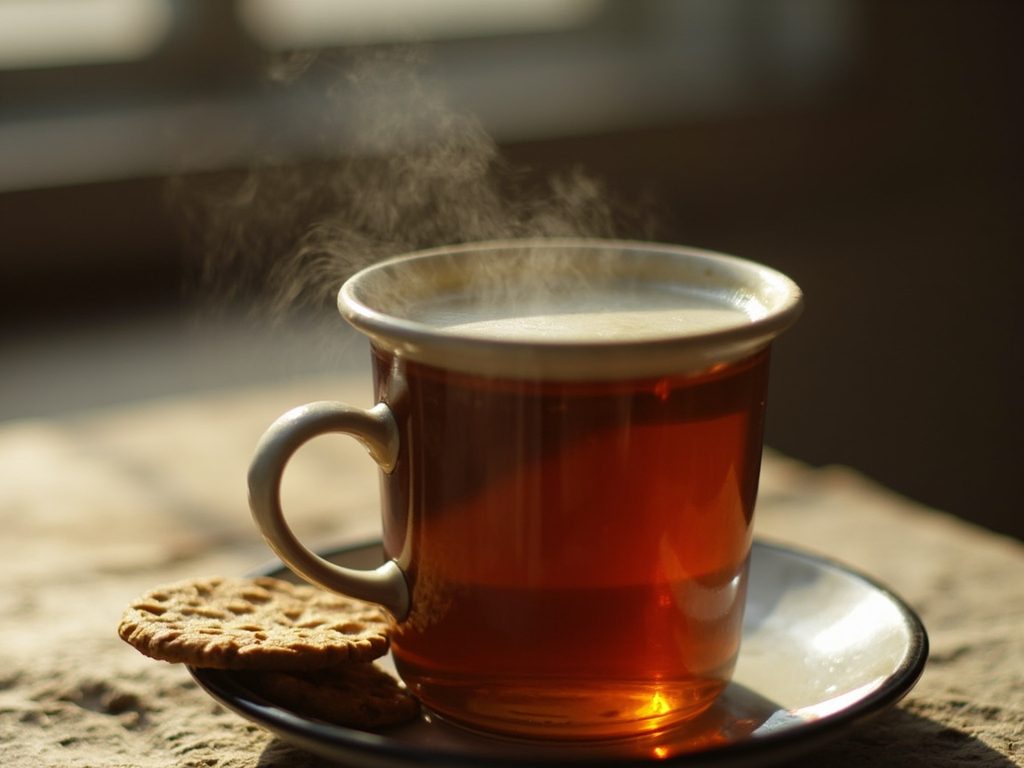
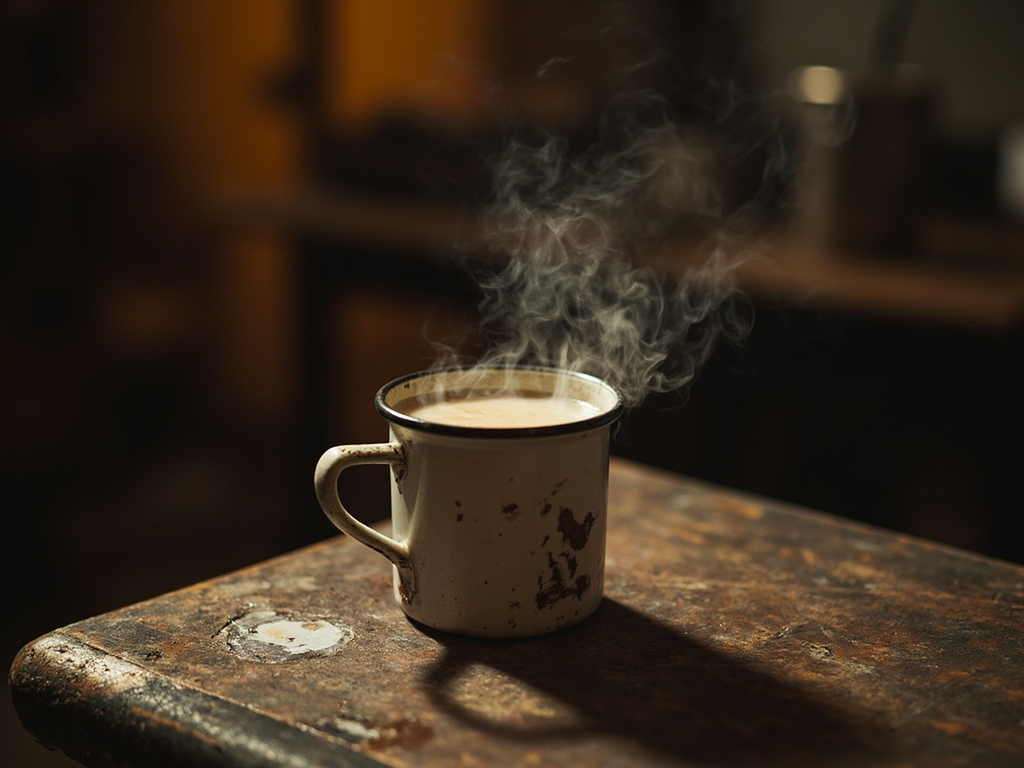
A strong black tea, steeped well, softened with a splash of milk. Not a drink: a threshold ritual, the moment when one stops, reads the hour in the cup. The most unchanging English gesture of her day.
Tea, you see, is not a matter of thirst — it's a matter of world order. At Clayton Green, my Irish nanny taught me that you warm the teapot first, always, otherwise the brew comes out sad and you can read nothing at the bottom of the cup. Milk after, never before, and you let it steep the time it takes for a leaf to give up its soul. Even here, in Mexico, among my painted horses and my creatures, I stop at that hour: it is my little daily spell.
- •Assam or Ceylon black tea leaves — one spoonful per cup, plus one 'for the pot' (base, tannic body)
- •Whole milk — a splash (roundness, softens bitterness)
- •Spring water, just below boiling — according to number of cups (infusion)
- •Sugar — optional, to taste (sweetness)
Black Tea with Milk, at the Exact Hour
A strong black tea, steeped well, softened with a splash of milk. Not a drink: a threshold ritual, the moment when one stops, reads the hour in the cup. The most unchanging English gesture of her day.
Why this dish? Born into a wealthy English family in Lancashire, Carrington kept the daily ritual of tea all her life, even in Mexico — an anchor drink that connected her to her childhood at Clayton Green, even in the heart of surrealist Mexico.
Tea, you see, is not a matter of thirst — it's a matter of world order. At Clayton Green, my Irish nanny taught me that you warm the teapot first, always, otherwise the brew comes out sad and you can read nothing at the bottom of the cup. Milk after, never before, and you let it steep the time it takes for a leaf to give up its soul. Even here, in Mexico, among my painted horses and my creatures, I stop at that hour: it is my little daily spell.
Ingredients (period version)
- Assam or Ceylon black tea leaves — one spoonful per cup, plus one 'for the pot' (base, tannic body)
- Whole milk — a splash (roundness, softens bitterness)
- Spring water, just below boiling — according to number of cups (infusion)
- Sugar — optional, to taste (sweetness)
Ingredients
- Loose Assam black tea — 12 g (≈ 4 tsp) (base)
- Filtered water — 75 cl (infusion)
- Whole milk — 4 tbsp (roundness)
- Brown sugar — optional (sweetness)
Method
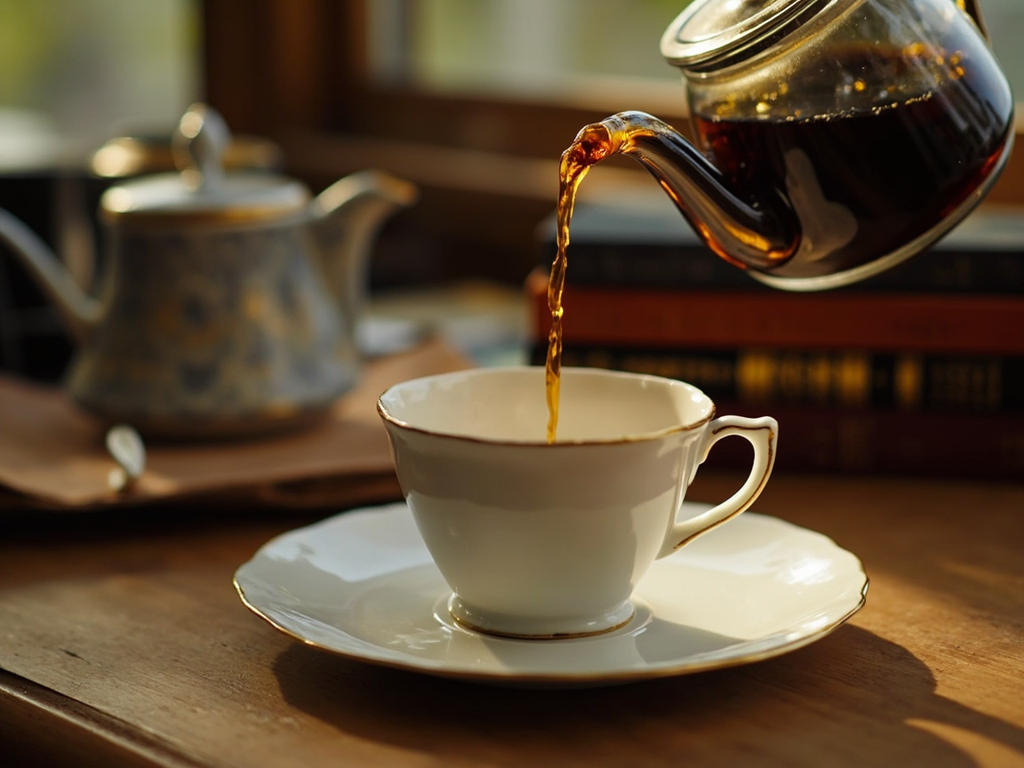
- Scald the empty teapot, pour out the water: it must be hot.
- Add the tea leaves to the hot pot.
- Bring the water just to a simmer (not a rolling boil) and pour over the leaves.
- Cover and steep for 4 minutes, no longer if you dislike too much tannin.
- Strain into cups, add a splash of milk after the tea, sweeten if desired.
How it was made : In the Edwardian England where Carrington grew up, tea was an institution regulated to the minute, with its national quarrel (milk before or after?). Tea bags were not yet common: leaves were brewed loose, and the dregs at the bottom of the cup were sometimes used for popular cartomancy — a detail that could only appeal to a future occult enthusiast.
The contemporary twist : Serve in a mismatched cup and, in the manner of Irish nannies, invite a guest to 'read' the leaves left at the bottom — a harmless divination game, very Carringtonian.
Leonora Carrington · Charactorium