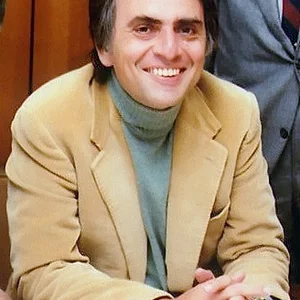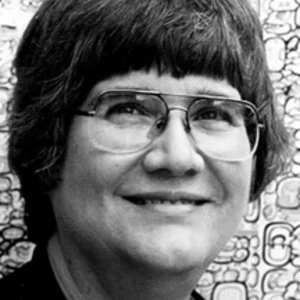

American epigrapher and archaeologist (1942–1998), pioneer in the decipherment of Maya writing. Her work revolutionized our understanding of Maya history, cosmology, and dynasties.
Linda Schele(1942 — 1998)
Linda Schele
États-Unis
9 min read
Frequently asked questions
Key Facts
- Born in 1942 in Alabama, she became one of the leading specialists in Maya writing
- Participated in the 1973 Mesa Redonda de Palenque, a founding conference for the decipherment of Maya glyphs
- Co-author of *The Blood of Kings* (1986) and *A Forest of Kings* (1990), landmark works on Maya dynasties
- Professor at the University of Texas at Austin, she trained a generation of Maya epigraphers
- Died in 1998; her work made it possible to read the political history of the Maya as inscribed in their monuments
Works & Achievements
Co-written with archaeologist David Freidel, this work synthesizes new epigraphic readings to reveal the political complexity and warfare of Classic Maya city-states. It marks a major break with the image of peaceful, mysterious Maya inherited from the nineteenth century.
With David Freidel and Joy Parker, Schele reconstructs Maya cosmology — the World Tree, the Maize God, the underworld Xibalba — by weaving together inscriptions, iconography, and the living traditions of contemporary Maya peoples.
Schele's final book, co-written with Peter Mathews, offers a method for reading the architectural and epigraphic programs of seven major Maya monuments. Published in the year of her death, it crowns a lifetime devoted to decipherment.
More than 7,000 line drawings of Maya monuments, glyphs, and iconographic scenes, produced by Schele in the field and in the laboratory. Now digitized and available online, this archive remains an indispensable reference tool for epigraphers around the world.
A series of annual pedagogical workbooks written by Schele for her workshops at the University of Texas. Distributed free of charge to hundreds of researchers, they democratized the study of Maya epigraphy and trained an entire generation of specialists.
Anecdotes
In 1970, Linda Schele was a simple art teacher visiting Palenque, Mexico, on vacation. Captivated by the Maya glyphs carved on the walls of the Temple of the Inscriptions, she stayed for several weeks copying them by hand, refusing to leave. This leisure trip would change the course of her life and of Maya studies.
In 1973, Linda Schele co-organized with artist Merle Greene Robertson the first Mesa Redonda de Palenque, an informal seminar bringing professional scholars and enthusiasts together around the same table. This collaborative approach — unusual in the academic world of the time — significantly accelerated the decipherment of Maya writing.
Linda Schele had a reputation for being able to read Maya inscriptions by the raking light of a flashlight alone, standing before a stela in the jungle, dictating her translations on the spot to her astonished students. Her visual memory of the roughly 800 glyphs in the Maya repertoire was extraordinary.
During the 1970s, Linda Schele noticed among the Palenque seminar participants a child prodigy of about ten named David Stuart, the son of a National Geographic archaeologist. She nurtured his early talent; at 18, in 1984, David Stuart received a MacArthur Fellowship — one of the youngest recipients in the award's history — for his discoveries in glyph decipherment.
Diagnosed with pancreatic cancer in 1997, Linda Schele continued to teach, to travel to archaeological sites, and to work on her final book *The Code of Kings* until the last weeks of her life. She passed away on April 18, 1998, leaving behind an archive of more than 7,000 drawings of Maya monuments.
Primary Sources
In this foundational article, Schele identifies the glyph sequences linked to the accession of Maya king Chan-Bahlum II, establishing for the first time a solid connection between dynastic texts and architectural iconography at Palenque.
The Classic Maya were not the peaceful astronomer-priests we once imagined. Their cities were warrior states ruled by shaman-kings whose inscriptions record victories, the capture of enemies, and blood rituals.
Schele and her co-authors demonstrate that Maya cosmology — the World Tree, the maize gods, the journey through the underworld — is a coherent system that shapes both temple architecture and royal ritual.
By analyzing seven major Maya monuments, Schele and Mathews provide a method for reading iconographic and epigraphic programs, transforming temples into texts accessible to the educated general public.
These teaching workbooks, written by Schele for her annual workshops at the University of Texas, were distributed free of charge to hundreds of researchers and students, democratizing access to decipherment techniques.
Key Places
Maya archaeological site where Schele discovered her calling in 1970. She returned every year until her death, co-organizing the famous Mesa Redonda conferences that revolutionized Maya epigraphy worldwide.
Institution where Schele was a professor of art and art history for more than twenty years. She organized the annual workshops on Maya hieroglyphic writing there, which became landmark events in the field on an international scale.
Maya site famous for its stelae and its Hieroglyphic Stairway, one of the longest known Maya inscriptions. Schele carried out important research there on the dynasty of Copán's kings and the spread of Maya royal practices.
Maya city accessible only by river along the Usumacinta, whose carved lintels recount the conquests of King Bird Jaguar. These monuments were central to Schele's research on Maya warfare and kingship.
A major Maya city in the Guatemalan Petén, Tikal was a key site of study for Schele, particularly for understanding the political and military networks connecting the Classic Maya city-states to one another.
Typical Objects

Schele copied by hand every glyph and every relief she studied in the field. These meticulous drawings, often made by flashlight at archaeological sites, form the heart of her archive of more than 7,000 documents.

An indispensable tool for working in the dark temples and dense jungles of Mexico and Guatemala. Schele was famous for her ability to read inscriptions by raking torchlight, which brings out the carved reliefs on stelae.

In the 1970s–1990s, slides were the central working tool of art historians. Schele owned thousands of them, documenting Maya monuments from Mexico, Guatemala, Honduras, and Belize, which she projected during her classes and seminars.

Schele used casts and reproductions of stelae to teach glyph reading at her workshops at the University of Texas. These reproductions allowed students to analyze inscriptions without risking damage to the originals.

One of the three surviving pre-Columbian Maya codices, the Dresden Codex is a foundational reference document for Maya epigraphy. Schele used high-quality facsimiles in her research on Maya cosmology and the Maya calendar.

Each year Schele wrote a substantial teaching workbook for her annual Maya writing workshop in Austin. Distributed free of charge, these notebooks became the go-to reference for epigraphers in training around the world.
School Curriculum
Vocabulary & Tags
Key Vocabulary
Tags
Daily Life
Morning
Linda Schele began her fieldwork days very early, before the intense tropical heat set in. At archaeological sites such as Palenque or Yaxchilán, she examined the monuments in the raking light of the rising sun — ideal for bringing out the low-relief carvings on the stelae. She always carried her sketchbook, pencils, and flashlight.
Afternoon
Afternoons in the field were devoted to photographic documentation and collaborative work around inscriptions. Back in Austin, outside excavation seasons, she taught her Maya art history courses and supervised graduate theses from an office lined with slides and reproductions of glyphs.
Evening
Evenings at Palenque during the Mesa Redonda were lively, informal working sessions around a table, sometimes stretching past midnight. Seasoned researchers and young enthusiasts debated the latest glyph readings. In Austin, she often worked late into the night drafting her teaching workbooks and books.
Food
In the field in Mexico and Guatemala, Schele ate local food: tortillas, black beans, rice, eggs, and tropical fruits. Contemporary Maya cuisine — built on corn, chili, and cacao, much as in the Classic period — was a constant reminder of the cultural continuity she tracked through ancient texts.
Clothing
On archaeological sites, Schele wore light, practical clothes suited to the humid tropical heat: cotton trousers, long-sleeved shirts to guard against insects, a wide-brimmed hat, and sturdy walking shoes. At the university, she favored the casual style typical of an American professor of the 1970s–1990s.
Housing
In Austin, Schele lived with her husband David in a family home typical of the Texas university town. During extended stays at Palenque or other Mexican and Guatemalan sites, she lodged in modest hotels or researchers' quarters, well accustomed to the very basic living conditions of fieldwork.
Historical Timeline
Period Vocabulary
Liens externes & ressources
Références
Œuvres
A Forest of Kings: The Untold Story of the Ancient Maya
1990
Maya Cosmos: Three Thousand Years on the Shaman's Path
1993
The Code of Kings: The Language of Seven Sacred Maya Temples and Tombs
1998
Linda Schele Drawing Archive (archive de dessins)
1970-1998
Notebooks for the Maya Hieroglyphic Writing Workshop at Texas
1977-1998