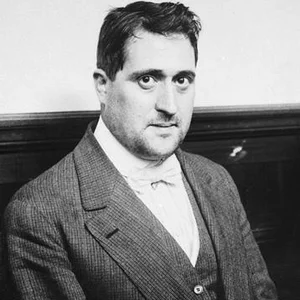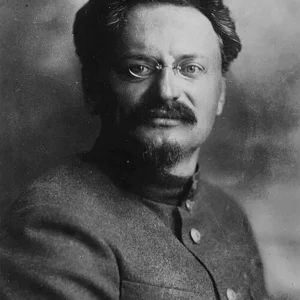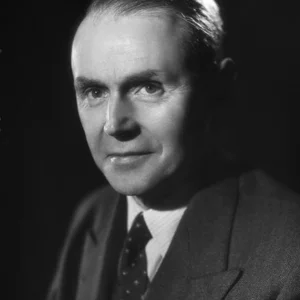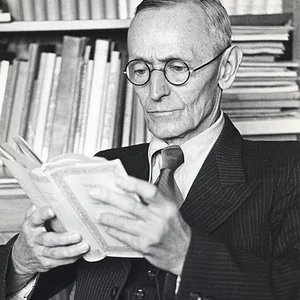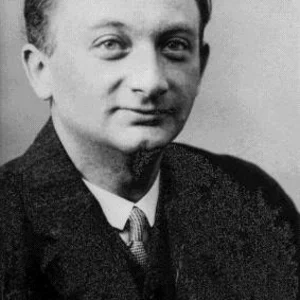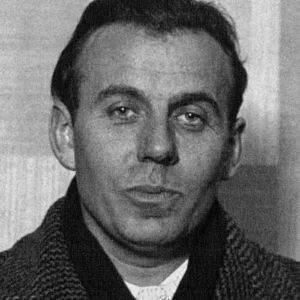

French writer and physician, author of *Journey to the End of the Night* (1932), a novel that revolutionized prose through its spoken style and use of slang. His major work is now overshadowed by his antisemitic pamphlets and his collaboration during the Occupation.
Louis-Ferdinand Céline(1894 — 1961)
Louis-Ferdinand Céline
France
6 min read
Frequently asked questions
Famous Quotes
« Travel is very useful; it exercises the imagination.»
« The truth of this world is death.»
Key Facts
- Born in 1894 in Courbevoie under the name Louis-Ferdinand Destouches.
- A volunteer enlistee in 1914, seriously wounded and decorated during the First World War.
- Published *Journey to the End of the Night* in 1932, which won the Prix Renaudot and transformed the language of the novel.
- Published *Death on the Installment Plan* in 1936, then antisemitic pamphlets from 1937 onward (*Bagatelles pour un massacre*).
- Convicted of collaboration after 1945, exiled in Denmark, granted amnesty in 1951, and died in Meudon in 1961.
Works & Achievements
His medical thesis, devoted to the scientist who discovered the importance of hygiene in saving young mothers. His talent as a writer can already be glimpsed in it.
His masterpiece and first novel, winner of the Prix Renaudot. It revolutionized French literature with its spoken style, its slang, and its disillusioned view of war and misery.
A largely autobiographical novel about a poor childhood in the Paris of the covered passages. Its fragmented style, punctuated with ellipses, fully comes into its own here.
A violently antisemitic and racist pamphlet. This piece of hateful writing, like Céline's other pamphlets, is unanimously condemned today and deeply dishonors its author.
A text in which Céline humorously explains his conception of style, which he compares to an “emotional metro” launched at full speed to convey emotion directly.
A tragicomic account of his stay in Sigmaringen among the last loyalists of Vichy. It marks Céline's return to the literary scene after his exile.
The second installment of his trilogy about the flight across the ruined Germany of 1944-1945, considered one of his stylistic peaks.
Anecdotes
In 1914, at just twenty years old, the cavalryman Destouches volunteered to carry a message under enemy fire in Flanders. Severely wounded in the arm, he received the military medal, and his portrait as a young hero appeared in the illustrated press. For the rest of his life, he would suffer from violent headaches and ringing in his ears.
“Céline” was not his real name: the writer was called Louis-Ferdinand Destouches and borrowed his pen name from his grandmother's first name. In this way he kept his two identities separate, that of Dr. Destouches who cared for the sick and that of the writer Céline.
In 1932, “Journey to the End of the Night” was the clear favorite for the Prix Goncourt. To everyone's surprise, the jury preferred a now-forgotten novel, “Les Loups” by Guy Mazeline. The scandal was enormous, but Céline consoled himself with the Prix Renaudot, awarded a few days later.
Before writing novels, Céline devoted his medical thesis to the Hungarian doctor Ignaz Semmelweis, a misunderstood pioneer who had discovered that by washing their hands doctors could save thousands of young mothers from infection. Céline admired this scholar rejected by his colleagues.
When he fled France in 1944 across a Germany in ruins, Céline took his cat Bébert with him, hidden in a shoulder bag. The animal would survive this perilous journey and would even accompany the writer into his Danish prison.
Primary Sources
Here's how it started. I'd never said a word. Not one word. It was Arthur Ganate who made me speak.
Our life is a journey / Through winter and through Night, / We search for our passage / In a Sky where nothing shines.
Here we are, alone again. It's all so slow, so heavy, so sad... Soon I'll be old. And then at last it will be over.
Key Places
Town in the Paris suburbs where Louis-Ferdinand Destouches was born in 1894.
Shopping arcade in central Paris where the child grew up in his mother's lace shop. This stifling setting would inspire the novel “Death on the Installment Plan”.
Sector of the Belgian front where the young cuirassier was severely wounded in the arm in October 1914, an experience that would mark his entire body of work.
German town where the Vichy government took refuge in 1944-1945, and where Céline stayed during his flight. It serves as the setting for the novel “Castle to Castle”.
Capital of Denmark where Céline took refuge in 1945 and where he was imprisoned for nearly eighteen months while awaiting his fate.
Town in the Hauts-de-Seine where the writer, back in France, lived, cared for his patients and wrote his last novels from 1951 until his death in 1961.
Liens externes & ressources
Références
Œuvres
La Vie et l'œuvre de Philippe Ignace Semmelweis
1924
Voyage au bout de la nuit
1932
Mort à crédit
1936
Bagatelles pour un massacre
1937
Entretiens avec le professeur Y
1955
D'un château l'autre
1957