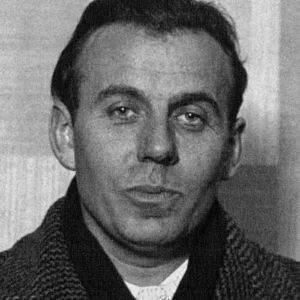

French writer (1890–1980), Maurice Genevoix is the author of *Ceux de 14* ("Those of '14"), a landmark eyewitness account of the First World War. A member of the Académie française and its perpetual secretary, he was inducted into the Panthéon in 2020.
Maurice Genevoix(1890 — 1980)
Maurice Genevoix
France
7 min read
Frequently asked questions
Famous Quotes
« We were there, we the survivors, with our dead.»
« War is death passing by.»
Key Facts
- 1890: born in Decize (Nièvre)
- 1914–1915: seriously wounded on the Meuse front, demobilized
- 1916–1923: writes and publishes the five volumes of *Ceux de 14*
- 1958: elected perpetual secretary of the Académie française
- 2020: inducted into the Panthéon alongside all soldiers of the Great War
Works & Achievements
Genevoix's first autobiographical account of his wartime experiences, written during his convalescence. It opens the series of testimonies that would become "Ceux de 14."
A naturalist novel about a poacher in the Sologne region, awarded the Prix Goncourt. It reveals Genevoix's sensitivity to nature and to those living on the margins of society.
A single-volume gathering of all his accounts of the Great War — Sous Verdun, Nuits de guerre, Au seuil des guitounes, La Boue, Les Éparges. Considered one of the most complete and most honest testimonies of the First World War.
A novel following a stag hunted through the forests of Sologne, often counted among his masterworks. It showcases his mastery of naturalist storytelling and his deep empathy for the animal world.
An autobiography published in the year of his death, in which Genevoix looks back on his life, the war, his passion for nature, and his literary commitment. A spiritual testament of profound serenity.
Anecdotes
Barely 24 years old and holding the rank of second lieutenant, Maurice Genevoix was sent to the Meuse front in August 1914. He carried a small notebook in which he recorded every detail of soldiers' daily lives, convinced that he had to bear witness for those dying at his side. These notebooks would become the raw material for *Ceux de 14*.
In April 1915, Genevoix was wounded three times within a few weeks on the Côte Saint-Nicolas, near Verdun. His right hand was injured, threatening his writing career. Evacuated from the front, he spent long months convalescing and shaped the accounts that would become his major work.
Genevoix received the Prix Goncourt in 1925 for *Raboliot*, a novel about a poacher from the Sologne region written in a lyrical and precise style. This dual recognition — a combatant turned great novelist — made him a moral figure in French literature of the interwar years.
On November 11, 2020, marking the 102nd anniversary of the Armistice, Maurice Genevoix was inducted into the Panthéon by decree of President Emmanuel Macron. His transfer was symbolically accompanied by soil taken from the battlefields of Verdun, as a tribute to all the *poilus* whose voice he had made himself.
A passionate lover of nature, Genevoix spent much of the year at his home in Saint-Denis-de-l'Hôtel, on the banks of the Loire. He hunted, fished, and observed wildlife with the same keen eye he had brought to describing the war, making the Sologne the setting for several of his most celebrated novels.
Primary Sources
We are here, two thousand men crammed into the mud, under the rain and the shells. And yet we must hold on, hold on still, hold on always.
The mud is our universe, our bed, almost our food. We sink into it, we struggle in it, we lie down in it when our legs can carry us no further.
The poacher sensed the forest the way an animal senses it — through his whole body, through every pore of his skin stretched taut in the silence.
I had promised the dead that I would speak for them, that I would bear witness to what they had lived and suffered. I have never broken that promise.
Key Places
Maurice Genevoix's birthplace in 1890, in the Loire valley. He spent his childhood there before moving to Paris to study at the École normale supérieure.
The trench sector where Genevoix fought from 1914 to 1915 and was seriously wounded three times. These places are at the heart of *Ceux de 14* and remain linked to his commitment to bearing witness for the dead.
A village on the banks of the Loire where Genevoix spent most of his writing life. It was there that he observed the nature of the Sologne region that fed his novels, and where he wrote his works every morning.
The literary institution founded in 1635, of which Genevoix was elected a member in 1946 and then Permanent Secretary from 1958 to 1974. He presided over the stewardship of the French language there for sixteen years.
The republican monument where the great figures of the French nation rest. Genevoix was transferred there on 11 November 2020, with soil from the Verdun battlefields placed symbolically at his side.
Typical Objects

A small bound notebook that Genevoix carried with him in the trenches to record his observations throughout the fighting. These notebooks are the direct source of *Ceux de 14* and constitute an exceptional historical document.

The standard-issue rifle of the French infantry during the First World War, handled daily by soldiers in the trenches. Genevoix describes its use with technical precision in his war narratives.

The regulation overcoat adopted by the French army from 1915 onward, replacing the old red uniform that was far too visible on the battlefield. A symbol of the *poilu*, it is described with meticulous detail in Genevoix's accounts.

The official ceremonial coat embroidered with oak and olive leaves, worn by members of the Académie française at formal sessions. Genevoix first donned it upon his election in **1946** and throughout his sixteen years as Perpetual Secretary.

The writer's everyday working tool, with which Genevoix handwrote his manuscripts each morning at his home in Saint-Denis-de-l'Hôtel. He tended carefully to clarity and rhythm, sentence by sentence.

An engraved-blade sword presented to members of the Académie française at their induction ceremony. Worn by a veteran of Verdun, it embodies the paradox of a life marked by war and devoted to the peace of letters.
School Curriculum
Vocabulary & Tags
Key Vocabulary
Daily Life
Morning
Genevoix rose early in his house in Saint-Denis-de-l'Hôtel and devoted his mornings to writing, facing the garden that opened onto the Loire countryside. He wrote by hand, slowly and carefully, reworking each sentence to achieve the precision and rhythm he was after.
Afternoon
His afternoons were often spent in nature: long walks through the Sologne, hunting trips or fishing on the banks of the Loire. He observed the flora and fauna with the same meticulous attention he had brought to describing the trenches, notebook in hand to jot down whatever felt right.
Evening
In the evenings, Genevoix read widely, corresponded with fellow writers, and read his manuscripts aloud to test the music of his sentences. He sometimes entertained friends around a simple table, sharing the local wine and game.
Food
Genevoix had a taste for the peasant cooking of the Val de Loire: feathered and furred game he hunted himself, river fish caught on a line, vegetables from the kitchen garden, and local cheeses. Country bread and local wine accompanied his daily meals.
Clothing
For everyday outings in nature, Genevoix wore sturdy, practical clothes: corduroy trousers, hunting jackets, and lace-up boots. For formal sessions at the Académie française, he would don the embroidered green coat of the Immortals — a symbol of his second life after the war.
Housing
His main home was a comfortable bourgeois house in Saint-Denis-de-l'Hôtel, surrounded by a large garden overlooking the countryside. In Paris, he kept an apartment for his academic duties, but he regarded the Loire valley as his true home and the natural setting for his literary work.
Historical Timeline
Period Vocabulary
Liens externes & ressources
Références
Œuvres
Sous Verdun
1916
Raboliot
1925
Ceux de 14 (recueil intégral)
1949
La Dernière Harde
1938
Trente mille jours
1980