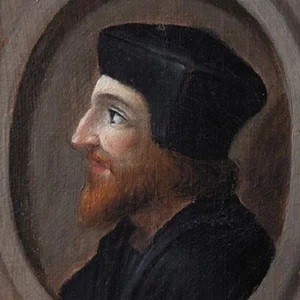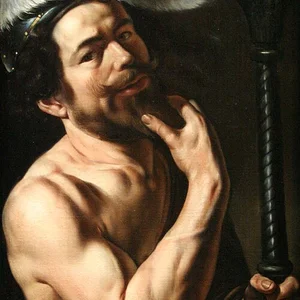

Louis Finson (c. 1580–1617) was a Flemish painter and art dealer, trained in Naples where he associated with Caravaggio. A key figure in spreading Caravaggism to Northern Europe, he owned several works by the master and helped disseminate this style in France and the Low Countries.
Louis Finson(1580 — 1617)
Louis Finson
Pays-Bas méridionaux
8 min read
Frequently asked questions
Key Facts
- Born c. 1580 in Bruges, in the Spanish Netherlands
- Stayed in Naples c. 1604–1612, where he met Caravaggio and became one of his close associates
- Owned, together with his partner Abraham Vinck, Caravaggio's painting 'The Raising of Lazarus' (now in the Museo Regionale di Messina)
- Worked in Provence (Aix-en-Provence, Marseille), where he spread the Caravaggesque style
- Died in 1617 in Amsterdam, leaving a substantial studio collection
Works & Achievements
Large religious composition painted for the Grands Augustins of Aix-en-Provence, signed and preserved at the Musée Granet. A documented masterpiece by Finson, it illustrates the adoption of Caravaggesque chiaroscuro in southern French painting.
Copy or version of the large Caravaggio canvas commissioned in Messina, of which Finson and his associate Abraham Vinck held reproduction rights. Several versions have been attributed to Finson or his workshop.
Variation after a Caravaggio painting of which Finson produced multiple versions for sale. These copies, distributed across Northern Europe, helped popularize the Caravaggesque style beyond Italy.
Composition inspired by Caravaggio's painting of this biblical heroine, illustrating Finson's ability to appropriate the master's dramatic subjects and offer them to a northern clientele hungry for novelty.
Devotional painting depicting the saint in meditation, a subject highly sought after in the wake of Caravaggism. Several versions attributed to Finson bear witness to the strong demand for this type of intimate work in European private collections.
Anecdotes
Louis Finson was one of the rare contemporaries to own original paintings by Caravaggio during the artist's lifetime. The inventory drawn up at his death in Amsterdam in 1617 includes *The Sleeping Cupid*, a canvas Caravaggio is said to have painted in Malta. This exceptional collection made Finson a key figure in the emerging European art market.
Together with his fellow Flemish painter **Abraham Vinck**, Finson acquired the rights to the large *Raising of Lazarus* that Caravaggio executed in Messina around 1608–1609. The two partners could thereby have copies made and sell them throughout Northern Europe, acting as genuine cultural entrepreneurs well ahead of their time.
Settled in Marseille around 1612, Finson painted a large *Annunciation* for the church of the Grands Augustins in Aix-en-Provence, signed in Latin *Ludovicus Finsonius pingebat Massiliae 1613*. This painting, now held at the Musée Granet, is one of his rare authenticated works and stands out for its dramatic contrasts directly inherited from Caravaggio's style.
Finson belonged to a generation of Flemish painter-dealers who trained in Italy and then returned north laden with paintings, sketchbooks, and new influences. This dual role of artist and art dealer — common at the time — allowed him to finance his own creations while spreading the Caravaggesque taste to regions where that style was still unknown.
In Naples, Caravaggio was a figure as admired as he was feared: a brilliant painter by day and a violent man by night, he had fled Rome after a killing in 1606. Finson moved in his circles during this tense period, at a time when Caravaggio lived under the protection of powerful Neapolitan nobles. This closeness to such a singular artist left a lasting mark on Finson's style and career.
Primary Sources
Among the items listed is 'a painting by Caravaggio depicting a sleeping Cupid', along with several copies and works in the manner of the Neapolitan master, attesting to the importance of the collection assembled by the Flemish painter over the course of his travels.
The two Flemish painter-dealers declare themselves co-owners of Caravaggio's large painting executed in Messina and assert their right to have copies made for sale in Northern Europe, providing evidence of organized commercial practices built around the master's work.
'Ludovicus Finsonius pingebat Massiliae 1613': the Latin signature on the painting confirms Finson's presence in Marseille, his Latinized name in keeping with the scholarly conventions of the time, and the precise date the work was executed.
Various Neapolitan notarial records mention 'Ludovico Finsonius pittore fiammingo' between 1601 and 1612, confirming his extended residence in the city, his activities buying and selling paintings, and his ties to the local artistic community.
Key Places
Finson's probable birthplace, a major Flemish commercial and artistic center heir to a painterly tradition stretching back to Van Eyck. It was here that he received his initial training before departing for Italy.
The city where Finson stayed from around 1601 to 1612 and where he met Caravaggio. Naples was then a cosmopolitan crossroads under Spanish rule, a hub of intense artistic renewal where Italian, Flemish, and Spanish painters worked side by side.
The Mediterranean port where Finson settled around 1612–1614, developing his career as both a painter and an art dealer. It was here that he produced his *Annunciation* for Aix-en-Provence in 1613.
The city for which Finson painted his *Annunciation* in 1613, now held at the Musée Granet. This religious commission reflects his integration into the network of Provençal patrons.
The city where Finson settled in the final years of his life and where he died in 1617. As a center of international trade, Amsterdam was the point from which his Caravaggesque collection dispersed into the rapidly growing Northern European market.
Typical Objects

An oval wooden board on which the painter arranges and mixes pigments ground in oil. An indispensable everyday tool, it reflects the technical skill of the Baroque painter, who worked his blacks and ochres with great care.

Seventeenth-century painters prepared their colors by grinding minerals, earths, and plant matter, bound with linseed or walnut oil. Lamp black, ochres, and vermilion were essential to the Caravaggesque chiaroscuro.

A painting support that gradually became the standard at the beginning of the seventeenth century, lighter and more portable than a wooden panel. Its portability made it easier to trade works between Naples, Marseille, and Amsterdam.

A financial instrument used to settle commercial transactions at a distance, without the need to carry hard currency. Finson, a painter and merchant active between Italy, France, and the Dutch Republic, made regular use of them.

A notarized document by which a patron (the Church, a nobleman, or a merchant) commissioned a work from a painter, specifying the subject, dimensions, price, and deadline. Many contracts of this type have been found in Naples covering the period of Finson's activity there.

A lantern with an adjustable shutter that could direct a controlled beam of light onto a model or a surface. Caravaggesque painters studied such artificial lighting effects in order to reproduce the drama of chiaroscuro.
School Curriculum
Vocabulary & Tags
Key Vocabulary
Daily Life
Morning
Finson began his day early in his studio, taking advantage of the natural morning light to paint. Like his Caravaggist contemporaries, he paid extreme attention to the quality and direction of light falling on his models — often ordinary people recruited from the neighborhood.
Afternoon
The afternoon was devoted to business matters: meetings with clients or collectors, negotiating commissions or painting purchases, writing letters to correspondents in Italy, France, or the Dutch Republic. Finson also kept an up-to-date inventory of his collection, a true artistic asset he managed with care.
Evening
In the evening, Finson moved in the artistic and merchant circles of whichever city he was living in — taverns, friends' studios, informal gatherings of painters. In Naples, these evenings could include encounters with Caravaggio himself, a charismatic and violent figure known for his nocturnal excesses and duels.
Food
In Naples, Finson's diet was Mediterranean: bread, olive oil, vegetables, fresh fish, and local wine. In Marseille, he discovered Provençal cuisine, rich in herbs and seafood. In Amsterdam, the table was more austere: herring, cheese, beer, rye bread — the robust fare of a prosperous northern port.
Clothing
Finson wore the typical clothing of a prosperous craftsman-merchant of the early seventeenth century: a dark doublet, a white lace collar, hose, and a traveling cape for his frequent journeys between cities. Influenced by Flemish fashion, he dressed neatly but without ostentation, in keeping with his status as a respectable professional.
Housing
In Naples, Finson likely rented a studio-lodging in a neighborhood frequented by foreign artists, close to the major churches that commissioned works. In Marseille and later Amsterdam, he had enough space to work, store his canvases, and receive buyers. The abundance of paintings in his posthumous inventory suggests an interior that was as much a gallery as a home.