Eusebi Güell
Eusebi Güell i Bacigalupi
8 min read
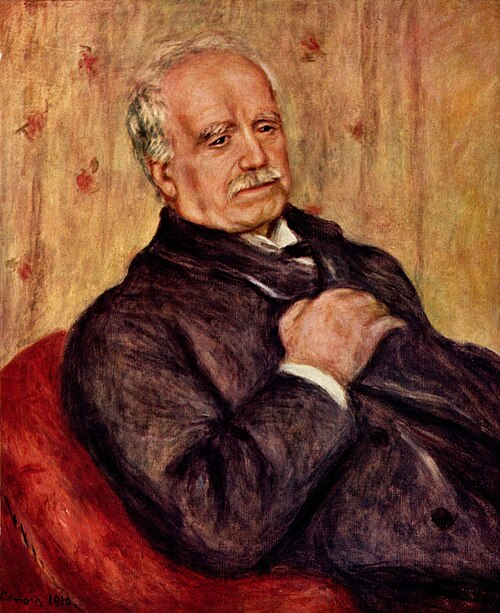
Catalan industrialist and patron of the arts (1846–1918), Eusebi Güell was the principal supporter of architect Antoni Gaudí. Using his textile fortune, he funded the boldest works of Catalan Modernisme, including Park Güell and Palau Güell in Barcelona.
Frequently asked questions
Key Facts
- Born on 15 December 1846 in Barcelona into a wealthy industrial family
- Met Antoni Gaudí in 1878 at the Paris Universal Exhibition, the beginning of a lasting collaboration
- Funded the construction of Palau Güell (1886–1890), a masterpiece of Barcelona Modernisme
- Created Park Güell (1900–1914), listed as a UNESCO World Heritage Site
- Made Count of Güell by King Alfonso XIII in 1908; died on 8 July 1918
Works & Achievements
Gaudí's first major architectural commission, this palace revolutionized Barcelona's architecture with its parabolic vaults and rooftop terrace of sculpted chimneys. Güell gave Gaudí complete creative freedom and unprecedented financial resources.
A model workers' village including housing, a school, a church, and a cooperative, this project reflects Güell's social vision. The crypt designed by Gaudí, begun in 1908, served as the first full-scale test of the structural solutions later used in the Sagrada Família.
A garden-city project inspired by the English garden city movement, featuring communal spaces and sweeping landscaped infrastructure. Converted into a municipal park in 1926, it is today one of the most visited sites in Spain.
Güell's first architectural commission to Gaudí, these entrance pavilions to his Pedralbes estate introduce the symbolic and naturalistic language that would define their entire collaboration. The dragon gate has become an emblem of Catalan Modernisme.
Wine cellars built by Gaudí on Güell's estate at Garraf, distinguished by architecture blending Gothic and organic forms. This project reflects the rural dimension of the Güell family's holdings outside Barcelona.
Güell funded numerous Catalan cultural initiatives, including the Centre Català, helping establish Barcelona as a cultural capital with a reach across Europe. His patronage extended well beyond architecture.
Anecdotes
In 1878, at the Paris Universal Exposition, Eusebi Güell noticed a glove display case designed by an unknown young architect from Barcelona: Antoni Gaudí. Struck by the genius of the work, Güell sought to meet him as soon as he returned to Barcelona. That encounter marked the beginning of a friendship and collaboration that would transform the face of Catalonia.
Güell was not merely Gaudí's patron — he was his most ardent champion. When the architect's projects shocked the people of Barcelona with their extravagance, Güell publicly came to his defense. This unconditional trust allowed Gaudí to create works that would never have seen the light of day without so courageous a benefactor.
The Colònia Güell, founded in 1890 in Santa Coloma de Cervelló, was far more than a simple textile mill. Eusebi Güell had workers' housing, a school, a cooperative, and a church built there — the crypt of which, designed by Gaudí, stands as a masterpiece of structural architecture. This paternalistic project reflected the ideal of an employer who saw himself as responsible for his employees' well-being.
As much a man of culture as of business, Güell spoke several languages and had studied in London and Paris. His time in England introduced him to the garden cities of the Arts and Crafts movement, which directly inspired the design of Park Güell, originally conceived as a garden city for Barcelona's bourgeoisie. The project was a commercial failure but an immortal artistic triumph.
When King Alfonso XIII granted him the title of count in 1908, Eusebi Güell crowned the social ascent of a Catalan merchant family that, in two generations, had risen from the textile industry to the Spanish nobility — while remaining deeply committed to the Catalan cause.
Primary Sources
The letters exchanged between Güell and Gaudí reveal a relationship that goes far beyond that of a patron and his architect: Güell shows careful attention to the smallest details of each project and does not hesitate to increase budgets in order to allow the architect to realize his vision without compromise.
The statutes of the Colònia Güell stipulate that the workers' colony must provide its residents with 'healthy housing, education, and religious practice.' This document reflects Eusebi Güell's social and paternalistic vision toward his workers.
In this speech, Güell argues for the necessity of promoting Catalan culture and language: "Catalonia can only prosper if it remains true to its own genius, its language, and its traditions."
The catalogue notes Eusebi Güell's contribution to the organization of the event and highlights several architectural works from his properties as showcases of nascent Catalan Modernisme.
Key Places
The main residence of Eusebi Güell, built by Antoni Gaudí between 1886 and 1890 in the Raval district. This urban palace, listed as a UNESCO World Heritage Site, was the first monumental masterpiece Gaudí created for his patron.
A garden-city project commissioned by Güell from Gaudí from 1900 onwards, converted into a public park in 1926. This iconic Barcelona landmark, with its colorful mosaics and organic structures, is listed as a UNESCO World Heritage Site.
A model workers' village founded by Güell in 1890 to house employees from his textile factories. It is home to the crypt of the church designed by Gaudí, which served as a structural laboratory for the architectural solutions later used in the Sagrada Família.
The Güell family's country estate, for which Gaudí designed the entrance pavilions between 1884 and 1887. The famous wrought-iron dragon gate is one of Gaudí's earliest symbolic works created for the family.
Eusebi Güell lived and worked at the heart of a bourgeois Barcelona in rapid expansion, shaped by the Cerdà Plan. It was in this context of accelerated urban modernization that he exercised his role as a patron of Catalan Modernisme.