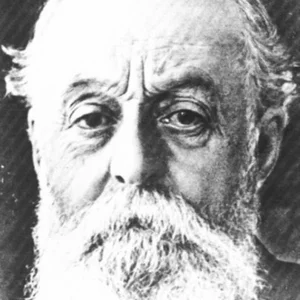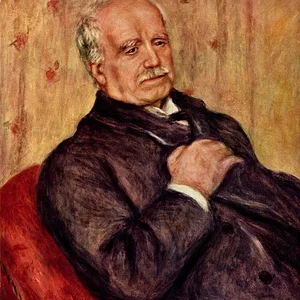

Paul Durand-Ruel (1831-1922) was the principal art dealer of the French Impressionists. He provided financial support to Monet, Renoir, Pissarro, and their contemporaries at a time when their art was being rejected, playing a decisive role in their international recognition.
Paul Durand-Ruel(1831 — 1922)
Paul Durand-Ruel
France
8 min read
Frequently asked questions
Key Facts
- 1865: takes over the family gallery on the rue de la Paix in Paris
- 1872: buys large quantities of works by Manet and the future Impressionists
- 1886: organizes an Impressionist exhibition in New York that meets with decisive success
- Provides financial support to Monet, Renoir, Pissarro, Sisley, and Berthe Morisot for years
- Helps secure the acceptance of Impressionism by American and European museums
Works & Achievements
After his father's death, Durand-Ruel transformed the family gallery into a showcase dedicated to modern artists. This venue became the center of the avant-garde art market in France and the primary exhibition space for the Impressionists in Paris.
During his London exile, Durand-Ruel organized the first exhibitions of Impressionist works abroad, introducing Monet, Pissarro, and Sisley to the British market.
Durand-Ruel funded and supported several of the major Impressionist exhibitions in Paris, allowing artists to present their work outside the official Salon, despite repeated financial losses.
A landmark event: approximately 300 Impressionist works exhibited in New York met with immediate public and commercial success. This exhibition marked the international consecration of the movement and saved Durand-Ruel from bankruptcy.
Opening of a permanent gallery in New York, the first French gallery to establish a lasting presence in the United States. It became a cornerstone of the American Impressionist art market for several decades.
A major exhibition organized in association with Durand-Ruel, presenting Impressionism as a historically significant movement. It definitively established the recognition of the movement in the United Kingdom.
Anecdotes
During the Franco-Prussian War of 1870, Paul Durand-Ruel was forced to flee Paris for London, taking part of his stock of paintings with him. There he met Claude Monet and Camille Pissarro, who had also taken refuge in England. He immediately bought their canvases and organized exhibitions for them at the Suffolk Street Gallery, laying the foundations of a historic collaboration that would go on to revolutionize the art market.
In the early 1880s, Durand-Ruel found himself on the brink of ruin: he had spent considerable sums buying hundreds of Impressionist canvases that almost no one wanted to purchase. Monet wrote to him offering to wait for payment, but the dealer flatly refused to abandon his artists, continuing to buy their works despite his mounting debts.
In 1886, he organized an exhibition of nearly 300 Impressionist works in New York at the American Art Association. While the Parisian art world had been shunning these painters for years, the American public welcomed them with enthusiasm: hundreds of paintings were sold, saving Durand-Ruel from bankruptcy and securing the Impressionists' international fame once and for all.
Over the course of his career, Durand-Ruel acquired more than 12,000 works, including over 1,000 canvases by Monet alone. Unable to sell them all, he decorated his private apartments with these masterpieces that the world had not yet learned to appreciate, living surrounded by paintings by Renoir, Degas, and Pissarro the way others live surrounded by wallpaper.
Pierre-Auguste Renoir is said to have once declared: “Without Durand-Ruel, we would all have died of hunger, all the Impressionists.” This remark illustrates just how much more the dealer was than a mere tradesman: by accepting years of financial loss in order to champion misunderstood artists, he was the true architect of Impressionism's worldwide recognition.
Primary Sources
I never sought to sell what sells easily, but to sell what deserved to be sold. Had I waited for public opinion to make up my mind, I would never have accomplished anything worthwhile.
I am in a state of profound discouragement and must frankly confess that I can no longer work under these conditions of uncertainty. Without your constant support, it would have been impossible for me to continue painting.
Works in Oil and Pastel by the Impressionists of Paris. An exhibition of paintings by the French Impressionists, selected and arranged by M. Paul Durand-Ruel of Paris.
Durand-Ruel came to take several canvases. He is the only one who truly understands our painting and dares to defend its value against the dominant academicism. Without him, our group would have no visibility whatsoever.
Key Places
Paul Durand-Ruel's main place of business, located in the Parisian art gallery district nicknamed 'la rue des tableaux' (the street of paintings). It was here that he organized numerous Impressionist exhibitions and welcomed collectors and critics from around the world.
The London gallery where Durand-Ruel exhibited French Impressionist works from 1870 onwards, during his exile amid the Franco-Prussian War. It was one of the first international showcases for Impressionism.
The venue where Durand-Ruel organized the landmark 1886 exhibition that introduced Impressionism to the United States. The event's success permanently transformed the market for Impressionist art on a global scale.
Paul Durand-Ruel was born and spent most of his life in this bourgeois quarter of Paris, close to his galleries and artists' studios. His apartment, covered with Impressionist canvases, was renowned among collectors.
Typical Objects

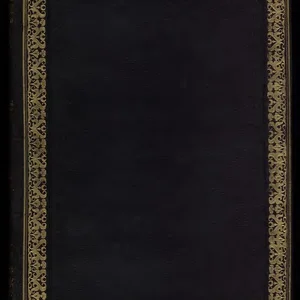
Large hardcover ledger in which Durand-Ruel meticulously recorded every purchase and sale of a painting, including the artist's name, the title of the work, the price paid, and the buyer's name. These archives are today an irreplaceable historical source on the Impressionist art market.

Printed brochure distributed at exhibitions organized by Durand-Ruel, listing the works on display with their titles, dimensions, and prices. These catalogues allowed collectors to identify paintings and place orders even after the exhibition had closed.

Oil on canvas depicting scenes of modern life, landscapes, or portraits in a style characterized by vivid brushstrokes and a keen attention to the effects of light. Durand-Ruel stored thousands of these works in his warehouses and private apartments.

Carved frame gilded with gold leaf, essential to the presentation of paintings in 19th-century galleries and salons. Durand-Ruel placed great importance on framing as a way to enhance the works of his artists in the eyes of a bourgeois clientele.

Written agreement by which Durand-Ruel committed to purchasing an artist's entire output and representing them exclusively, in exchange for a regular income. This pioneering arrangement allowed painters to work free from immediate financial concerns.

Handwritten correspondence exchanged with artists, collectors, and foreign galleries. Durand-Ruel maintained an extensive international correspondence that bears witness to his central role in the network of the modern art market.
School Curriculum
Vocabulary & Tags
Key Vocabulary
Daily Life
Morning
Durand-Ruel began his day early, going through the art and trade press. He would then head to his gallery on rue Laffitte to oversee the hanging of canvases and receive the first visitors of the day — collectors or fellow dealers — before the gallery officially opened.
Afternoon
Afternoons were devoted to visits at artists' studios and meetings with his associates. He negotiated prices, examined new works brought in by painters, and drafted his voluminous correspondence with foreign galleries and American or British collectors.
Evening
Durand-Ruel's evenings were often social affairs: dinners with wealthy collectors, private views at his gallery or at colleagues', and sometimes informal gatherings with Monet, Renoir, or Degas. He also set aside part of the evening for his accounts and for cataloguing his purchases.
Food
As a Parisian bourgeois of the second half of the nineteenth century, Durand-Ruel shared the dining habits of his class: meals taken with family or at business dinners in restaurants near the Opéra district, featuring classic French cuisine — meats, seasonal vegetables, cheese, and quality wines.
Clothing
Durand-Ruel wore the strict, elegant dress of the Parisian bourgeois merchant: a dark frock coat, a carefully knotted cravat, and a top hat for official outings. His polished appearance reflected his standing as a respected gallerist who received a well-heeled clientele.
Housing
He lived in a bourgeois apartment in the 9th arrondissement of Paris, its walls lined with the Impressionist paintings he had not yet sold. This spectacular interior, crowded with canvases by Monet, Renoir, and Degas, astonished visitors and testified to his absolute conviction in the value of these works.
Historical Timeline
Period Vocabulary
Liens externes & ressources
Références
Œuvres
Galerie Durand-Ruel, Paris (rue Laffitte)
1865
Premières expositions impressionnistes à Londres
1870-1872
Financement des expositions impressionnistes parisiennes
1876-1882
Exposition des impressionnistes à l'American Art Association, New York
1886
Galerie Durand-Ruel, New York
1888
Rétrospective impressionniste, Grafton Gallery, Londres
1905