 flip
flipHot Cancoillotte on Country Bread
Hot Cancoillotte on Country Bread
Why this dish? Born in Dole and raised in Arbois, Pasteur grew up with this melted Franche-Comté cheese that was eaten daily in modest and bourgeois families of the Jura. His sober, regular life, 'eating at fixed hours a regional cuisine,' made room for these simple local dishes. Fermented cheese also embodies, without his childhood knowledge, the work of the microorganisms he would later study.
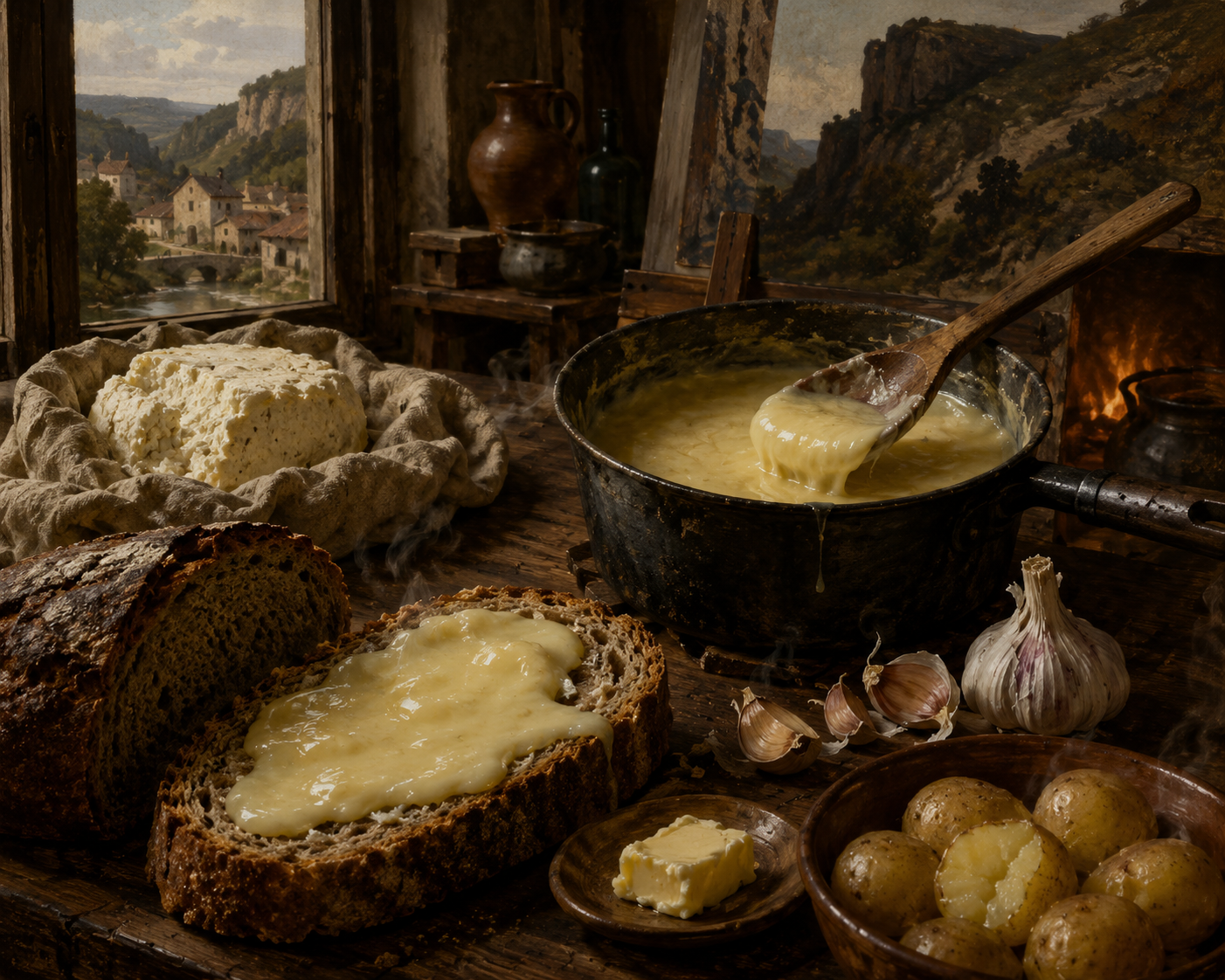
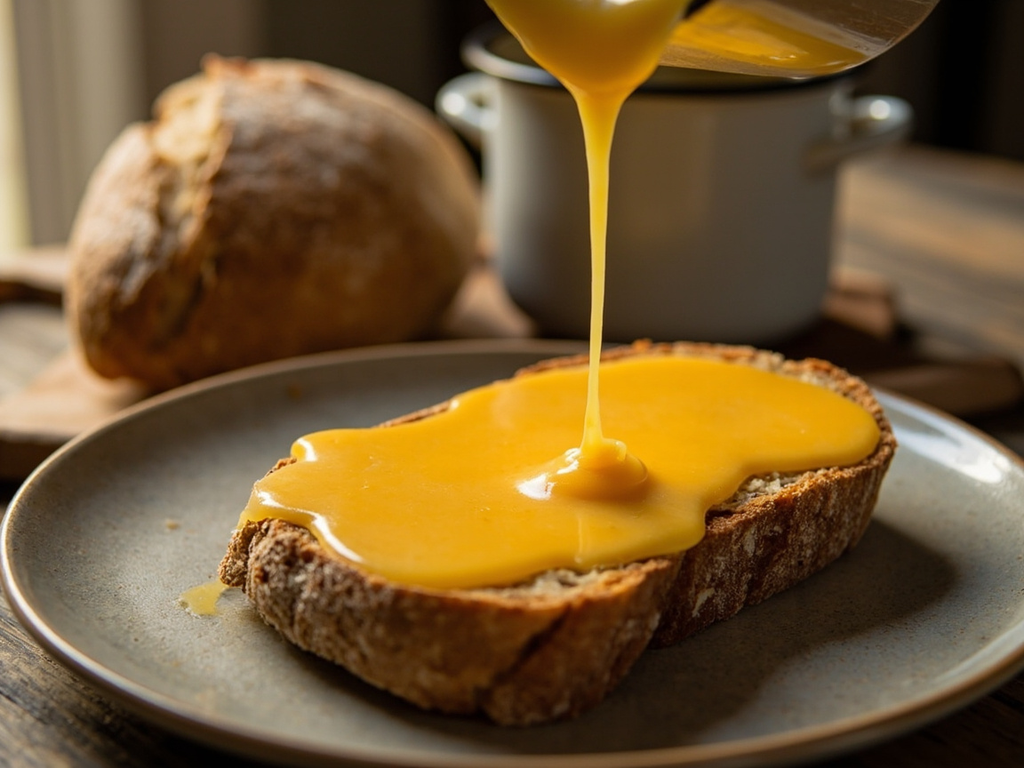
A flowing, golden cheese cream made by melting metton (aged skim-milk curds) with a little water and butter, spread piping hot on country bread. A humble, inexpensive dish deeply rooted in Franche-Comté.
You see, my friend, this is the dish of my childhood in Arbois, the one my mother would melt gently on the corner of the stove. Take well-aged metton, thin it with a drop of water and a knob of butter, and stir without pause until it runs like a golden cream. I confess, I did not know then that this cheese owed its flavor to the patient work of those invisible ferments I devoted my life to understanding. Eat it very hot on a crust of bread: no Jura table is without it.
- •Metton (aged skim-milk curds) — a good lump (fermented cheese base)
- •Spring water — a small cupful (to thin the curds)
- •Farm butter — a knob (binding and creaminess)
- •Salt — a pinch (seasoning)
- •Sourdough country bread — a few slices (base)
Hot Cancoillotte on Country Bread
A flowing, golden cheese cream made by melting metton (aged skim-milk curds) with a little water and butter, spread piping hot on country bread. A humble, inexpensive dish deeply rooted in Franche-Comté.
Why this dish? Born in Dole and raised in Arbois, Pasteur grew up with this melted Franche-Comté cheese that was eaten daily in modest and bourgeois families of the Jura. His sober, regular life, 'eating at fixed hours a regional cuisine,' made room for these simple local dishes. Fermented cheese also embodies, without his childhood knowledge, the work of the microorganisms he would later study.
You see, my friend, this is the dish of my childhood in Arbois, the one my mother would melt gently on the corner of the stove. Take well-aged metton, thin it with a drop of water and a knob of butter, and stir without pause until it runs like a golden cream. I confess, I did not know then that this cheese owed its flavor to the patient work of those invisible ferments I devoted my life to understanding. Eat it very hot on a crust of bread: no Jura table is without it.
Ingredients (period version)
- Metton (aged skim-milk curds) — a good lump (fermented cheese base)
- Spring water — a small cupful (to thin the curds)
- Farm butter — a knob (binding and creaminess)
- Salt — a pinch (seasoning)
- Sourdough country bread — a few slices (base)
Ingredients
- Metton (or plain commercial cancoillotte) — 200 g (fermented cheese base)
- Water — 5 cl (to thin)
- Butter — 20 g (creaminess)
- Garlic (optional) — 1 small clove (flavor)
- Salt — 1 pinch (seasoning)
- Sourdough country bread — 4 slices (base)
Method
- If starting from metton, put it in a small saucepan with the water and let it swell for 10 minutes.
- Heat over very low heat, stirring with a wooden spoon until you get a smooth, stringy cream.
- Stir in the butter, salt, and add crushed garlic if desired.
- Lightly toast the country bread.
- Spoon the hot cancoillotte over the bread and serve immediately, before it sets.
How it was made : In the 19th century, cancoillotte was the cheese of Franche-Comté families: skimmed milk (the butter being sold) was left to curdle and age into metton, then melted. Cheap and nourishing, it was eaten in the early morning or upon returning from the fields, kept warm on the stove.
The contemporary twist : Served in a small individual pot with steamed potatoes and a splash of vin jaune whisked in, as a nod to the scientist of fermentations.
Louis Pasteur · Charactorium