 flip
flipCongrí Oriental-Style (Rice and Black Beans)
Congrí Oriental-Style (Rice and Black Beans)
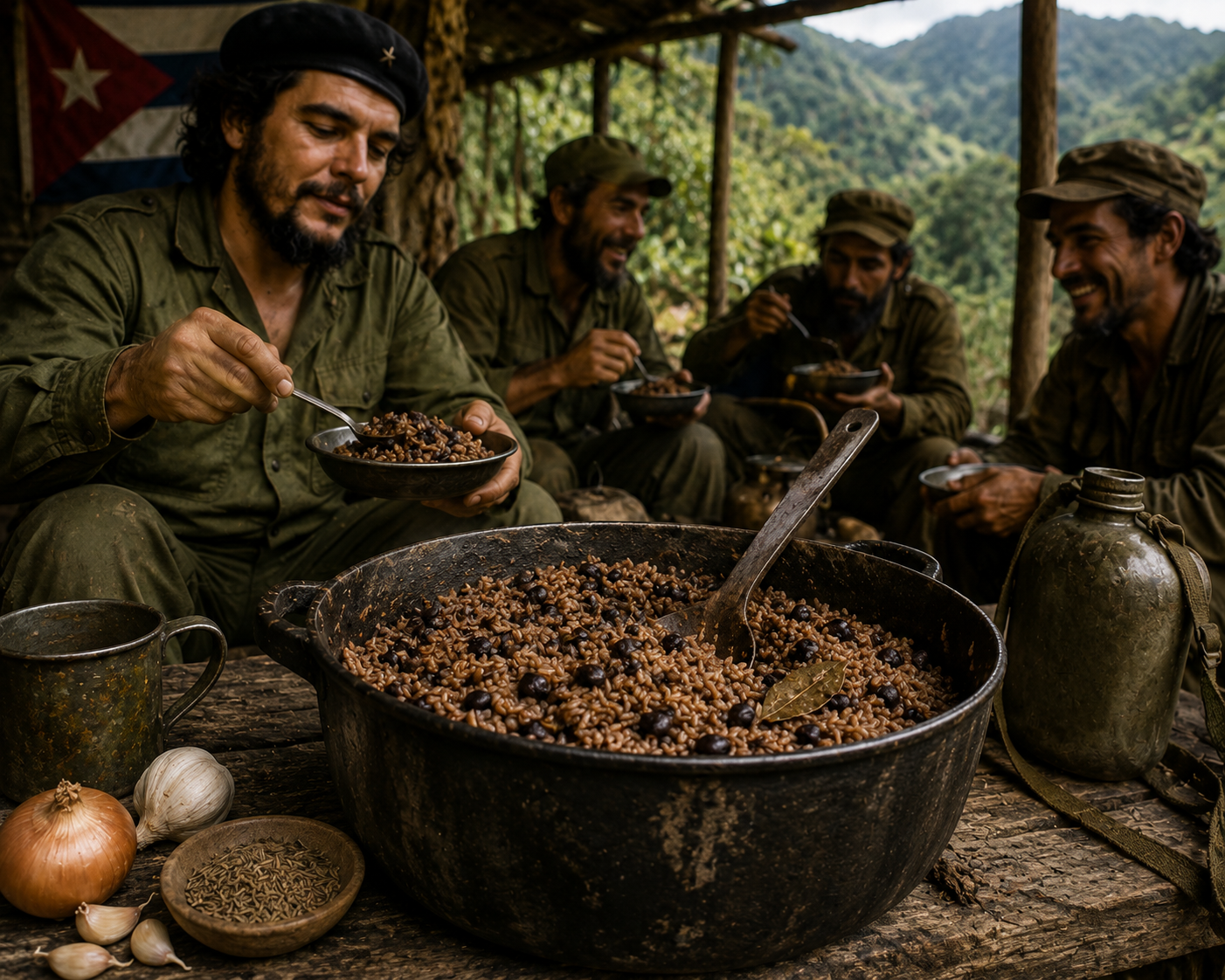
Why this dish? Cabrera herself mentions that her everyday Cuban fare mixed rice, black beans, plantains, and pork—a cross-heritage from Spain and Africa. *Congrí*, cooked in a single pot, comes from the Oriente region of the island, where the Afro-Cuban culture she studied so deeply left its mark even on the dish's name.
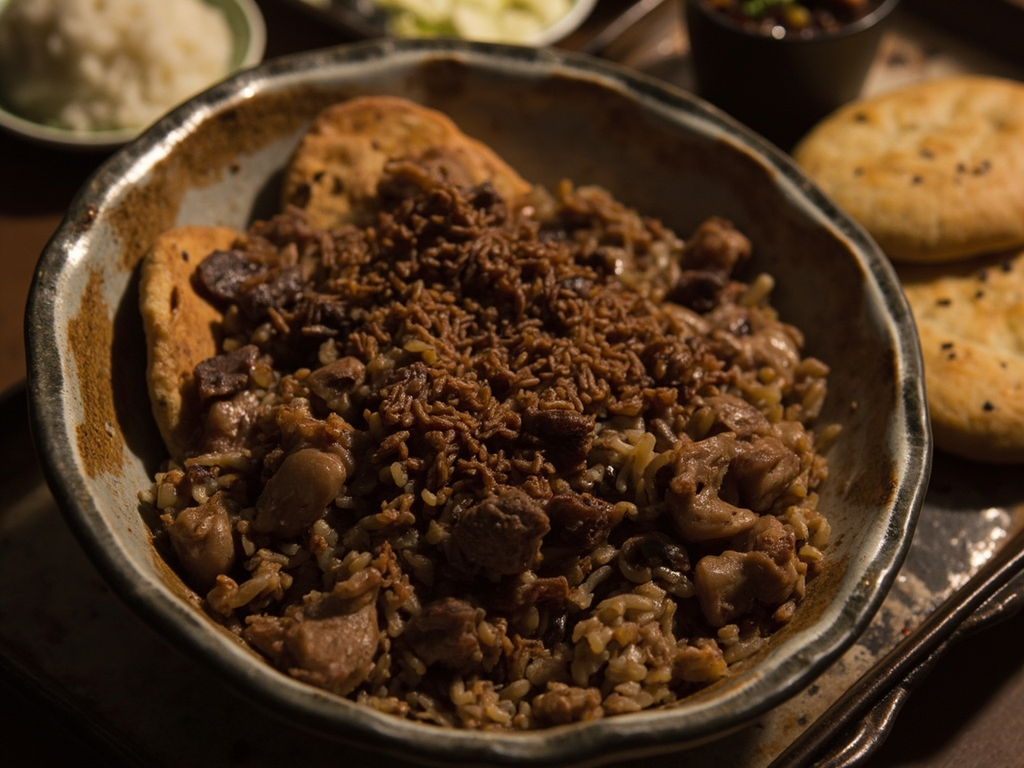
Rice and black beans cooked together in the bean broth, tinted with *sofrito* and perfumed with bacon and cumin. A grain that is both tender and well-separated, deep brown in color, serving as the heart of the meal.
Sit down, please. At home in Marianao, the *congrí* would simmer from early morning in the big cast-iron pot, and the house smelled of garlic and melted bacon all the way to the patio. My cook, who taught me more about *El Monte* than many books, swore that the rice had to be cooked in the very water of the beans—never plain water—so that the grain would take on that earthy color and all the flavor. We'd add a pinch of cumin, a bay leaf, and stir little, almost never, so as not to wound the grain. It's a humble dish, yes, but it's what holds the whole Cuban table together.
- •Dried black beans — a good bowlful (base, provides the colored broth)
- •White rice — two measures to one of beans (starchy foundation)
- •Pork fatback or bacon — a piece (fat and savor)
- •Onion, garlic, green bell pepper, tomato — as needed (aromatic *sofrito*)
- •Cumin, bay leaf, oregano — a pinch (Creole perfume)
- •Lard or oil — a few spoonfuls (for cooking the *sofrito*)
Congrí Oriental-Style (Rice and Black Beans)
Rice and black beans cooked together in the bean broth, tinted with *sofrito* and perfumed with bacon and cumin. A grain that is both tender and well-separated, deep brown in color, serving as the heart of the meal.
Why this dish? Cabrera herself mentions that her everyday Cuban fare mixed rice, black beans, plantains, and pork—a cross-heritage from Spain and Africa. *Congrí*, cooked in a single pot, comes from the Oriente region of the island, where the Afro-Cuban culture she studied so deeply left its mark even on the dish's name.
Sit down, please. At home in Marianao, the *congrí* would simmer from early morning in the big cast-iron pot, and the house smelled of garlic and melted bacon all the way to the patio. My cook, who taught me more about *El Monte* than many books, swore that the rice had to be cooked in the very water of the beans—never plain water—so that the grain would take on that earthy color and all the flavor. We'd add a pinch of cumin, a bay leaf, and stir little, almost never, so as not to wound the grain. It's a humble dish, yes, but it's what holds the whole Cuban table together.
Ingredients (period version)
- Dried black beans — a good bowlful (base, provides the colored broth)
- White rice — two measures to one of beans (starchy foundation)
- Pork fatback or bacon — a piece (fat and savor)
- Onion, garlic, green bell pepper, tomato — as needed (aromatic *sofrito*)
- Cumin, bay leaf, oregano — a pinch (Creole perfume)
- Lard or oil — a few spoonfuls (for cooking the *sofrito*)
Ingredients
- Dried black beans — 250 g (soaked overnight) (base and broth)
- Long-grain rice — 300 g (starchy foundation)
- Smoked bacon or pork belly — 120 g (fat and savor)
- Onion — 1 large (*sofrito*)
- Garlic — 4 cloves (*sofrito*)
- Green bell pepper — 1 (*sofrito*)
- Ripe tomato — 1, or 1 tbsp tomato paste (*sofrito*)
- Ground cumin — 1 tsp (perfume)
- Bay leaf — 1 leaf (perfume)
- Olive oil — 3 tbsp (cooking)
- Salt — to taste (seasoning)
Method
- Cook the soaked black beans in a large pot of unsalted water until tender (45–60 min). Reserve both the beans AND their black cooking water.
- In a Dutch oven, render the bacon, then add finely chopped onion, bell pepper, and garlic. When they soften, add the tomato, cumin, and bay leaf: this is the *sofrito*.
- Add the rinsed rice, stir to coat in the *sofrito* for 1 minute.
- Measure twice the volume of bean cooking water (top up with water if needed) and add it, along with the beans and salt.
- Bring to a boil, then reduce to the lowest heat, cover, and cook without stirring for 18–20 minutes, until the liquid is absorbed.
- Turn off the heat, let rest covered for 10 minutes, then fluff gently with a fork.
How it was made : Originally, everything was cooked over charcoal in a cast-iron *caldero*, and lard (*manteca*) was used instead of oil. The distinction remains strong in Cuba: *congrí* (Oriente, red or black beans cooked WITH the rice) is not quite the same as *moros y cristianos* from the West (black beans cooked separately then mixed with white rice).
The contemporary twist : Serve it unmolded from a cup into a dome, topped with a little shredded pork and raw marinated onion, to wake up the grain with a tangy note.
Lydia Cabrera · Charactorium