
An American computer scientist and engineer, Lynn Conway revolutionized integrated circuit design by co-developing VLSI design rules with Carver Mead. A pioneer of superscalar processor architecture, she also made history as a transgender woman who rebuilt a brilliant career after being fired from IBM.
Lynn Conway(1938 — 2024)
Lynn Conway
États-Unis
7 min read
Frequently asked questions
Key Facts
- 1938: born in White Plains, New York
- 1964–1968: works at IBM and develops the foundations of superscalar processor architecture
- 1968: fired from IBM after announcing her gender transition, she starts over under a new identity
- 1979–1980: co-publishes with Carver Mead Introduction to VLSI Systems, a foundational text in modern integrated circuit design
- 2024: dies on June 9, recognized worldwide as a pioneer of computer science
Works & Achievements
A technique invented at IBM allowing processors to reorder the execution of instructions to maximize their speed. This foundational principle is now found in virtually every modern processor, from smartphones to supercomputers.
A set of standardized rules for designing complex integrated circuits in a portable and accessible way, transforming microelectronics from an art reserved for large industrial corporations into an open academic discipline.
The foundational textbook on integrated circuit design, used in hundreds of universities around the world. It revolutionized the teaching of microelectronics and remains an essential historical reference.
Lynn Conway was one of the architects of the Metal Oxide Semiconductor Implementation Service, which allowed universities and small companies to have their own chips manufactured at reduced cost, democratizing innovation in electronics.
As chief architect at DARPA, Lynn Conway oversaw the funding and direction of research into advanced circuit design, accelerating the development of the American semiconductor industry.
Anecdotes
In 1968, IBM fired Lynn Conway overnight when she announced her gender transition. She lost not only her job, but her contributions to computer science were erased from IBM's internal records. Forced to start over under a new identity, she rebuilt a brilliant career — proving that talent always finds a way.
When Lynn Conway and Carver Mead introduced their VLSI design rules in 1979–1980, they issued an unprecedented challenge: university students would design their own chips and have them actually manufactured. Several dozen circuits worked on the very first try — considered a remarkable feat in the semiconductor industry at the time.
At IBM in the 1960s, Lynn Conway invented a fundamental technique called dynamic instruction scheduling, which allows processors to reorder calculations to speed up execution. Ironically, for decades no one knew she was the true inventor — her work had been reassigned after her wrongful dismissal.
In 1998, Lynn Conway decided to publicly reveal her story and her past identity. Her decision sparked a worldwide awakening: a major pioneer of electronics had lived in the shadows for thirty years. IBM ultimately issued her an official apology in 2020 for having wrongfully dismissed her.
The MOSIS service, which Lynn Conway helped architect starting in 1979, allowed universities and small companies to have their own integrated circuits manufactured affordably for the first time. Before this initiative, only large industrial groups could afford to produce chips — MOSIS literally democratized invention in microelectronics.
Primary Sources
Scalable design rules provide a powerful way to specify the geometry of VLSI circuits in a process-independent manner, so that designs can be ported from one process generation to the next without redesign.
We had to find a way to break down the barriers between chip designers and chip fabrication, to make chip design accessible to university researchers and system designers who were not semiconductor process specialists.
I was fired by IBM in 1968, after telling my management that I intended to change my sex. In order to survive, I had to hide my past and begin a new life.
Key Places
Lynn Conway's birthplace in 1938, located in the northern suburbs of New York City.
Laboratory where Lynn Conway worked from 1964 to 1968, notably developing dynamic instruction scheduling, before being fired due to her gender transition.
The legendary research center where Lynn Conway worked starting in 1973 and co-developed with Carver Mead the VLSI design rules that revolutionized microelectronics worldwide.
University where Lynn Conway taught starting in 1985, training generations of microelectronics engineers while continuing her research on integrated circuit design.
The advanced research agency of the U.S. Department of Defense where Lynn Conway served as chief architect of computing systems from 1983 to 1985.
Typical Objects

The everyday working tool of engineers from the 1960s through the 1980s. Lynn Conway used it to design, simulate, and test processor architectures and integrated circuit schematics.

A thin disk of pure silicon onto which thousands of integrated circuits are etched. Lynn Conway spent her entire career optimizing how to design and manufacture these fundamental components.

The book co-written with Carver Mead in 1980, which became the worldwide bible of integrated circuit design and was used in hundreds of universities for decades.

A transparent plate etched with ultra-fine patterns used to print circuits onto silicon. Lynn Conway helped standardize the design of these masks through scalable VLSI design rules.
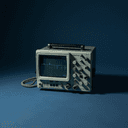
A measuring instrument that displays electrical signals as waveforms. An essential tool for verifying that the circuits designed by Lynn Conway and her teams functioned correctly.

An analog calculation tool used by engineers before the era of electronic calculators. Lynn Conway relied on it during her early years of study and work at IBM in the 1960s.
School Curriculum
Vocabulary & Tags
Key Vocabulary
Tags
Daily Life
Morning
In the 1970s–1980s at Xerox PARC and later at the University of Michigan, Lynn Conway started her day early, often by 7 a.m., reviewing students' work or browsing the latest scientific publications. She would arrive at the lab with her notes and circuit diagrams ready to discuss with the team.
Afternoon
Her afternoons were devoted to circuit design and simulation at a computer terminal, research meetings, and lecturing in the classroom. Collaboration with Carver Mead involved frequent exchanges between Palo Alto and partner universities to validate the new VLSI design rules.
Evening
In the evenings, Lynn Conway wrote scientific articles and chapters for her textbook. An outdoor enthusiast and thrill-seeker, she practiced sports such as skiing and hang gliding, which allowed her to recharge far from screens and laboratories.
Food
Like most American researchers of the era, Lynn Conway kept a practical diet — sandwiches and coffee from the lab cafeteria at lunch, simple home-cooked meals in the evening. Long work sessions were often fueled by large amounts of black coffee.
Clothing
As an engineer and professor on California and later Michigan campuses, Lynn Conway favored a smart-casual style: blouses, trousers, and light jackets, typical of the informal atmosphere of 1970s–1980s research labs.
Housing
Lynn Conway first lived in the suburbs of Palo Alto, California, then settled in the Ann Arbor, Michigan area after her university appointment. She lived in a single-family house with a garden, in the quiet residential setting typical of American university neighborhoods.
Historical Timeline
Period Vocabulary
Liens externes & ressources
Références
Œuvres
Ordonnancement dynamique des instructions (Dynamic Instruction Scheduling)
1965–1968
Règles de conception VLSI scalables (avec Carver Mead)
1979
Introduction to VLSI Systems (avec Carver Mead, Addison-Wesley)
1980
Contribution à la création du service MOSIS
1979–1981
Programme de recherche VLSI au DARPA
1983–1985