 flip
flipPlakoûs with Fresh Cheese and Honey
Plakoûs with Fresh Cheese and Honey
Why this dish? Honey and cheese cakes (plakoûs) were placed on altars as offerings to the gods. For Maia, the most beautiful and eldest of the Pleiades, honored in Arcadian sanctuaries, such a cake evokes the first fruits and sweets that the faithful left near Cyllene.
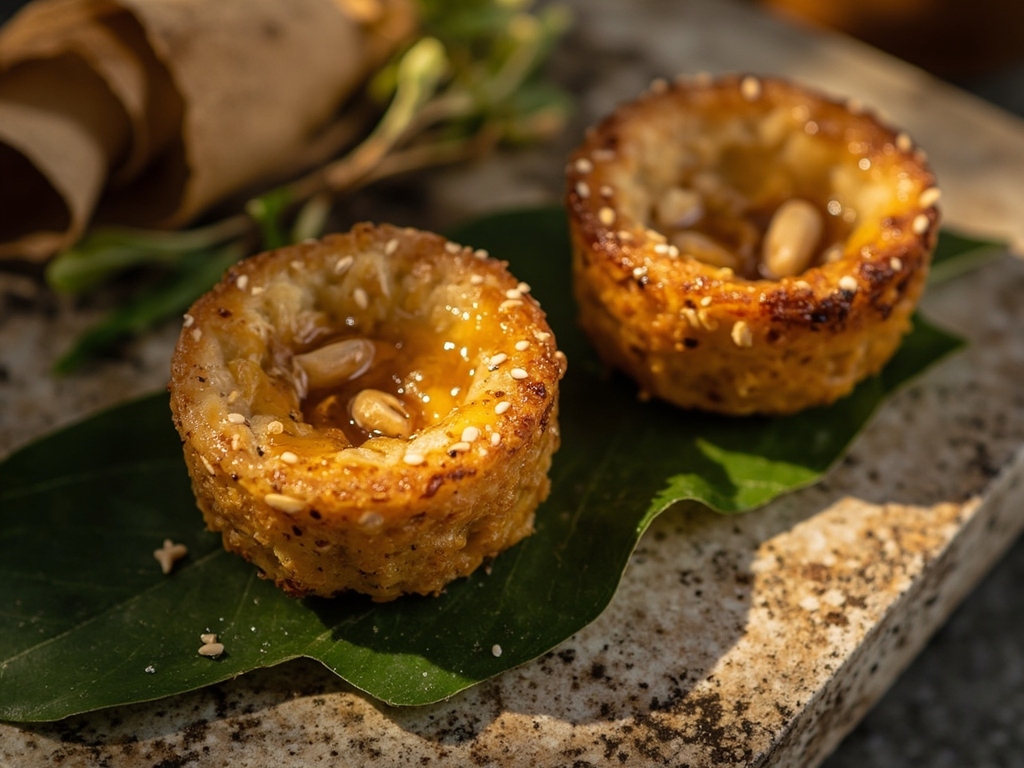
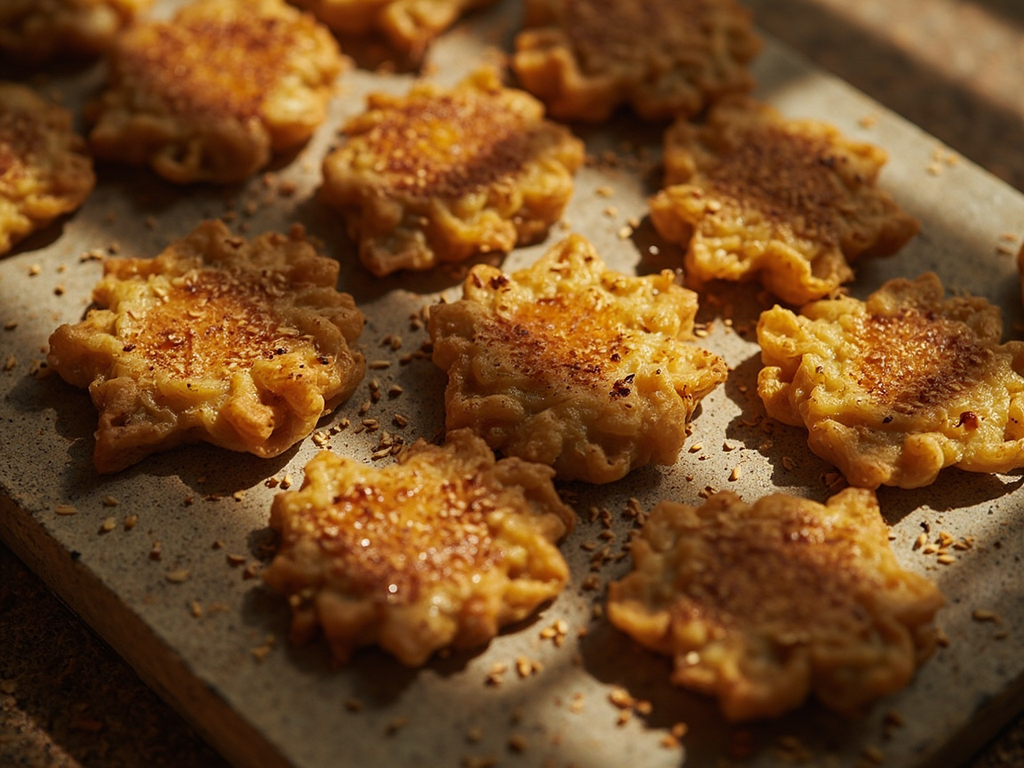
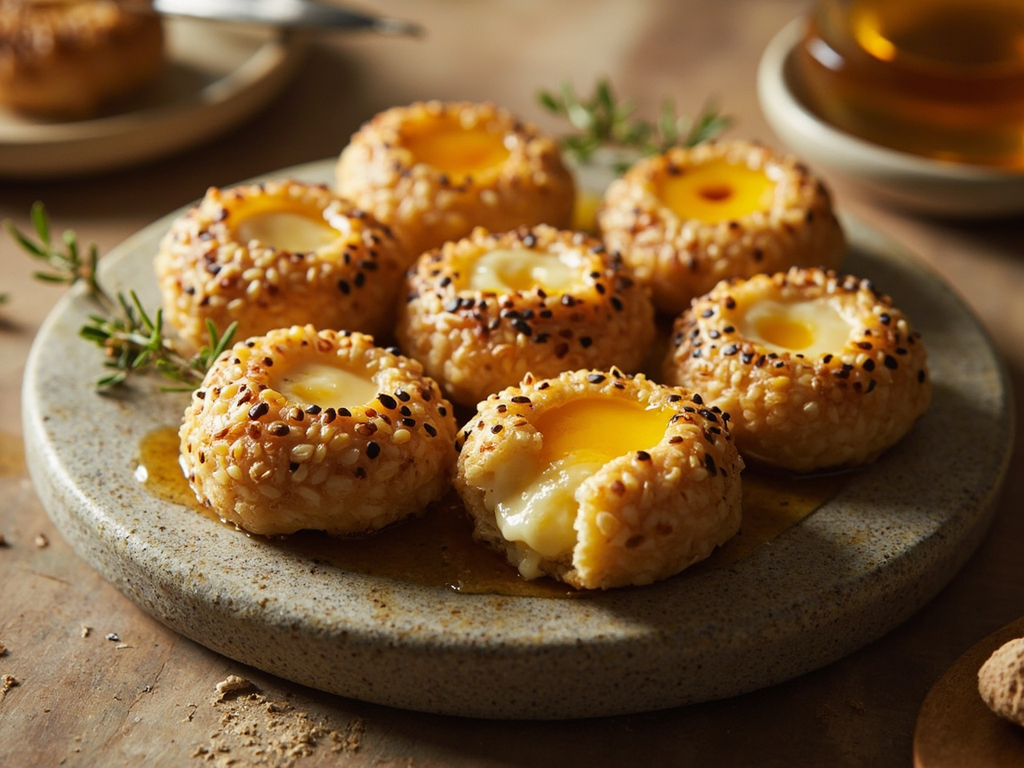
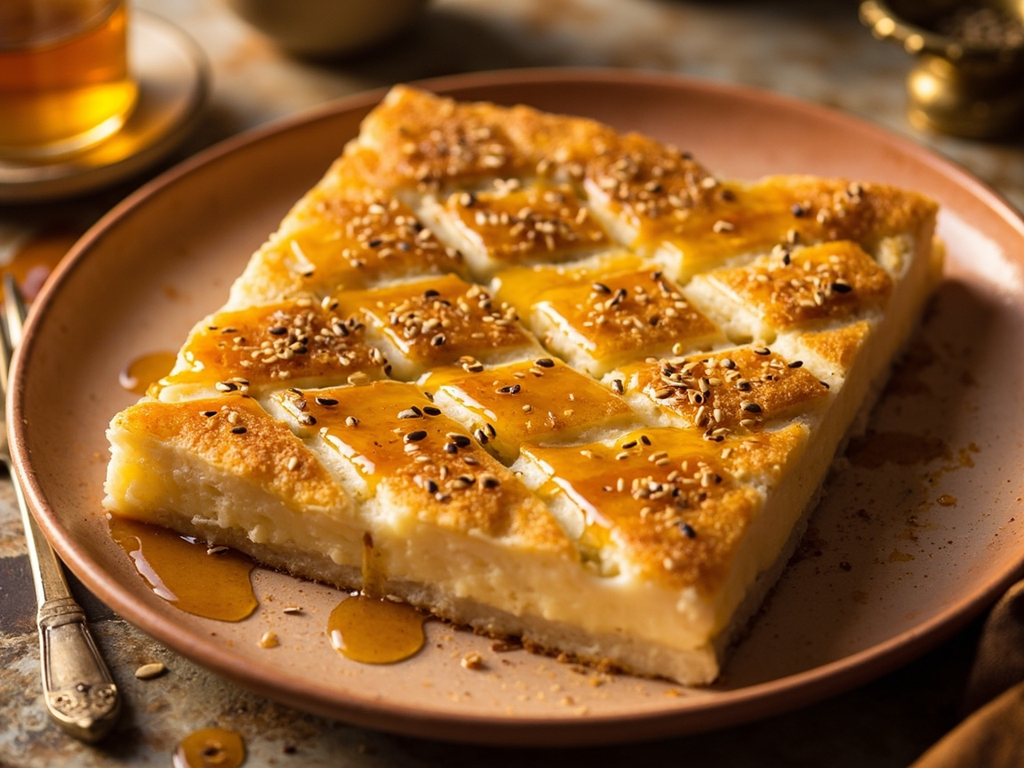
A flat cake of thin pastry layers, filled with fresh cheese beaten with honey, golden from the oven: the Greek ancestor of the sweet tart, halfway between sacred offering and banquet centerpiece.
When the Arcadians wished to honor me, they did not come empty-handed: they beat the fresh cheese of their goats with my mountain honey, enclosed it between leaves of dough thin as a veil, and let the ember oven brown it all. Know, you who prepare it, that sweetness is the language of love between mortals and us: a honey cake is worth many words. Place it on the altar, or share it at your table—in either case, you honor the Pleiades.
- •Fresh goat or sheep cheese — a good lump (filling)
- •Arcadian thyme honey — abundant (sweetener and binder)
- •Wheat flour — as needed (pastry leaves)
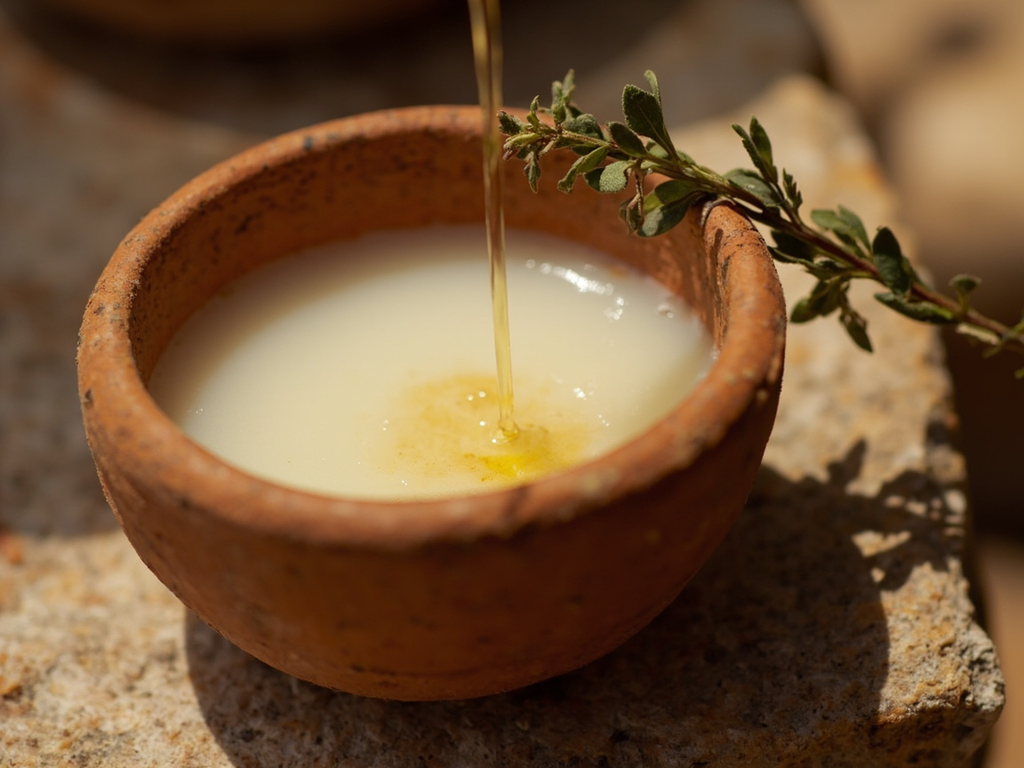
- •Olive oil — a little (greasing the leaves)
- •Sesame or poppy seeds — a pinch (fragrant decoration)
Plakoûs with Fresh Cheese and Honey
A flat cake of thin pastry layers, filled with fresh cheese beaten with honey, golden from the oven: the Greek ancestor of the sweet tart, halfway between sacred offering and banquet centerpiece.
Why this dish? Honey and cheese cakes (plakoûs) were placed on altars as offerings to the gods. For Maia, the most beautiful and eldest of the Pleiades, honored in Arcadian sanctuaries, such a cake evokes the first fruits and sweets that the faithful left near Cyllene.
When the Arcadians wished to honor me, they did not come empty-handed: they beat the fresh cheese of their goats with my mountain honey, enclosed it between leaves of dough thin as a veil, and let the ember oven brown it all. Know, you who prepare it, that sweetness is the language of love between mortals and us: a honey cake is worth many words. Place it on the altar, or share it at your table—in either case, you honor the Pleiades.
Ingredients (period version)
- Fresh goat or sheep cheese — a good lump (filling)
- Arcadian thyme honey — abundant (sweetener and binder)
- Wheat flour — as needed (pastry leaves)
- Olive oil — a little (greasing the leaves)
- Sesame or poppy seeds — a pinch (fragrant decoration)
Ingredients
- Fresh goat cheese (or sheep ricotta) — 250 g (filling)
- Thyme or heather honey — 5 tbsp (+ for drizzling) (sweetener)
- Phyllo dough or thin pastry sheets — 6 sheets (layers)
- Extra virgin olive oil — 3 tbsp (brush)
- Sesame seeds — 1 tbsp (decoration)
Method
- Preheat the oven to 180 °C (350 °F).
- Beat the fresh cheese with 4 tablespoons of honey until smooth.
- Oil a mold, lay down 3 sheets of dough, brushing each with oil.
- Spread the honey-cheese cream, cover with the remaining 3 sheets, also oiled.
- Sprinkle with sesame seeds, bake for 25–30 minutes until nicely golden.
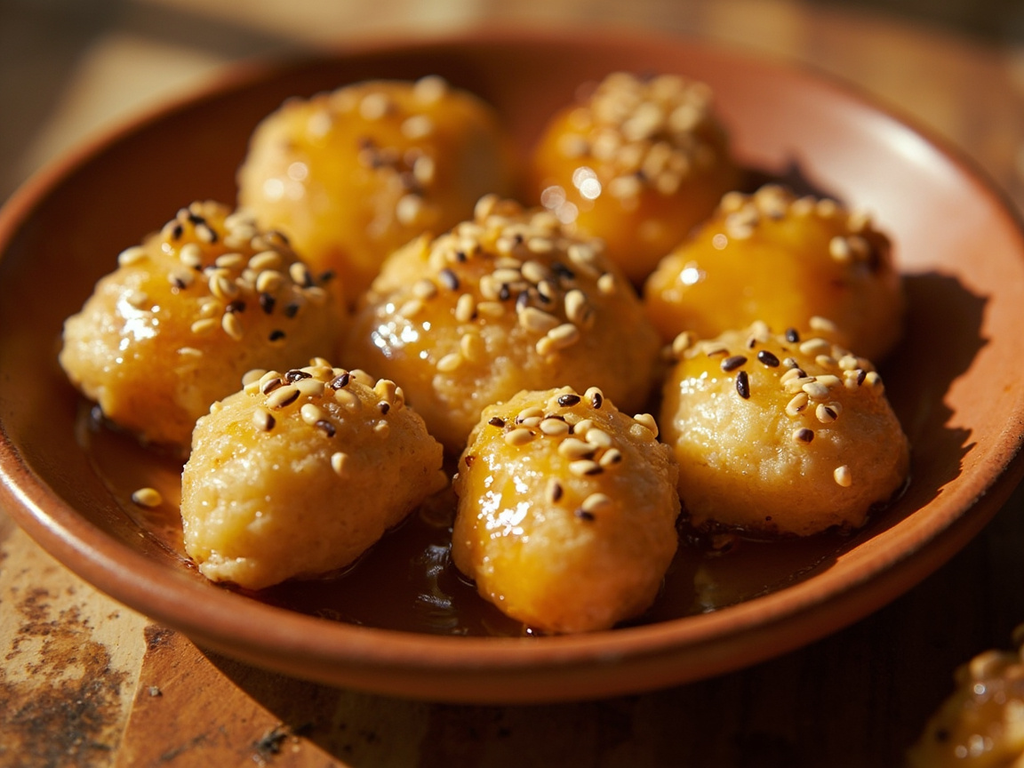
- Upon removal, drizzle with warm honey and let cool slightly before cutting into diamonds.
How it was made : Plakoûs ('flat thing') in Greek sources denotes a family of cakes made with layers of dough, cheese, and honey; Cato the Elder later transmitted a detailed Roman version, the placenta. It was cooked on a hearth or under a bell of embers (testum), as closed ovens were rare among private households.
The contemporary twist : Serve warm with a few spring edible flower petals (violet, primrose) as a nod to the 'spring flowers' and first fruits offered to Maia.
Sources : Cato the Elder, De Agri Cultura, ch. 76 (placenta, heir to the Greek plakoûs) · Athenaeus of Naucratis, The Deipnosophists, Book XIV (catalogue of cakes)
Maia · Charactorium