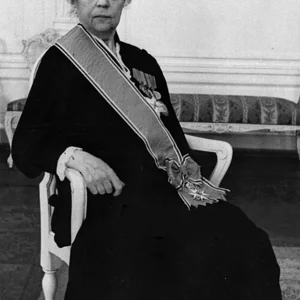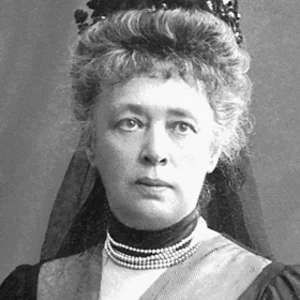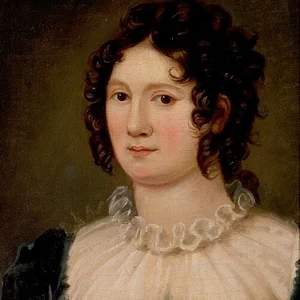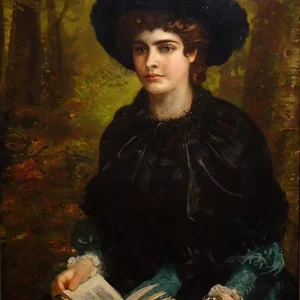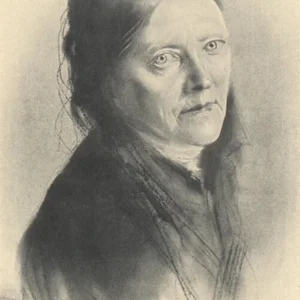

German writer and intellectual, a figure of feminism and the democratic ideals of 1848. After the revolution failed she emigrated, hosted a cosmopolitan salon, and was a close friend of Wagner, Nietzsche, and Romain Rolland.
Malwida von Meysenbug(1816 — 1903)
Malwida von Meysenbug
Allemagne, royaume de Prusse
6 min read
Frequently asked questions
Key Facts
- Born in 1816 in Kassel into a family of Huguenot nobility in the service of the Landgrave of Hesse
- Took part in the democratic ideals of the 1848 revolution, then went into exile, notably in London and Italy
- Published her memoirs, *Memoirs of an Idealist* (Memoiren einer Idealistin), between 1869 and 1876
- Hosted a salon in Rome where Friedrich Nietzsche, Paul Rée, and Lou Andreas-Salomé met in 1882
- Died in 1903 in Rome
Works & Achievements
Her major work, an autobiography first published anonymously, which became a classic of the literature of female and democratic emancipation.
A collection of stories and reflections in which she blends memories, landscapes, and meditations on art and the inner life.
A novel in which she revisits psychological and moral themes, showcasing her literary ambition beyond autobiography.
A late sequel to her memoirs, in which she looks back on her friendships with Nietzsche, Wagner, and Rolland and takes stock of her ideals.
A practical commitment as an educator within the family of the Russian refugee, putting into practice her convictions about the education of women.
A meeting place for generations of European artists and thinkers, where she played the role of a bridge between the age of revolutions and the Belle Époque.
Anecdotes
As an adolescent in Kassel, Malwida refused Lutheran religious confirmation because she could not bear the idea that only Christians could be saved. This early act of rebellion against intolerance foreshadowed her entire life as a free spirit.
After the failure of the 1848 revolution, she had to go into exile and found refuge in London, where she mingled with the great European political refugees such as Alexander Herzen, the eminent Russian publicist, whose daughters she raised.
She was one of the very first students at the Hochschule für das weibliche Geschlecht (the College for the Female Sex) in Hamburg, a pioneering institution that sought to give women a genuine intellectual education.
Nietzsche regarded her as an almost maternal figure: it was partly at her invitation that he stayed in Sorrento in 1876-1877, in a “colony” of friends where he began to develop the ideas of “Human, All Too Human.”
Elderly and nearly blind at the end of her life in Rome, she became the confidante and mentor of the young Romain Rolland, who saw in her a living link to the Europe of Wagner and Mazzini.
Primary Sources
I want to tell the story of a woman's soul that, through many errors and struggles, gradually attained inner clarity and freedom.
Sorrento did us all good; I think with gratitude of those days spent under your protection.
The older I grow, the more I feel how the ideals of my youth, far from fading, shine with an ever purer light.
She was the living link between us and a whole world of vanished heroes and thinkers, Wagner, Mazzini, Herzen.
Key Places
Malwida's birthplace, where she grew up in a noble Protestant household and where her political consciousness first awakened.
Where she attended the Hochschule für das weibliche Geschlecht, a pioneering school for women's education, and joined democratic circles.
A place of exile after 1848, where she lived among political refugees and raised the daughters of Alexander Herzen.
Where, in 1876-1877, she gathered a “colony” of friends around Nietzsche, a place of intense philosophical reflection.
The heart of the Wagnerian cult, where she witnessed the birth of the festival alongside Richard Wagner.
The city where she settled from 1877 onward, held a cosmopolitan salon, and died in 1903.
Typical Objects

Her multi-volume autobiography, first published anonymously, which became a manifesto of women's emancipation and democratic idealism.

The everyday instruments of this tireless writer and letter-writer, who kept up an immense correspondence with the thinkers of her time.

Bundles of letters exchanged with Wagner, Nietzsche, Herzen and Romain Rolland, preserving the memory of an entire European intellectual network.

The social space where she gathered artists, philosophers and exiles; the salon was the very tool of her intellectual influence.

A devoted friend of Wagner, she followed his music passionately; the scores and the Bayreuth Festival embody this artistic bond.

Like the cultured women of the 19th century, she wore plain, dark garments, a mark of austere dignity rather than vanity.
School Curriculum
Vocabulary & Tags
Key Vocabulary
Daily Life
Morning
The morning of a woman of letters like Malwida was devoted to writing and reading, in the quiet of a study. She would reread the European newspapers and answer her abundant correspondence.
Afternoon
The afternoon could be given over to walks, visits, and the education of the young girls in her care. In Rome, she loved to wander through the gardens and ancient ruins.
Evening
In the evening, her salon brought together friends, exiles, and artists for conversations about politics, philosophy, and music. There, people read texts aloud, listened to the piano, and debated the ideals of the age.
Food
Her diet was that of the cultivated European classes of the 19th century, plain and regular: bread, soups, vegetables, fruit, and Italian specialties once she had settled in Rome. Tea, a habit inherited from her London exile, accompanied her conversations.
Clothing
She wore the plain, dark outfits of the intellectual women of her time, far from the splendors of fashion: long dresses, a shawl, and a simple hairstyle, the mark of a serious dignity.
Housing
She lived in modest but welcoming apartments, first in London among the exiles, then in Rome, where her home served as a salon and a refuge for her many friends passing through.
Historical Timeline
Period Vocabulary
Liens externes & ressources
Références
Œuvres
Mémoires d'une idéaliste (Memoiren einer Idealistin)
1869-1876
Stimmungsbilder (Tableaux d'atmosphère / Impressions)
1879
Phädra (Phèdre)
1885
Der Lebensabend einer Idealistin (Le Soir de la vie d'une idéaliste)
1898
Éducation des filles d'Alexander Herzen
années 1850
Salon intellectuel de Rome
1877-1903