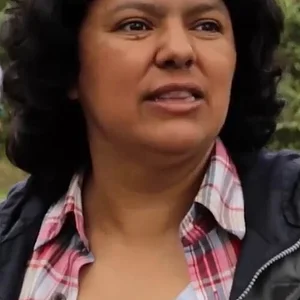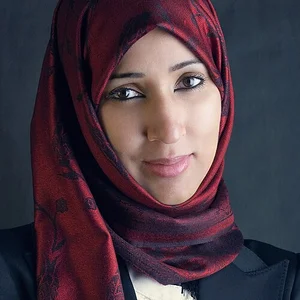

Saudi women's rights activist who rose to international prominence in 2011 after posting a video of herself driving in Saudi Arabia, defying the ban imposed on women. Her arrest sparked a global movement for women's right to drive.
Manal al-Sharif(1979 — ?)
Manal al-Sharif
Arabie saoudite
7 min read
Frequently asked questions
Famous Quotes
« It's not about driving. It's about freedom.»
Key Facts
- 2011: she posts a video of herself driving in Saudi Arabia and is arrested
- 2011: launch of the Women2Drive campaign on social media
- 2013: she receives the Oslo Freedom Forum Award
- 2018: Saudi Arabia officially lifts the driving ban for women
- 2017: publication of her autobiography 'Daring to Drive'
Works & Achievements
The founding act of her activism: filmed by her brother, Manal drives and comments on the situation of Saudi women. Viewed millions of times, the video sparked the Women2Drive movement.
A civil disobedience movement organized on social media, calling on Saudi women to get behind the wheel on June 17, 2011. The first Saudi feminist campaign to achieve international reach.
Manal al-Sharif received the Václav Havel Prize at the Oslo Freedom Forum and delivered a widely noted speech on nonviolent civil disobedience and digital activism.
An internationally broadcast talk in which she shares her journey and calls for Arab women to be recognized as agents of their own emancipation.
An autobiography translated into numerous languages, tracing her childhood in Mecca, her feminist awakening, and her fight for the right to drive. A landmark work on contemporary Saudi feminism.
An organization supporting Saudis in the diaspora and human rights activists, established from Australia to maintain international pressure on the kingdom.
Anecdotes
On May 19, 2011, Manal al-Sharif got behind the wheel in Khobar, Saudi Arabia, while her brother filmed the scene. She posted the video on YouTube that same evening. Within 24 hours, it had been viewed millions of times around the world, before Saudi authorities had it taken down.
Arrested two days after posting the video, Manal was held for nine days in a women's prison. During her detention, her colleagues at Saudi Aramco — the national oil company where she worked as a cybersecurity expert — organized a petition calling for her release.
Before taking action, Manal al-Sharif had drawn inspiration from Rosa Parks, the American woman who refused to give up her seat on a bus in 1955. She would later say: “I wanted to be the Saudi Rosa Parks.” This reference to the American civil rights movement allowed her to connect her struggle to a universal history of activism.
After her release, Manal was forced to sign a document promising never to drive again and not to speak to the press. She nevertheless left Saudi Arabia a few years later and settled in Australia, from where she continued her activism on an international scale, including founding an organization to support women across the Arab world.
On June 24, 2018, Saudi Arabia officially lifted the ban on women driving. Manal al-Sharif, then in Australia, learned the news from afar. She savored the victory but lamented that several activists who had fought the same battle — including Loujain al-Hathloul — had been arrested just weeks before the ban was lifted, in May 2018.
Primary Sources
I was not only fighting for the right to drive. I was fighting for the right to exist as a full human being — to make my own choices, to live my own life.
The day I got behind the wheel was the day I stopped being afraid. Fear is the real prison, not the cell they put me in.
We, Saudi women, demand the right to drive on our own land, in accordance with the rights recognized by sharia law and our country's international commitments.
I was arrested not because I had broken the law, but because I had dared to show that the law was unjust. I regret nothing.
Social media gave us a weapon that no autocracy had faced before: the ability to show the world what they were trying to hide. My camera was my most powerful tool.
Key Places
Manal al-Sharif's birthplace, a holy city of Islam where she grew up in a conservative religious environment she would come to question as an adult.
A city in the Eastern Province where Manal al-Sharif lived and worked in 2011, and where she took the wheel to film her landmark video on the coastal road.
Manal al-Sharif worked here as a cybersecurity specialist. It was in this professional setting that she developed the digital skills she would turn into tools for activism.
Where Manal al-Sharif was held for nine days in May 2011 following the release of her video. Her imprisonment sparked an international wave of solidarity.
The city where Manal al-Sharif settled in exile from 2013 onward, continuing her fight for Saudi women's rights from abroad.
Typical Objects

Manal al-Sharif used her phone to film and broadcast her driving video in 2011. Without this tool, her act of civil disobedience would never have had international resonance.

The central symbol of her struggle, the steering wheel represents the physical autonomy and freedom of movement denied to Saudi women. Her hand on the wheel became an iconic activist image.

A black full-body garment required of women in public spaces in Saudi Arabia. Manal wears it in her video, visually grounding her act within the Saudi cultural context.

As a cybersecurity expert at Saudi Aramco, Manal al-Sharif worked with computers daily — a professional background that also sharpened her command of digital broadcasting tools.

Manal held an international license obtained outside Saudi Arabia, yet legally unusable for a woman on Saudi soil — a paradox that lays bare the absurdity of the ban she was fighting.

YouTube was the platform through which the video spread. Twitter and Facebook then amplified the Women2Drive movement — Manal was among the first Arab activists to use these tools strategically.
School Curriculum
Vocabulary & Tags
Key Vocabulary
Tags
Daily Life
Morning
In 2011, Manal al-Sharif rises early in Khobar, prepares her son for school, then puts on her abaya and veil to go out. To get to work at Saudi Aramco, she depends on a driver or a male relative — a daily constraint shared by all Saudi women.
Afternoon
In Aramco's cybersecurity office, she works on computer systems, writes security analyses, and coordinates with colleagues. It is in this mixed-gender professional environment — rare in Saudi Arabia — that she becomes acutely aware of the gap between her recognized skills and her limited rights.
Evening
In the evenings, she returns home waiting for a man to agree to drive her. She browses the internet, follows the events of the Arab Spring on Twitter, and exchanges messages with activists across the Arab world. It is during these evenings that she conceives and plans her action of May 19, 2011.
Food
Traditional Saudi cuisine: saffron rice (*kabsa*), flatbread (*khubz*), dates, cardamom tea. Family meals hold a central place, often taken with men and women eating separately in more conservative households.
Clothing
Wearing the black abaya is mandatory in public spaces, usually accompanied by the niqab or hijab depending on the family. In her 2011 video, Manal wears her abaya while driving — this visual detail underscores that her act does not challenge cultural dress codes, but the injustice of a single law.
Housing
An apartment in a residential neighborhood of Khobar, a modern city in the oil-rich Eastern Province. Women there live under the male guardianship system (*mahram*): they cannot rent a home on their own, open a bank account without authorization, or travel without a document signed by a male relative.
Historical Timeline
Period Vocabulary
Liens externes & ressources
Références
Œuvres
Campagne Women2Drive
2011
Discours à l'Oslo Freedom Forum
2012
Conférence TED « A Saudi woman who dared to drive »
2013
Daring to Drive: A Saudi Woman's Awakening (mémoire)
2017
Fondation de l'association SEAT (Saudi Expat Association for Transparency)
2015