 flip
flipSunday Roast Beef and Yorkshire Pudding
Sunday Roast Beef and Yorkshire Pudding
Why this dish? The Sunday roast is the family institution of 20th-century England, the meal that brings everyone together after church. For a Methodist and patriotic Lincolnshire family like Thatcher's, this Sunday lunch embodied order, tradition and national pride.
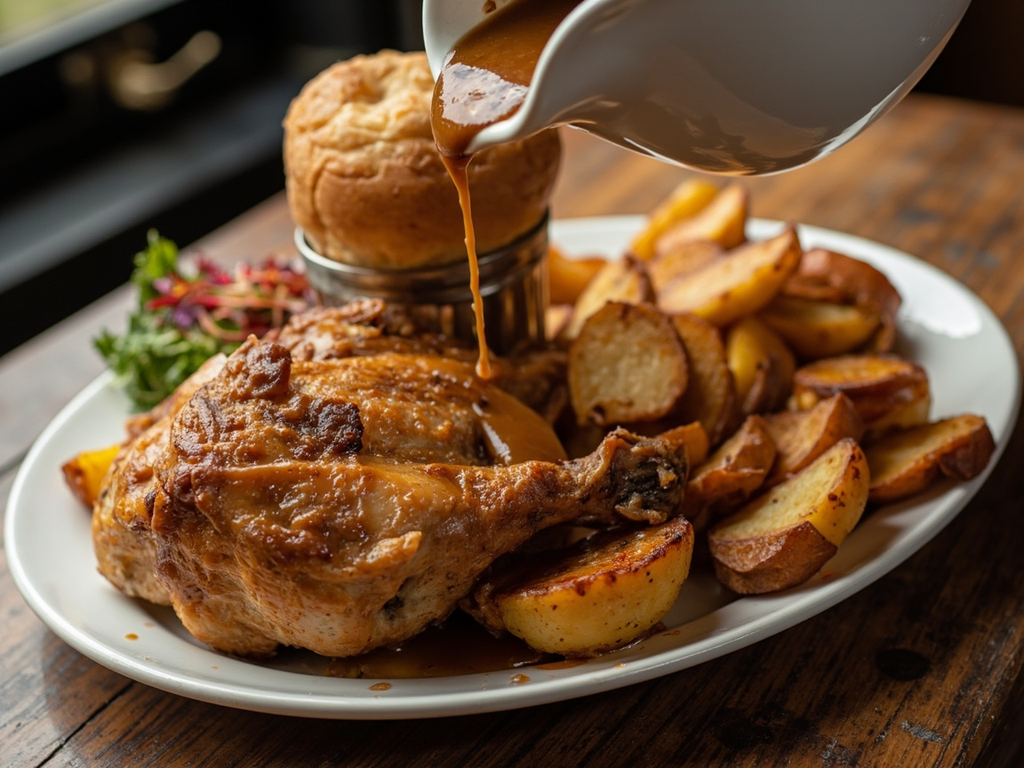
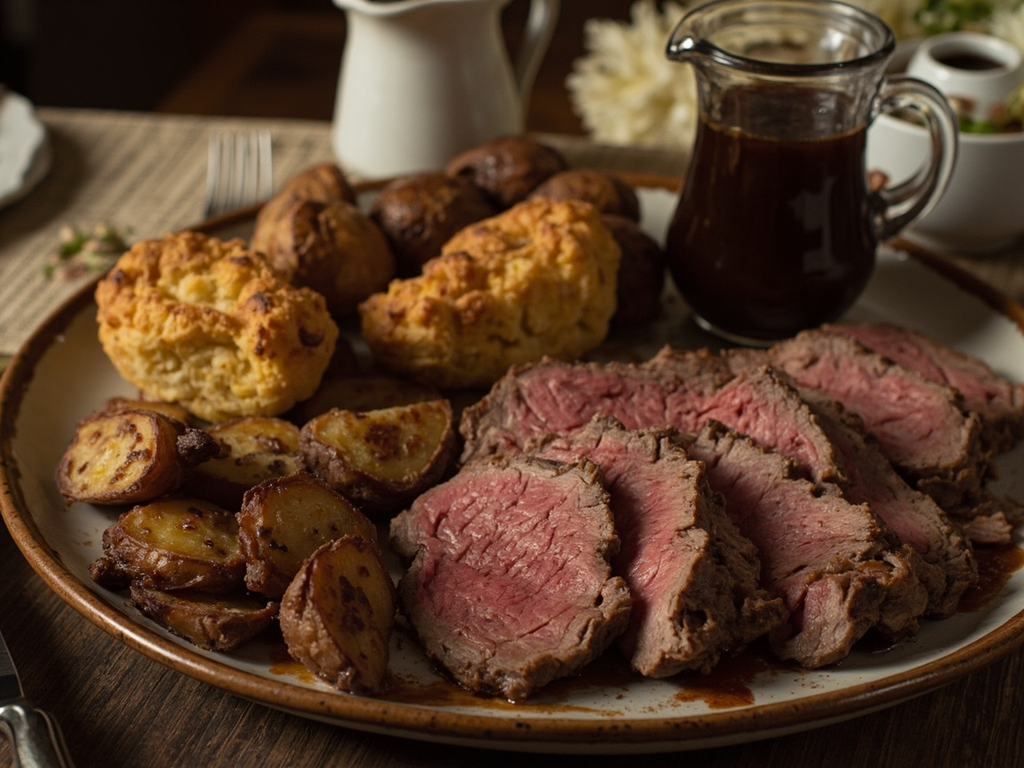
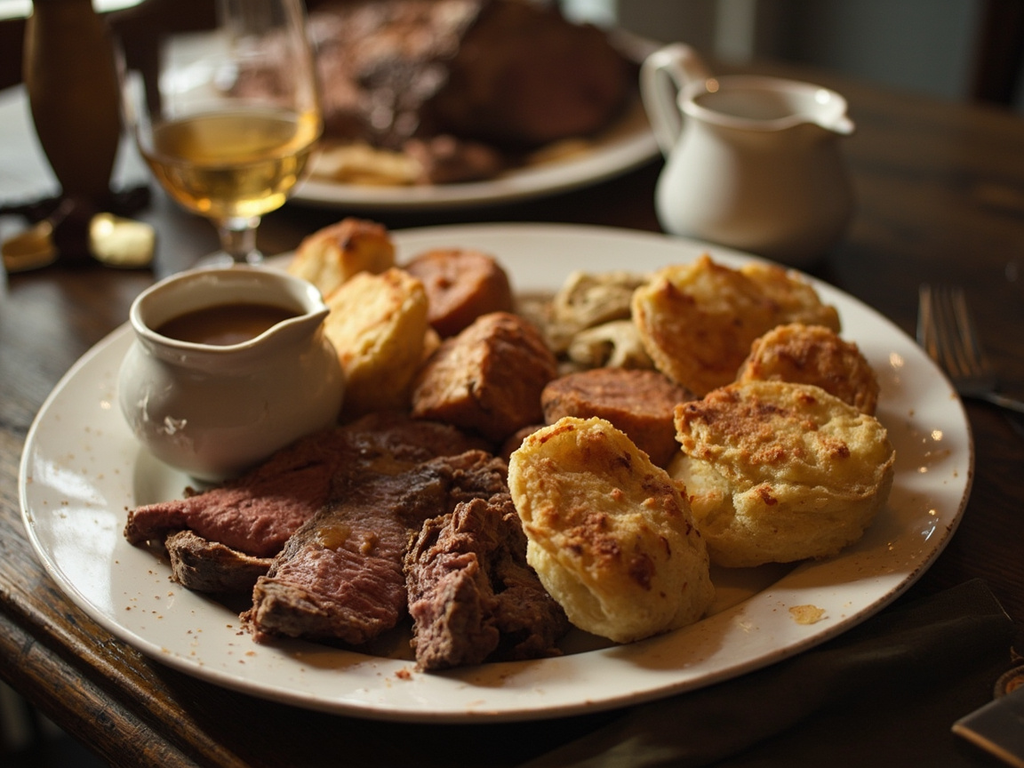
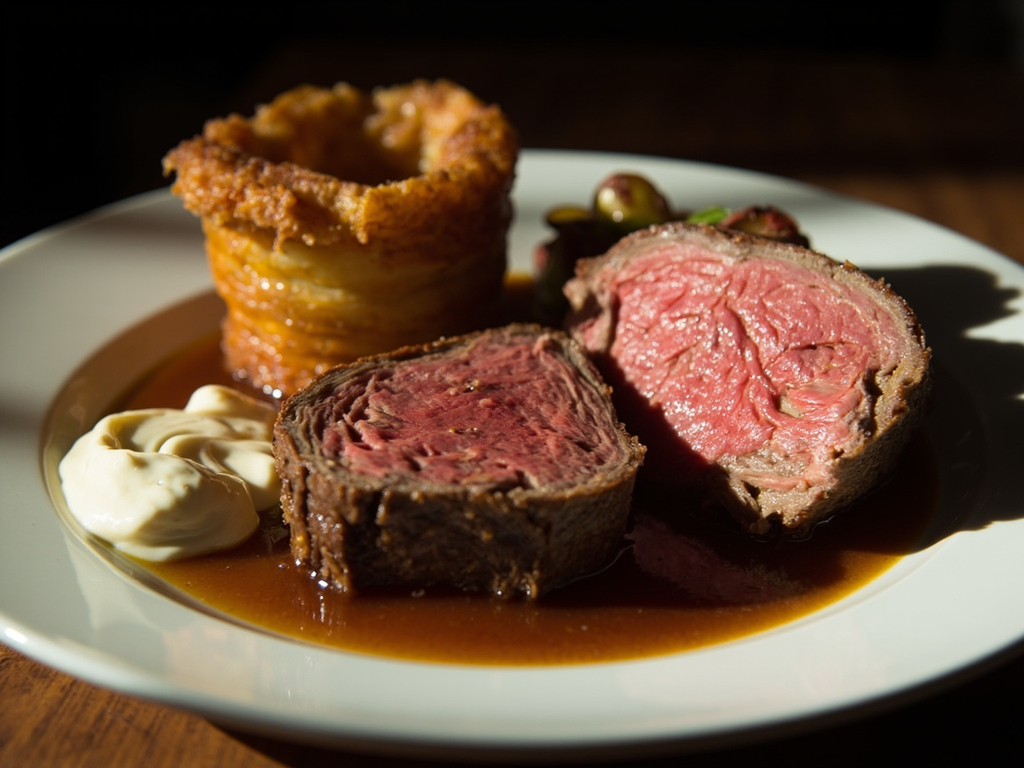
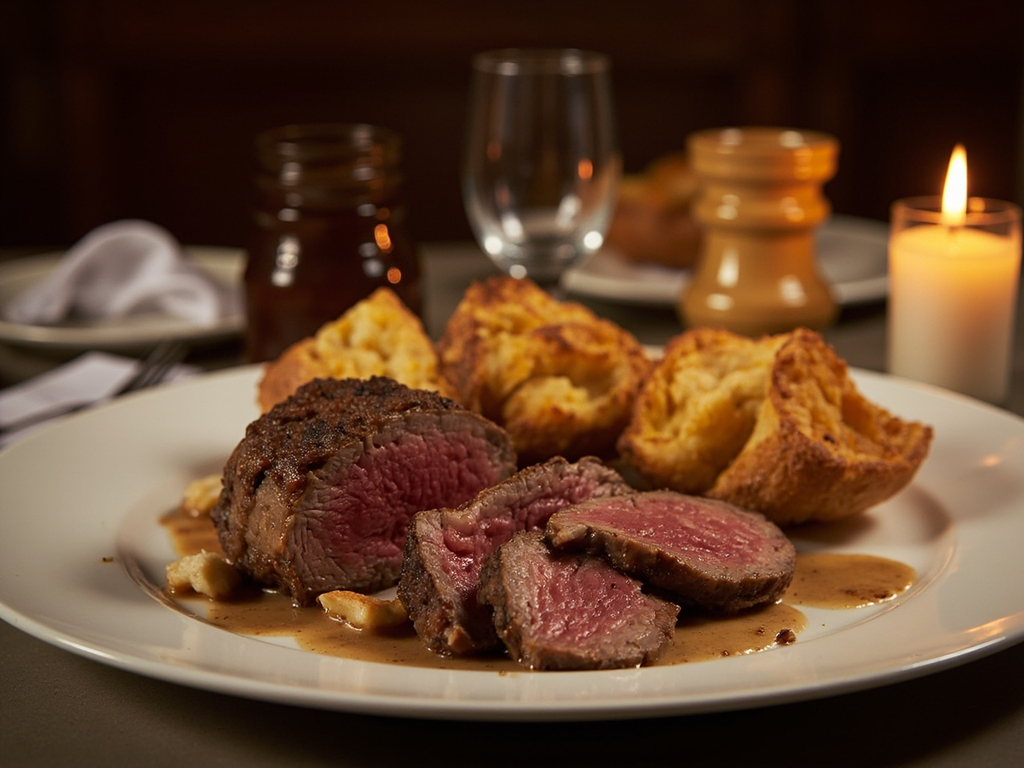
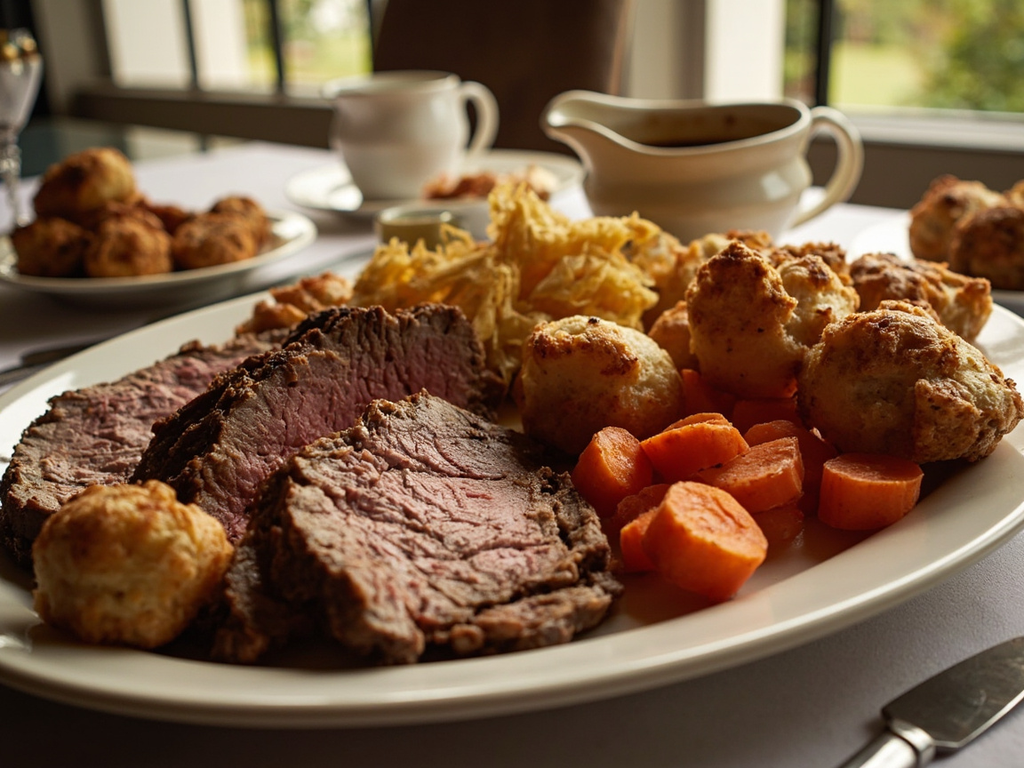
A piece of roast beef served with golden Yorkshire puddings, potatoes roasted in the juices, vegetables and a sharp English mustard. The most British of Sunday meals.
On Sunday, after church, we would gather around the roast — that's how a respectable family should live. A good piece of beef, perfectly browned, its Yorkshire puddings that must come out puffed and crispy, and a touch of English mustard that awakens the palate. On Sunday, you don't skimp, but you don't waste either: the cooking juices make the gravy, leftovers will do for Monday. That's the Britain I love: serious, generous and frugal all at once.
- •Roast beef (sirloin or rib) — a fine piece (centrepiece)
- •Flour, egg, milk — equal parts for batter (Yorkshire pudding)
- •Potatoes — according to guests (roasted garnish)
- •Beef dripping — a few spoonfuls (cooking fat)
- •English mustard — a little (condiment)
- •Seasonal vegetables (carrots, cabbage) — according to guests (accompaniment)
Sunday Roast Beef and Yorkshire Pudding
A piece of roast beef served with golden Yorkshire puddings, potatoes roasted in the juices, vegetables and a sharp English mustard. The most British of Sunday meals.
Why this dish? The Sunday roast is the family institution of 20th-century England, the meal that brings everyone together after church. For a Methodist and patriotic Lincolnshire family like Thatcher's, this Sunday lunch embodied order, tradition and national pride.
On Sunday, after church, we would gather around the roast — that's how a respectable family should live. A good piece of beef, perfectly browned, its Yorkshire puddings that must come out puffed and crispy, and a touch of English mustard that awakens the palate. On Sunday, you don't skimp, but you don't waste either: the cooking juices make the gravy, leftovers will do for Monday. That's the Britain I love: serious, generous and frugal all at once.
Ingredients (period version)
- Roast beef (sirloin or rib) — a fine piece (centrepiece)
- Flour, egg, milk — equal parts for batter (Yorkshire pudding)
- Potatoes — according to guests (roasted garnish)
- Beef dripping — a few spoonfuls (cooking fat)
- English mustard — a little (condiment)
- Seasonal vegetables (carrots, cabbage) — according to guests (accompaniment)
Ingredients
- Roast beef — 1 kg (centrepiece)
- Flour — 100 g (Yorkshire pudding)
- Eggs — 2 (Yorkshire pudding)
- Milk — 150 ml (Yorkshire pudding)
- Potatoes for roasting — 800 g (garnish)
- Oil or beef dripping — 4 tbsp (cooking fat)
- English mustard (Colman's) — to taste (condiment)
- Carrots and cabbage — according to guests (accompaniment)
- Salt, pepper — to taste (seasoning)
Method
- Take the beef out 1 hour ahead, season with salt and pepper, sear then roast in the oven (about 20 min per 500 g at 190°C for medium-rare).
- Prepare Yorkshire pudding batter: whisk flour, eggs, milk and a pinch of salt, let rest 30 min.
- Heat the fat very hot in moulds, pour in batter and bake at 220°C until puffed and golden (20-25 min, without opening the oven).
- Roast the potatoes in fat until crispy.
- Steam or boil carrots and cabbage.
- Rest the meat 10 min, deglaze the pan to make gravy, slice and serve everything hot with mustard.
How it was made : Yorkshire pudding was once cooked under the spit to catch dripping meat juices, and was served before the meat to fill stomachs cheaply. Beef dripping was carefully saved. English mustard powder, mixed with water, traditionally accompanied beef.
The contemporary twist : Present each Yorkshire pudding as an individual case, filled with a slice of beef and a drizzle of gravy: elegant and true to tradition.
Margaret Thatcher · Charactorium