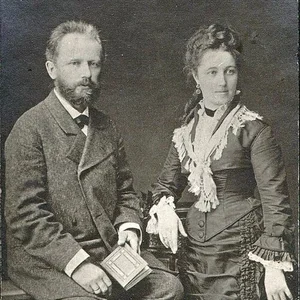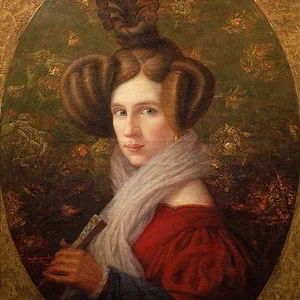

Margherita Barezzi was the first wife of the Italian composer Giuseppe Verdi. The daughter of Antonio Barezzi, a patron and protector of the young Verdi, she married him in 1836. Her untimely death in 1840, following that of their two infant children, plunged the composer into deep despair.
Margherita Barezzi(1814 — 1840)
Margherita Barezzi
duché de Parme et Plaisance, royaume de Lombardie-Vénétie
6 min read
Frequently asked questions
Key Facts
- Daughter of Antonio Barezzi, a merchant and patron who protected the young Verdi in Busseto
- Marries Giuseppe Verdi on 4 May 1836
- Gives birth to two children, Virginia (1837) and Icilio (1838), both of whom die in infancy
- Dies prematurely on 18 June 1840, probably of encephalitis
- Her death, following that of her children, plunges Verdi into deep mourning while he was composing a comic opera
Works & Achievements
As a member of the Barezzi family, Margherita contributed to the loving environment that allowed Verdi to pursue his career, with her father funding the young composer's studies.
A union that sealed the bond between the composer and the Barezzi household, and accompanied Verdi's professional beginnings.
The first child of the Verdi couple, who died in infancy in 1838.
The couple's second child, who also died in infancy in 1839, adding to the family's tragedy.
The loss of Margherita and the children deeply marked Verdi's sensibility, and his later operas often explore grief and loss.
Anecdotes
Margherita was the daughter of Antonio Barezzi, a wealthy music-loving merchant from Busseto who chaired the local Philharmonic Society. It was in the Barezzi household that the young Verdi, still unknown, gave music lessons to Margherita: that is how the two young people fell in love.
Antonio Barezzi believed so strongly in Verdi's talent that he funded his musical studies in Milan and welcomed him into his home like a son. Verdi's marriage to his daughter Margherita, in May 1836, sealed this already almost familial bond between the patron and the composer.
In the span of less than two years, between 1838 and 1840, Verdi lost his two young children, Virginia and then Icilio, both of whom died in infancy. Margherita herself passed away in June 1840, probably from encephalitis, when she was only 26 years old.
These successive bereavements struck Verdi at the very moment he was supposed to compose a comic opera, *Un giorno di regno*. The work, written in grief, was a resounding failure, and the devastated composer briefly considered giving up music altogether.
Verdi remained attached to the memory of the Barezzi family all his life. Many years later, it was still to his father-in-law Antonio that he dedicated some of his most tender thoughts, and the memory of Margherita continued to quietly haunt his life as a man.
Primary Sources
Giuseppe Fortunino Francesco Verdi marries Margherita Barezzi, daughter of Antonio Barezzi, in the collegiate church of Busseto.
Death of Margherita Barezzi, wife of the maestro Giuseppe Verdi, at the age of twenty-six.
Within the span of about two months, three dear ones passed away. First my little boy, then my little girl, and finally the third blow: my young companion.
Key Places
Small town in the Duchy of Parma where Margherita was born and where the Barezzi family lived. The cradle of her meeting and marriage with Verdi.
Home of the patron Antonio Barezzi, where Verdi was welcomed and gave lessons to Margherita. Today a museum dedicated to Verdi.
Site of the marriage of Margherita Barezzi and Giuseppe Verdi on 4 May 1836.
The Lombard capital of musical culture where the couple settled and where Verdi made his debut at La Scala. It was there that Margherita died in 1840.
Typical Objects

Keyboard instrument on which Margherita took her lessons and accompanied the musical evenings at the Barezzi household. It was around the piano that her relationship with Verdi took shape.

Sheets of music copied by hand, used for study and for the concerts of the Busseto Philharmonic Society. Verdi produced a great many of them for the Barezzi household.

Women's attire of the early 19th century, with leg-of-mutton sleeves and a full skirt, worn by the young women of the provincial middle class. It signalled the social standing of the Barezzi family.

The band exchanged at the wedding in the collegiate church of Busseto in 1836. A symbol of the union of Margherita and Verdi, and of the closer bond between the two families.

Handwritten correspondence closed with a wax seal, the main means of communication between Busseto and Milan. In this way Verdi and the Barezzis exchanged family news and musical business.

The source of light in middle-class interiors, indispensable for musical evenings and late-night gatherings. Gas lighting had not yet spread through the Italian provinces.
School Curriculum
Vocabulary & Tags
Key Vocabulary
Daily Life
Morning
A young middle-class woman's morning in Busseto began with washing and a light breakfast — coffee or chocolate with bread. She would then attend to running the household and to her devotions, in a provincial town set to the rhythm of the church bells.
Afternoon
The afternoon was divided between needlework, reading and visits. Margherita, raised in a music-loving family, devoted time to practising singing and the piano, sometimes under the guidance of a music master.
Evening
Evenings were the time for musical gatherings: at the Barezzi home, people played, sang and welcomed members of the local Philharmonic Society. These candle-lit gatherings were the heart of the family's social life.
Food
The diet followed the cuisine of Emilia: fresh pasta, bread, cheeses such as Parmesan, regional cured meats and seasonal vegetables. Local wine accompanied the meals of well-off families.
Clothing
Margherita wore the Romantic dresses of the early 19th century, with puffed sleeves and a fitted waist, made of fine fabrics that reflected the Barezzi family's comfortable means. Shawls, bonnets and discreet jewellery completed her attire.
Housing
The family lived in a large middle-class house in Busseto, with reception rooms, musical instruments and comfortable furnishings. After her marriage, Margherita also shared the more modest life of a young couple in Milan.
Historical Timeline
Period Vocabulary
Liens externes & ressources
Références
Œuvres
Soutien à la formation musicale de Verdi
années 1830
Mariage avec Giuseppe Verdi
1836
Naissance de Virginia Maria Luigia
1837
Naissance d'Icilio Romano
1838