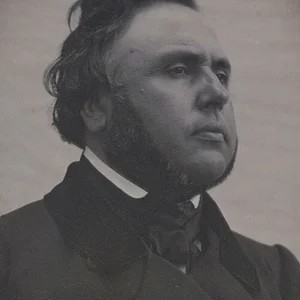

A physician and republican deputy, Alphonse Baudin was killed on December 3, 1851, on a barricade in the faubourg Saint-Antoine while resisting Louis-Napoléon Bonaparte's coup d'état. He became a martyr of the Republic, and his trial in 1868 reignited republican opposition to the Second Empire.
Alphonse Baudin(1811 — 1851)
Alphonse Baudin
France
7 min read
Frequently asked questions
Key Facts
- Born on August 19, 1811, in Nantua (Ain)
- Elected republican deputy for Ain to the Legislative Assembly in 1849
- Killed on December 3, 1851, on a barricade in the faubourg Saint-Antoine while resisting Louis-Napoléon Bonaparte's coup d'état
- His tomb at Montmartre Cemetery became a site of republican remembrance
- In 1868, the trial of Gambetta for having contributed to the restoration of his tomb reignited republican opposition to the Second Empire
Works & Achievements
Baudin earned his doctorate in medicine in Paris and practiced as a physician among working-class communities, an experience that shaped his social conscience and republican convictions.
Elected to the Legislative Assembly as a member of the Montagne, Baudin championed workers' rights and opposed the reactionary laws curtailing universal suffrage and freedom of the press.
Baudin was one of the signatories of the proclamation calling on citizens to resist Bonaparte. He immediately put his words into action by taking his place on the barricade in the faubourg Saint-Antoine.
Through his death on the barricade, Baudin unwittingly created an enduring symbol: that of the republican who chooses death over submission to tyranny. His example sustained opposition to the Second Empire for eighteen years.
Anecdotes
On December 3, 1851, the day after Louis-Napoléon Bonaparte's coup d'état, Baudin attempted to rally the workers of the faubourg Saint-Antoine to resist. A worker contemptuously called out: 'We don't risk our lives for twenty-five francs!' — the deputies' daily wage. Baudin immediately climbed onto the barricade and replied: 'You are about to see how one dies for twenty-five francs.' Minutes later, he was shot dead. This phrase became one of the most celebrated of the republican resistance in the nineteenth century.
Trained as a physician, Baudin practiced medicine in the working-class neighborhoods of Paris before entering politics. Elected as a republican deputy for the Seine in 1849, he sat with La Montagne, the left-wing group of the Legislative Assembly. He thus combined his social commitment as a practitioner with his republican convictions as a representative of the people.
In 1868, republicans launched a subscription drive to erect a monument to Baudin at Père-Lachaise cemetery. The imperial government, furious, prosecuted the organizers. The young lawyer Léon Gambetta took up their defense and delivered a thunderous indictment of the Second Empire, which propelled him to the forefront of the republican opposition. This 'Baudin trial' showed that the martyr continued to haunt Napoleon III seventeen years after his death.
Baudin had taken part in the revolutionary days of 1848 with great enthusiasm. Like many republicans of his generation, he saw in the Second Republic the fulfillment of the promises of 1789. His refusal to accept the coup of December 2 without armed resistance was therefore consistent with his entire political trajectory: for him, allowing Bonaparte to dissolve the Assembly without fighting back was nothing less than a betrayal of the Republic itself.
Primary Sources
Baudin, standing on the barricade, was shouting to the soldiers: 'Don't shoot! They are our brothers!' A bullet struck him in the head. He fell without uttering a cry.
We call to judgment the architects of the coup d'état of December 2nd; we shall hold you to account for the eighteen years of rule you have imposed upon France.
Louis-Napoléon Bonaparte is a traitor to the Republic. He is an outlaw. All citizens have a duty to resist him by every means.
Representative Baudin was killed on a barricade on the rue Sainte-Marguerite. His body was recovered and identified by several witnesses.
Key Places
Birthplace of Alphonse Baudin, in the Ain department. This town in eastern France, shaped by republican traditions, forged the political convictions of the future deputy.
This is where Alphonse Baudin was killed on December 3, 1851, while resisting the coup d'état. This working-class district of Paris had been a historic hotbed of popular uprisings since the Revolution.
Seat of the Legislative Assembly where Baudin served as republican deputy for the Seine from 1849 to 1851. It was here that Bonaparte sent his soldiers to arrest the representatives on the night of December 2, 1851.
Baudin was buried here, and a monument was erected in his honor following a republican subscription campaign in 1868. This cemetery stands as one of the foremost sites of French republican and revolutionary memory.
Liens externes & ressources
Références
Œuvres
Thèse de médecine (Faculté de Paris)
années 1830
Mandat de député républicain de la Seine
1849-1851
Participation à la proclamation de résistance au coup d'État
2-3 décembre 1851
Son sacrifice comme acte politique fondateur
3 décembre 1851