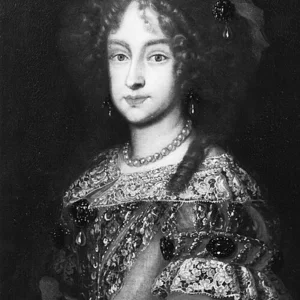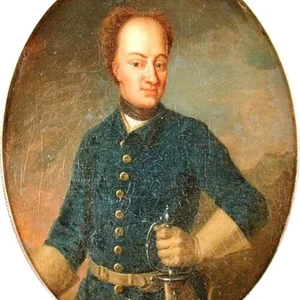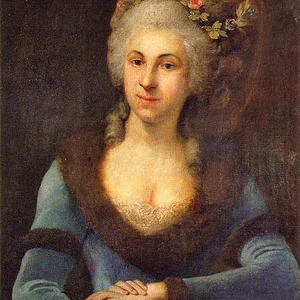

Italian composer, singer, and pianist born in Vienna (1744–1812), pupil of Haydn and friend of Mozart. She was one of the few women of her time to be admitted to the Accademia Filarmonica of Bologna.
Marianna Martines(1744 — 1812)
Marianne de Martines
empire d'Autriche
8 min read
Frequently asked questions
Key Facts
- Born on May 4, 1744 in Vienna into a family of Italian origin
- Trained in piano and composition by Joseph Haydn, who lived in the same building
- Admitted to the Accademia Filarmonica of Bologna in 1773, an extremely rare distinction for a woman
- Composed more than 200 works: masses, oratorios, concertos, cantatas
- Died on December 13, 1812 in Vienna
Works & Achievements
One of her most ambitious sacred works, performed at the imperial court in Vienna. This mass demonstrates her complete mastery of counterpoint and the Viennese galant style.
An oratorio set to a text by Metastasio, her neighbor and mentor. This work illustrates the synthesis achieved by Marianna Martines between literary poetry and dramatic musical writing.
A concerto for keyboard and orchestra that showcases the composer's technical virtuosity and her assimilation of the style of her contemporaries Haydn and Mozart.
Several sonatas for harpsichord and later fortepiano, some of which were copied and circulated in Viennese musical circles. They are representative of the galant style in its most refined form.
Marianna Martines composed around forty cantatas, a genre in which she excelled by frequently setting texts by Metastasio to music. These pieces were performed in salons and at court.
A vocal and orchestral setting of this liturgical psalm, which showcases her skills in polyphonic choral writing inherited from the great Viennese Catholic tradition.
Anecdotes
The young Joseph Haydn, a penniless musician freshly arrived in Vienna, gave music lessons to little Marianna in exchange for lodging provided by the Martines family. This unusual arrangement between two future giants of music lasted several years: Haydn honed his pupil's counterpoint while she offered him a roof in the house the Martines family shared with the great poet Metastasio.
In 1773, Marianna Martines received an official letter from the Accademia Filarmonica of Bologna: she was being admitted as an honorary member. This distinction, granted to Mozart at age 14 and to Haydn shortly before, was extraordinarily rare for a woman. Martines thus joined a handful of female composers to have crossed the doors of such a prestigious institution.
The English music historian Charles Burney, a great traveler in search of Europe's finest musicians, attended an evening at Marianna Martines's home in 1772. He was so impressed by the quality of her singing and keyboard playing that he devoted several enthusiastic pages to her in his celebrated travel journal on music, published in 1773. His account remains one of the most valuable primary sources on the composer.
Marianna literally grew up alongside the poet Pietro Metastasio, who had lived in the same Viennese building since her birth. This patriarch of Italian letters — whose opera libretti were set to music by every major composer of the century — regarded her as an adopted daughter and passed on to her a refined literary culture that shines through in her own compositions.
After Metastasio's death in 1782, Marianna Martines inherited the large drawing room of the apartment and transformed it into a musical salon renowned throughout Vienna. She welcomed composers, singers, and music lovers from across Europe, playing a central role as a cultural mediator in Viennese musical life until the end of her days.
Primary Sources
Signora Martines, who was brought up under the eye of Metastasio, has composed a great deal of music both sacred and secular... I heard her sing and accompany herself, with great taste and expression.
Metastasio mentions on several occasions “la Martinesina”, describing her musical progress and exceptional talent with evident paternal pride.
Minutes of the admission of Marianna Martines as an honorary member, recording the favorable vote of the academicians in recognition of her compositions.
Marianna Martines is cited among the most remarkable female composers of her era, with mention of her masses, cantatas, and keyboard sonatas.
Key Places
It was in this building in central Vienna that Marianna Martines was born, grew up, and spent her entire life. She shared decades there with the poet Metastasio and received her first lessons from Haydn.
A musical institution founded in 1666 and one of the most prestigious in Europe, the Philharmonic Academy of Bologna elected Marianna Martines an honorary member in 1773, placing her alongside Mozart and Haydn.
The residence of the Habsburgs and the center of Viennese cultural power, the Hofburg was one of the venues where works by Marianna Martines were premiered, notably her solemn mass of 1768.
A cornerstone of Viennese sacred musical life, St. Stephen's was the setting for countless performances of religious works of the era. Marianna Martines's sacred music — masses, motets, oratorios — was written for exactly such liturgical spaces.
Typical Objects

Keyboard instrument and forerunner of the modern piano that Marianna Martines mastered with virtuosity. She was one of the first composers to write concertos and sonatas that fully exploited the expressive range of the Viennese fortepiano.

The instrument on which Marianna Martines received her first lessons from Haydn. In the Vienna of her childhood, the harpsichord was still the reigning instrument before the fortepiano gradually supplanted it.

Marianna Martines composed and copied her works herself, using a quill pen on music paper. Her autograph manuscripts, partly preserved at the Austrian National Library, attest to a careful musical hand and a firm command of counterpoint.

An indispensable fixture at any eighteenth-century musical evening, wax candelabras cast light over scores and drawing rooms alike. In Marianna Martines's apartment, they illuminated gatherings that brought together the greatest musicians in Vienna.

An essential fashion accessory for a woman of good standing in eighteenth-century Viennese society, the fan accompanied Marianna at concerts and receptions held at the imperial court.

The poet who lived next door was the author of the most celebrated opera librettos of the century. Marianna Martines set several of his texts to music, working directly with him to align verse and melody.
School Curriculum
Vocabulary & Tags
Key Vocabulary
Daily Life
Morning
Marianna Martines rose early and attended Mass in one of Vienna's many churches — a moment of devotion but also of musical inspiration. She then devoted her mornings to composing, writing, and copying her scores, in the quiet of the family apartment.
Afternoon
Afternoons were reserved for the singing and keyboard lessons she gave to young women from Viennese noble families. She also rehearsed her own works at the fortepiano, or received the musicians and poets who frequented the Metastasio-Martines salon.
Evening
Evenings were the time for private concerts and musical academies: musicians gathered to play and sing new works, often those of Marianna herself. These gatherings drew Vienna's cultural elite to an apartment transformed into a stage for the musical life of the century.
Food
Like all respectable Viennese society of the 18th century, the Martines family consumed white bread, roasted meats, seasonal vegetables, and pastries. Coffee, which had become indispensable in Vienna since the 17th century, was the drink of choice in the intellectual salons she frequented.
Clothing
Marianna wore the elaborate outfits typical of well-bred Viennese women: silk or brocade pannier dresses, whalebone corsets, and powdered headdresses or wigs for grand occasions. When composing at home, a more comfortable house dress allowed her to remain seated at the keyboard for hours on end.
Housing
The Martines family occupied a spacious apartment in a building in the historic center of Vienna, shared with Metastasio, who lived on the floor above. The apartment included a large drawing room with a fortepiano, a musical and literary library, and several rooms decorated in the Rococo style — wood paneling, gilded mirrors, and devotional paintings.