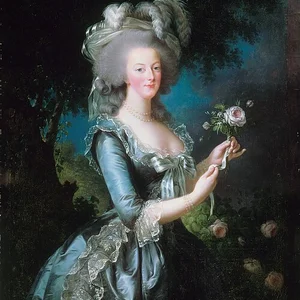

Queen consort of France from 1774 to 1792, wife of Louis XVI. A symbol of the Ancien Régime and its excesses, she became deeply unpopular with the French people and came to embody the frivolity of the Versailles court. Accused of treason during the French Revolution, she was executed by guillotine in 1793.
Marie-Antoinette(1755 — 1793)
Marie-Antoinette
France, Monarchie de Habsbourg
8 min read
Frequently asked questions
Key Facts
- 1755: Born in Vienna, daughter of Maria Theresa of Austria
- 1770: Marriage to the future Louis XVI, sealing the Franco-Austrian alliance
- 1774: Becomes Queen of France and Navarre upon Louis XVI's accession to the throne
- 1789: Departure from Versailles and the Women's March on Versailles (October 5–6)
- 1793 (October 16): Execution by guillotine at the Place de la Révolution in Paris
Works & Achievements
Marie-Antoinette transformed the Petit Trianon into a space of freedom away from Versailles court etiquette, and had the Hamlet built, an artificial rustic village. These achievements, testaments to her taste for the neoclassical style and return to nature, are today listed as UNESCO World Heritage.
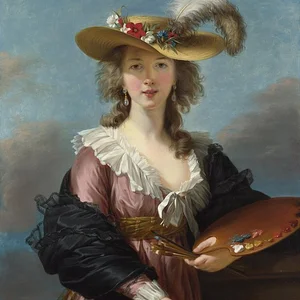
By posing for Vigée Le Brun's portrait in a simple white muslin dress (the "chemise dress"), Marie-Antoinette caused a scandal but sparked a fashion revolution, abandoning heavy corsets and panniers in favor of lighter garments that influenced all of Europe.
Marie-Antoinette, together with Louis XVI, supported American independence by funding French military aid to the insurgents. This decision, costly in financial terms, contributed to the budget crisis that precipitated the French Revolution.
An avid music lover, the queen patronized composer Christoph Willibald Gluck, her former teacher, and supported his Parisian career. She also played a role in the musical quarrels between the supporters of Gluck and Piccinni.
Anecdotes
Upon her arrival in France in 1770, the young Marie Antoinette was subjected to a ceremony known as the "remise": at the Franco-Austrian border, she was literally stripped of all her Austrian clothing and fully redressed in the French style, symbolizing her renunciation of Austria in favor of France. She was only 14 years old.
Marie Antoinette had the Hameau de la Reine built in the gardens of Versailles, an artificial rustic village where she enjoyed playing shepherdess with her ladies-in-waiting. This costly whim, inaugurated in 1783, contributed to shaping her image as a queen disconnected from the realities of the common people.
The queen was passionate about fashion and partnered with the milliner Rose Bertin, nicknamed the "Minister of Fashion". She launched extravagant trends such as the "pouf", a monumental hairstyle that could exceed one meter in height, adorned with feathers, flowers, and sometimes miniatures depicting current events.
During the Flight to Varennes in June 1791, the royal family disguised themselves as commoners in an attempt to flee France. Marie Antoinette, poorly disguised as a governess, was recognized in part because her portrait appeared on the assignats, the revolutionary banknotes. The family was arrested and brought back to Paris amid jeers.
At the revolutionary trial in October 1793, public prosecutor Fouquier-Tinville went so far as to accuse her of incest with her own son. Faced with this outrage, Marie Antoinette replied with dignity: "Nature itself refuses to respond to such a charge laid against a mother." This retort moved a portion of the audience present.
Primary Sources
I read all the letters from my dear mother with the greatest attention; I strive to benefit from her wise counsel and to merit her approval.
I come, my brother, to beg your forgiveness for all the distress that, without wishing it, I may have caused you... I die in the Catholic, Apostolic and Roman faith, that of my fathers, that in which I was raised.
Marie-Antoinette, widow of Louis Capet, has been since her time in France the scourge and the leech of the French people. Even before the Revolution, she had dealings with the King of Bohemia and Hungary.
The Queen loved with passion all that was beautiful; she gathered in her chamber the most brilliant works of the arts. She had the surest and most refined taste for music, painting and poetry.
The Queen received the people's complaints with a kindness that touched all hearts; she said that the misery of the people brought tears to her eyes and that she would do everything in her power to relieve it.
Key Places
Main residence of the royal court, where Marie-Antoinette lived from 1770 to 1789. She had her private apartments redecorated there and had the Queen's Hamlet built in the grounds of the Petit Trianon.
Parisian residence where the royal family was forced to move following October 1789. Louis XVI and Marie-Antoinette lived there under surveillance until the storming of the palace on 10 August 1792.
Former royal prison on the Île de la Cité where Marie-Antoinette was held from 2 August to 16 October 1793, in very austere conditions, before being tried and sentenced to death.
Site of Marie-Antoinette's execution on 16 October 1793. The guillotine had been erected there, and Louis XVI himself had been beheaded on the same spot nine months earlier.
Imperial palace in Vienna where Marie-Antoinette was born and spent her childhood alongside her mother, Empress Maria Theresa. She left Austria in 1770 and never returned.
Typical Objects
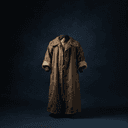
Elaborate court dress featuring ruffles, embroidery, and panniers (metal frames widening the hips). Marie-Antoinette ordered dozens of them each year, thereby setting the trends of European fashion.

An indispensable accessory at Versailles, the fan served as much to cool oneself as to communicate through a coded language of gestures. Marie-Antoinette owned an exceptional collection of them.

The royal apartments at Versailles were lit by thousands of candles during grand festivities, representing a considerable expense and a symbol of the court's luxury.

Marie-Antoinette had received advanced musical training in Vienna and played the harpsichord and pianoforte with great talent. She had even been a pupil of the young Mozart during his visit to the Viennese court.

Deeply Catholic, Marie-Antoinette kept a book of hours by her side. In her final hours at the Conciergerie, she spent the night in prayer before her execution.

On her way to the scaffold, Marie-Antoinette wore a simple white dress and a white cap, the colour of mourning for the queens of France, in stark contrast to the luxury of her former wardrobe.
School Curriculum
Vocabulary & Tags
Key Vocabulary
Tags
Mouvement
Concept
Daily Life
Morning
The queen's morning routine was an official ceremony known as "the lever" attended by dozens of hand-picked courtiers. Marie-Antoinette had to allow herself to be dressed in front of witnesses according to a strict protocol inherited from Louis XIV, with each lady-in-waiting holding the privilege of handing her a specific garment.
Afternoon
Afternoons alternated between strolls through the gardens of Versailles, card games (the queen was fond of pharaon, a card game), portrait sittings, or theatrical performances in the château's private theatre. She also enjoyed horseback riding and carriage rides.
Evening
Evenings at Versailles were marked by masquerade balls, opera performances, and suppers with the king and the court. Marie-Antoinette hosted lavish parties in her apartments at the Petit Trianon, gathering a close circle of chosen friends, away from the constraints of official etiquette.
Food
The royal table at Versailles was one of the most sumptuous in Europe, with meals comprising several dozen dishes served during the public "grands couverts." Marie-Antoinette ate modestly in private, showing a marked preference for Viennese pastries, candied fruits, and hot chocolate — a fashion imported from Austria.
Clothing
The queen changed outfits several times a day following a codified ritual. Her wardrobe included hundreds of gowns created by Rose Bertin, her appointed modiste, as well as dozens of pairs of shoes, lavish jewellery, and a unique collection of fans and embroidered gloves.
Housing
Marie-Antoinette lived primarily in her private apartments at the Château de Versailles, whose décor she had redesigned on several occasions to follow the fashions of the day. She preferred the Petit Trianon, where she could escape the stifling protocol of the court and receive her close friends in a more intimate and pastoral setting.
Historical Timeline
Period Vocabulary
Visual Style
L'esthétique visuelle de Marie-Antoinette incarne le Rococo tardif et le Néoclassicisme français : dorures de Versailles, soies pastel et coiffures monumentales, puis le dépouillement dramatique de la période révolutionnaire.
Sound Ambience
L'univers sonore de Marie-Antoinette oscille entre la splendeur musicale de Versailles et le tumulte menaçant de la Révolution, entre le luxe des fêtes galantes et le fracas populaire qui y mit fin.
Liens externes & ressources
Références
Œuvres
Aménagement du Petit Trianon et création du Hameau de la Reine
1774-1783
Réforme du costume de cour : la robe en chemise
1783
Soutien à la cause américaine
1778-1783
Mécénat musical : soutien à Gluck et Salieri
1774-1789