The French Revolution
From the storming of the Bastille to the Reign of Terror, the figures who shaped the French Revolution — revolutionaries, thinkers, victims and survivors.
47 characters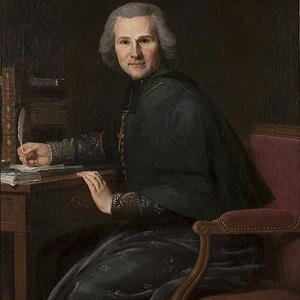
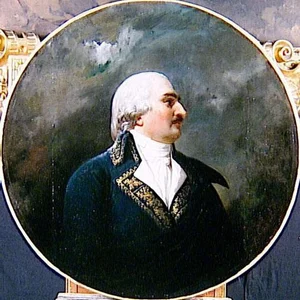
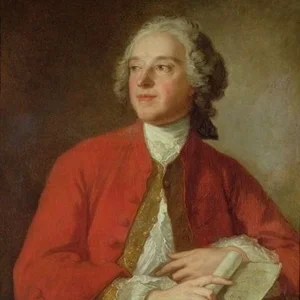
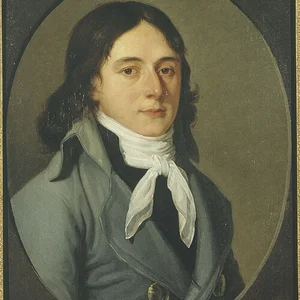
47 characters
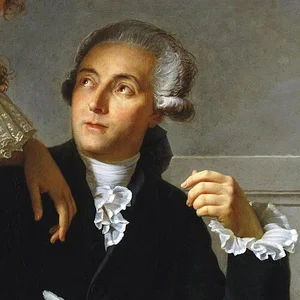
Antoine de Lavoisier
1743 — 1794
An 18th-century French chemist, Lavoisier is the founder of modern chemistry. He established the law of conservation of mass and identified oxygen, revolutionizing the understanding of chemical phenomena.
Antoine François de Fourcroy
1755 — 1809
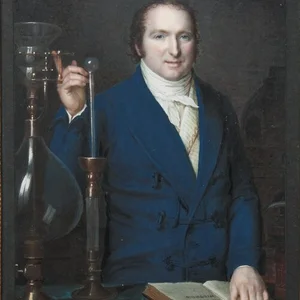
French chemist and statesman, a collaborator of Lavoisier in the reform of chemical nomenclature. A member of the National Convention, he played a major role in reorganizing scientific education during the Revolution.
Beaumarchais
1732 — 1799
French writer, musician, and businessman (1732-1799), Beaumarchais is the author of The Barber of Seville and The Marriage of Figaro, two plays that revolutionized 18th-century comedy through their social criticism and complex plotting.
Camille Desmoulins
1760 — 1794
French lawyer, journalist and politician, a figure of the Revolution. An orator at the Palais-Royal in July 1789, he was one of the most influential pamphleteers of his time before being guillotined alongside the Indulgents in 1794.
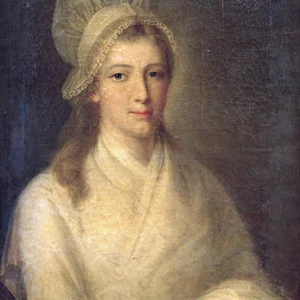
Charlotte Corday
1768 — 1793
A Norman Girondin activist, Charlotte Corday assassinated Jean-Paul Marat in his bathtub on July 13, 1793. Convinced she was putting an end to the Terror, she was guillotined four days later at the age of 24.
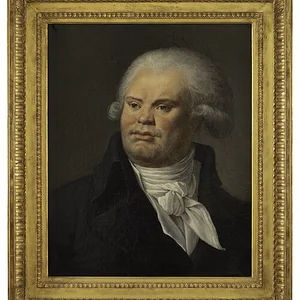
Danton
1759 — 1794
French lawyer and politician (1759–1794), Danton is a major figure of the French Revolution. Known for his eloquence and charisma, he played a key role in revolutionary events before being executed during the Terror.
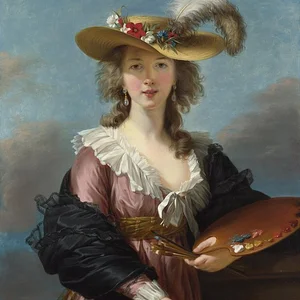
Élisabeth Vigée Le Brun
1755 — 1842
Élisabeth Vigée Le Brun (1755–1842) was one of the greatest portrait painters of the 18th century. Official painter to Marie Antoinette, she completed more than 660 portraits before fleeing the French Revolution. The first woman admitted to the Royal Academy of Painting, she embodied female excellence in an artistic world dominated by men.
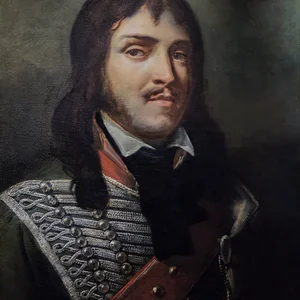
François Séverin Marceau
1769 — 1796
A general of the French Revolution, Marceau enlisted at 16 and became one of the youngest generals of the Republic. A hero of the pacification of the Vendée and the Rhine campaigns, he died in battle at 27 in 1796, embodying the ideal of the republican soldier.
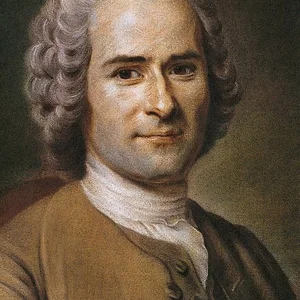
Jean-Jacques Rousseau
1712 — 1778
Genevan philosopher, writer, and musician (1712–1778), a central figure of the Enlightenment. Author of The Social Contract and Confessions, he profoundly influenced political and educational thought by championing popular sovereignty and natural education.
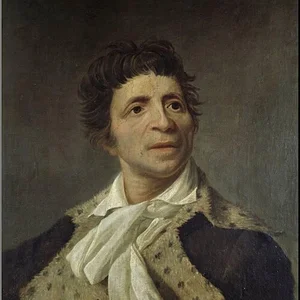
Jean-Paul Marat
1743 — 1793
A physician, physicist, and journalist who became one of the most radical figures of the French Revolution. Founder of the newspaper L'Ami du peuple, he served as a Montagnard deputy in the National Convention before being assassinated in his bath by Charlotte Corday in 1793.
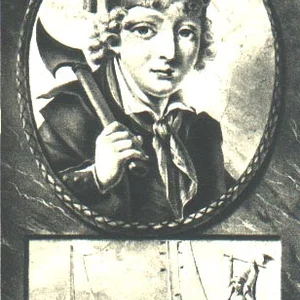
Joseph Agricol Viala
1778 — 1793
Revolutionary child-soldier born in Avignon in 1780, killed at age 13 on July 23, 1793, while attempting to cut the moorings of Federalist boats on the Durance river. Proclaimed a martyr of the Republic by the National Convention, his name was included among the heroes decreed for pantheonization, though the transfer never took place.
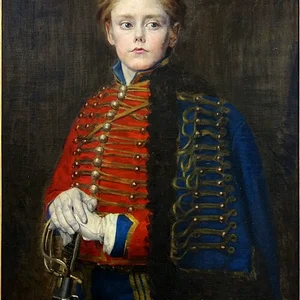
Joseph Bara
1779 — 1793
A drummer boy for the Republic at age 13, Joseph Bara was killed by Vendée rebels in 1793. Robespierre held him up as an exemplary martyr of revolutionary youth, and the Convention voted to transfer his remains to the Panthéon — a decree that was never carried out.
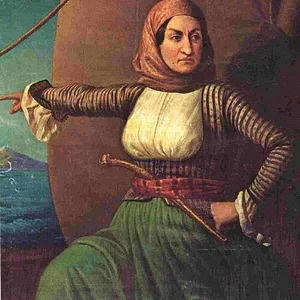
Laskarina Bouboulina
1771 — 1825
Laskarína Bouboulína was a Greek heroine of the War of Independence against the Ottoman Empire. Arming and financing her own war fleet, she took an active part in naval combat from 1821, most notably during the blockade of Nafplio. She is the only woman to have received the honorary title of admiral in the Russian Imperial Navy.
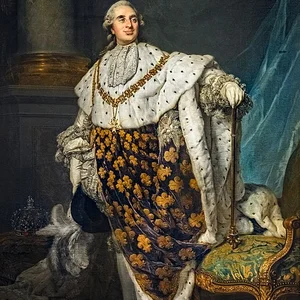
Louis XVI
1754 — 1793
King of France and Navarre from 1774 to 1791, then King of the French from 1791 to 1792. His reign was marked by the French Revolution, attempted reforms, and the abolition of the Ancien Régime. Arrested during the Flight to Varennes in 1791, he was tried and executed by guillotine on January 21, 1793.
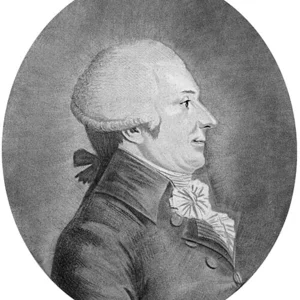
Louis-Bernard Guyton de Morveau
1737 — 1816
A French chemist, jurist and statesman, Guyton de Morveau was one of the architects of the reform of chemical nomenclature alongside Lavoisier in 1787. As a member of the National Convention, he also took part in the Revolution and contributed to the founding of the École Polytechnique.
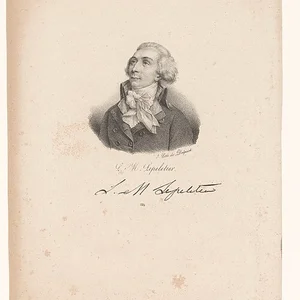
Louis-Michel Lepeletier de Saint-Fargeau
An aristocrat who embraced the Revolution, he was elected to the Estates-General and later served as a deputy in the National Convention, where he voted for the execution of King Louis XVI in January 1793. Assassinated on the eve of the king's execution by a royal guard, he became the first martyr of the French Revolution and was temporarily interred in the Panthéon.
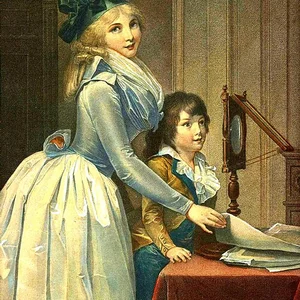
Louise Gély
1776 — 1856
Second wife of Georges Danton, whom she married in 1793 at the age of sixteen after caring for his children. A figure in the intimate circle of a major actor of the French Revolution, she lived through the Terror and then remarried after Danton's execution.
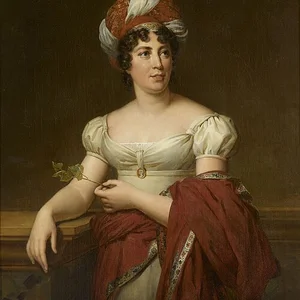
Madame de Staël
1766 — 1817
Germaine de Staël, daughter of minister Necker, was one of the great intellectual voices of her era. A novelist, essayist, and salon hostess, she stood up to Napoleon, who exiled her, and helped introduce German Romanticism to France with her work *De l'Allemagne*.
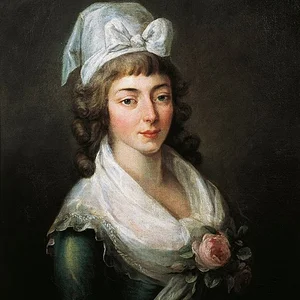
Madame Roland
1754 — 1793
Salon hostess and Girondin political figure, Manon Roland (1754–1793) exerted considerable influence over the Girondin party during the French Revolution. Arrested during the Terror, she was guillotined in 1793, uttering her famous words about liberty.
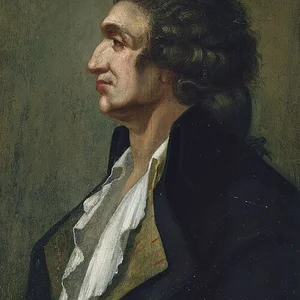
Marie Jean Antoine Nicolas de Condorcet
Mathematician and Enlightenment philosopher (1743–1794), Condorcet served as Permanent Secretary of the Academy of Sciences, championed equal rights for women and enslaved people, and played an active role in the French Revolution. He died during the Reign of Terror, having written his intellectual testament on human progress.
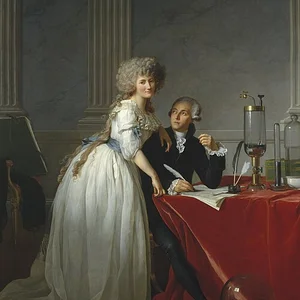
Marie-Anne Paulze
French chemist and illustrator (1758–1836), essential collaborator of Antoine Lavoisier. She translated English scientific treatises and created the engravings for the landmark "Elementary Treatise on Chemistry" (1789), contributing to the chemical revolution.
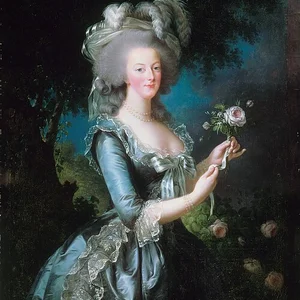
Marie-Antoinette
1755 — 1793
Queen consort of France from 1774 to 1792, wife of Louis XVI. A symbol of the Ancien Régime and its excesses, she became deeply unpopular with the French people and came to embody the frivolity of the Versailles court. Accused of treason during the French Revolution, she was executed by guillotine in 1793.
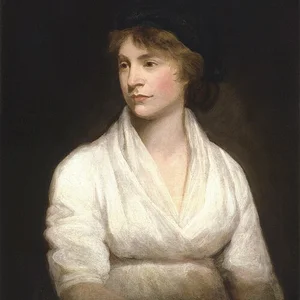
Mary Wollstonecraft
1759 — 1797
Mary Wollstonecraft was an 18th-century British philosopher and writer, a pioneer of feminism. Her landmark work, *A Vindication of the Rights of Woman* (1792), demands equal education and civil rights for women. She embodies Enlightenment thinking applied to the condition of women.
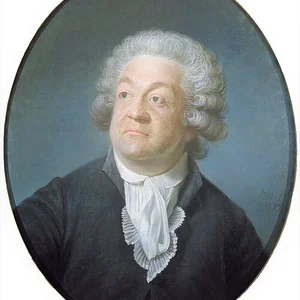
Mirabeau
1749 — 1791
Orator and French statesman, Mirabeau is one of the towering figures of the early French Revolution. Elected to the Estates-General in 1789 by the Third Estate, he embodied the bridge between the nobility and the people, championing a constitutional monarchy. His death in 1791 earned him a state funeral and a place in the Panthéon.
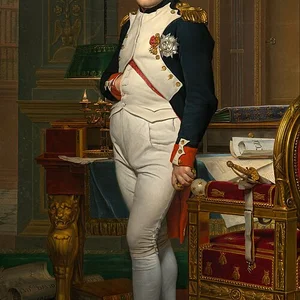
Napoleon Bonaparte
1769 — 1821
Napoleon Bonaparte (1769-1821) was a French military leader and statesman who seized power in 1799 and proclaimed himself Emperor in 1804. He transformed France and Europe through his reforms and military campaigns, most notably by establishing the Civil Code, which modernized the French legal system.
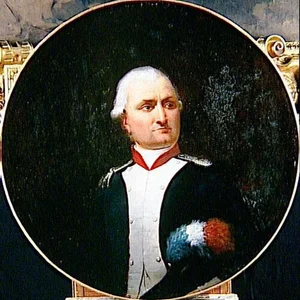
Nicolas-Joseph Beaurepaire
1740 — 1792
French general (1740–1792), commander of Verdun during the Prussian invasion of 1792. Refusing to surrender, he died on September 2, 1792, rather than sign the capitulation of the fortress. His sacrifice became a symbol of revolutionary patriotism.
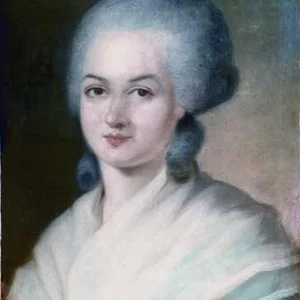
Olympe de Gouges
1748 — 1793
French author, politician and pamphleteer (1748–1793), Olympe de Gouges campaigned for women's rights and the abolition of slavery during the French Revolution. She wrote the Declaration of the Rights of Woman and of the Female Citizen in 1791, a founding document of feminism.
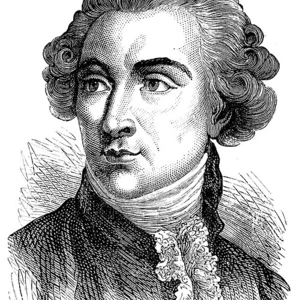
Pierre Choderlos de Laclos
1741 — 1803
Pierre Choderlos de Laclos was an eighteenth-century French writer and artillery officer. He is the author of the famous epistolary novel *Les Liaisons dangereuses* (1782), a cruel portrayal of the libertine intrigues of the aristocracy.
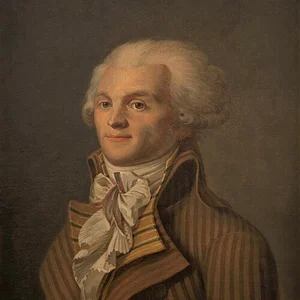
Robespierre
1758 — 1794
French lawyer and politician (1758–1794), Robespierre was a central figure of the French Revolution. Leader of the Montagnards, he dominated the Committee of Public Safety and became the embodiment of the Reign of Terror before being executed in 1794.
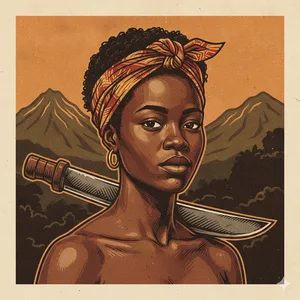
Solitude
1772 — 1802
Born around 1772 in Guadeloupe to an enslaved African mother, Solitude joined the mixed-race insurgents during the armed resistance against the restoration of slavery decreed by Bonaparte in 1802. Pregnant, she fought until her capture and was hanged the day after giving birth, on November 29, 1802. Her story, passed down through Creole and Caribbean oral tradition, has made her an emblematic figure of resistance against colonial oppression.
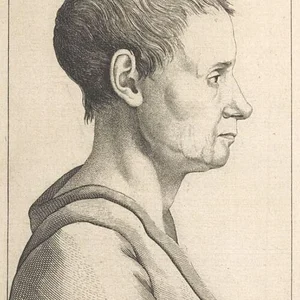
Théroigne de Méricourt
A Belgian revolutionary activist (1762–1817), Théroigne de Méricourt played an active role in the French Revolution, most notably during the Women's March on Versailles (1789). A fierce champion of women's political rights, she was one of the first revolutionary feminists before being committed to the Salpêtrière asylum, where she remained until her death.
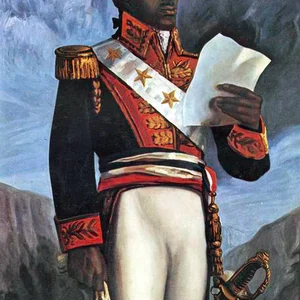
Toussaint Louverture
1743 — 1803
A freed slave and Haitian military leader (1743–1803), Toussaint Louverture led the Haitian Revolution and abolished slavery in Saint-Domingue. An iconic figure in the fight for freedom, he transformed a slave colony into the first independent Black republic.
Abbé Henri Grégoire
1750 — 1831
A Catholic priest and politician of the French Revolution, he championed the emancipation of Jews and the abolition of slavery in the colonies. Elected as a constitutional bishop, he sat in the National Convention and helped secure the passage of the 1794 abolition decree.
Antoine-Jean-Marie Thévenard
1733 — 1815
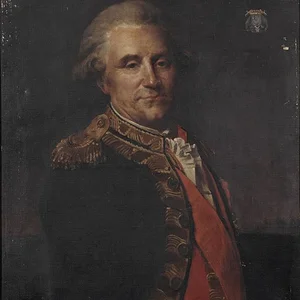
French admiral born in 1733, he distinguished himself during the American War of Independence before becoming Minister of the Navy under the Revolution (1791-1792). A senator under the Napoleonic Empire, he embodies the continuity between the Old Regime's naval tradition and the revolutionary institutions.
Auguste Marie Henri Picot de Dampierre
1756 — 1793
French general of the Revolution (1756–1793), he took command of the Army of the North after Dumouriez's betrayal and was killed in action during the siege of Condé-sur-l'Escaut. Pantheonized in 1793, his remains were removed during the Restoration.
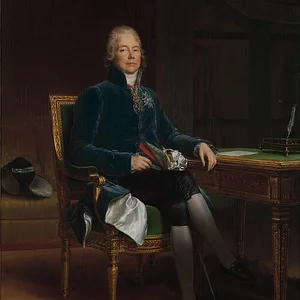
Charles-Maurice de Talleyrand-Périgord
1754 — 1839
French diplomat and statesman (1754–1838), he served under the Ancien Régime, the Revolution, the Empire, and the Restoration. A master negotiator, he defended France's interests at the Congress of Vienna in 1815.
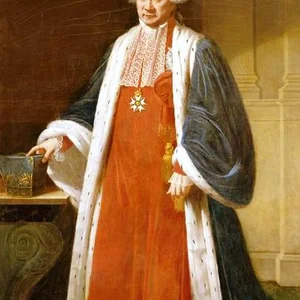
Claude Ambroise Régnier
1746 — 1814
French jurist and politician (1746–1814), Grand Judge and Minister of Justice under the First Empire. A loyal servant of Napoleon, he was created Duke of Massa in 1809 and contributed to the organization of the Napoleonic judicial system.
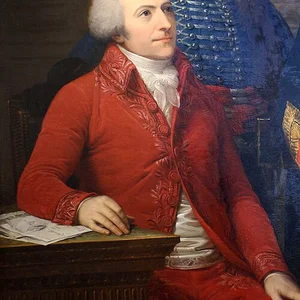
Claude-Louis Petiet
1749 — 1806
French general and politician, Claude-Louis Petiet served as Minister of War under the Directory (1797–1798), then as Councillor of State and senator under the Consulate and the Napoleonic Empire. He died in 1806, becoming the first person interred during the reign of Napoleon I.
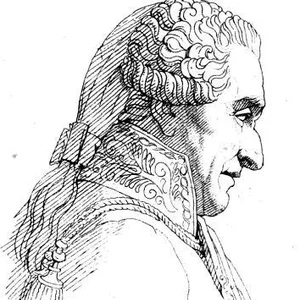
François Denis Tronchet
1726 — 1806
French jurist and statesman (1726–1806), he courageously defended Louis XVI before the Convention in 1792. He was one of the four principal authors of the Civil Code promulgated in 1804, a foundational work of modern French law.
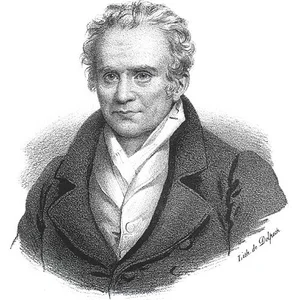
Gaspard Monge
1746 — 1818
French mathematician (1746–1818), inventor of descriptive geometry and co-founder of the École Polytechnique. A close ally of Napoleon, he played a major role in modernizing scientific and technical education in France.
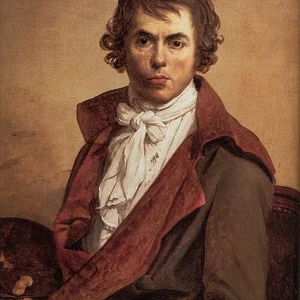
Jacques-Louis David
1748 — 1825
French Neoclassical painter (1748–1825), David was the leading figure in official painting during the Revolution and the Empire. His grand historical compositions and portraits left a lasting mark on Western art.
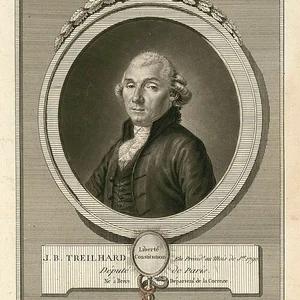
Jean-Baptiste Treilhard
1742 — 1810
French jurist and statesman (1742–1810), a member of the National Convention during the Revolution, briefly a Director, then a Councillor of State and Count of the Empire under Napoleon. He played a key role in drafting the Civil Code.
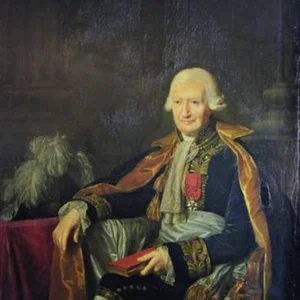
Jean-Baptiste-Pierre Bevière
1723 — 1807
French politician and member of the Convention during the Revolution, he served in the National Convention before becoming a dignitary under the Napoleonic Empire. His career illustrates the political trajectories of those who navigated both the Revolution and the Empire.
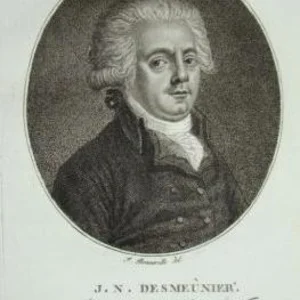
Jean-Nicolas Démeunier
1751 — 1814
French politician and writer (1751-1814), deputy to the Estates-General of 1789 and member of the National Constituent Assembly. He later became a senator under the Napoleonic First Empire.
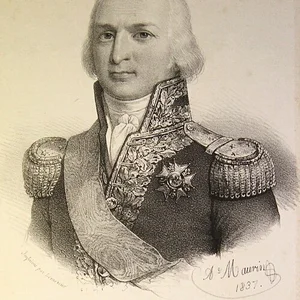
Justin Bonaventure Morard de Galles
1741 — 1809
French admiral born in 1741, he commanded the Brest squadron during the Revolution and took part in the Irish Expedition of 1796. Appointed senator of the First Empire by Napoleon, he died in 1809.
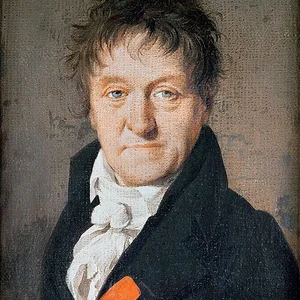
Lazare Carnot
1753 — 1823
French mathematician and general, Lazare Carnot earned the nickname "The Organizer of Victory" for his role on the Committee of Public Safety. He restructured the republican armies, contributing to the victories of revolutionary France, and left a notable mathematical legacy in geometry.
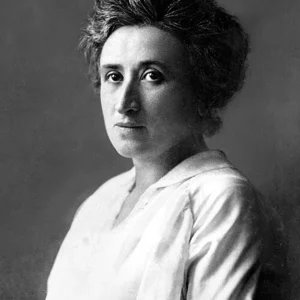
Rosa Luxemburg
1871 — 1919
Rosa Luxemburg was a Polish-born revolutionary activist and Marxist theorist who became a naturalized German citizen. Co-founder of the Communist Party of Germany (KPD), she championed a socialist revolution rooted in the mass consciousness of the working class. Arrested during the Spartacist uprising of January 1919, she was murdered by paramilitary soldiers.