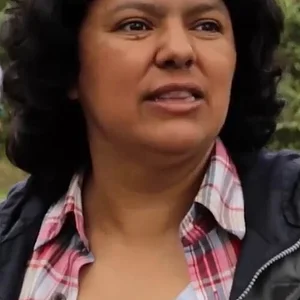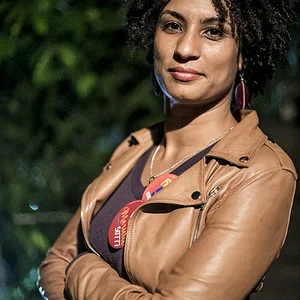

Brazilian politician, city councillor of Rio de Janeiro, and activist for the rights of Black women and LGBTQ+ people. Assassinated on March 14, 2018, she became a global symbol of the fight against violence against women and racial inequality.
Marielle Franco(1979 — 2018)
Marielle Franco
Brésil
8 min read
Frequently asked questions
Famous Quotes
« I was interrupted, but they will not silence me.»
« It's not about me, it's about us.»
Key Facts
- 1979: Born in the Maré favela in Rio de Janeiro
- 2016: Elected city councillor (vereadora) of Rio de Janeiro with the 5th highest number of votes
- March 14, 2018: Shot and killed along with her driver Anderson Gomes
- Her assassination sparked a global mobilization under the slogan 'Quem matou Marielle?' (Who killed Marielle?)
- 2023–2024: Conviction of a member of parliament and former police officers who commissioned the assassination
Works & Achievements
A critical analysis of the Pacifying Police Units in Rio's favelas, in which Marielle argues that Brazilian security policy reproduces racial exclusion. This academic work forms the foundation of most of her later legislative battles.
In a single year in office, Marielle Franco filed eleven bills and parliamentary inquiries, defending the rights of women survivors of violence, LGBTQ+ people, and favela residents facing police brutality.
One of her most emblematic texts at the Câmara Municipal, it aimed to strengthen reception and protection services for women survivors of domestic abuse in Rio, building on the federal Maria da Penha law.
Her municipal campaign, run on limited resources, drew massive support from favela residents, feminist activists, and anti-racist organizers, making her the fifth most voted candidate across all of Rio de Janeiro.
Marielle Franco's last public appearance: that evening she was hosting an empowerment event for young Black women in Rio. She was assassinated just a few hours later, on her way home.
Anecdotes
Marielle Franco grew up in the Complexo da Maré, one of the largest favela complexes in Rio de Janeiro, home to more than 130,000 residents. Despite the social and economic hardships, she earned a scholarship to study at the prestigious PUC-Rio university, proving that academic excellence can open doors even from the margins of society.
In the 2016 municipal elections, Marielle Franco received 46,502 votes, making her the fifth most elected city councillor in Rio de Janeiro. This exceptional result for a Black, lesbian woman from a favela symbolized the rising power of inclusive political representation in a deeply unequal city.
On the evening of March 14, 2018, Marielle Franco was returning from a conference titled "Young Black Women Who Move Structures." Her vehicle was ambushed in the Estácio neighborhood: she was shot and killed along with her driver Anderson Gomes. Her assassination, carried out by former police officers, sent shockwaves around the world and sparked protests in dozens of countries.
Before entering politics, Marielle Franco spent several years working alongside state representative Marcelo Freixo, who specialized in fighting the paramilitary militias that controlled large swaths of Rio. This experience shaped her understanding of systemic violence and fueled her legislative battles in defense of favela residents' rights.
Marielle Franco defended a master's thesis in public administration at the Federal Fluminense University (UFF) in 2014, analyzing the Pacifying Police Units (UPP) established in Rio's favelas. She demonstrated that these security measures reproduced patterns of control and exclusion targeting Black and low-income populations — a finding that foreshadowed her future battles in the city council.
Primary Sources
The UPP cannot be analyzed as an isolated policy, but as part of a city project that prioritizes certain spaces and populations to the detriment of others. The favela remains a place of control, not of full citizenship.
I come to the Câmara to contribute, but above all to learn. I come to say that it is possible and necessary to have representation in these spaces. And that the struggle of Black women, from the peripheries, from the favelas, cannot be left out of political decisions.
How many more must die for this war to end? Manielle is yet another victim of the genocide by the Brazilian State. Young, a woman, a mother, a sister from Coração de Jesus in the Complexo do Lins.
In 2017, we submitted 11 bills and motions focused on defending the rights of women, the LGBT population, and favela residents. The Câmara Municipal must be the place where the entire city can recognize itself.
Key Places
Marielle Franco's birthplace and childhood home, this vast network of favelas in northern Rio shaped her political and social vision. It was here that she experienced racial inequality, police violence, and community solidarity firsthand.
The seat of Rio's city council, where Marielle Franco served as a vereadora from January 2017 to March 2018, speaking out in debates on human rights, public safety, and inequality.
The university where Marielle Franco studied sociology on a scholarship — her first major step beyond the favela. This institution gave her the intellectual tools to analyze and challenge Brazil's systemic inequalities.
The site where Marielle Franco and her driver Anderson Gomes were assassinated on March 14, 2018. This street has become a place of remembrance, regularly adorned with flowers and portraits of the activist by her supporters.
A public square in Rio that became a spontaneous gathering place following Marielle Franco's assassination. Vigils and demonstrations were held there in the days that followed, reflecting the wave of popular mourning that spread internationally.
Typical Objects

Marielle Franco used the Câmara Municipal microphone as her primary political weapon, denouncing police violence, defending the rights of Black women, and challenging authorities with an eloquence recognized by her colleagues.

Her university dissertation on the UPPs (2014) was the academic foundation of her political action. She regularly cited it to legitimize her positions and demonstrate that her critique of state violence was grounded in rigorous data.

Marielle Franco made intensive use of Twitter and Instagram to broadcast her views, mobilize supporters, and document violence in the favelas in real time. Her last tweet, posted the evening of her assassination, has become a landmark historical document worldwide.

This elected official's badge symbolized the historic breakthrough of a Black woman from a favela into the Brazilian political arena. She had made it the concrete symbol of political representation long denied to marginalized communities.

In a single year in office, Marielle Franco introduced eleven bills and parliamentary motions, notably in support of women victims of violence and favela residents. These folders gave tangible form to an intense and targeted legislative record.

Her 2016 poster, featuring her smiling face against a colorful background with the slogan "Marielle vereadora — PSOL", became a global icon taken up by feminist activists in many countries following her assassination.
School Curriculum
Vocabulary & Tags
Key Vocabulary
Tags
Daily Life
Morning
Marielle Franco started her days early, checking social media to follow news from the favelas and prepare her interventions at the Câmara. She coordinated her schedule between community meetings and parliamentary sessions, often accompanied by her driver Anderson Gomes.
Afternoon
Her afternoons were divided between committee work at the city council, drafting legislation, and field visits to the favelas and working-class neighborhoods of Rio. She made time for women's associations and LGBTQ+ groups to collect their testimonies and bring their voices into the political arena.
Evening
Marielle Franco regularly took part in conferences, public debates, and activist events in the evenings, often held in cultural centers or community spaces. She was very active on social media late into the night, sharing her views and documenting the violence she spoke out against.
Food
Like many Brazilians from working-class backgrounds, her daily diet centered on rice, black beans, cassava, and chicken — the staples of popular carioca cuisine. Meals with family or fellow activists also served as moments of informal political discussion.
Clothing
Marielle Franco dressed carefully but accessibly, often pairing bold colors with professional outfits. She regularly wore gold hoop earrings and clothing that celebrated her identity as a Black woman, fully embracing her appearance as a political statement of visibility.
Housing
She lived in an apartment in Rio de Janeiro, having left the Maré favela where she had grown up. She maintained close ties with her home community, making frequent trips between her city residence and the favelas where she carried out her grassroots work.
Historical Timeline
Period Vocabulary
Liens externes & ressources
Références
Œuvres
Thèse de master : 'UPP — a redução da favela a três letras'
2014
Mandat de vereadora (conseillère municipale) — PSOL Rio
2017-2018
Projet de loi pour la protection des femmes en situation de violence domestique
2017
Campagne électorale 'Marielle vereadora' — 46 502 voix
2016
Conférence 'Jovens Negras Movendo Estruturas' (Jeunes femmes noires qui font bouger les structures)
14 mars 2018