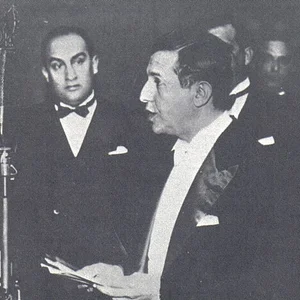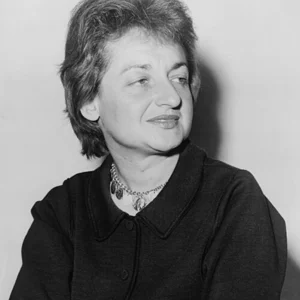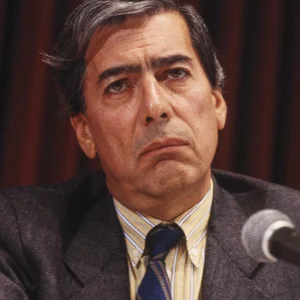

Peruvian writer, a major figure of the Latin American “Boom” and winner of the 2010 Nobel Prize in Literature. A novelist, essayist and engaged intellectual, he also ran for the presidency of Peru in 1990.
Mario Vargas Llosa(1936 — 2025)
Mario Vargas Llosa
Espagne, Pérou, République dominicaine
6 min read
Frequently asked questions
Famous Quotes
« Literature is fire.»
Key Facts
- Born on 28 March 1936 in Arequipa (Peru)
- Publishes The Time of the Hero (La ciudad y los perros) in 1963, which makes his name
- Runs for the presidency of Peru in 1990, defeated by Alberto Fujimori
- Receives the Nobel Prize in Literature in 2010
- Elected to the Académie française in 2021; died on 13 April 2025 in Lima
Works & Achievements
First novel, inspired by a military academy, which brought him to prominence and helped launch the Latin American “Boom” through its fragmented, daring narrative.
A teeming novel of interwoven storylines, set in the Peruvian jungle and desert, confirming his mastery of the “total novel.”
A vast fresco on corruption under the Odría dictatorship, built around a long dialogue. Many consider it his masterpiece.
A partly autobiographical novel blending his youthful marriage with radio soap operas, full of humor and self-mockery.
A grand historical fresco about the Canudos revolt in nineteenth-century Brazil, questioning fanaticism and utopia.
A novel about the Trujillo dictatorship in the Dominican Republic, a gripping study of the mechanisms of tyranny and fear.
A memoir recounting his childhood and his 1990 presidential campaign, a valuable document on the man and his era.
Anecdotes
Mario Vargas Llosa learned to read at the age of five and always said it was “the most important thing” in his life. As a teenager, his father sent him to the Leoncio Prado Military Academy in Lima to “cure” him of his taste for writing: the effect was the opposite, for that harsh experience inspired his first major novel.
In 1963, his novel “The Time of the Hero,” inspired by the military academy he had attended, caused a scandal in Peru. It is said that furious officers burned copies of the book in the school’s courtyard, accusing the author of having tarnished the institution’s honor.
On February 12, 1976, in a movie theater in Mexico City, Vargas Llosa punched his friend, the Colombian writer Gabriel García Márquez, giving him a black eye. The two giants of the Latin American “boom” never publicly reconciled, and the true reason for the quarrel remained a mystery.
In 1990, Vargas Llosa ran in Peru’s presidential election. Considered the favorite, he was ultimately defeated in the second round by Alberto Fujimori, an engineer who was then almost unknown. Disappointed by politics, he returned fully to literature.
In 2010, he received the Nobel Prize in Literature. Eleven years later, in 2021, he was elected to the Académie Française: an exceptional feat, he became an “immortal” even though he wrote in Spanish and not in French.
Primary Sources
Literature is fire; it means nonconformity and rebellion. The reason for the writer's existence is protest, contradiction, and criticism.
I learned to read at the age of five, in Brother Justiniano's class at the De la Salle Academy in Cochabamba, Bolivia. It is the most important thing that has ever happened to me in my life.
“Four,” said the Jaguar.
My father was alive. That news, when I was eleven, was the greatest shock of my childhood, because I had always been told that he was dead.
Key Places
City in southern Peru where Mario Vargas Llosa was born in 1936. Set at the foot of volcanoes, it is one of the country's most beautiful colonial cities.
Bolivian city where he spent his early childhood with his mother's family and learned to read at the age of five. A decisive step in his calling.
A military boarding school in Lima where he studied as a teenager. The experience directly inspired “The Time of the Hero.”
Capital of Peru, the setting for several of his novels and the stage for his 1990 presidential campaign. He died here in 2025.
Beneath the dome of the Institut de France, he was inducted as an academician, a rare honor for a Spanish-language writer. He had lived in Paris during the 1960s.
City where he settled for much of his life after acquiring Spanish citizenship in 1993. One of his main places of residence and writing.
Typical Objects

The writer's everyday working tool before the computer era, on which he tirelessly typed his drafts. Vargas Llosa was renowned for his methodical writing discipline.

Notebooks in which he recorded observations, story outlines and research for his novels, often inspired by real events. His preparation was meticulous, almost journalistic.

Pages covered with crossings-out and corrections, evidence of his relentless rewriting. He would revise his texts for long weeks before publication.

Gold medal awarded by the Swedish Academy in 2010, honouring his entire body of work. It represents the highest literary distinction in the world.

Ceremonial sword presented to members of the Académie française, to which he was elected in 2021. A symbolic object marking the status of an “immortal”.

A vast collection of books spread across his homes in Lima, Madrid and London. A passionate reader, he drew his love of fiction from the classics.
School Curriculum
Vocabulary & Tags
Key Vocabulary
Tags
Daily Life
Morning
Known for his iron discipline, Vargas Llosa devoted every morning to writing, usually from nine o'clock to two o'clock, without exception. He first wrote his drafts by hand or on a typewriter, line by line.
Afternoon
The afternoon was reserved for revising, researching, and reading. He reread and corrected his pages tirelessly, sometimes for months, before deeming a text finished.
Evening
In the evening, he enjoyed going to the theater, concerts, and dinners with friends and intellectuals. A great conversationalist, he often extended these evenings with discussions about politics and literature.
Food
A citizen of the world divided between Lima, Madrid, Paris, and London, he enjoyed Peruvian cuisine such as ceviche, but also European gastronomy. For him, meals were moments of sociability and exchange.
Clothing
Elegant and well-groomed, he gladly wore a suit and tie, in keeping with his image as a public intellectual and presidential candidate. At his induction into the Académie française, he donned the green embroidered uniform of the “immortals.”
Housing
He lived in comfortable, cultivated apartments filled with books, moving between his various residences in Lima, Madrid, Paris, and London. These places reflected his dual belonging to both Peru and Europe.
Historical Timeline
Period Vocabulary
Liens externes & ressources
Références
Œuvres
La Ville et les Chiens
1963
La Maison verte
1966
Conversation à La Cathédrale
1969
La Tante Julia et le Scribouillard
1977
La Guerre de la fin du monde
1981
La Fête au Bouc
2000
Le Poisson dans l'eau
1993