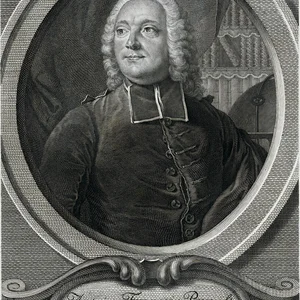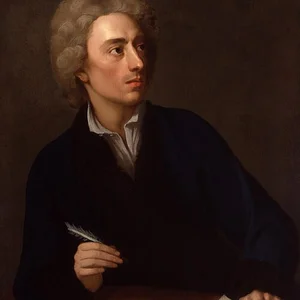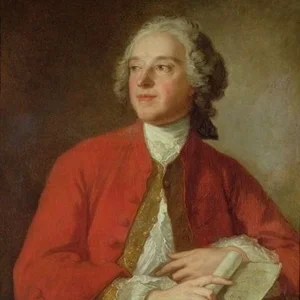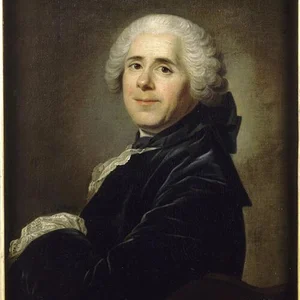

An 18th-century French writer, playwright, and journalist, Marivaux is the author of brilliant comedies that explore the games of love and chance. He is known for his elegant style and psychological subtlety in the portrayal of feelings.
Marivaux(1688 — 1763)
Marivaux
France
7 min read
Frequently asked questions
Key Facts
- 1722: publication of The Surprise of Love, his first major comedy
- 1730: premiere of The Game of Love and Chance, his most celebrated play
- 1735–1750: director and editor of Le Spectateur français, a literary journal
- 1743: elected to the Académie française
- 1763: died in Paris on 11 February
Works & Achievements
Marivaux's masterpiece, this three-act comedy stages a double disguise between masters and servants. It perfectly illustrates 'marivaudage' and remains to this day the most performed French play in secondary schools.
A three-act play in which sincere love is put to the test by the artifices of court life. Marivaux explores the contradictions of the human heart and the complexity of feelings.
A subtle comedy in which a valet orchestrates a sentimental manipulation so that his master may win the heart of a wealthy widow. The work questions the boundaries between sincerity and artifice in love.
A fictional autobiographical novel published in eleven parts, following the journey of an orphan girl through Parisian society. This novel of psychological analysis anticipates the realist novel of the nineteenth century.
A moral journal founded by Marivaux, composed of periodic sheets in which he observes the customs of his time with irony and benevolence. This journalistic work reveals his acuity as a social observer.
A short utopian comedy in which masters and slaves exchange roles on an imaginary island. Marivaux critiques social inequalities with lightness but genuine philosophical depth.
A libertine and social novel recounting the rise of a young peasant into Parisian high society. The male counterpart to The Life of Marianne, it depicts with humor the strategies of social mobility.
Anecdotes
Marivaux inadvertently coined a word in the French language: "marivaudage". His contemporaries used this term, sometimes mockingly, to describe his style of amorous dialogue — precious and subtle. Today, the word has entered every dictionary and refers to a way of expressing one's feelings with delicacy and refinement.
Marivaux was a regular at Parisian literary salons, notably those of Mme de Lambert and Mme de Tencin. It was in these elegant circles that he honed his keen observation of amorous behavior, nourishing his future comedies with lived situations and finely observed psychological portraits.
In 1720, Marivaux lost nearly his entire fortune in the collapse of John Law's financial system, which ruined thousands of French investors. Forced to write for a living, he multiplied his activities as a playwright and journalist — this personal tragedy perhaps making him even more attuned to the social inequalities he depicts in his works.
Elected to the Académie française in 1742, Marivaux was chosen over Voltaire, much to the latter's displeasure. This election reveals the prestige Marivaux enjoyed among his peers, even though Voltaire never forgave him and publicly mocked his style as overly convoluted.
Marivaux personally directed several of his plays with the Comédie-Italienne, a troupe he preferred over the Comédie-Française for their flexibility and natural acting style. This lasting collaboration allowed him to create characters such as Arlequin and Silvia, who became emblematic of his theatre.
Primary Sources
SILVIA: My God, how easy men are to deceive! It fills me with pity. DORANTE: I confess that I find myself in the same predicament as you, and that I do not know what to make of what I see.
I have seen men capable of good, who did not do good; I have seen men capable of evil, who did not do evil. It is this mixture that moves me and occupies my mind.
I remember having seen, in my youth, an elderly woman whom everyone respected, and whose virtue seemed to me so natural, so effortless, that it was all the more beautiful for it.
DUBOIS: You are loved, Sir, I tell you; I know Araminte, her heart is yours. I have seen her blush, I have seen her grow pale, and those two movements do not lie.
Key Places
Main stage where Marivaux had most of his masterworks performed. The Italian troupe offered him a freedom of improvisation and a natural style of acting that he could not find at the Comédie-Française.
One of the most prestigious literary salons in Paris, frequented by Marivaux from the very start of his career. It was there that he honed his keen observation of the social and romantic games that fuel his comedies.
Marivaux had several plays performed there, including La Mère confidente (1735), but he preferred the Comédiens-Italiens. The rivalry between the two troupes left its mark on his career.
Institution of which Marivaux became a member in 1742, a belated but symbolic crowning of an exceptional literary career. He delivered several speeches there on language and style.
Typical Objects

The everyday instrument of Marivaux, a prolific journalist and playwright who wrote plays, novels, and press articles with a quill. His fine, swift handwriting reflected the liveliness of his mind.

Symbol of the Comédie-Italienne troupe with which Marivaux collaborated closely. The Harlequin mask, a recurring character in his plays, represents the play on identities and appearances so central to his theatre.

Garment worn by manservants and maidservants in Marivaux's comedies. Sartorial disguise — masters and servants swapping their clothes — lies at the heart of plays such as The Game of Love and Chance.

An indispensable feminine accessory in eighteenth-century drawing rooms, the fan accompanies the games of seduction and whispered asides that Marivaux stages with subtlety. It symbolises the coquetry and restraint of his female characters.

Marivaux was one of the first French literary journalists, publishing Le Spectateur français and then L'Indigent philosophe. These periodical sheets served him as a means of observing and commenting on the manners and morals of his time.

The literary salons where Marivaux was received — at the homes of Mme de Lambert and Mme de Tencin — were lit by candlelight. It was by the glow of these soft lights that the social intrigues unfolded which inspired his work.
School Curriculum
Vocabulary & Tags
Key Vocabulary
Daily Life
Morning
Marivaux rose early to write, taking advantage of the morning quiet to draft his dialogues or journal articles. He worked with a quill pen in a modest Parisian apartment, surrounded by manuscripts and loose sheets of paper.
Afternoon
His afternoons were often devoted to rehearsals with the Comédie-Italienne or to gatherings in literary salons where he was warmly received. He closely observed the behavior of his contemporaries, feeding his work in the process.
Evening
Marivaux's evenings were frequently spent at the theatre, attending performances of his own plays or those of other troupes. After the show, he would often join fashionable circles for lively conversations and fine suppers.
Food
Like any cultured Parisian of his era, Marivaux frequented cafés where coffee, hot chocolate, and lemonade were served. His meals followed the bourgeois habits of the 18th century: broths, roasts, and sweet entremet desserts, all washed down with Burgundy wine.
Clothing
Marivaux dressed as a distinguished man of letters, though without excessive ostentation: a fine wool coat, powdered wig, lace jabot, and silk stockings. His neat appearance allowed him to move freely between aristocratic salons and bourgeois circles without standing out.
Housing
Marivaux lived in various Parisian apartments throughout his life, never reaching the comfort of the great lords. After the financial ruin of 1720, he led a modest but intellectually rich existence, far from the grandeur of the nobility's private mansions.
Historical Timeline
Period Vocabulary
Visual Style
Le style visuel de l'univers de Marivaux s'inspire du Rococo français — pastels dorés, jardins galants et salons dorés à la Watteau — avec une touche d'ironie théâtrale et de travestissement.
Sound Ambience
L'univers sonore de Marivaux mêle la douceur feutrée des salons littéraires parisiens au bourdonnement vivant des coulisses de théâtre, entre conversations spirituelles et froissement de costumes.
Liens externes & ressources
Références
Œuvres
Le Jeu de l'amour et du hasard
1730
La Double Inconstance
1723
Les Fausses Confidences
1737
La Vie de Marianne
1731-1742
Le Spectateur français
1721-1724
L'Île des esclaves
1725
Le Paysan parvenu
1734-1735