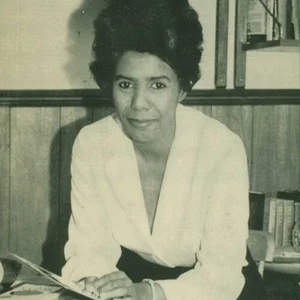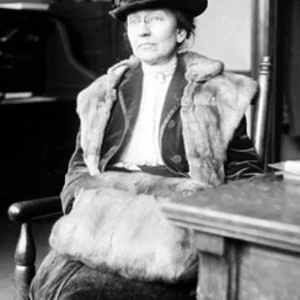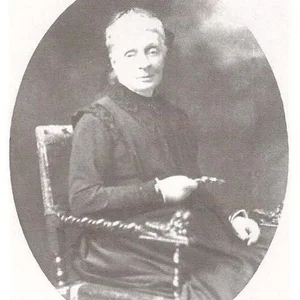

French aristocrat, daughter of the Duke of Morny, known by the nickname “Missy.” A sculptor and music-hall performer, she lived openly dressed as a man and had a famous relationship with the writer Colette, sparking the Moulin Rouge scandal of 1907.
Marquise de Belbeuf
Mathilde de Morny, Marquise de Belbeuf
5 min read
Frequently asked questions
Key Facts
- Born in 1863, the daughter of Charles de Morny, Duke of Morny and half-brother of Napoleon III, and of the Russian princess Sophie Troubetzkoï.
- In 1881 she married Jacques Godart, Marquis de Belbeuf, from whom she separated and then divorced in 1903.
- A sculptor under the pseudonym “Yssim” (an anagram of Missy), she also performed on music-hall stages.
- On 3 January 1907, her pantomime “Rêve d'Égypte” (Dream of Egypt) at the Moulin Rouge with Colette caused a scandal and the show was banned.
- Colette's partner from 1906 to 1911, she lived openly dressed as a man until her death by suicide in 1944.
Works & Achievements
Missy practiced sculpture in her studio and exhibited some of her works, an artistic pursuit that was exceptional for an aristocrat at the time.
A pantomime performed at the Moulin Rouge in which Missy, under the name “Yssim,” played a scholar opposite Colette as a mummy; the closing kiss set off a resounding scandal.
She appeared on several Parisian stages in pantomimes, combining her love of spectacle with her provocative public life.
Missy encouraged and funded Colette's early days in music hall and in writing, and lent her the Villa Rozven, which inspired several of her books.
Anecdotes
On 3 January 1907, Mathilde de Morny stepped onto the stage of the Moulin Rouge in a pantomime titled “Rêve d'Égypte” (Dream of Egypt), under the pseudonym “Yssim” (Missy spelled backwards). Dressed as a scholar, she kissed her friend, the writer Colette, who was playing a revived mummy, right there on stage. The hall erupted in whistles, shouts and flying objects, and the police had to step in. The show was banned the very next day.
The daughter of the Duke of Morny, Mathilde had herself called “Missy,” “Uncle Max,” or “Monsieur le Marquis.” She wore men's suits, kept her hair short and smoked cigars, at a time when a regulation still forbade women from wearing trousers without permission from the police.
Beyond the music halls, Missy was a sculptor and worked in her own studio, handling clay and modelling tools. Such serious artistic work was very rare at the time for a woman of the high aristocracy.
Her father, the Duke of Morny, was the half-brother of Emperor Napoleon III: Mathilde was thus born at the very top of the Second Empire's aristocracy. Yet she chose to lead a free and provocative life, far from the conventions imposed on women of high society.
Missy owned a villa called Rozven, on the Breton coast near Saint-Malo, which she made available to Colette. The writer spent many summers there and drew from it the inspiration for several of her books.
Primary Sources
In it, Colette paints the portrait of “la Chevalière,” a society woman dressed as a man and inspired by Missy, whom she describes with tenderness for her manly elegance and her delicacy.
The newspapers report the uproar in the Moulin Rouge hall when the Marquise de Morny and Colette kiss on stage; faced with the scandal, the police prefecture had the pantomime banned.
The text requires any woman wishing to dress as a man to first obtain authorization from the police prefecture — a rule still invoked in Missy's day.
Key Places
Missy's hometown, where she lived a large part of her life and where she died in 1944.
Famous Montmartre music hall where, on 3 January 1907, the scandal of the “Rêve d'Égypte” took place.
Seaside house in Brittany that Missy owned and made available to Colette for her summers of writing.
Typical Objects

Trousers, jacket, and waistcoat cut for her by tailors: this was her everyday outfit, which displayed her rejection of feminine codes.

Missy smoked cigars, a gesture then reserved for men, which reinforced her persona as the “Monsieur le Marquis.”

An accessory of masculine elegance prized in the high-society and bohemian circles that Missy frequented.

In her studio, she modeled clay and shaped busts, evidence of her work as an artist.

An element of the dandy's outfit, the cane completed her masculine silhouette in the streets of Paris.

Pieces of men's clothing she fully adopted, where a woman was expected to wear dresses and corsets.
School Curriculum
Vocabulary & Tags
Key Vocabulary
Tags
Daily Life
Morning
In the morning, Missy liked to work in her sculpture studio, shaping clay and modeling busts. She would dress in a comfortable man's suit, with short hair and a white shirt, before sometimes receiving a few visitors.
Afternoon
The afternoon might be devoted to pantomime rehearsals for the music hall or to strolls through Paris. A wealthy woman, she could use her time freely, far from the social obligations imposed on women of her rank.
Evening
In the evening, Paris came alive: dinners with artist friends, shows, and parties in bohemian and high-society circles. She moved in the circles that tolerated her freedom to live and dress like a man.
Food
Like the aristocracy of the Belle Époque, she enjoyed refined cuisine: dishes in rich sauces, game, pastries, and fine wines, served at home or in fashionable restaurants. A cigar often accompanied the end of the meal.
Clothing
Missy wore tailor-made men's suits: trousers, waistcoat, jacket, tie, and sometimes a monocle. This outfit, daring for a woman, in principle required a permit from the police prefecture.
Housing
She lived in comfortable Parisian apartments and owned the Villa Rozven in Brittany. Her aristocratic fortune ensured her an elegant lifestyle, with servants and a personal studio.
Historical Timeline
Period Vocabulary
Liens externes & ressources
Références
Œuvres
Rêve d'Égypte
1907
Rôles de pantomime en music-hall
vers 1906-1910
Soutien à la carrière de Colette
1906-1911