 flip
flipPoi, the Pounded Taro Staple
Poi, the Pounded Taro Staple
Why this dish? To transcribe the Kumulipo, the Hawaiian creation chant, Beckwith spent entire seasons alongside storytellers on Maui. At each of those tables was the poi bowl: this is the food she shared day after day to gain the trust of those who held the myths.
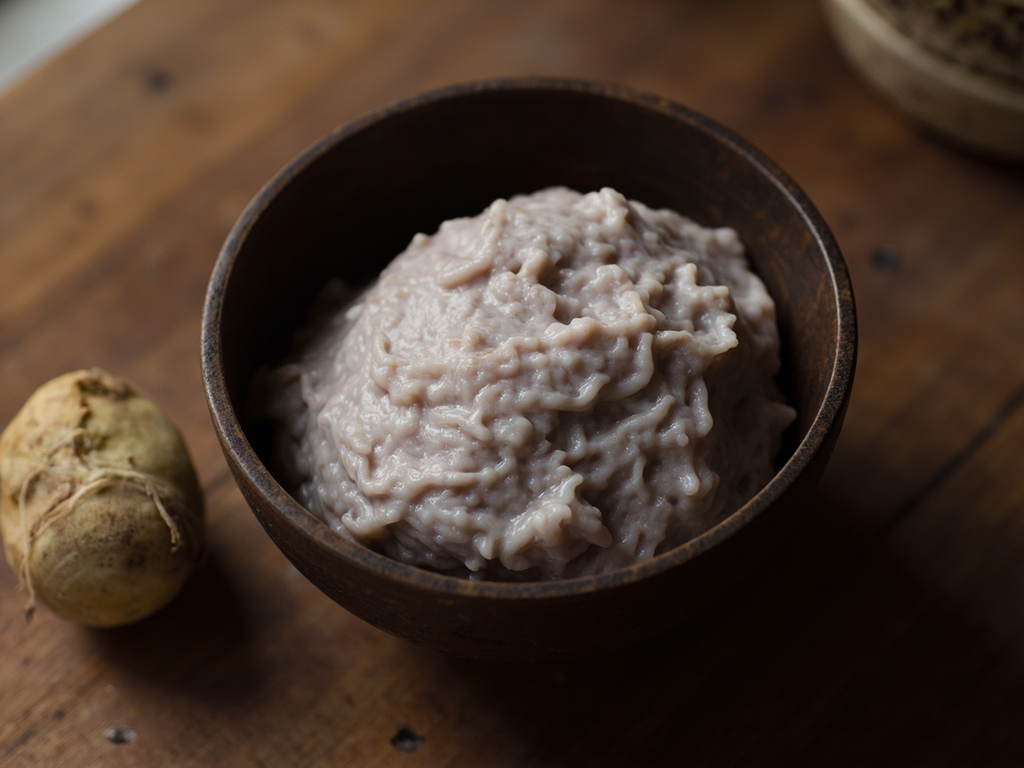
A smooth, greyish-purple paste made from taro root steamed then pounded with water. Depending on whether it is left to age for one day or three, it goes from sweet to slightly sour. It is eaten with the fingertips, rolled — 'one-finger poi' or 'two-finger poi' depending on its thickness.
Allow me to present this humble grey bowl: do not be deceived by its simplicity. In Maui, I learned that one never raises one's voice over an uncovered poi bowl, for the taro is the elder of the house, the first-born brother of man. It is pounded at length, on stone, until it flows; it is thinned with a few drops of water, and depending on how many fingers it takes to bring it to the mouth, it is called one-finger, two-finger, or three-finger. On the second day it turns, becomes a little sour — and that, I was assured, is how it is best loved.
- •Taro root (kalo) — several large roots (starchy base)
- •Spring water — as needed for consistency (texture adjustment)
Poi, the Pounded Taro Staple
A smooth, greyish-purple paste made from taro root steamed then pounded with water. Depending on whether it is left to age for one day or three, it goes from sweet to slightly sour. It is eaten with the fingertips, rolled — 'one-finger poi' or 'two-finger poi' depending on its thickness.
Why this dish? To transcribe the Kumulipo, the Hawaiian creation chant, Beckwith spent entire seasons alongside storytellers on Maui. At each of those tables was the poi bowl: this is the food she shared day after day to gain the trust of those who held the myths.
Allow me to present this humble grey bowl: do not be deceived by its simplicity. In Maui, I learned that one never raises one's voice over an uncovered poi bowl, for the taro is the elder of the house, the first-born brother of man. It is pounded at length, on stone, until it flows; it is thinned with a few drops of water, and depending on how many fingers it takes to bring it to the mouth, it is called one-finger, two-finger, or three-finger. On the second day it turns, becomes a little sour — and that, I was assured, is how it is best loved.
Ingredients (period version)
- Taro root (kalo) — several large roots (starchy base)
- Spring water — as needed for consistency (texture adjustment)
Ingredients
- Fresh taro root — 1 kg (starchy base)
- Water — 250 to 400 ml (texture adjustment)
- Salt — 1 pinch (optional) (very light seasoning)
Method
- Scrub and peel the taro (wear gloves: raw troot irritates the skin).
- Cut into large chunks and steam for 45 minutes to 1 hour, until a knife pierces without resistance.
- Mash the still-hot taro with a pestle or in a mortar, adding water little by little, until a perfectly smooth and silky paste forms.
- For 'fresh' poi, serve immediately; for 'sour' poi, cover and let ferment for 1 to 3 days at room temperature, stirring daily.
- Serve in a communal bowl, to be eaten with the fingers.
How it was made : The taro had to be cooked thoroughly (raw, it contains irritating oxalate crystals) then pounded on a wooden board (papa ku'i 'ai) with a stone pestle (pōhaku ku'i 'ai). Natural fermentation, due to airborne yeasts, was not an accident but the sought-after signature of mature poi.
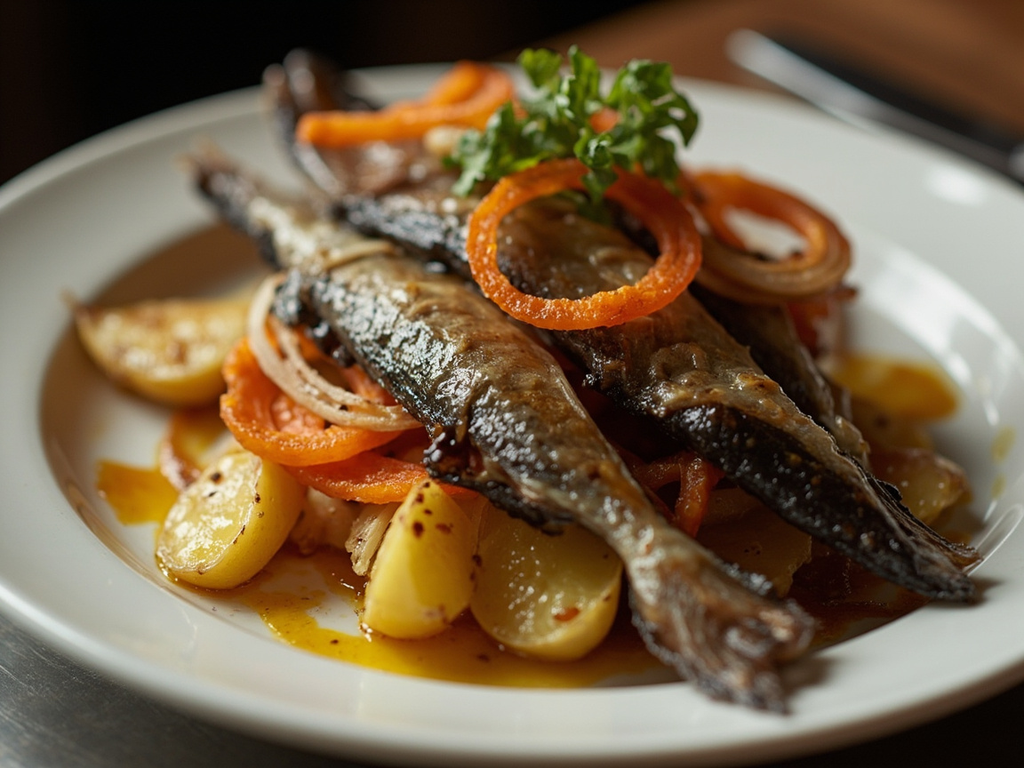
The contemporary twist : Serve the poi in small quenelles on a slate plate, alongside a medium-rare salmon, to remind that this 'bread' of the Pacific deserves a place at fine dining tables.
Sources : Martha Warren Beckwith, Hawaiian Mythology, 1940 · Mary Kawena Pukui & Samuel Elbert, Hawaiian Dictionary
Martha Beckwith · Charactorium