 flip
flipCollard Greens
Collard Greens
Why this dish? Long-simmered collard greens are the daily side of the African American Southern table, present at every family meal. They embody the "traditional Southern cuisine" and "simmered vegetables" mentioned in King's profile, a direct legacy of Southern kitchen gardens.
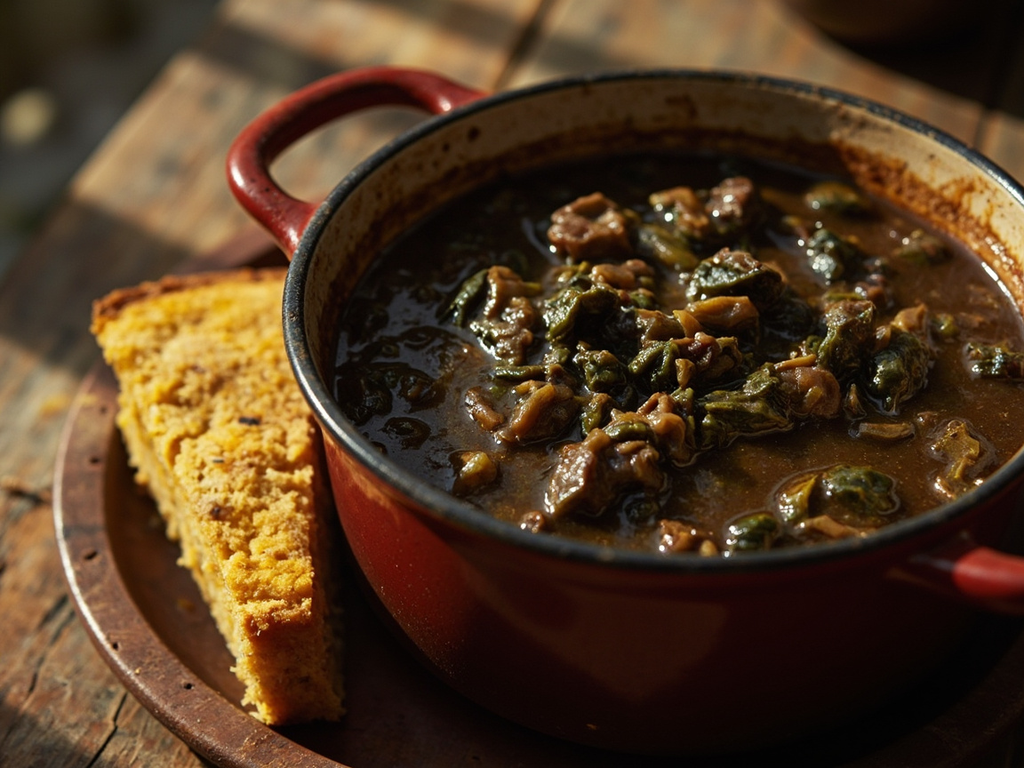
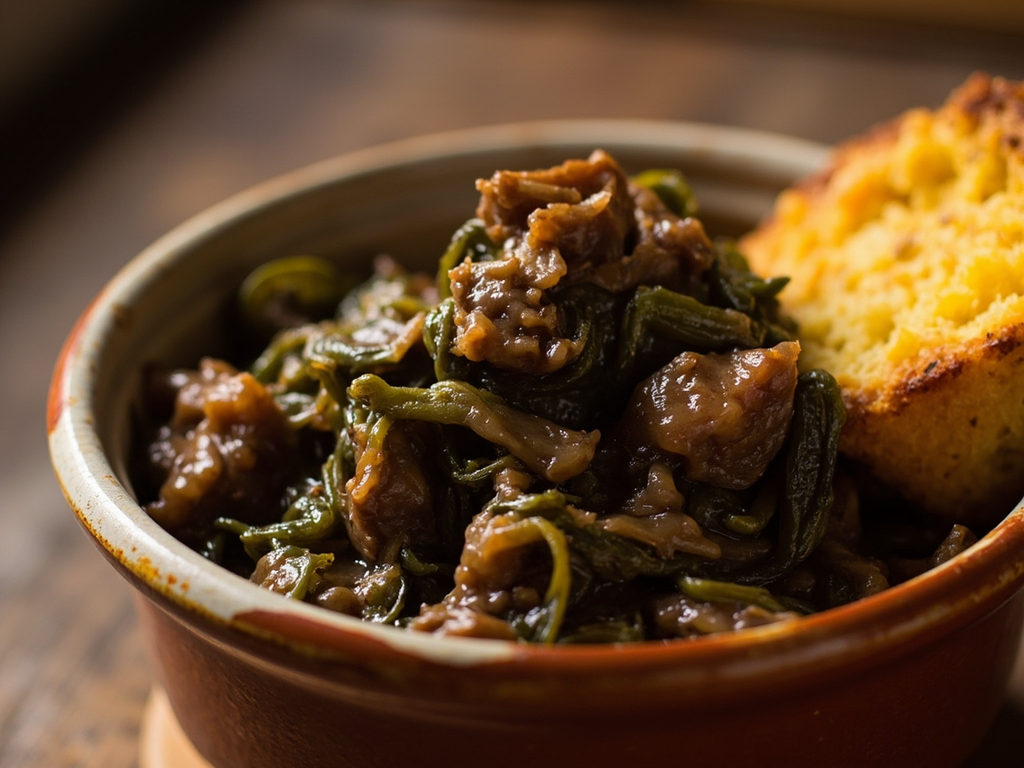
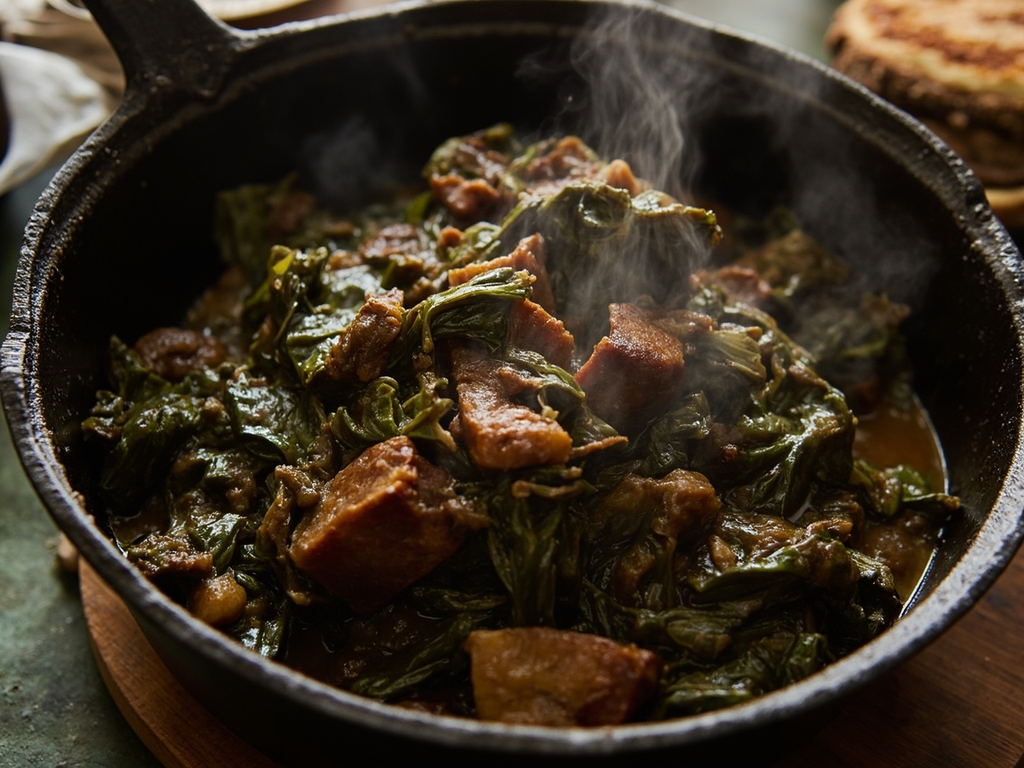
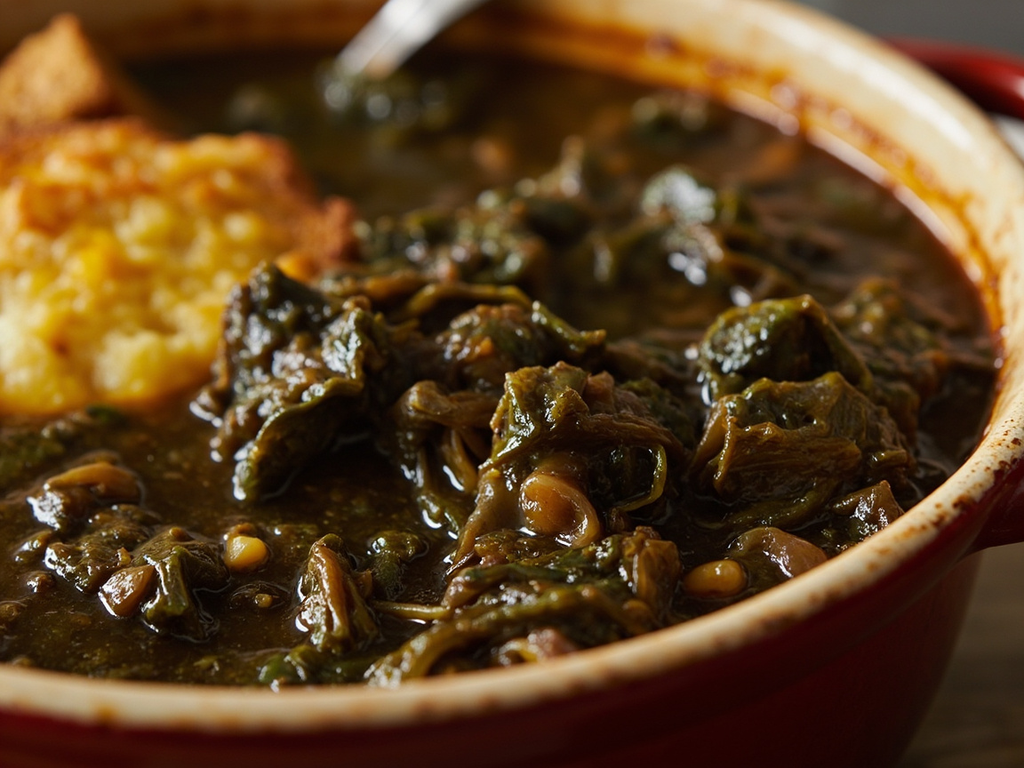
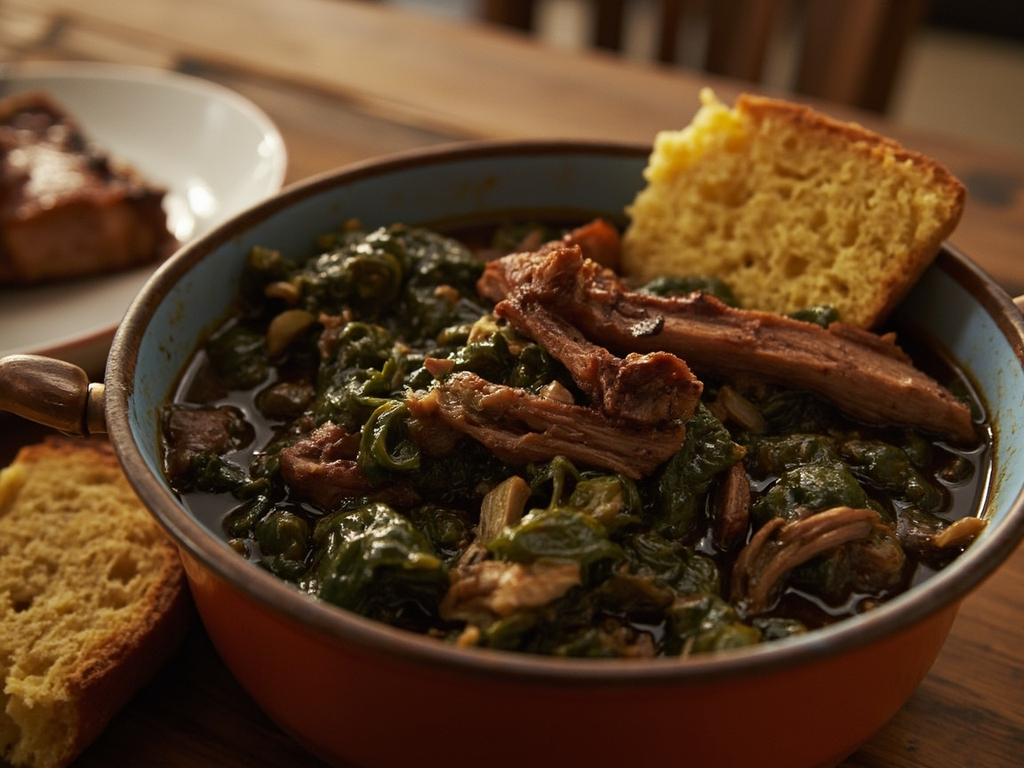
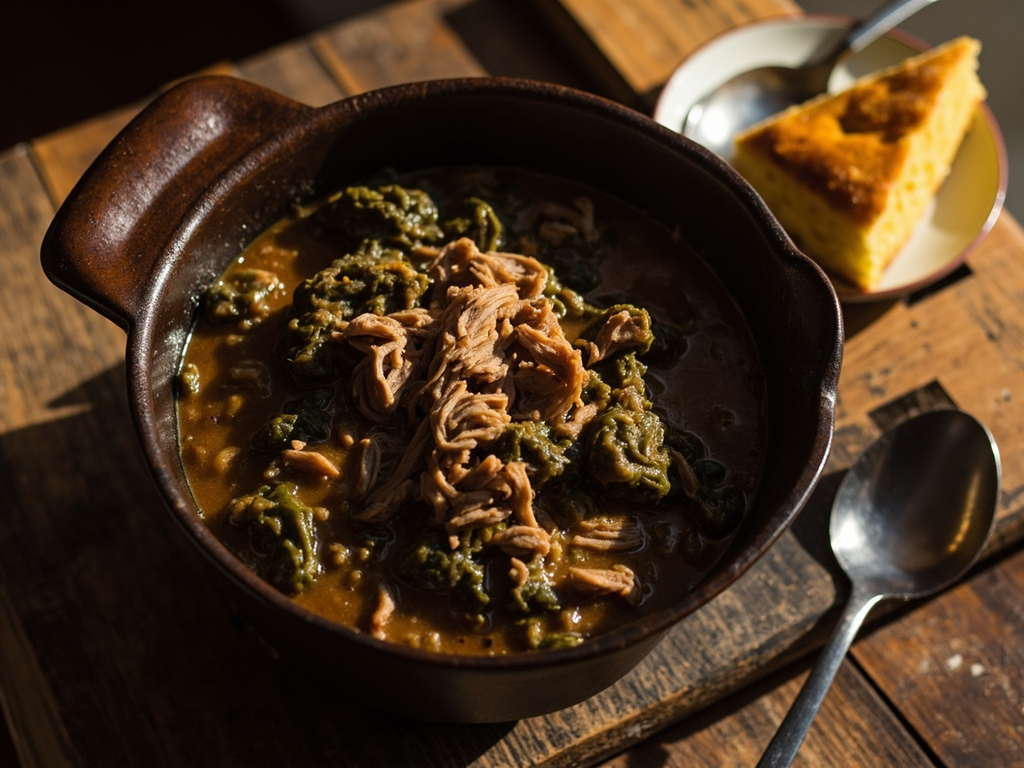
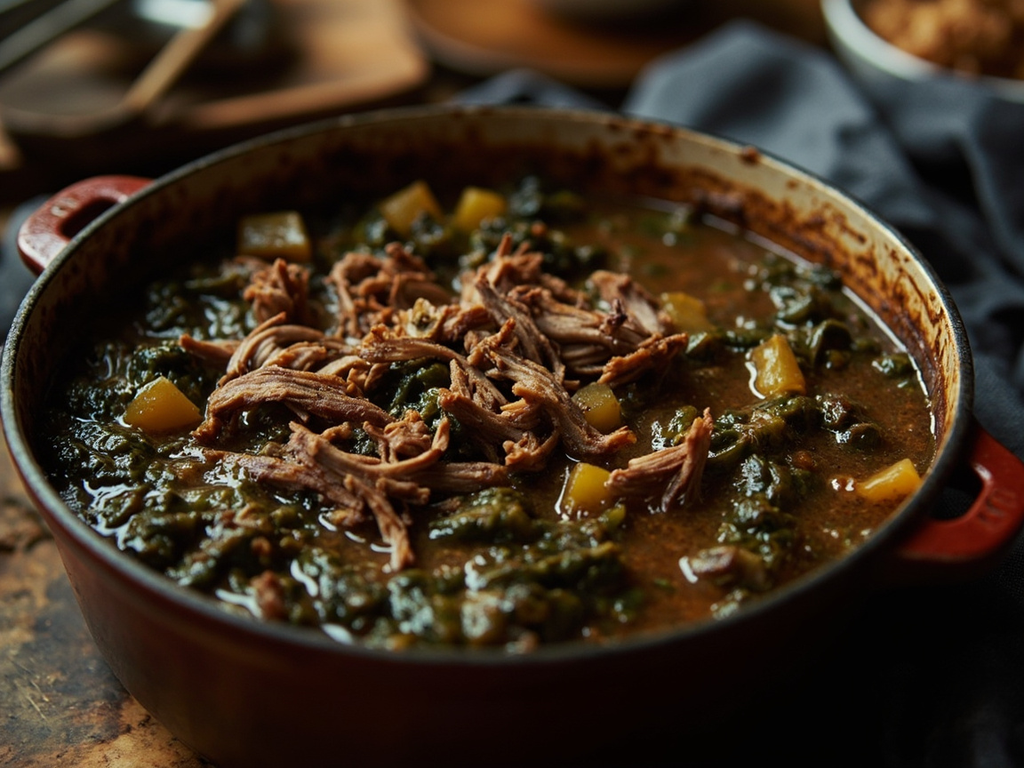
Large collard leaves braised for hours with a piece of smoked pork, until silky and deeply flavorful. The cooking liquid, the precious "pot likker," is even drunk by the spoonful or soaked up with bread.
See these green leaves, humble as they are: they have fed a whole people through trials. At home, we let them sing softly on the fire for an entire afternoon, with a piece of smoked ham hock that gave them its soul. And the juice at the bottom of the pot — we called it pot likker — no one threw it away, for that is where all the strength of the dish lay. Learn this, my children: what seems humble and bitter can, through patience, become a blessing on the table.
- •Collard greens — a large armful (base vegetable)
- •Smoked ham hock — 1 piece (umami seasoning)
- •Onion — 1 (aromatic)
- •Water — to cover (broth)
- •Salt, pepper, splash of vinegar — to taste (seasoning)
Collard Greens
Large collard leaves braised for hours with a piece of smoked pork, until silky and deeply flavorful. The cooking liquid, the precious "pot likker," is even drunk by the spoonful or soaked up with bread.
Why this dish? Long-simmered collard greens are the daily side of the African American Southern table, present at every family meal. They embody the "traditional Southern cuisine" and "simmered vegetables" mentioned in King's profile, a direct legacy of Southern kitchen gardens.
See these green leaves, humble as they are: they have fed a whole people through trials. At home, we let them sing softly on the fire for an entire afternoon, with a piece of smoked ham hock that gave them its soul. And the juice at the bottom of the pot — we called it pot likker — no one threw it away, for that is where all the strength of the dish lay. Learn this, my children: what seems humble and bitter can, through patience, become a blessing on the table.
Ingredients (period version)
- Collard greens — a large armful (base vegetable)
- Smoked ham hock — 1 piece (umami seasoning)
- Onion — 1 (aromatic)
- Water — to cover (broth)
- Salt, pepper, splash of vinegar — to taste (seasoning)
Ingredients
- Kale or collard greens — 1 kg (base vegetable)
- Smoked ham hock (or smoked pork belly) — 300 g (smoky umami)
- Sliced onion — 1 large (aromatic)
- Chicken broth — 1 L (braising liquid)
- Apple cider vinegar — 2 tbsp (brightens flavor)
- Salt, pepper, pinch of sugar — to taste (balance)
Method
- Wash the leaves thoroughly, remove tough stems, and cut into wide ribbons.
- In a large pot, sauté the onion, add the ham hock and broth, bring to a simmer.
- Let the pork simmer alone for 45 minutes to flavor the liquid.
- Add the leaves, cover, and braise on low heat for 1 to 1.5 hours until silky tender.
- Shred the meat from the hock into the dish, add vinegar, adjust salt and pepper.
- Serve hot with a ladle of pot likker (the juice).
How it was made : Inherited from plantation kitchen gardens, this dish extracts the maximum from a minimum: robust, frost-resistant greens, tenderized by hours on the stove and enlivened with a bit of smoked pork that was made to last. The pot likker, rich in vitamins, was given to children and the sick.
The contemporary twist : A smoked version without pork, using smoked paprika and mushroom broth, to keep the umami spirit in a vegetarian variation.
Sources : Adrian Miller, Soul Food, 2013 · Jessica B. Harris, High on the Hog: A Culinary Journey from Africa to America, 2011
Martin Luther King · Charactorium