 flip
flipCollard Greens Braised with Pot Likker
Collard Greens Braised with Pot Likker
Why this dish? Collard greens are the heart of African American Southern cuisine, with which Angela Davis grew up in Birmingham, in a middle-class Black family attached to these traditions. A dish passed down through generations of women, it embodies for her the culinary memory she now connects to food justice issues.
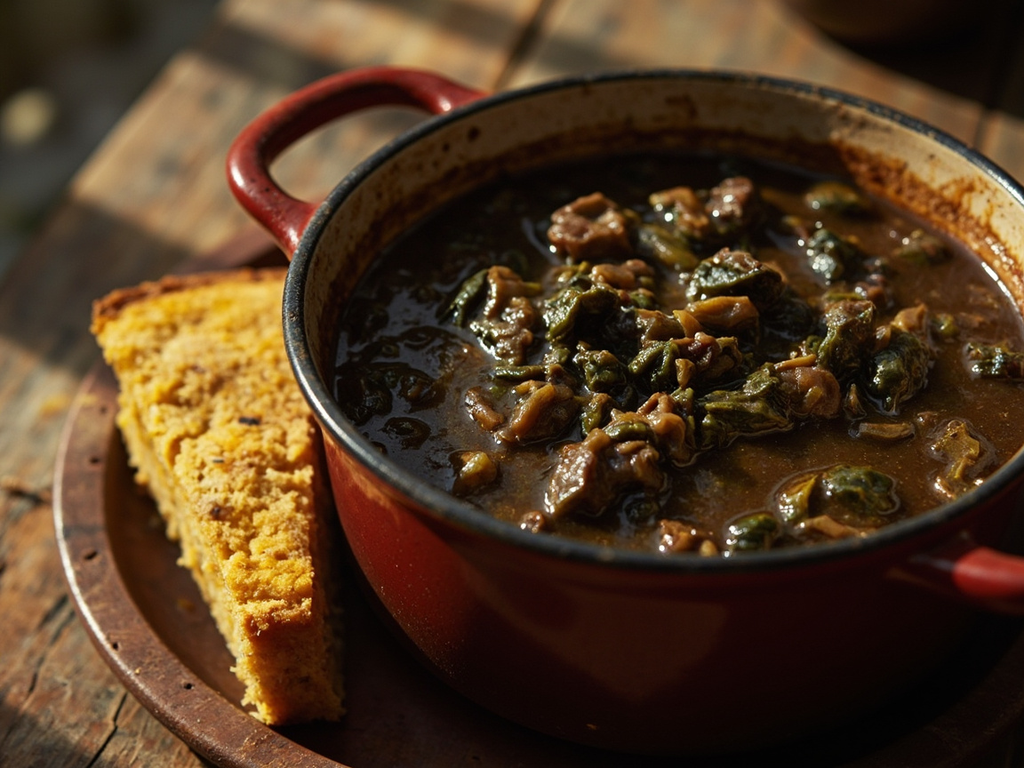
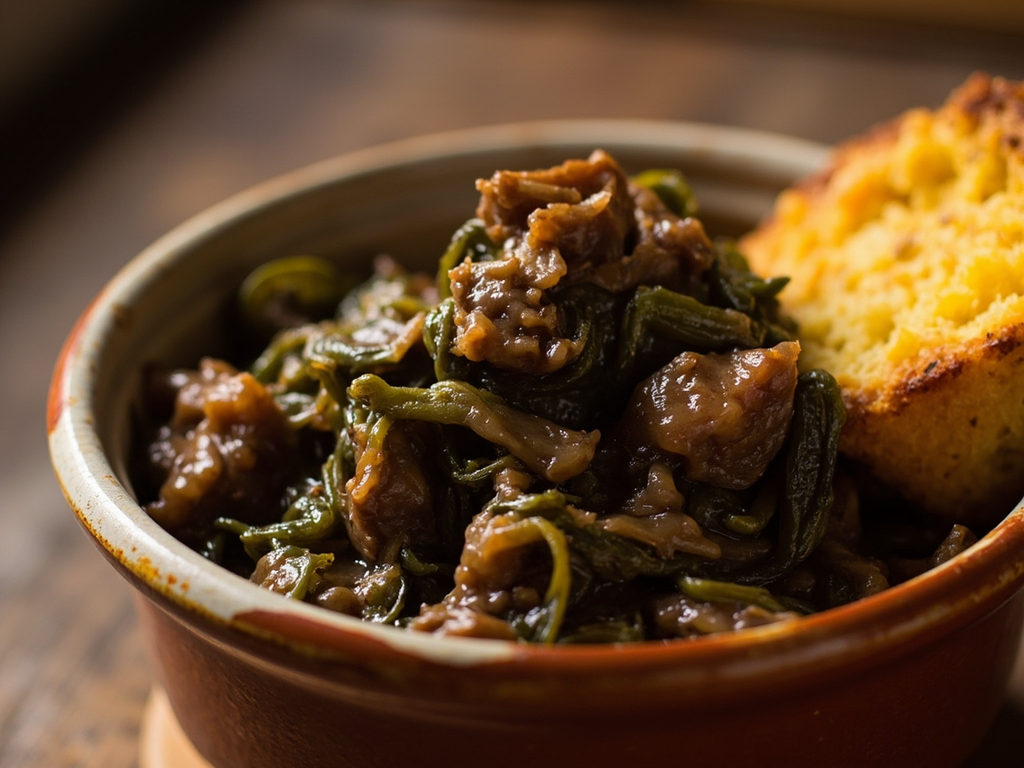
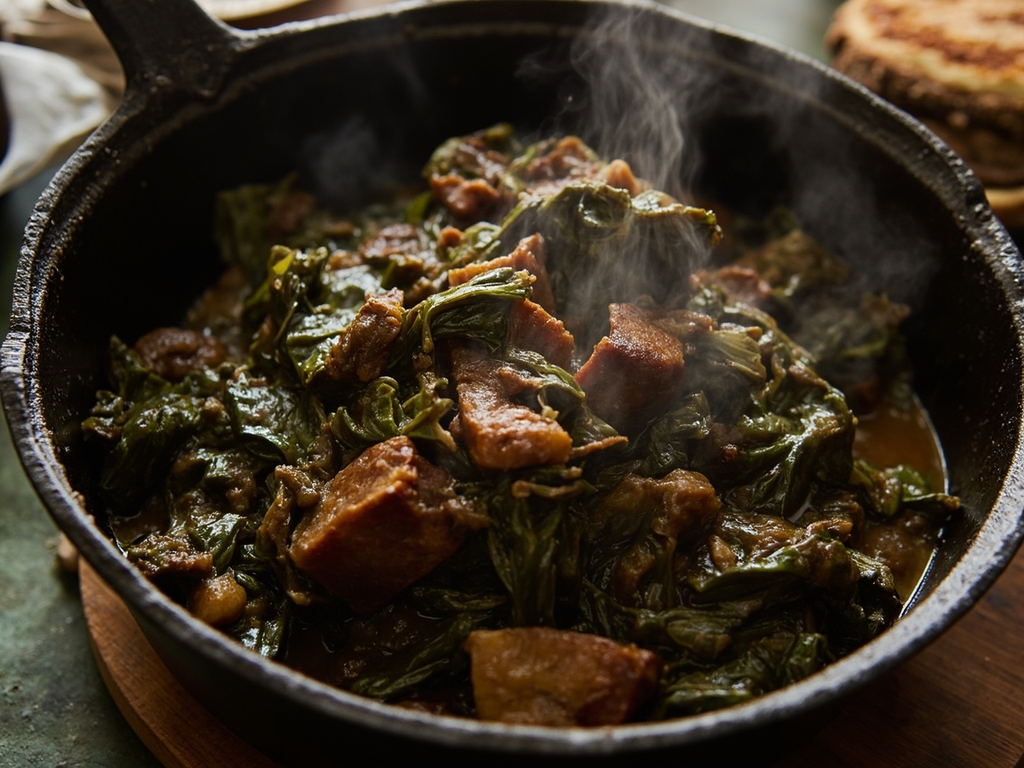
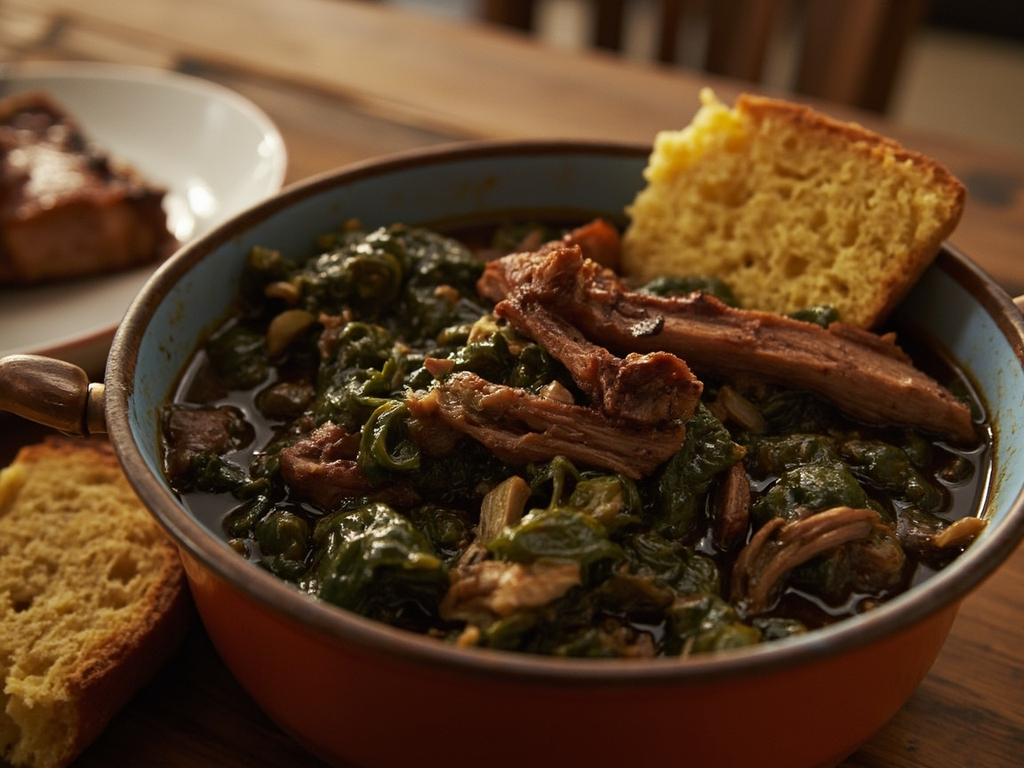
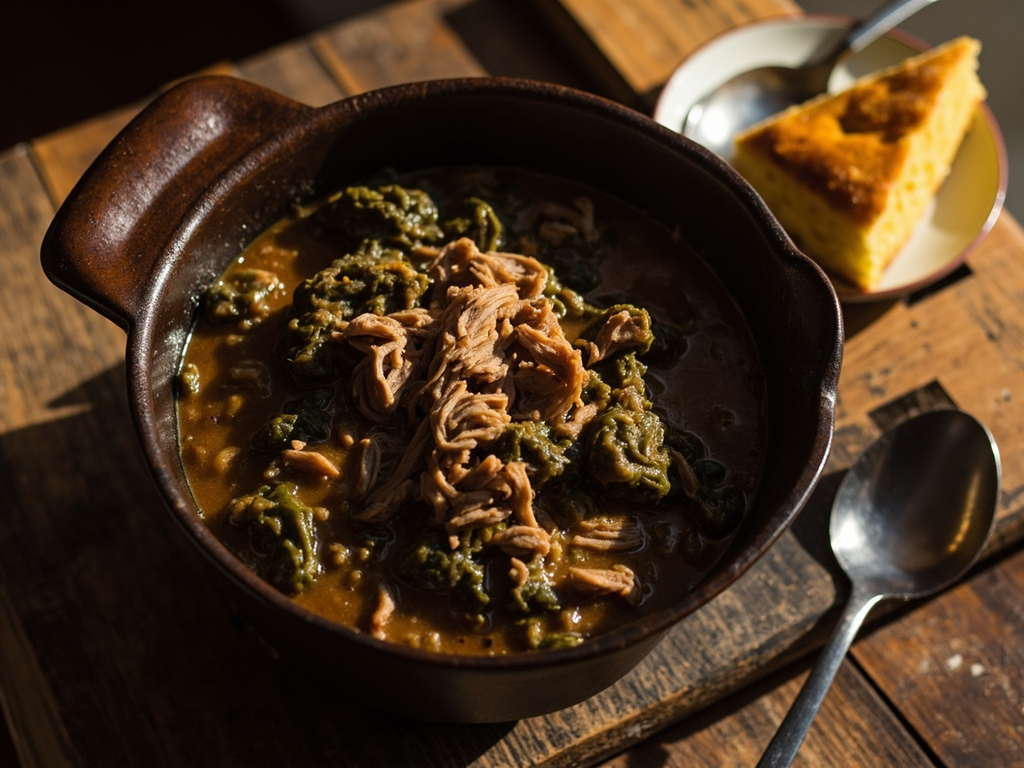
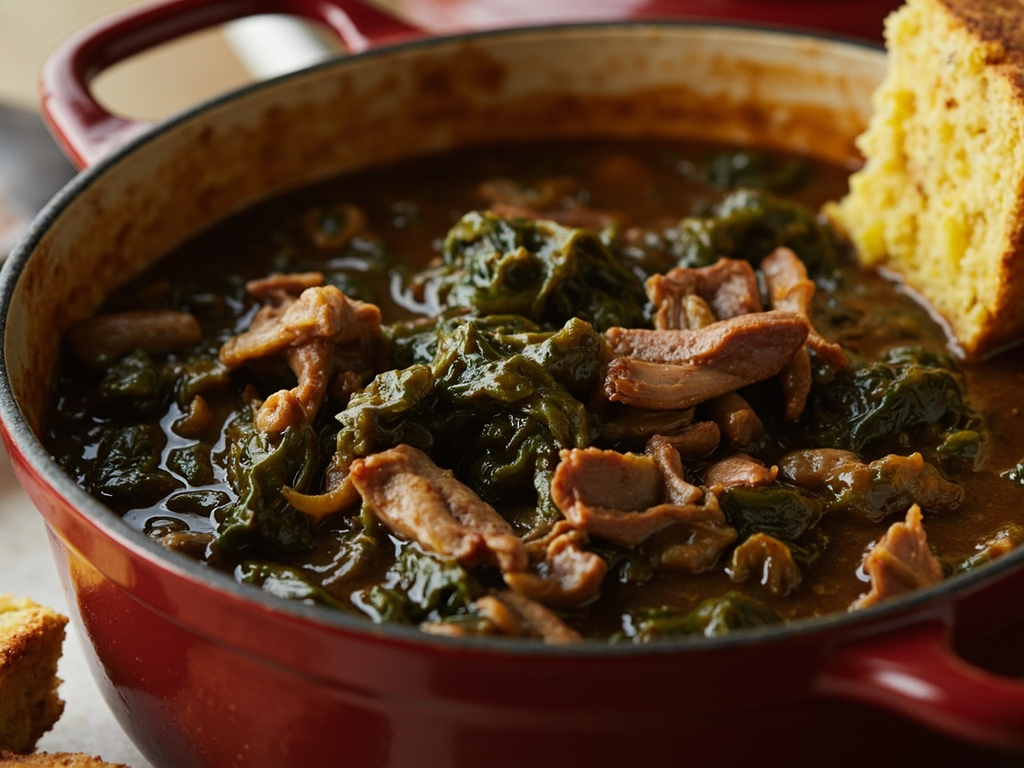
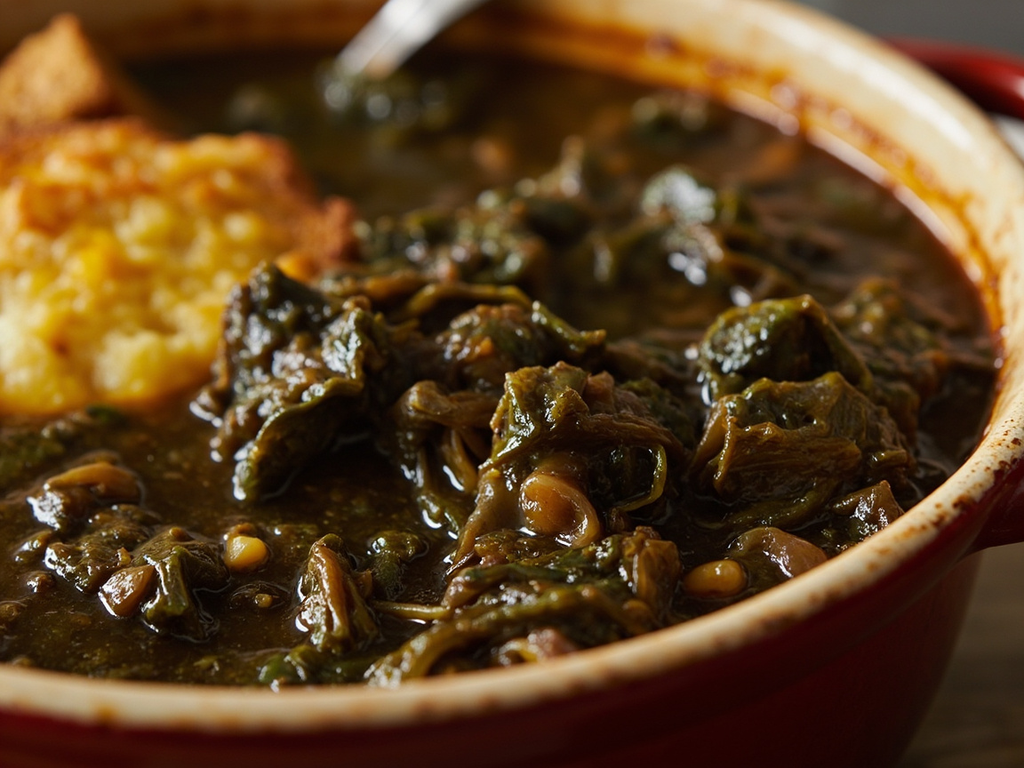
Large, dark green leaves, firm and slightly bitter, slowly melted for hours in a smoky broth until silky. The secret is the 'pot likker,' that concentrated cooking juice carefully saved for dipping cornbread.
Let me tell you something: in these leaves is our whole history. My grandmother knew that a good mess of greens is never rushed—you let it simmer as long as it takes, and the bitterness gives way, slowly, to become something deep. Above all, never throw away the broth at the bottom of the pot; that pot likker, our foremothers drank it as a remedy, because nothing, absolutely nothing, was to be wasted. Today I make it without pork, but the gesture remains the same: it says where we come from and what we refuse to forget.
- •Collard greens — one large bunch (main vegetable)
- •Smoked pork jowl or ham hock — one piece (smoked fat for cooking)
- •Onion — one (aromatic)
- •Apple cider vinegar — a splash (acidity, balance)
- •Water and salt — as needed (broth)
Collard Greens Braised with Pot Likker
Large, dark green leaves, firm and slightly bitter, slowly melted for hours in a smoky broth until silky. The secret is the 'pot likker,' that concentrated cooking juice carefully saved for dipping cornbread.
Why this dish? Collard greens are the heart of African American Southern cuisine, with which Angela Davis grew up in Birmingham, in a middle-class Black family attached to these traditions. A dish passed down through generations of women, it embodies for her the culinary memory she now connects to food justice issues.
Let me tell you something: in these leaves is our whole history. My grandmother knew that a good mess of greens is never rushed—you let it simmer as long as it takes, and the bitterness gives way, slowly, to become something deep. Above all, never throw away the broth at the bottom of the pot; that pot likker, our foremothers drank it as a remedy, because nothing, absolutely nothing, was to be wasted. Today I make it without pork, but the gesture remains the same: it says where we come from and what we refuse to forget.
Ingredients (period version)
- Collard greens — one large bunch (main vegetable)
- Smoked pork jowl or ham hock — one piece (smoked fat for cooking)
- Onion — one (aromatic)
- Apple cider vinegar — a splash (acidity, balance)
- Water and salt — as needed (broth)
Ingredients
- Collard greens (or kale if unavailable) — 800 g (main vegetable)
- Smoked vegetable broth (or smoked paprika) — 1 L + 1 tsp (smoky, meatless version)
- Sliced onion — 1 (aromatic)
- Garlic — 2 cloves (aromatic)
- Olive oil — 2 tbsp (fat)
- Apple cider vinegar — 2 tbsp (final acidity)
- Red pepper flakes, salt — to taste (seasoning)
Method
- Thoroughly wash the leaves, remove the toughest stems, and cut into wide ribbons.
- Sauté the onion and garlic in oil in a large pot.
- Add the smoked broth and smoked paprika; bring to a simmer.
- Add the greens, cover, and simmer on low heat for 45 minutes to 1 hour, until tender and melting.
- At the end, stir in the apple cider vinegar, salt, and red pepper flakes.
- Serve the greens with a ladle of their cooking liquid (pot likker) and cornbread for sopping.
How it was made : In the old days, the dish relied on a piece of smoked pork (jowl, skin, or ham bone) that flavored the water for hours. This cuisine was born from the ingenuity of Black cooks who turned modest cuts and hardy greens into nourishing, flavorful meals.
The contemporary twist : A plant-based version true to Angela Davis's contemporary commitment: smokiness comes from paprika and smoked vegetable broth, losing none of the pot likker's depth.
Sources : Adrian Miller, Soul Food: The Surprising Story of an American Cuisine, One Plate at a Time (2013) · Angela Y. Davis, public statements on food justice and veganism
Angela Davis · Charactorium