 flip
flipSmoked Pork Braised Collard Greens (Collard greens)
Smoked Pork Braised Collard Greens (Collard greens)
Why this dish? The "pot of greens" is the heart of African American Southern cuisine in which Rosa Parks grew up in Alabama: garden leaves, a cheap piece of smoked pork, and hours of simmering. It was the Sunday dish after church in Montgomery, economical and comforting.
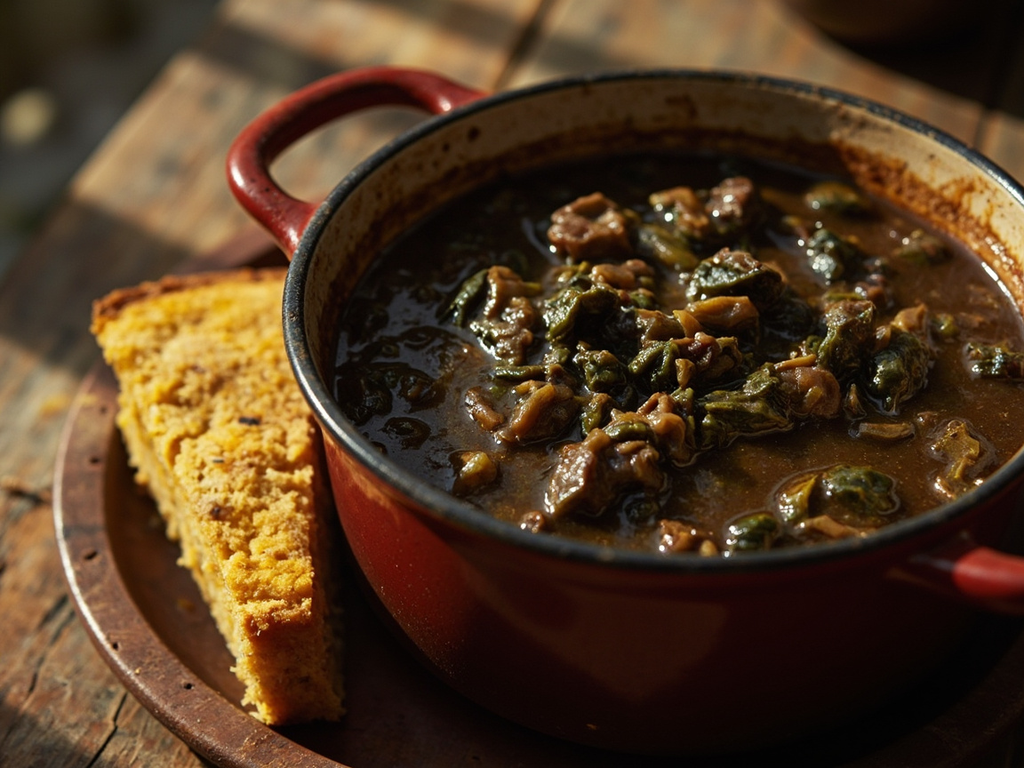
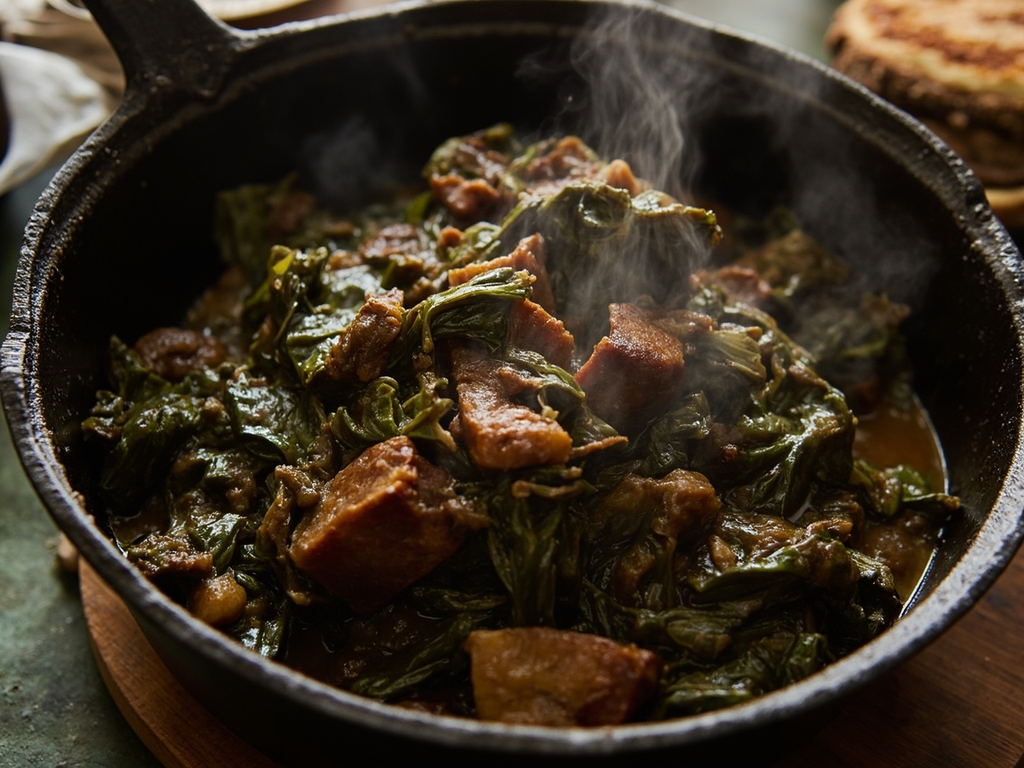
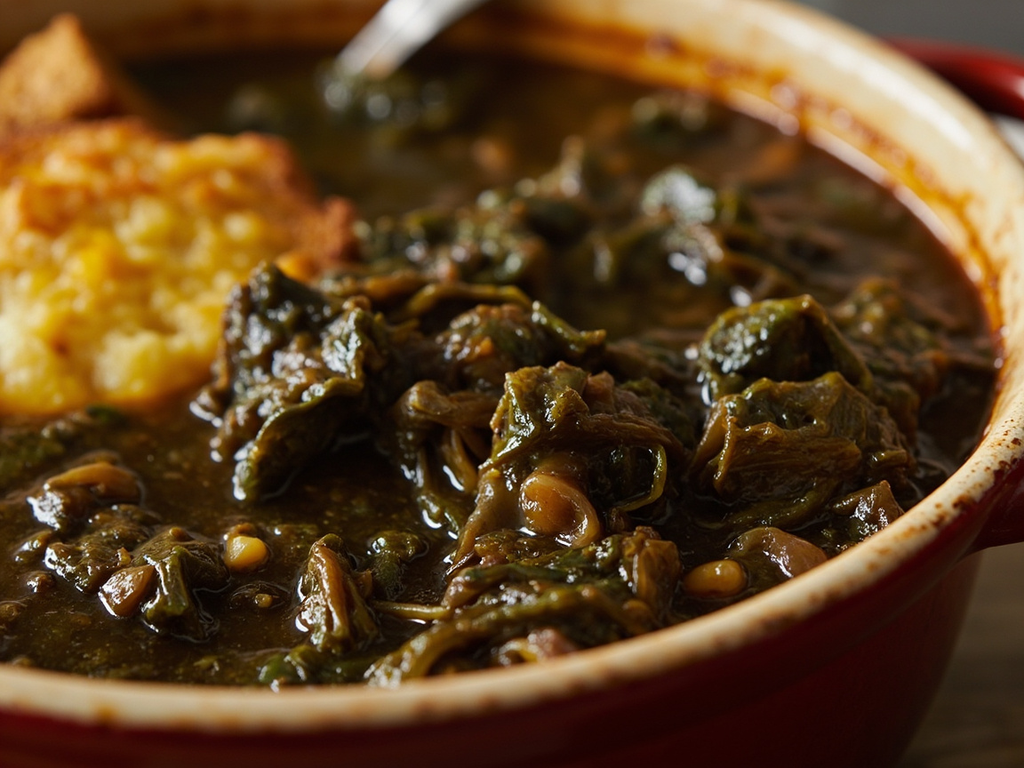
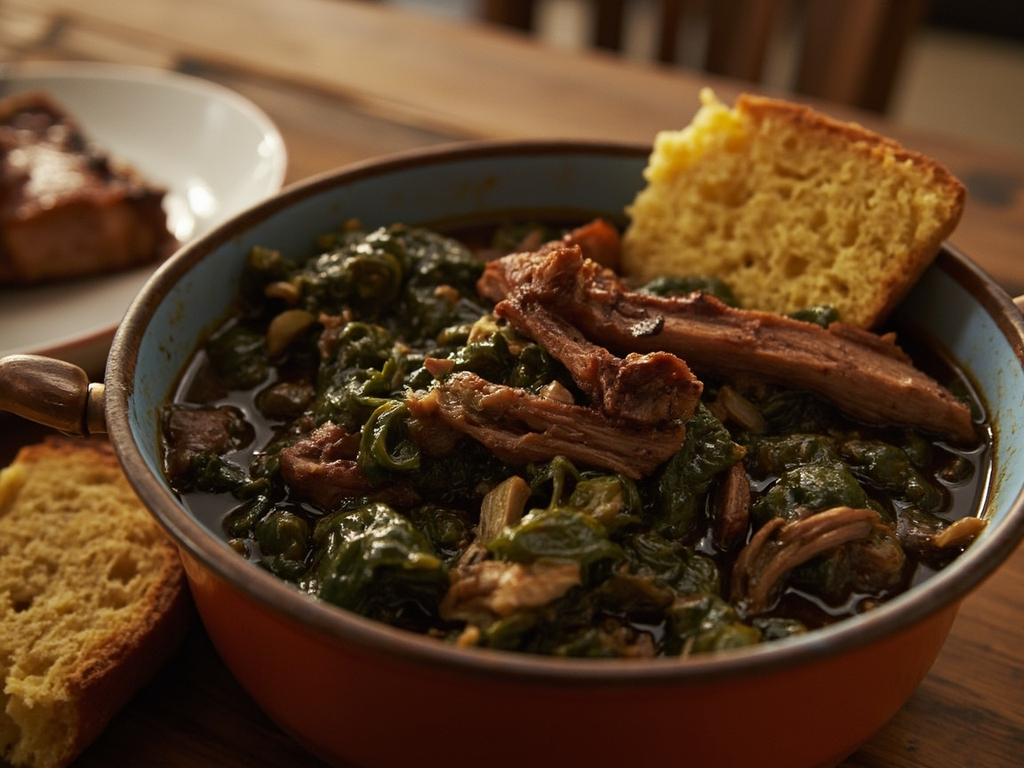
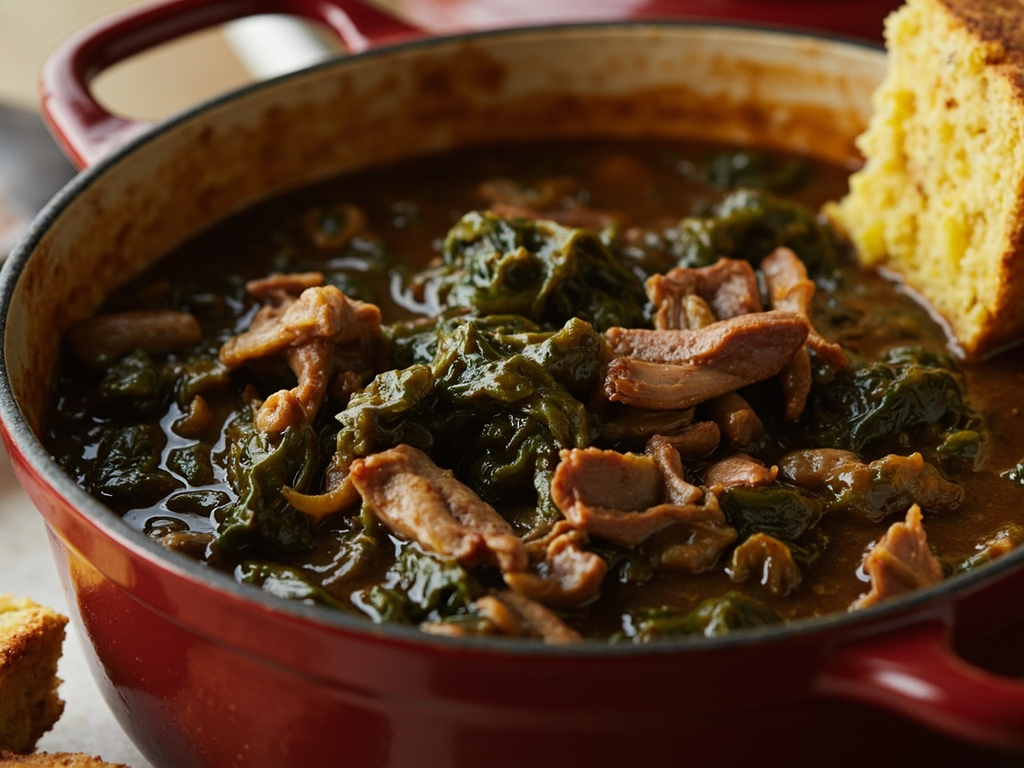
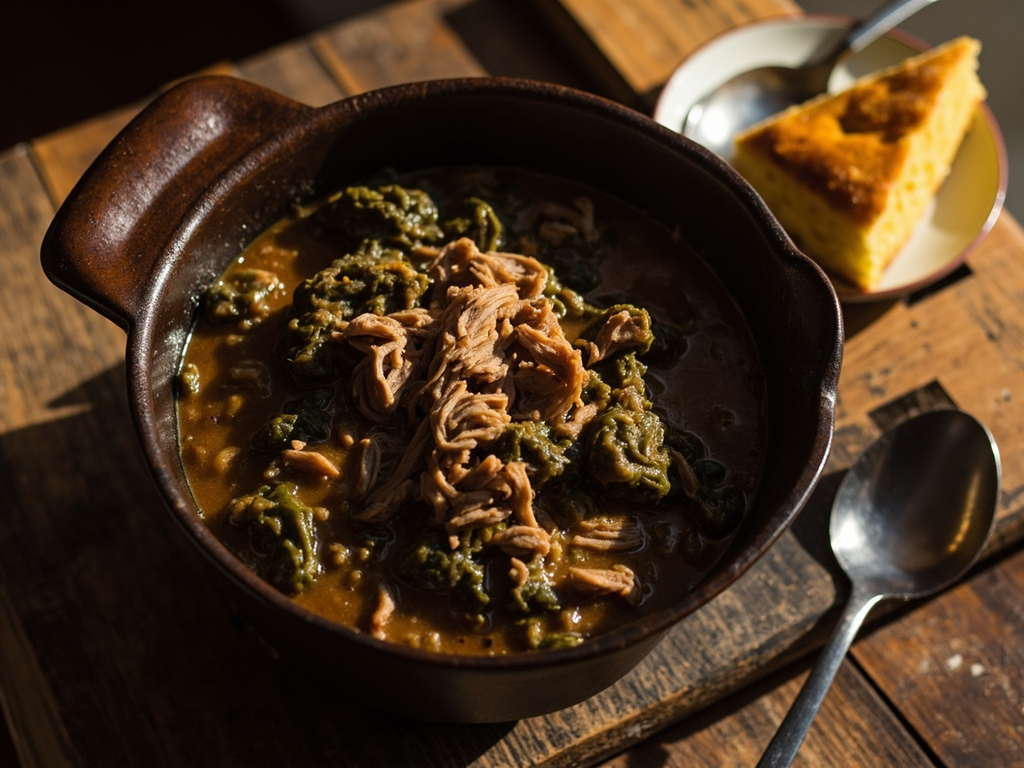
Large collard greens leaves slowly melted in a broth flavored with smoked pork hock, just brightened with vinegar. Even the cooking liquid, "pot likker," is drunk by the spoonful or sopped up with cornbread.
We never threw anything away, you see. A piece of smoked hock given by a neighbor, the leaves we'd grown behind the house, and time — the time it took, on the corner of the stove, while we did the rest. I'd rinse my leaves three times, because the garden soil hides in them, and let them soften all afternoon. Keep the juice at the bottom of the pot, that 'pot likker': that's where all the strength of the dish is, and we'd sop it up with cornbread to the last drop.
- •Collard greens — a big armful (base)
- •Smoked pork hock or fatback — one piece (umami, smoky fat)
- •Onion — one (aromatic)
- •Vinegar — a splash (acidity, balances bitterness)
- •Salt, pepper, pinch of sugar — to taste (seasoning)
Smoked Pork Braised Collard Greens (Collard greens)
Large collard greens leaves slowly melted in a broth flavored with smoked pork hock, just brightened with vinegar. Even the cooking liquid, "pot likker," is drunk by the spoonful or sopped up with cornbread.
Why this dish? The "pot of greens" is the heart of African American Southern cuisine in which Rosa Parks grew up in Alabama: garden leaves, a cheap piece of smoked pork, and hours of simmering. It was the Sunday dish after church in Montgomery, economical and comforting.
We never threw anything away, you see. A piece of smoked hock given by a neighbor, the leaves we'd grown behind the house, and time — the time it took, on the corner of the stove, while we did the rest. I'd rinse my leaves three times, because the garden soil hides in them, and let them soften all afternoon. Keep the juice at the bottom of the pot, that 'pot likker': that's where all the strength of the dish is, and we'd sop it up with cornbread to the last drop.
Ingredients (period version)
- Collard greens — a big armful (base)
- Smoked pork hock or fatback — one piece (umami, smoky fat)
- Onion — one (aromatic)
- Vinegar — a splash (acidity, balances bitterness)
- Salt, pepper, pinch of sugar — to taste (seasoning)
Ingredients
- Collard greens or kale — 1 kg (base)
- Smoked pork hock (or smoked belly) — 300 g (smoky umami)
- Onion — 1 large (aromatic)
- Garlic — 2 cloves (aromatic)
- Chicken broth — 1 liter (cooking liquid)
- Apple cider vinegar — 2 tbsp (acidity)
- Sugar — 1 pinch (softens bitterness)
- Salt, pepper, red pepper flakes — to taste (seasoning)
Method
- Sweat onion and garlic, add the smoked hock and cover with broth. Simmer 45 minutes to flavor the liquid.
- Meanwhile, wash the leaves very thoroughly (3 water changes), remove tough ribs, and cut into wide strips.
- Add the leaves to the broth, along with vinegar, a pinch of sugar, salt, and pepper.
- Simmer covered for 1 to 1.5 hours until the leaves are very tender.
- Shred the meat from the hock, return it to the pot, adjust acidity and salt.
- Serve the greens with a ladle of their juice ("pot likker") and cornbread.
How it was made : Inherited from slave kitchens that made the most of cheap pork cuts and vegetable tops, the pot of greens simmered for hours on a wood stove. The pinch of sugar and vinegar round out the natural bitterness of the greens.
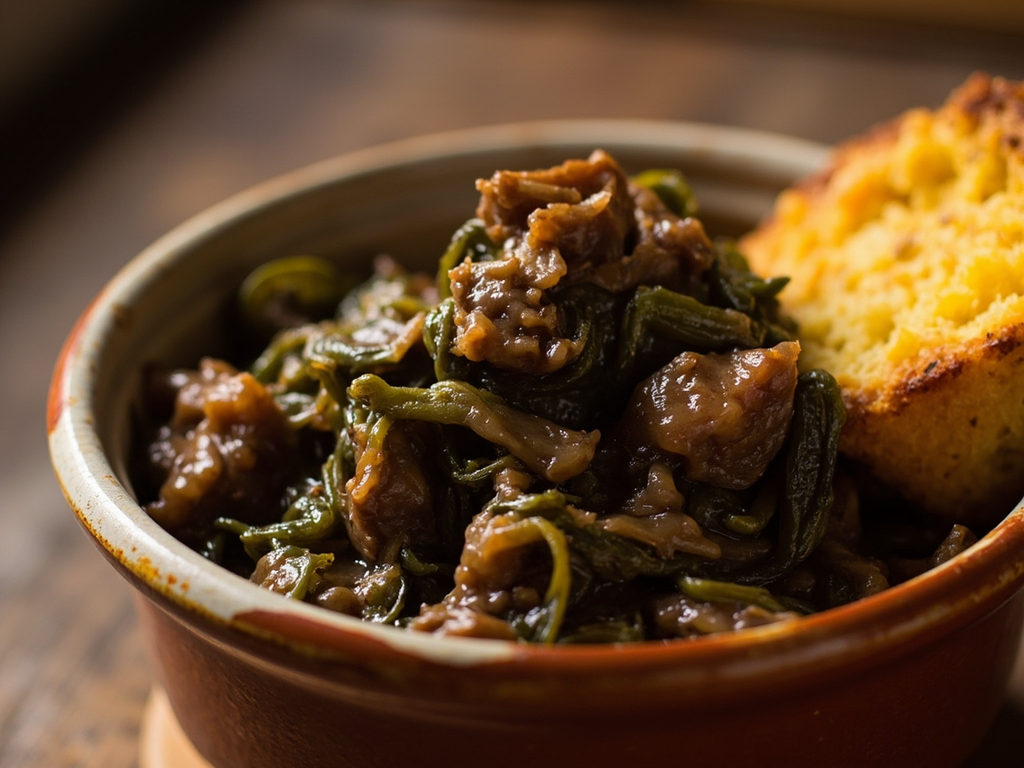
The contemporary twist : Served in a small bowl with its "pot likker" as a broth-tapa, and a slice of grilled cornbread for dipping — a revisited Southern bistro style.
Sources : Jessica B. Harris, « High on the Hog: A Culinary Journey from Africa to America », 2011 · Adrian Miller, « Soul Food: The Surprising Story of an American Cuisine », 2013
Rosa Parks · Charactorium