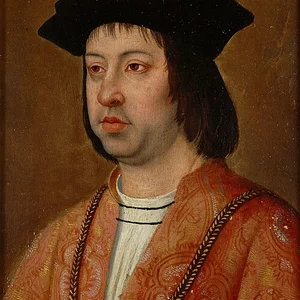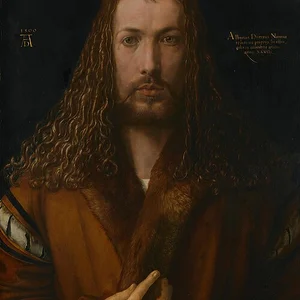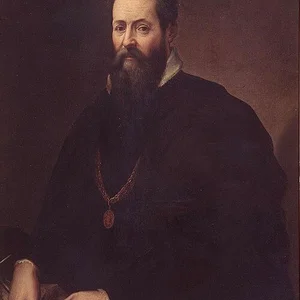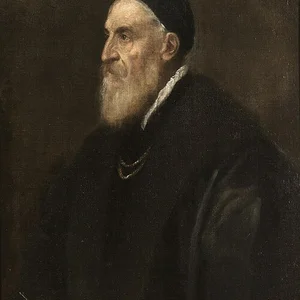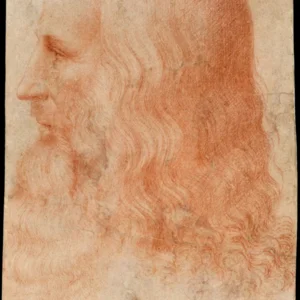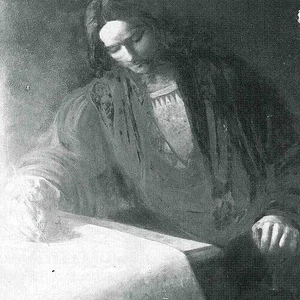

A German Renaissance cartographer, he was the first to use the name “América” on a map, in 1507. His world map, printed in Saint-Dié-des-Vosges, depicts America for the first time as a distinct continent.
Martin Waldseemüller(1470 — 1520)
Martin Waldseemüller
margraviat de Hachberg-Sausenberg
8 min read
Frequently asked questions
Key Facts
- 1507: publishes the *Universalis Cosmographia*, the first map to name the American continent “América”
- 1507: writes the *Introductio Cosmographiae*, a treatise accompanying his world map
- Member of the Gymnasium Vosagense in Saint-Dié-des-Vosges, a humanist center in Lorraine
- His 1507 world map is inscribed in UNESCO’s Memory of the World Register
- Named America in honor of Amerigo Vespucci, whom he believed to be the discoverer of the new lands
Works & Achievements
Twelve-sheet planisphere, the first document to use the name América and to depict the New World as a distinct continent separate from Asia. Considered the cartographic birth certificate of America.
Explanatory text accompanying the large 1507 map, officially proposing the name América in tribute to Amerigo Vespucci and summarizing the state of geographical knowledge at the time.
A small world representation in segments designed to be cut out and glued onto a sphere. It is one of the earliest known globes to bear the name América, serving as a practical companion to the large wall map.
A revised and expanded edition of Ptolemy's Geography, enriched with modern maps including regional depictions of Europe. The New World is labelled Terra Incognita here, suggesting Waldseemüller wished to reconsider his 1507 choice.
A large twelve-sheet nautical map focusing on Portuguese and Spanish navigation routes. It represents a major update to the geographical knowledge accumulated since 1507 through exploration.
Anecdotes
In 1507, Waldseemüller published in Saint-Dié-des-Vosges a world map on which he inscribed for the first time the word “América” to designate the new continent. He chose this name as a tribute to the Florentine explorer Amerigo Vespucci, convinced that it was he who had first understood that this was a land entirely unknown to the Ancients.
Waldseemüller seems to have regretted naming the continent “América”: on his later maps, notably his 1513 edition of Ptolemy, he erased the name and replaced it with “Terra Incognita.” But it was too late — the name had already spread throughout Europe, and no map could dislodge it.
The 1507 map, printed on twelve sheets that could be assembled into a world map roughly 2.4 m × 1.3 m, was produced in about a thousand copies. Yet only one complete copy has survived to this day: it was discovered in 1901 at Wolfegg Castle in Germany, and the Library of Congress purchased it in 2003 for ten million dollars.
Waldseemüller worked within a circle of humanists gathered in Saint-Dié-des-Vosges under the patronage of Duke René II of Lorraine. His friend Matthias Ringmann likely wrote much of the text of the Cosmographiae Introductio that accompanied the map and formally proposed the name “América” — a fine example of collective humanist scholarship in the Renaissance.
Primary Sources
"And inasmuch as both Europe and Asia received their names from women, I see no reason why anyone should justly object to calling this land Amerige, that is, the Land of Americus, or America, after Americus, its discoverer, a man of great ability." (Since Europe and Asia received their names from women, I see no reason to refuse calling this land America, after its discoverer Amerigo, a man of great intellect.)
A twelve-sheet map representing for the first time the Americas as a distinct continent, separated from Asia by an ocean. The inscription AMERICA appears on the southern portion of the new continent.
Waldseemüller's second major map, focused more on maritime routes than on theoretical geographical representation. It partly replaces the name America with Portuguese designations and corrects several coastal outlines.
An edition of Ptolemy's Geography expanded with modern maps by Waldseemüller. The map of the New World bears the inscription Terra Incognita instead of America, reflecting the author's uncertainty about who truly deserved credit for the discovery.
Key Places
City where Waldseemüller worked at the Gymnasium Vosagense, a humanist circle patronized by Duke René II of Lorraine. It was here that the 1507 map and the *Cosmographiae Introductio* were printed — the works that gave America its name.
Town in Baden-Württemberg often cited as the probable birthplace of Waldseemüller around 1470, though sources on his early life remain scarce and sometimes contradictory.
Waldseemüller likely attended the University of Freiburg im Breisgau, one of the great Rhenish humanist universities of the late 15th century, where he is thought to have acquired his training in geography and Latin.
Castle in Upper Swabia where, in 1901, Jesuit priest Joseph Fischer discovered the only known complete copy of the 1507 map, which had been preserved since the 16th century in the archives of the Waldburg-Wolfegg family.
Current home of the only complete surviving copy of the 1507 *Universalis Cosmographia*, acquired in 2003 for ten million dollars. The map is displayed there as a treasured landmark of American history.
Typical Objects

Waldseemüller used carved wooden blocks to print his maps. Each sheet of the 1507 map required a separate block — a considerable feat of craftsmanship demanding precision and patience.

An indispensable instrument for transferring distances and angles onto paper. It allowed Waldseemüller to faithfully transpose the measurements gathered by navigators onto his maps.

These astronomical measuring instruments provided the latitudes of locations observed by sailors. Waldseemüller incorporated this data to accurately position coastlines and cities on his maps.

Medieval marine charts drawn by hand on parchment, depicting coastlines with remarkable accuracy. They were one of Waldseemüller's primary sources for the Atlantic and Mediterranean shorelines.

Waldseemüller drew on the work of the Greek geographer Ptolemy (2nd century) as a theoretical and mathematical foundation, while correcting and expanding it with the latest discoveries made by explorers.

The printing press at the Gymnasium Vosagense in Saint-Dié allowed Waldseemüller to distribute maps and texts in hundreds of copies — a revolution in the spread of geographical knowledge across Europe.

Vespucci's travel accounts, notably the Mundus Novus (1503), were the direct source from which Waldseemüller drew when naming the new continent America.
School Curriculum
Vocabulary & Tags
Key Vocabulary
Tags
Daily Life
Morning
Waldseemüller begins his day in the library of the Gymnasium Vosagense, consulting accounts of Portuguese and Spanish navigators' voyages translated into Latin. He compares latitudes recorded by explorers with Ptolemy's data, carefully noting discrepancies on his working sheets.
Afternoon
The afternoon is devoted to drawing and engraving: he transfers coastal outlines onto his tracings, corrects mathematical projections, and oversees the craftsmen tasked with incising the wooden blocks for printing. Exchanges with his humanist colleagues, particularly Matthias Ringmann, are constant.
Evening
In the evening, Waldseemüller writes the texts that will accompany his maps and corresponds by letter with other European scholars. The humanist circle of Saint-Dié sometimes gathers to debate the latest news from voyages of exploration, often by candlelight.
Food
Like most clergymen and scholars of his era, Waldseemüller ate bread, vegetables, fish, and occasionally meat. The Vosges region provided game and forest fruits; local Lorraine wine accompanied meals. The fasting days prescribed by the Catholic Church gave a regular rhythm to his weekly diet.
Clothing
Waldseemüller most likely wore the long, dark robe of clerics and scholars — plain and practical. His dress reflected his status as a churchman and intellectual attached to a religious institution, with neither ostentation nor conspicuous poverty.
Housing
He lived and worked within the Gymnasium Vosagense, housed in stone buildings in Saint-Dié. His workroom was probably cluttered with rolls of parchment, sheets of paper, quills, inks, and measuring instruments — a cartographer's workshop as much as a humanist's library.
Historical Timeline
Period Vocabulary
Liens externes & ressources
Références
Œuvres
Universalis Cosmographia secundum Ptholomaei traditionem et Americi Vespucii aliorumque lustrationes
1507
Cosmographiae Introductio
1507
Globe terrestre en gores (fuseaux imprimés)
1507
Claudii Ptolemaei Geographicae enarrationis libri octo (édition augmentée)
1513
Carta Marina navigatoria Portugallen navigationes
1516