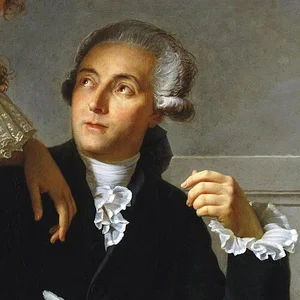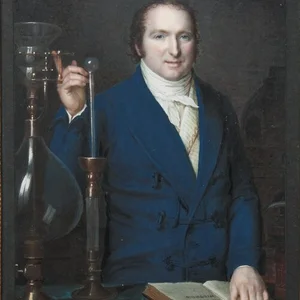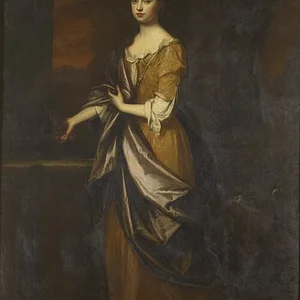

Mary Pitt (1676-) was an English courtesan moving in circles close to British royal power at the end of the 17th century. Her role at court places her within a context of spreading scientific and cultural ideas characteristic of the era.
Mary Pitt(1676 — ?)
Mary Pitt
8 min read
Frequently asked questions
Key Facts
- Born in 1676 in England, during the reigns of Charles II and then James II
- Witnessed the Glorious Revolution of 1688, which placed William III of Orange on the throne
- Lived during an era marked by the rise of the Royal Society, founded in 1660
- Contemporary of major scientific figures such as Isaac Newton (Principia, 1687)
Works & Achievements
Women close to the court of William III often served as intermediaries between Continental scientific circles — particularly Dutch ones — and British aristocratic society, fostering the circulation of ideas from the nascent Enlightenment.
Like other educated women in royal circles, Mary Pitt would have taken part in the exchange of scientific and philosophical ideas through the correspondence networks linking the court to scholars of the Royal Society and Continental philosophers.
The court of Queen Anne was renowned for the vibrancy of its cultural life. The women who moved within it played an active role in the literary and philosophical debates of the day, contributing to the spread of English Enlightenment ideas.
Anecdotes
Mary Pitt grew up in the England of the Glorious Revolution (1688), which overthrew the Catholic king James II in favor of William III of Orange and his wife Mary II. This largely bloodless event permanently transformed the British monarchy into a constitutional monarchy, shaped by the Bill of Rights of 1689 which limited royal powers.
At the court of William III and Mary II, women from circles close to power sometimes attended public sessions of the Royal Society, founded in 1660 under Charles II. This academy of sciences, whose motto was 'Nullius in verba' ('take nobody's word for it'), organized demonstrations that attracted the educated aristocracy, including Edmond Halley's work on comets.
The publication of Newton's Principia Mathematica in 1687 caused a sensation in London's learned circles. Court salons buzzed with discussions of gravity and planetary motion, and well-informed women from royal circles played an essential role in popularizing these revolutionary theories among the aristocracy.
In 1698, a devastating fire almost entirely destroyed the Palace of Whitehall, the heart of court life since the Tudors. The court then moved primarily to Kensington Palace, profoundly transforming the social habits of the courtiers who had long revolved around that legendary palace.
The court of Queen Anne (1702–1714), the last of the Stuarts, was marked by intense political debates between Whigs and Tories, as well as a brilliant cultural life. Court women often served as go-betweens among rival political factions, passing information and favors in a world where access to the sovereign was the supreme political resource.
Primary Sources
Pepys describes with remarkable precision the life of the court under Charles II and the early years of the Royal Society, mentioning ladies of quality who frequented London's learned circles and their role in spreading new knowledge among the aristocracy.
The minutes of Royal Society sessions document the growing interest of court circles in the natural sciences, particularly Newton's work on gravitation and Halley's on comets, which captivated London's aristocracy in the late seventeenth century.
This influential periodical depicts the manners of cultivated London society in the early eighteenth century, evoking the role of women in intellectual circles and the popular dissemination of scientific and philosophical ideas emerging from the Royal Society.
The correspondence of this contemporary English aristocrat sheds light on the daily lives of high-ranking women at the British court, their access to learned circles, and their active participation in the intellectual life of post-revolutionary England.
Key Places
The principal royal palace in London under the Stuarts, Whitehall was the heart of English court life until its destruction by fire in 1698. It was here that courtiers close to royal power gathered for much of Mary Pitt's childhood.
After the Whitehall fire of 1698, the court of William III and then Queen Anne moved primarily to Kensington Palace. This new centre of royal power became the gathering place for London's aristocracy and learned circles.
The original home of the Royal Society, founded in 1660, Gresham College hosted the major scientific demonstrations that drew members of London's learned circles. It was in this great seat of knowledge that the ideas of Newton and Halley were debated and brought to wider audiences.
William III's favourite royal residence, Hampton Court hosted the court's stays outside London. Its formal Dutch-style gardens and richly decorated galleries made it an ideal setting for the social and intellectual life of the aristocracy.
Rebuilt by Christopher Wren after the Great Fire of 1666 and completed in 1710, St Paul's symbolised the rebirth and modernity of London. A central gathering place in London's social life, it was frequented by all sections of the capital's elite.
Typical Objects

An indispensable accessory for women of the English court, the fan served both to keep cool and to communicate through a coded language of gestures. In the royal salons, it allowed courtiers to discreetly express approval or disinterest during conversations.

Pairs of globes — one representing the Earth, the other the starry sky — were highly fashionable prestige objects in aristocratic interiors of the era. They reflected the growing interest in geography and astronomy promoted by the Royal Society.

This multi-drawer piece of furniture housed collections of natural objects (minerals, fossils, shells) and man-made artefacts, reflecting the encyclopaedic curiosity characteristic of the seventeenth century. Owning such a cabinet signalled membership in the cultivated circles close to the Royal Society.

Handwritten letters were the primary networking tool for women of the court. They allowed them to maintain ties with other ladies of rank, natural philosophers, and political figures in a society where information was a precious resource.

Refined since Galileo, the astronomical telescope had become a fashionable instrument in English aristocratic circles. Evening sky-watching sessions organised at court were highly prized social occasions, blending scientific curiosity with elegant sociability.

Educated women of the English court often kept a diary or account book, in the tradition popularised by the diarist Samuel Pepys. These private writings blended devotion, household management, and observations on court life.
School Curriculum
Vocabulary & Tags
Key Vocabulary
Daily Life
Morning
An English courtesan's morning began with a lengthy toilette attended by her ladies: the application of rice powder, rouge, and perfumes imported from France. She received her first visitors in her bedchamber in keeping with the levee custom, exchanging court news, political gossip, and the latest learned reading.
Afternoon
The afternoon was devoted to social pursuits: strolling through the formal gardens of Kensington or Hampton Court, visiting cabinets of curiosities or artists' studios, and attending gatherings of cultivated circles where the latest discoveries of the Royal Society and the ideas of Locke and Newton were eagerly debated.
Evening
Evening at court brought the elite together for chamber music concerts, games of whist, and balls. Elegant suppers — served in several courses of roasted meats and elaborate pastries — provided the setting for philosophical and political conversation with the men of letters and science who orbited the centres of power.
Food
The aristocratic English table of the late seventeenth century was lavish: roasted meats, game, and fish in rich French-style sauces, accompanied by Bordeaux wines or port. Tea, still rare and costly, was beginning to appear as a fashionable drink among the elite, while coffee was consumed in the coffee houses.
Clothing
Court gowns followed French fashion, featuring full-volume skirts, laced bodices, and rich embroidery in gold and silver thread. Luxurious fabrics — silk, velvet, brocade — were imported from the Continent. Pearl and diamond jewellery completed elaborate hairstyles, powdered and adorned with ribbons and feathers.
Housing
Court apartments at Whitehall and later Kensington comprised several richly furnished rooms: a bedchamber with a canopied four-poster bed, an antechamber for receiving visitors, and a private closet for personal use. Fine wood furnishings, Flemish tapestries, and formal portraits were the hallmarks of these aristocratic interiors.
Historical Timeline
Period Vocabulary
Visual Style
Portrait baroque anglais de la fin du XVIIe siècle, dans la tradition de Peter Lely et Godfrey Kneller, avec des intérieurs luxueux aux draperies dorées et une lumière chaude de bougie.
Sound Ambience
L'atmosphère sonore feutrée des palais royaux londoniens à la fin du XVIIe siècle, mêlant musique de chambre, conversations raffinées et bruits lointains de la ville en plein essor.
Liens externes & ressources
Références
Œuvres
Rôle d'intermédiaire culturelle dans les cercles de Guillaume III
vers 1689-1702
Participation aux réseaux épistolaires savants
vers 1695-1714
Présence dans les cercles de la reine Anne
vers 1702-1714