
Maya was a high dignitary of ancient Egypt who held important positions at the royal court. He is known for having served as Overseer of the Treasury under Tutankhamun and Horemheb, playing a key role in the administration of the kingdom.
Maya(1400 av. J.-C. — 1300 av. J.-C.)
Maya
7 min read
Frequently asked questions
Key Facts
- Overseer of the Royal Treasury under Tutankhamun (c. 1336–1327 BC)
- Continued his duties under Ay and Horemheb
- His mastaba was discovered at Saqqara, rediscovered in 1986 by a Dutch archaeological mission
- He was accompanied by Merit, his wife, who is also depicted in his tomb
Works & Achievements
Maya oversaw the entirety of the Egyptian state's finances, managing tribute from provinces and conquered territories, mining expeditions, and the funding of major royal building projects. His role was crucial to the kingdom's economic stability in the aftermath of the Amarna period.
As Overseer of Works in the Place of Eternity, Maya directed the construction and fitting-out of royal burial chambers. He ensured that each pharaoh would have an eternal dwelling worthy of their divine status.
Following Akhenaten's monotheistic revolution, Maya played an active role in restoring the traditional cults by channelling royal treasury funds into the repair of temples dedicated to the ancient gods, most notably Amun and Ptah.
Maya commissioned a large temple-style tomb at Saqqara, richly decorated with sculpted and painted reliefs. This funerary monument is today one of the most important sources of information on the lives of senior officials during the New Kingdom.
Anecdotes
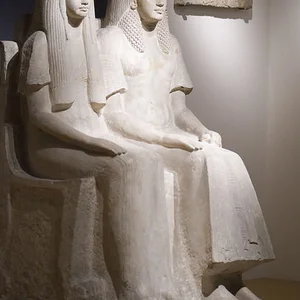
Maya is one of the rare high officials of the New Kingdom whose name and face are known to us: his tomb at Saqqara, rediscovered in 1975 by British archaeologists, contained magnificent carved reliefs depicting him alongside his wife Merit. These images allow us to picture this powerful man in the full dignity of his official role.
As Treasurer under Tutankhamun, Maya oversaw not only the kingdom's wealth but also the royal funerary works in the Valley of the Kings. He held the dual title of Overseer of the Treasury and Overseer of Works in the Place of Eternity, making him one of the most influential men in Egypt.
A small shabti box bearing Maya's name was found in Tutankhamun's tomb, evidence of the close bond between the official and the young pharaoh. This touching detail shows that Maya watched over not only the royal treasury during his lifetime, but also over the king's funerary equipment for eternity.
Maya lived through one of the most turbulent periods in Egyptian history: following Akhenaten's religious revolution, he helped restore the ancient cults and re-establish traditional order under Horemheb. His exceptionally long career in the service of several pharaohs is a testament to rare political skill.
Inscriptions in his tomb show that Maya received the gold collar of reward from the pharaoh, the highest distinction granted to the king's most loyal servants. This solemn ceremony, carved into the walls of his tomb, illustrates the bond of absolute trust that united the great steward with his sovereign.
Primary Sources
The Overseer of the Treasury of the Lord of the Two Lands, the Superintendent of Works in the Place of Eternity, Maya, justified of voice. Official titulary carved on the walls of his tomb, attesting to his roles under Tutankhamun and Horemheb.
A small wooden box bearing an inscription in the name of Maya was found among the funerary equipment of Tutankhamun, evidence of the close relationship between the Overseer of the Treasury and the deceased pharaoh.
The painted and carved reliefs depict Maya receiving the gold collar from the pharaoh's hands, accompanied by his wife Merit. The hieroglyphic texts describe his merits and his loyalty to the crown.
Documents from the royal administration mention the functions of the royal treasury and the responsibilities of its overseer in collecting and redistributing the kingdom's wealth, including tribute from conquered territories.
Key Places
Large temple-shaped tomb carved into the necropolis of Saqqara, near Memphis. Rediscovered in 1975, it is decorated with exceptional reliefs depicting the life and career of Maya as well as his wife Merit.
Royal necropolis on the west bank of the Nile at Thebes, which Maya oversaw as Superintendent of Funerary Works. He coordinated the construction and furnishing of royal tombs there, including that of Tutankhamun.
Ancient administrative capital of Egypt, home to the royal Treasury that Maya directed. It was here that he carried out most of his duties as treasurer and lived with his family.
Religious capital of Egypt during the New Kingdom, seat of the cult of Amun and residence of the pharaohs. Maya traveled there regularly for official ceremonies and court affairs.
Typical Objects

An essential instrument for the Overseer of the Treasury, the balance was used to weigh precious metals and goods. Maya had to oversee the daily weighing of the gold, silver, and copper that filled the royal coffers.

The official seal bearing Maya's titles allowed him to authenticate administrative documents and authorize withdrawals from the royal treasury. This small object concentrated immense authority throughout the entire Egyptian administration.

Inventory lists, payment orders, and administrative reports were written on papyrus. Maya and his scribes kept meticulous accounts of all the kingdom's wealth.

A mark of royal distinction awarded by the pharaoh to his most loyal servants. Representations in his tomb show Maya wearing these heavy collars, a visible symbol of the absolute trust the sovereign placed in him.

Funerary figurines meant to carry out labor in the afterlife on behalf of the deceased. A box bearing Maya's name was found in the tomb of Tutankhamun, a testament to the special bond between the overseer and his pharaoh.

The attribute of every high Egyptian dignitary, the staff symbolized authority and rank. Maya is depicted holding this scepter in the reliefs of his tomb at Saqqara.
School Curriculum
Vocabulary & Tags
Key Vocabulary
Daily Life
Morning
Maya began his day before sunrise with ritual ablutions and prayers to Ptah, the patron god of Memphis. After a light meal of bread, beer, and figs, he made his way to the treasury storehouses to receive his scribes' reports on the flow of wealth in and out.
Afternoon
The afternoon was devoted to audiences and inspections. Maya received delegates from the provinces bringing their annual tributes, checked the weighing of gold and silver, and affixed his seal to official documents. He also oversaw royal funerary construction sites, dictating his orders to an army of scribes and foremen.
Evening
In the evening, Maya rejoined his wife Merit in their fine Memphis residence. The evening meal, served by domestic staff, featured roasted meats, Nile fish, vegetables, and wine imported from the Levant. He sometimes entertained fellow dignitaries at banquets where music and poetry were held in high esteem.
Food
Like any senior official, Maya enjoyed a varied diet: fine bread, wheat beer, meats (beef, poultry), Nile fish, pulses, fruits (dates, figs, pomegranates), and honey-sweetened treats. At major royal festivals, wine imported from Syria or Crete was served.
Clothing
Maya wore a carefully pleated white linen kilt, a mark of distinction among high-ranking dignitaries. At official ceremonies, he donned an elaborate black wig, leather sandals, and his gold necklaces of honor. A faience or gold pectoral adorned his chest on grand occasions.
Housing
Maya lived in a large sun-dried brick house in Memphis, arranged around an interior courtyard with a pool and garden. The rooms were cool and airy, decorated with wall paintings depicting scenes from nature and banqueting life. Granaries, kitchens, and servants' quarters rounded out this substantial estate.
Historical Timeline
Period Vocabulary
Liens externes & ressources
Références
Œuvres
Administration du Trésor royal sous Toutânkhamon
vers 1332-1323 av. J.-C.
Supervision des tombes royales dans la Vallée des Rois
vers 1330-1295 av. J.-C.
Contribution à la restauration religieuse post-Amarna
vers 1332-1319 av. J.-C.
Tombeau de Maya et Merit à Saqqara
vers 1310-1295 av. J.-C.