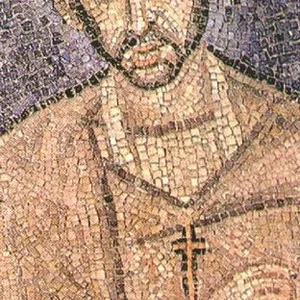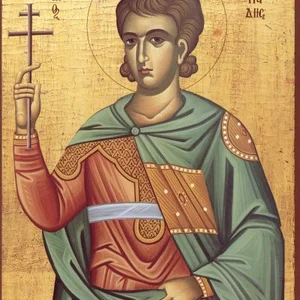

Miltiades was the 32nd bishop of Rome (pope) from 311 to 314. His pontificate coincided with the Constantinian turning point: the Edict of Milan (313) ended the persecutions and granted Christians freedom of worship within the Roman Empire.
Miltiades
Miltiades
6 min read
Frequently asked questions
Key Facts
- Elected bishop of Rome (pope) in 311, during the reigns of Constantine and Maxentius
- His pontificate (311-314) saw the promulgation of the Edict of Milan in 313, which established freedom of worship
- Received the Lateran Palace from the imperial authorities, the future seat of the papacy
- Presided in 313 over a council in Rome (the Lateran) addressing the Donatist schism in Africa
- Died in 314; he is venerated as a saint by the Catholic Church
Works & Achievements
A pontificate that ensured the transition of the Roman Christian community from persecuted secrecy to imperial recognition.
The installation of the bishops of Rome at the Lateran, which would remain the center of papal power for nearly a thousand years.
A synod presided over by Miltiades that examined the Donatist conflict and confirmed Bishop Caecilian of Carthage against Donatus.
The implementation in Rome of the return to Christians of the places of worship and property seized during the persecutions, as provided for by the Edict of Milan.
According to tradition, Miltiades is said to have overseen the unity of liturgical practices within the reviving Roman community.
Anecdotes
Miltiades became bishop of Rome in 311, just as Christians were emerging from the great persecutions of Diocletian. Yet his short pontificate of less than four years was one of the most decisive in the history of the Church, for it accompanied the Roman Empire's shift toward tolerance of Christianity.
According to the tradition recorded in the *Liber Pontificalis*, Miltiades was of African origin. He thus lived through the spectacular transition from a persecuted religion, whose faithful risked death, to a faith now protected by the emperor **Constantine** himself.
In 313, the emperor **Constantine** gave Miltiades the Lateran Palace (the former residence of the empress Fausta). This gift marked the beginning of the popes' long presence at the Lateran, which remained their principal residence for nearly a thousand years, long before the Vatican.
Miltiades had to confront the outbreak of the Donatist controversy, a serious conflict that was tearing apart the Christians of North Africa. In October 313, he convened a council in Rome to judge the matter and ruled in favor of bishop Caecilian, against Donatus.
At his death in January 314, Miltiades was buried in the Catacomb of Callixtus, on the Via Appia, one of the great underground cemeteries of the early Christians of Rome. He was later venerated as a saint.
Primary Sources
Miltiades, of African nationality, sat for three years, six months, and eight days. He was bishop in the time of Maxentius and Constantine.
We have resolved to grant to Christians and to all others the free power to follow whatever religion each one wished, so that the divinity that dwells in heaven may be favorable to us.
Miltiades, bishop of the Roman Church, sitting with several bishops, examined the case of Caecilian and his accusers and declared him innocent.
When Constantine and Licinius were in agreement, they decided that every restriction concerning the Christians should be lifted and their liberty fully restored.
Key Places
Capital of the Empire and seat of the Bishop of Rome. Miltiades served his entire pontificate there from 311 to 314.
A former imperial residence given by Constantine to the Bishop of Rome in 313. There Miltiades held the council of 313 on the Donatist affair.
A vast underground Christian cemetery south of Rome, the burial place of many popes of the early centuries. Miltiades was buried there in 314.
A bridge over the Tiber, north of Rome, where Constantine defeated Maxentius in 312. This victory paved the way for the pro-Christian policy of Miltiades's pontificate.
An imperial residence in northern Italy where Constantine and Licinius agreed in 313 on freedom of worship (the “Edict of Milan”).
Typical Objects

The bishop's seat, a symbol of his authority to teach and govern. It was from this “chair” that the bishop of Rome presided over the assemblies.

A cup and plate used for the celebration of the Eucharist. In the 4th century, the end of the persecutions allowed the use of richer liturgical vessels.

A bound book (codex) containing the sacred texts, read during services. Christians adopted the codex early on in preference to the scroll.

A symbol formed from the Greek letters chi and rho, popularized after the vision attributed to Constantine before the Milvian Bridge. It became a major Christian emblem.

A small terracotta lamp, often decorated with Christian symbols, used in homes, tombs, and catacombs. It also lit funeral ceremonies.

A legal text promulgated by the emperor and circulated throughout the provinces. The “Edict of Milan” of 313 thus guaranteed in writing the Christians' freedom of worship.
School Curriculum
Vocabulary & Tags
Key Vocabulary
Daily Life
Morning
The Bishop of Rome began his day with prayer and the reading of Scripture alongside his clergy. Very early on, he might preside over the Eucharist for the community, now free to gather openly in broad daylight.
Afternoon
The afternoon was devoted to the administration of the Church: receiving priests and deacons, managing aid to the poor and to widows, and handling matters of discipline such as the Donatist dispute.
Evening
The evening brought the bishop together with his close collaborators for shared prayer and a meal. It was also the time to write letters to the other Churches and to prepare upcoming decisions.
Food
The diet remained simple, based on bread, olive oil, vegetables, fish, and wine cut with water. Fasts marked the rhythm of the Christian liturgical year.
Clothing
Miltiades probably wore the tunic and cloak (pallium) of Roman tradition, without the splendor of the elaborate liturgical vestments that would appear later. The insignia were still very plain.
Housing
Before 313, the community gathered in discreet house-churches (tituli). From the donation of the Lateran onward, the bishop had at his disposal a vast residence befitting his new role.
Historical Timeline
Period Vocabulary
Liens externes & ressources
Références
Œuvres
Direction de l'Église de Rome (311-314)
311-314
Réception du palais du Latran
313
Concile de Rome de 313
octobre 313
Restitution des biens confisqués
313
Organisation de la liturgie romaine post-persécution
311-314