 flip
flipBarley Maza with Oil and Sea Salt
Barley Maza with Oil and Sea Salt
Why this dish? In the time of the Gorgons, long before the wheat bread of wealthy cities, people lived on barley. The maza is the foundation of the meal for everyone, mortals and remote creatures alike: a simple dough, made without an oven, wherever only hardy barley grows — like the edges of Libya where tradition places the cave of Medusa.
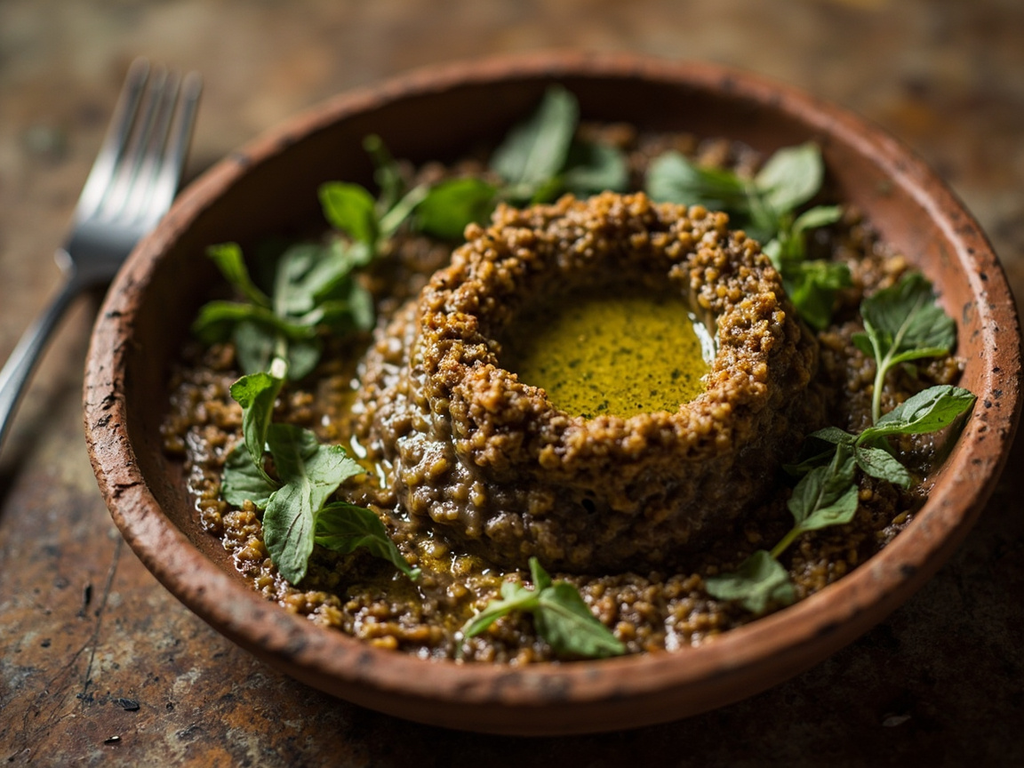
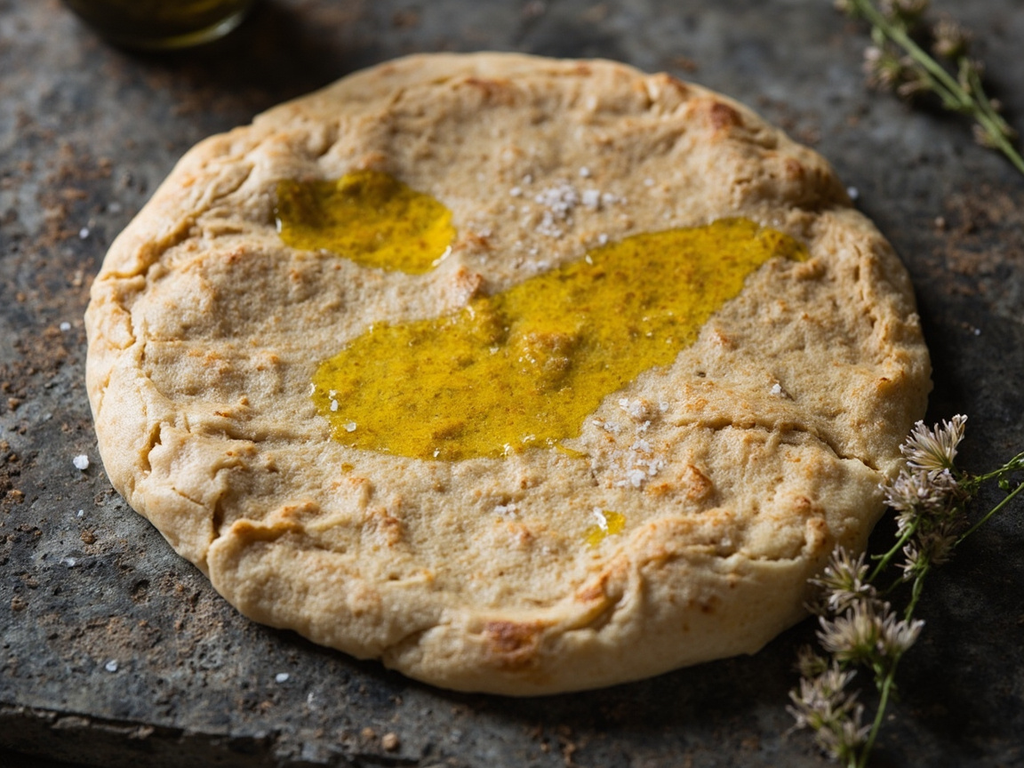
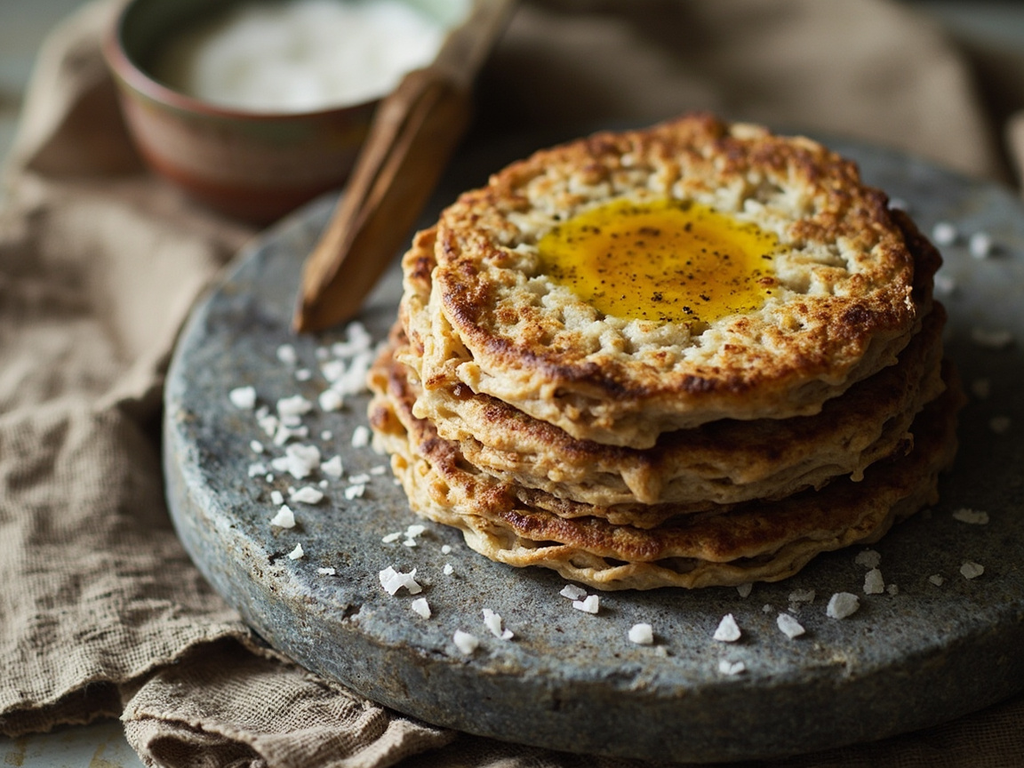
A dough of toasted barley kneaded with oil, water, and salt, shaped by hand into a flat cake or ball. The bread of the poor and heroes before the city-states, eaten as is or used to dip into a vegetable porridge.
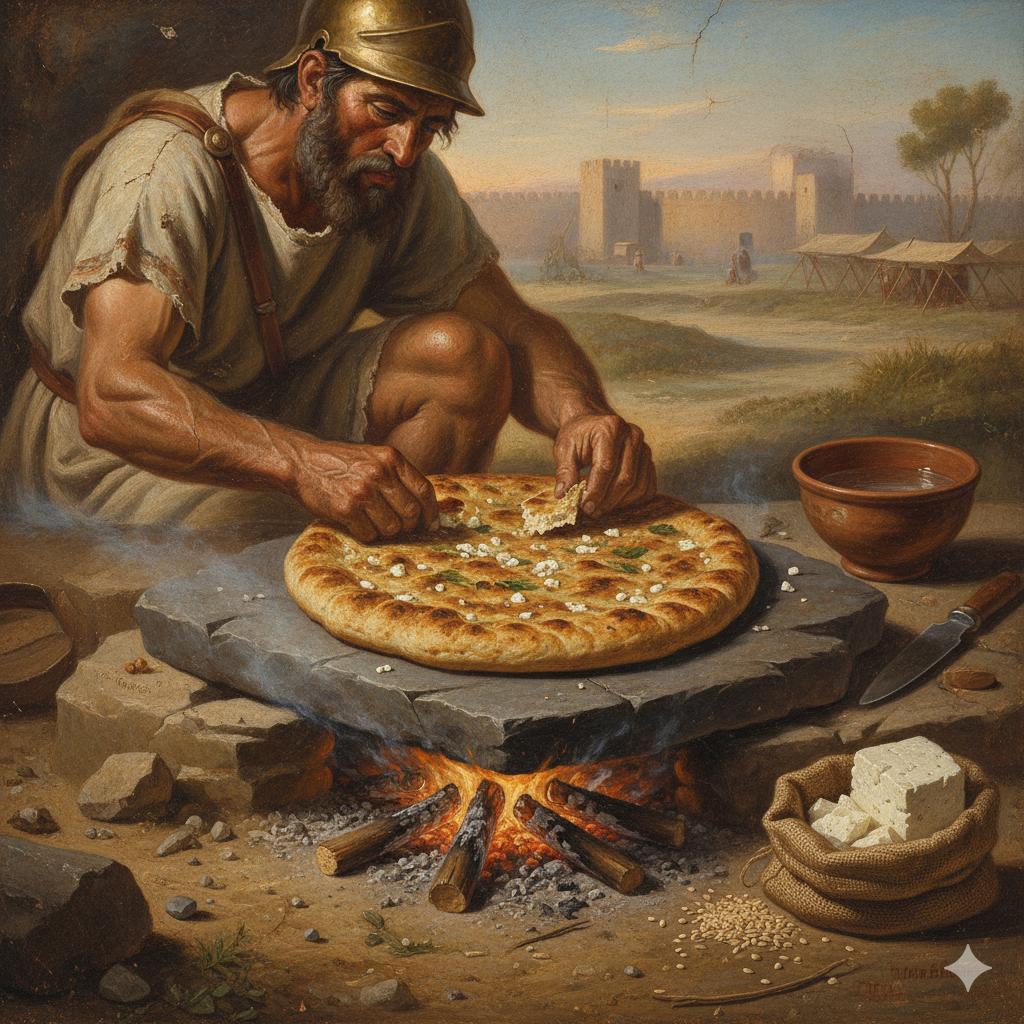
Approach, mortal, but do not look up. On my stone table, far from men, there is no oven nor baker: I toast the barley on the hot rock, I crush it, I knead it with my hands that you would not dare to look at. A drop of oil, the salt that the sea leaves on my shore, and here is the bread of those who have been driven to the ends of the world. Eat it without staring at me — it is all I offer you, and it is already much for one who ventures near my lair.
- •Toasted barley flour (alphita) — two handfuls (base)
- •Spring water — as needed (binder)
- •Olive oil — a drizzle (fat)
- •Sea salt — a pinch (seasoning)
Barley Maza with Oil and Sea Salt
A dough of toasted barley kneaded with oil, water, and salt, shaped by hand into a flat cake or ball. The bread of the poor and heroes before the city-states, eaten as is or used to dip into a vegetable porridge.
Why this dish? In the time of the Gorgons, long before the wheat bread of wealthy cities, people lived on barley. The maza is the foundation of the meal for everyone, mortals and remote creatures alike: a simple dough, made without an oven, wherever only hardy barley grows — like the edges of Libya where tradition places the cave of Medusa.
Approach, mortal, but do not look up. On my stone table, far from men, there is no oven nor baker: I toast the barley on the hot rock, I crush it, I knead it with my hands that you would not dare to look at. A drop of oil, the salt that the sea leaves on my shore, and here is the bread of those who have been driven to the ends of the world. Eat it without staring at me — it is all I offer you, and it is already much for one who ventures near my lair.
Ingredients (period version)
- Toasted barley flour (alphita) — two handfuls (base)
- Spring water — as needed (binder)
- Olive oil — a drizzle (fat)
- Sea salt — a pinch (seasoning)
Ingredients
- Barley flour — 150 g (base)
- Warm water — 80 to 100 ml (binder)
- Extra virgin olive oil — 2 tbsp (fat)
- Sea salt (fleur de sel) — 1 tsp (seasoning)
Method
- Dry-toast the barley flour in a pan for a few minutes until it smells nutty, then let it cool slightly.
- Mix the flour, salt, and oil, then add water little by little until you get a soft, non-sticky dough.
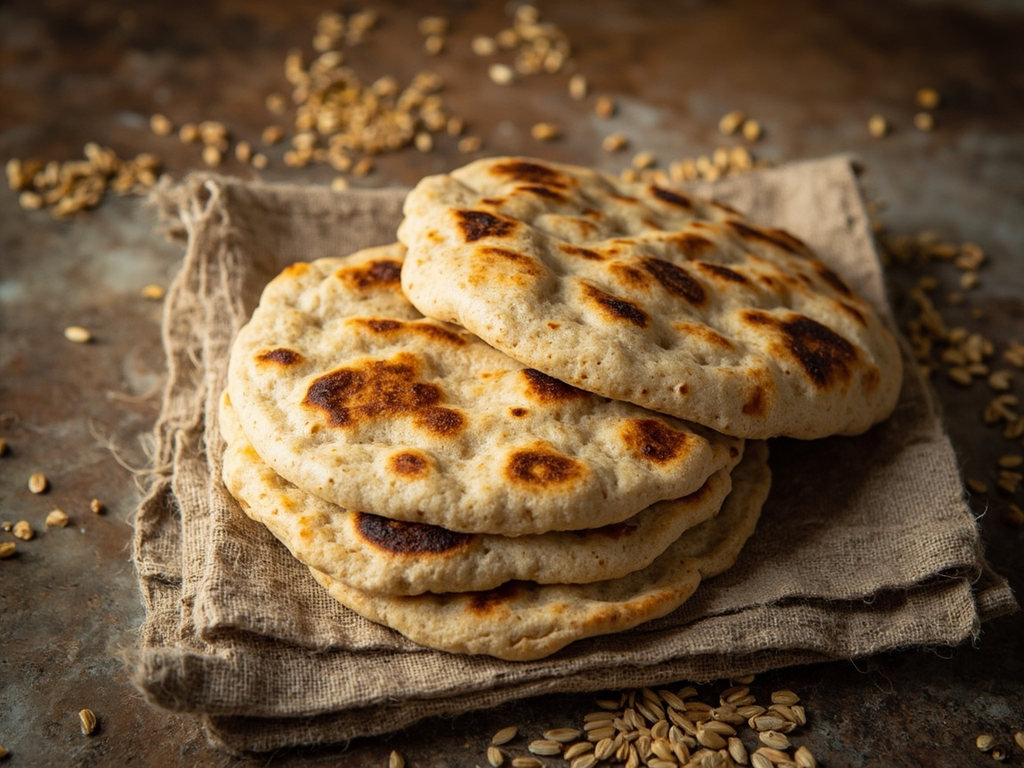
- Knead briefly and shape into flat cakes about half a centimeter thick.
- Cook for 3 to 4 minutes per side on a hot stone or cast-iron pan, without fat, until lightly golden in spots.
- Serve warm, drizzled with a little oil.
How it was made : The maza was often eaten raw or simply dried, without cooking: the toasted barley was mixed with water, wine, or oil. It was the staple food of Greece before wheat and leavened bread became signs of prosperity.
The contemporary twist : Serve as mini dipping cakes, "hero's bread" style, with a bowl of new olive oil and fresh oregano.
Sources : Andrew Dalby, Siren Feasts: A History of Food and Gastronomy in Greece · Homer, Odyssey (mentions of alphiton and maza)
Medusa · Charactorium