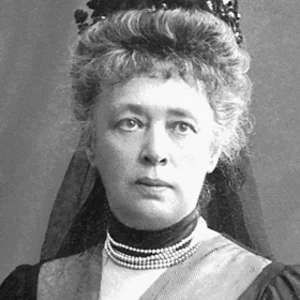

Nicknamed “Mother Jones,” Mary Harris Jones was one of the most formidable labor activists in the United States. An organizer for coal miners and textile workers, she fought her entire life against the exploitation of workers and child labor.
Mother Jones
Mary Harris Jones
9 min read
Frequently asked questions
Famous Quotes
« Pray for the dead and fight like hell for the living.»
« I'm not a humanitarian, I'm a hell-raiser.»
Key Facts
- 1837: born in Cork, Ireland
- 1867: loses her husband and four children during a yellow fever epidemic in Memphis
- 1877: becomes actively involved in the labor movement following the Great Railroad Strike
- 1903: organizes the “Children's March” from Philadelphia to Washington to denounce child labor
- 1930: dies at the age of 93, after a lifetime of activism
Works & Achievements
For more than two decades, Mary Jones traveled the Appalachian coalfields recruiting miners into the UMWA union. Her organizing work directly contributed to the recognition of union rights in American mines and to improved working conditions.
Mary Jones organized a march of several hundred child workers from Philadelphia to President Roosevelt's summer residence at Oyster Bay, covering nearly 125 miles. This dramatic action shocked American public opinion and fueled the legislative movement to abolish child labor.
Mary Jones was among the figures present at the IWW's founding convention in Chicago — a revolutionary union advocating for the organization of all workers regardless of trade, race, or nationality.
During the strike of 140,000 miners in Pennsylvania, Mary Jones organized the wives and families of strikers to keep pressure on the coal companies. The strike resulted in a presidential arbitration commission — the first federal intervention in an American labor dispute.
Dictated to Mary Field Parton, this autobiography recounts the major labor battles in which Mary Jones took part, from Reconstruction through the 1920s. A foundational text in the memory of the American labor movement, it remains available in modern editions.
Mary Jones testified on multiple occasions before congressional committees on child labor, mining conditions, and employer violence. Her depositions helped raise lawmakers' awareness of the real living conditions faced by industrial workers.
Anecdotes
In 1867, a yellow fever epidemic devastated Memphis, Tennessee, carrying off Mary's husband and four children within the space of a few weeks. Far from being broken by the tragedy, she stayed in the city to care for the sick before leaving to rebuild her life. This personal ordeal forged in her an absolute determination to fight against the misery of working people.
In 1903, Mary Jones organized the famous “March of the Mill Children”: she led hundreds of child workers from Philadelphia to Oyster Bay, New York — President Theodore Roosevelt’s summer residence — to show him their bodies mutilated by machinery. Roosevelt refused to receive them, but the event shocked public opinion and fueled the national debate on abolishing child labor.
During the great West Virginia coal strike of 1912, Mary Jones was arrested and brought before a military tribunal when she was over 75 years old. A state prosecutor called her “the most dangerous woman in America” — a title she wore with pride for the rest of her life.
Mary Jones invariably wore a long black grandmother’s dress and a lace bonnet, an outfit she chose deliberately to unsettle her opponents. She explained that looking like a harmless old woman allowed her to enter heavily guarded mining camps without arousing the suspicion of company guards.
During the Ludlow Massacre of April 1914, in which soldiers and Rockefeller company guards slaughtered striking families in a tent colony in Colorado, Mary Jones — then around 77 years old — traveled the country to bear witness and alert public opinion. Her testimony before the U.S. Congress helped expose the violence that employers wielded against workers and their families.
Primary Sources
I am not afraid of the pen, or the scaffold, or the sword. I will tell the truth wherever I please.
I have been in jail more than once and I expect to go again. If you ought to be there it is all right to go.
Pray for the dead and fight like hell for the living.
The children ask, Mr. President, that they be not compelled to work in the mills and factories of Philadelphia until they are fifteen years of age.
Key Places
Presumed birthplace of Mary Harris, around 1837, born into a family of Irish Catholic peasants. Ireland's Great Famine shaped her deep understanding of poverty and the oppression of working-class people.
The city where Mary Jones lost her husband George Jones and their four children during the yellow fever epidemic of 1867. This devastating loss became the turning point that led her to full-time labor activism.
The city where Mary Jones ran her dressmaking shop before the Great Fire of 1871. Chicago was the heart of American industrialization and the main hub of the nascent labor movement, including the Knights of Labor.
The heart of the anthracite coal industry, where Mary Jones organized dozens of strikes and marches from the 1890s onward. It was here that she earned her national reputation as a formidable labor activist.
Site of the Ludlow Massacre (April 20, 1914), where striking miners and their families were killed by the National Guard, funded by the Rockefeller family. Mary Jones testified about this tragedy before the United States Congress.
The burial place of Mary Jones, in the Union Miners Cemetery, alongside victims of the Virden mine strike of 1898. She had personally requested to be buried there, among “her men.”
Typical Objects

Mary Jones always wore a long, austere black dress and a lace bonnet — a deliberate choice to appear harmless in the eyes of company guards. This respectable old-lady appearance allowed her to enter surveilled mining camps and gather workers without immediately triggering a crackdown.
In her later years, Mary Jones still traveled through mining and industrial regions leaning on a cane — a paradoxical symbol of her apparent frailty and her true endurance. She would walk miles to reach isolated strikers in the most remote corners of the Appalachians.

Mary Jones had no fixed home for decades; she lived on trains and with the working-class families who took her in. Railroads — symbols of industrial capitalism's power — were, paradoxically, her primary means of organizing workers from one state to the next.
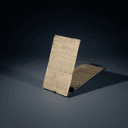
Mary Jones handed out leaflets and union newspapers during her organizing tours of the mining districts. These inexpensive printed materials were the essential tool for informing workers of their rights and the collective actions underway.
During prolonged strikes, miners' wives cooked communally to feed picket lines using large cast-iron cauldrons. This symbol of collective cooking represents the survival solidarity that Mary Jones encouraged in striker camps.

This popular socialist newspaper, read by hundreds of thousands of American workers, regularly published Mary Jones's speeches and opinion pieces. It was one of the main channels through which her ideas reached the laboring class of the United States.
School Curriculum
Vocabulary & Tags
Key Vocabulary
Tags
Daily Life
Morning
Mary Jones had no fixed home for most of her activist life: she slept with working-class families, in modest boarding houses, or directly in strikers' camps. In the morning, she rose early to join picket lines or prepare union meetings in barns, parish halls, or outdoors, often in the cold of the mining regions.
Afternoon
Her afternoons were devoted to haranguing crowds of miners and workers, often standing on a barrel or cart for lack of a platform. She negotiated with union delegates, wrote letters to newspapers and elected officials, and organized strikers' wives to maintain the movement's cohesion against companies that sought to starve their families.
Evening
In the evenings, she held long vigils with working-class families, listening to their testimonies, sharing their frugal meals, and bolstering their morale to face the repression of the following day. She often slept in rudimentary conditions, refusing any comfort that would have separated her from the workers she defended.
Food
Mary Jones shared the simple food of working-class families: black bean soup, cornbread, potatoes, and sometimes salt meat when times were not too hard. In strike camps, food was distributed collectively through union solidarity funds, which were often insufficient to properly feed all the families.
Clothing
She invariably wore a long, austere black dress, a white lace bonnet, and a dark shawl — a “respectable grandmother” outfit deliberately chosen to disarm prejudice and move freely through the mining camps. She refused any clothing that might have set her apart from the working women she lived alongside every day.
Housing
For several decades, Mary Jones had no fixed home: she lived in train cars, with miner families who took her in, in cheap workers' boarding houses, or in tents during major strikes. Only in her very last years was she housed by friends, notably with the Powderly family in Maryland.
Historical Timeline
Period Vocabulary
Liens externes & ressources
Références
Œuvres
Organisation des mineurs de l'United Mine Workers of America (UMWA)
1897-1920
La Marche des enfants des filatures (Children's Crusade)
1903
Participation à la fondation des Industrial Workers of the World (IWW)
1905
Mobilisation lors de la grande grève de l'anthracite
1902
The Autobiography of Mother Jones
1925
Témoignages devant le Congrès américain et les commissions d'enquête fédérales
1900-1915