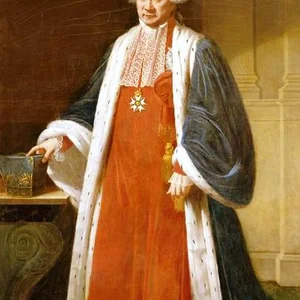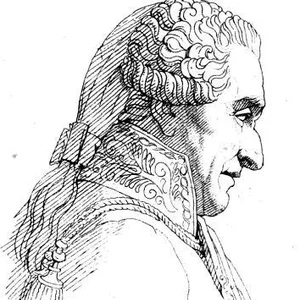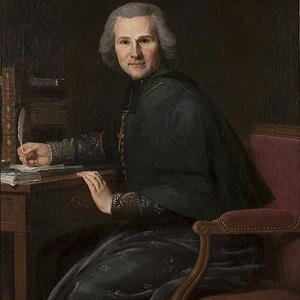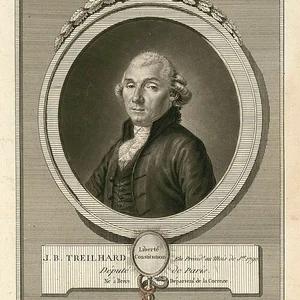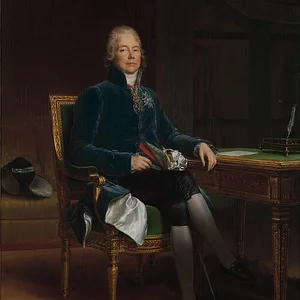

French diplomat and statesman (1754–1838), he served under the Ancien Régime, the Revolution, the Empire, and the Restoration. A master negotiator, he defended France's interests at the Congress of Vienna in 1815.
Charles-Maurice de Talleyrand-Périgord(1754 — 1839)
Charles-Maurice de Talleyrand-Périgord
France
9 min read
Frequently asked questions
Famous Quotes
« Beware of first impulses — they are always noble.»
« Speech was given to man to disguise his thoughts.»
Key Facts
- 1754: Born in Paris into a noble family
- 1789: Bishop of Autun, he supports the Revolution and the nationalization of Church property
- 1814–1815: Represents France at the Congress of Vienna and secures favorable terms for defeated France
- 1830: Supports Louis-Philippe during the July Monarchy
- 1838: Dies in Paris after a career spanning five different political regimes
Works & Achievements
Presented to the National Constituent Assembly, this report proposes a national, secular, and free system of education. It anticipates the core principles of the French republican school system and demonstrates the reforming dimension of Talleyrand's thought.
As Minister of Foreign Affairs, Talleyrand took part in the negotiations that led to the agreement between Napoleon and Pope Pius VII, normalizing relations between revolutionary France and the Catholic Church after ten years of schism.
His greatest diplomatic achievement: representing a defeated France, Talleyrand championed the principle of legitimacy, divided the coalition of victors, and secured France's 1792 borders, restoring the country to the rank of a major power.
As ambassador to London, Talleyrand negotiated with the great powers to secure recognition of the newly established Kingdom of Belgium and its status as a permanently neutral state, thereby stabilizing the balance of power in northwestern Europe.
Written in secret over several decades, these memoirs offer an invaluable account of French political life from the Revolution to the July Monarchy. They were published after his death in accordance with his testamentary instructions.
Anecdotes
Talleyrand was born with a club foot, which earned him the nickname 'the limping devil.' This disability had steered him away from the military career planned for him and toward the Church, then diplomacy. Far from being a hindrance, his singular posture and slow, deliberate gait contributed to his aura as an elusive and mysterious man.
At the Congress of Vienna (1814–1815), Talleyrand pulled off a remarkable diplomatic feat: representing Napoleon's defeated France, he managed to assert himself among the victorious great powers by invoking the principle of “hegitimacy.” In less than six months, he transformed France from a guilty nation into an indispensable arbiter of Europe.
His political cynicism was legendary. He had served the Ancien Régime as Bishop of Autun, sworn an oath to the Civil Constitution of the Clergy, celebrated Mass at the Fête de la Fédération in 1790, then served the Revolution, the Directory, Napoleon, and finally the Bourbons. When reproached for these about-faces, he would calmly reply that he had always served France.
Talleyrand kept a table reputed to be the finest in Paris. His chef, Marie-Antoine Carême, is considered the founder of classical French cuisine. Talleyrand maintained that “to practice good diplomacy, one must first practice good cooking,” and organized diplomatic dinners at which negotiations often advanced more smoothly than around a conference table.
On his deathbed in 1838, a priest asked whether he acknowledged eternal punishment. Talleyrand, who had renounced the Church for fifty years, signed a retraction he had carefully drafted in advance. Louis-Philippe, who came to visit him, expressed surprise that he was suffering so greatly. “Yes, Sire,” Talleyrand is said to have replied, “I am suffering like one of the damned” — a remark that encapsulates his entire life in a single phrase.
Primary Sources
I have served all governments because each of them represented France, and I served France above all. My country — that is my first love.
Public education is one of the foremost needs of society. It must be national, it must be universal, it must be uniform in all its principles.
Peace is necessary for France; without it, she can consolidate neither her internal liberty nor her external influence. It is in this spirit that I conduct the negotiations entrusted to me.
The principle of legitimacy is the only one that can ensure the tranquility of Europe. Any arrangement that departs from it would be nothing but the seed of future troubles.
Key Places
Talleyrand's main Paris residence, located on the Place de la Concorde, this private mansion was the center of his social and political life for decades. He received the intellectual and diplomatic elite of the era there and died on 17 May 1838.
Talleyrand served as Bishop of Autun from 1788 to 1791. It was as representative of the clergy of this diocese that he was elected to the Estates-General of 1789, the starting point of his revolutionary political career.
The Congress of Vienna (November 1814 – June 1815) was the pinnacle of Talleyrand's diplomatic career. Representing a defeated France, he established himself as an indispensable negotiator and secured France's retention of its 1792 borders.
Napoleon pressed Talleyrand to acquire this vast château in 1803 to use for receiving foreign ambassadors. Talleyrand made it his country residence and furnished it lavishly; among his guests there was Ferdinand VII of Spain.
Talleyrand undertook several diplomatic missions to London during the Revolution (1792), then served as French Ambassador (1830–1834). There he played a decisive role in securing international recognition of Belgian independence.
Typical Objects

Talleyrand had walked with a cane since childhood due to his club foot. This accessory — often crafted from precious wood and topped with a gold or ivory pommel — became a defining feature of his silhouette and a symbol of his aristocratic elegance.

As Minister of Foreign Affairs, Talleyrand wrote and received hundreds of coded dispatches. These secret messages enabled confidential communications between Paris and French embassies across Europe.

Like many aristocrats of his era, Talleyrand carried a richly adorned snuffbox. Offering a pinch of snuff was a carefully codified gesture of politeness and sociability in the salons of the 18th and 19th centuries.

An avid whist player, Talleyrand often spent his evenings at the card table. He believed that card games revealed a man's true character and gave him the opportunity to observe people under pressure — a skill that served him well in diplomacy.

Seals authenticated treaties, letters of credence, and diplomatic passports. Talleyrand affixed his mark to some of the most consequential documents in French history, from peace treaties to ambassadorial credentials.

Under the Empire, Talleyrand wore the ceremonial robes of Grand Chamberlain — covered in gold embroidery, completed with a sword and white silk stockings. These court garments reflected his rank and played a deliberate role in the pageantry of Napoleonic power.
School Curriculum
Vocabulary & Tags
Key Vocabulary
Daily Life
Morning
Talleyrand rose late, rarely before eleven o'clock. He began his day with a long hot bath — a practice considered extravagant at the time — then received his secretaries and diplomats awaiting an audience in his bedroom. The morning was devoted to reading dispatches and dictating his correspondence.
Afternoon
The afternoon was given over to official audiences, carriage rides, and visits to Parisian salons. Talleyrand attached great importance to informal conversation, convinced that real decisions were made outside the office. He was a regular at the salons of Mme de Staël, Mme Récamier, and the Faubourg Saint-Germain.
Evening
Talleyrand's evenings were diplomatic events in their own right. His table, run by the great chef Carême, was reputed to be the finest in Paris. He gathered ministers, ambassadors, and public figures of every stripe around dinners that lasted several hours, blending gastronomy, music, and political conversation. The nights often stretched until dawn over games of cards.
Food
Talleyrand was a refined epicurean who regarded gastronomy as an art of statecraft. His table featured elaborate dishes, fine wines, and sophisticated desserts. He drank little alcohol himself but savored great bottles of Burgundy and Bordeaux, which he shared with his most distinguished guests.
Clothing
Talleyrand dressed with studied elegance but without ostentation. Under the Empire, he wore the gold-embroidered chamberlain's coat. In everyday life, he favored court dress that was sober yet of the highest quality, always impeccably tailored. His powdered wig, kept long after the fashion had passed, was part of his image as a man of the Ancien Régime.
Housing
Talleyrand lived in several Parisian townhouses, including the Hôtel Galliffet (his ministry) and the Hôtel de Monaco on the Rue de Varenne. He also owned the Château de Valençay, a vast estate in the Berry region, and resided in London in sumptuous ambassadorial surroundings. His interiors reflected his taste for art and fine furniture, much of it acquired from aristocratic estates sold off during the Revolution.
Historical Timeline
Period Vocabulary
Liens externes & ressources
Références
Œuvres
Rapport sur l'instruction publique
1791
Gestion des négociations du Concordat de 1801
1801
Diplomatie au Congrès de Vienne
1814-1815
Négociation de l'indépendance belge
1830-1831
Mémoires du prince de Talleyrand
rédigés 1816-1838, publiés en 1891