Character Catalog

Historical Library

CollectionGalaxy
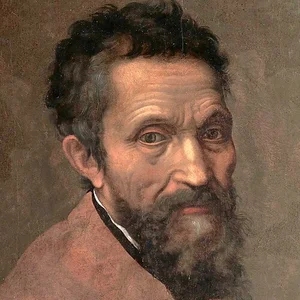
Portrait de Michelangelo

Michelangelo

Michelangelo di Lodovico Buonarroti Simoni

1475 — 1564

République florentine

Visual ArtsArtistePoète(sse)RenaissanceItalian Renaissance, 15th–16th century

Italian Renaissance painter, sculptor, poet, and architect (1475–1564). Michelangelo is considered one of the greatest artists of all time, author of world-famous masterpieces such as the David and the Sistine Chapel ceiling fresco.

Émotions disponibles (6)

N

Neutre

par défaut

I

Inspiré

P

Pensif

S

Surpris

T

Triste

F

Fier

Famous Quotes

« I saw the angel in the marble and carved until I set him free »
« The true work of art is but a shadow of the divine perfection »

Key Facts

  • 1504: Completion of the statue of David, a masterpiece of Renaissance sculpture
  • 1508–1512: Painting of the monumental fresco on the ceiling of the Sistine Chapel in the Vatican
  • 1536–1541: Execution of the Last Judgment on the altar wall of the Sistine Chapel
  • 1547: Appointment as chief architect of St. Peter's Basilica in Rome
  • 1564: Death in Rome at the age of 88, recognized as the undisputed master of his era

Works & Achievements

The PietĂ  (1498-1499)

A marble sculptural group depicting the Virgin Mary holding the dead Christ, housed in St. Peter's Basilica in Rome. Created at age 24, it is the only work Michelangelo ever signed.

David (1501-1504)

A colossal marble statue depicting the biblical hero before his battle against Goliath. A symbol of the Florentine Republic, it is considered the masterpiece of Renaissance sculpture.

Sistine Chapel Ceiling (1508-1512)

A monumental fresco covering 500 m², depicting scenes from Genesis including the famous Creation of Adam. Commissioned by Pope Julius II, it remains one of the greatest artistic achievements in history.

Moses (1513-1515)

A marble sculpture intended for the tomb of Pope Julius II, housed in San Pietro in Vincoli in Rome. The power of the figure with horns — a traditional interpretation of rays of light — is striking.

The Last Judgment (1536-1541)

A monumental fresco on the altar wall of the Sistine Chapel, painted by Michelangelo at over 60 years of age. Its dramatic vision and nudity sparked controversy from the moment it was completed.

Dome of St. Peter's Basilica (1546-1564 (completed posthumously in 1590))

Designed by Michelangelo as chief architect of St. Peter's, this monumental dome with a diameter of 42 metres influenced the architecture of modern Europe.

Rondanini PietĂ  (1552-1564)

The last sculpture left unfinished by Michelangelo, worked on until his final days. Housed in Milan, it bears witness to the artist's spiritual and formal quest in the last years of his life.

Anecdotes

When Pope Julius II commissioned Michelangelo to decorate the ceiling of the Sistine Chapel in 1508, the artist initially refused, considering himself primarily a sculptor. He eventually accepted and worked for four years, often lying on a scaffold with his head tilted back, to the point of suffering severe pain in his neck and eyes.

At the age of 21, Michelangelo sculpted the Pietà housed in St. Peter's Basilica in Rome. Upon hearing visitors attribute the work to another sculptor, he entered the basilica at night and carved his name on the Virgin's sash: 'MICHAEL·ANGELUS·BONAROTUS·FLORENT·FACIEBAT'. It was the only work he ever signed.

Michelangelo was renowned for his solitary nature and ascetic lifestyle. He slept little, ate frugally — often bread and wine — and neglected his hygiene to the point that friends testified he rarely removed his boots. According to his biographer Vasari, when he did take them off, the skin came with them.

When asked how he had managed to sculpt the famous David, Michelangelo reportedly replied: 'I simply removed everything that was not David.' This phrase illustrates his conviction that the perfect form already existed within the marble, and that one simply had to set it free.

At nearly 90 years old, Michelangelo was still working on St. Peter's Basilica in Rome, of which he had taken charge of construction at the age of 72. He died in 1564, leaving behind sketches and unfinished sculptures, such as the Rondanini PietĂ , which he was still reworking just days before his death.

Primary Sources

Le Vite de' più eccellenti pittori, scultori e architettori (Lives of the Artists) — Giorgio Vasari (1550 (1st edition), 1568 (revised edition))
Michelangelo Buonarroti of Florence… has surpassed not only all those who have almost conquered nature, but even those celebrated and glorious ancients who have been, without any doubt, beyond all praise.
Dialogos de la pintura — Francisco de Holanda (1548)
Michelangelo said: 'Painting is only worthwhile to me when it approaches relief, and relief is only good when it approaches painting.'
Rime (Poems) — Michelangelo Buonarroti (written between 1503 and 1560)
So that love can do nothing, nor beauty, nor nobility, nor virtue, upon a soul hardened and closed to all feeling. Only the grace of heaven can overcome nature.
Lettere — Michelangelo Buonarroti (letter to his father Lodovico) (1509)
I live here in great misery and in extreme toil, without money, and I suffer from a thousand ills… I lack nothing but time.

Key Places

Sistine Chapel, Vatican, Rome

Site of the ceiling fresco (1508-1512) and the Last Judgment (1536-1541), the absolute masterpiece of Michelangelo and of all Western painting.

Galleria dell'Accademia, Florence

Museum housing the David (1501-1504), a marble colossus standing 5.17 metres tall, symbol of Florence and the humanist Renaissance.

St. Peter's Basilica, Vatican, Rome

Michelangelo became its chief architect at the age of 72 and designed the famous dome, which still dominates the skyline of Rome today.

Palazzo Medici Riccardi, Florence

The Medici residence where the young Michelangelo lived and was educated within the humanist circles of Lorenzo the Magnificent from 1490 onwards.

Carrara (Tuscany)

Town and white marble quarries where Michelangelo personally sourced his materials, sometimes staying for several months to select and oversee the extraction of his blocks.

Typical Objects

Sculptor's chisel and mallet

Fundamental tools of Michelangelo, who wielded them with exceptional mastery to carve Carrara marble. He is said to have preferred sculpture above all other artistic disciplines.

Block of Carrara marble

Michelangelo would travel himself to the Carrara quarries to select his blocks, sometimes for months at a time. He sought marble of perfect whiteness and purity, free of veins that might have weakened his sculptures.

Sketchbook and quill

Michelangelo produced hundreds of preparatory drawings for his projects. His sketchbooks, several of which have been preserved, bear witness to an intense visual thinking process combining anatomical studies and monumental compositions.

Scaffolding of the Sistine Chapel

Michelangelo himself designed an innovative scaffolding system to paint the vaulted ceiling. He often worked in uncomfortable positions, standing or with his neck tilted back, for four years.

Fresco pigments and plaster (intonaco)

For the Sistine Chapel, Michelangelo painted a fresco onto fresh plaster applied each day (giornata). The technique demanded speed and precision, as corrections were impossible once the plaster had dried.

Torch or candle

Often working at night or in poorly lit spaces, Michelangelo would sometimes attach a candle to his hat to illuminate his hands while sculpting or drawing.

School Curriculum

Cycle 4 (5e-3e)Arts plastiques
Cycle 4 (5e-3e)Histoire
LycéeArts plastiques
LycéeHistoire
LycéeArts plastiques — L'art de la Renaissance italienne
LycéeArts plastiques — Le mécénat artistique et politique à la Renaissance
LycéeArts plastiques — L'humanisme et la représentation du corps humain
LycéeArts plastiques — Les techniques artistiques : fresque, sculpture, perspective
LycéeArts plastiques — Florence et Rome comme centres artistiques majeurs
LycéeArts plastiques — L'influence de l'Antiquité gréco-romaine sur la Renaissance

Vocabulary & Tags

Key Vocabulary

frescosculptureproportionsperspectiveRenaissancehumanismpatronagemasterpiece

Tags

Époque

Mouvement

Michel-AngeArtiste visuelfresquesculptureproportionsperspectivemécénatchef-d'œuvreRenaissance italienne, XVe-XVIe siècle

Daily Life

Morning

Michelangelo rose at dawn, sometimes even before daylight, eager to return to the workshop. He would begin sculpting or drawing without delay, before the heat of the day became too intense in the unventilated studios of Rome or Florence.

Afternoon

The afternoon was devoted to monumental building sites: overseeing masons and painters on the scaffolding of the Sistine Chapel or St. Peter's, correcting the work of assistants, and sometimes receiving emissaries from impatient popes or patrons.

Evening

In the evenings, Michelangelo reread Latin and Italian poets — Dante and Petrarch were his favorites — and composed poetry himself. He maintained an extensive correspondence with his family and friends, including Vittoria Colonna, a poetess with whom he shared an intense spiritual friendship.

Food

Michelangelo lived frugally: bread, wine, cheese, and dried legumes made up the bulk of his diet. He often ate standing up, eager to return to work, paying little attention to meals or the pleasures of the table.

Clothing

He wore simple, sturdy clothes, often stained with marble dust or plaster: a tunic and hose of coarse wool, and hard-wearing leather boots. Vasari notes that he sometimes wore his clothes and boots for weeks without removing them.

Housing

In Rome, Michelangelo lived in modest lodgings, far below what his fame and income could have afforded. He preferred proximity to his worksites over any comfort, accumulating sketches, tools, and marble blocks in cluttered spaces he sometimes shared with a servant.

Historical Timeline

1469Laurent de Médicis (le Magnifique) prend la tête de Florence, faisant de la ville le centre culturel de la Renaissance italienne.
1475Naissance de Michel-Ange Ă  Caprese, en Toscane, dans une famille de petite noblesse florentine.
1492Mort de Laurent de Médicis, protecteur de Michel-Ange, et chute progressive de la domination médicéenne sur Florence.
1494Invasion de l'Italie par Charles VIII de France ; Michel-Ange fuit Florence et se réfugie à Bologne puis à Rome.
1498Savonarole, moine dominicain, domine Florence et organise le 'Bûcher des Vanités', faisant brûler œuvres d'art et livres jugés impies.
1503Élection du pape Jules II, grand mécène qui commandera à Michel-Ange son tombeau et la fresque de la Chapelle Sixtine.
1508Début de la fresque du plafond de la Chapelle Sixtine, commande de Jules II ; les travaux dureront jusqu'en 1512.
1517Luther affiche ses 95 thèses à Wittemberg, déclenchant la Réforme protestante qui ébranlera l'Église catholique commanditaire de Michel-Ange.
1527Sac de Rome par les troupes de Charles Quint ; la ville est pillée, bouleversant profondément la vie artistique romaine.
1534Michel-Ange quitte définitivement Florence pour s'installer à Rome, où il restera jusqu'à sa mort.
1536Début de la peinture du Jugement Dernier sur le mur de l'autel de la Chapelle Sixtine, achevée en 1541.
1546Michel-Ange, à 71 ans, est nommé architecte en chef de la basilique Saint-Pierre de Rome par le pape Paul III.
1563Clôture du Concile de Trente, qui redéfinit les règles de l'art religieux catholique — certaines nudités de la Sixtine seront recouvertes après la mort de Michel-Ange.
1564Mort de Michel-Ange à Rome le 18 février, à 88 ans. Son corps est ramené secrètement à Florence et inhumé à Santa Croce.

Period Vocabulary

Fresco (fresque) — A mural painting technique consisting of applying pigments onto fresh lime plaster (intonaco). Michelangelo used it for the Sistine Chapel, requiring speed of execution as the paint must dry together with the support.
Contrapposto — Italian term denoting a sculpted posture in which the body's weight rests on one leg, creating a slight twist in the torso. Michelangelo perfected this principle inherited from Antiquity to give life and movement to his figures.
Terribilità — A word used by contemporaries to describe the overwhelming power and almost awe-inspiring greatness of Michelangelo's works, which inspired a feeling combining admiration and dread.
Patron (mécène) — A wealthy and powerful figure (pope, prince, banker) who finances artists in exchange for works glorifying them. The Medici, Julius II, and Paul III were Michelangelo's greatest patrons.
Giornata — Literally 'day' in Italian: the portion of fresh plaster applied each morning for a fresco painting session. Michelangelo had to finish his section before the plaster dried.
Humanism — An intellectual movement of the Renaissance that places the human being at the center of reflection, values ancient Greek and Latin knowledge, and extols the dignity and capacities of mankind. Michelangelo was its foremost artistic expression.
Neoplatonismo (Neoplatonism) — A philosophy inspired by Plato, highly influential in Florentine Medicean circles, according to which earthly beauty is the reflection of an ideal divine beauty. This thinking deeply permeates Michelangelo's art and poetry.
Pietà — A representation of the Virgin Mary holding the dead body of Christ in her arms after the Crucifixion. Michelangelo sculpted several versions of this theme, including the famous Vatican Pietà and the Rondanini Pietà.
Carrara marble — An exceptionally high-quality white marble quarried in the city of Carrara in Tuscany. It was Michelangelo's preferred material for his sculptures, which he would personally select at the quarry.

Gallery


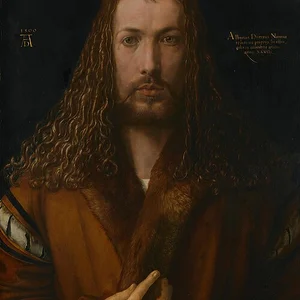
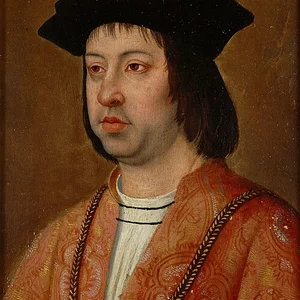
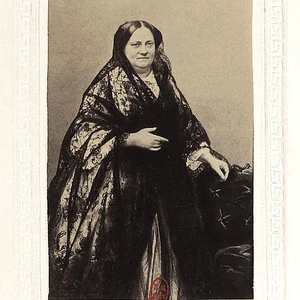
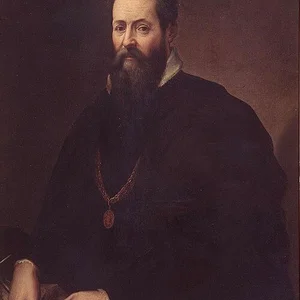
Michelangelo Buonarroti (1475–1564) title QS:P1476,en:"Michelangelo Buonarroti (1475–1564) "label QS:Len,"Michelangelo Buonarroti (1475–1564) "label QS:Lit,"Michelangelo Buonarroti"label QS:Lde,"Mich

Michelangelo Buonarroti (1475–1564) title QS:P1476,en:"Michelangelo Buonarroti (1475–1564) "label QS:Len,"Michelangelo Buonarroti (1475–1564) "label QS:Lit,"Michelangelo Buonarroti"label QS:Lde,"Mich


Michelangelo Buonarroti (1475–1564) title QS:P1476,en:"Michelangelo Buonarroti (1475–1564) "label QS:Len,"Michelangelo Buonarroti (1475–1564) "label QS:Lit,"Michelangelo Buonarroti"label QS:Lde,"Mich

Michelangelo Buonarroti (1475–1564) title QS:P1476,en:"Michelangelo Buonarroti (1475–1564) "label QS:Len,"Michelangelo Buonarroti (1475–1564) "label QS:Lit,"Michelangelo Buonarroti"label QS:Lde,"Mich

“I’ ho già fatto un gozzo” (“I’ve Grown a Goitre”) – Michelangelo

“I’ ho già fatto un gozzo” (“I’ve Grown a Goitre”) – Michelangelo


Michelangelo Sculpting the Statue of 'Night'

Michelangelo Sculpting the Statue of 'Night'


Michelangelo Buonarroti

Michelangelo Buonarroti

Plaster cast of the Pieta of Michelangelo, Museo dell'Opera del Duomo, Florence, 223886

Plaster cast of the Pieta of Michelangelo, Museo dell'Opera del Duomo, Florence, 223886

Plaster cast of the Pieta of Michelangelo, Museo dell'Opera del Duomo, Florence, 223887

Plaster cast of the Pieta of Michelangelo, Museo dell'Opera del Duomo, Florence, 223887

Plaster cast of the Pieta of Michelangelo, Museo dell'Opera del Duomo, Florence, 223889

Plaster cast of the Pieta of Michelangelo, Museo dell'Opera del Duomo, Florence, 223889

Escultura de yeso de Moisés

Escultura de yeso de Moisés


Historical narrations in French; consisting of interesting historical pieces, intended for reading, translation and particularly for narration ..

Historical narrations in French; consisting of interesting historical pieces, intended for reading, translation and particularly for narration ..

Visual Style

Style Renaissance italienne du Cinquecento : lumières chaudes et contrastées, figures monumentales en marbre blanc ou en fresque aux pigments intenses, atmosphère à la fois sacrée et humaniste.

#C9A96E
#F5F0E8
#2B3A6B
#8B4513
#D4C4A0
AI Prompt
Renaissance Italy, Cinquecento aesthetic. Warm terracotta and ochre tones of Florentine stone, brilliant white Carrara marble under raking light, deep ultramarine and burnt sienna from fresco pigments. Monumental human figures with powerful musculature, twisted contrapposto poses, dramatic chiaroscuro. The golden light of oil lamps on dusty workshop floors, the cold grey of unfinished stone. Aerial views of Rome with the dome of Saint Peter's rising above the skyline. Detailed anatomical drawings in sanguine on cream paper, architectural blueprints with Renaissance proportions. Style referencing Raphael's contemporaries, High Renaissance grandeur, devotional religious iconography.

Sound Ambience

L'atelier de Michel-Ange résonne du bruit rythmé du ciseau sur le marbre, entouré des sons de la Florence de la Renaissance : cloches d'église, rues pavées animées et chants liturgiques au loin.

AI Prompt
The rhythmic chiseling of marble in a Renaissance sculptor's workshop, the scraping of stone dust on the floor, muffled echoes in a vast stone chapel under construction. Distant sounds of Florence streets: horse hooves on cobblestones, church bells tolling the hours, merchants calling in Italian. Inside the Sistine Chapel, creaking wooden scaffolding, the soft brushing of plaster, the occasional drip of paint. Wind through open windows of a palazzo, the crackle of oil lamps and candles at night, the turning of heavy pages of an anatomy sketchbook. Gregorian chants drifting from a nearby chapel, the faint hum of a city in the grip of the Renaissance.

Portrait Source

Wikimedia Commons — domaine public — Attributed to Daniele da Volterra — 1545