 flip
flipPoitou Rillettes
Poitou Rillettes
Why this dish? Foucault was a native of Poitiers: rillettes, the fatty and robust glory of the entire West, are the peasant cuisine of his childhood land, found on family tables and in provincial charcuteries.
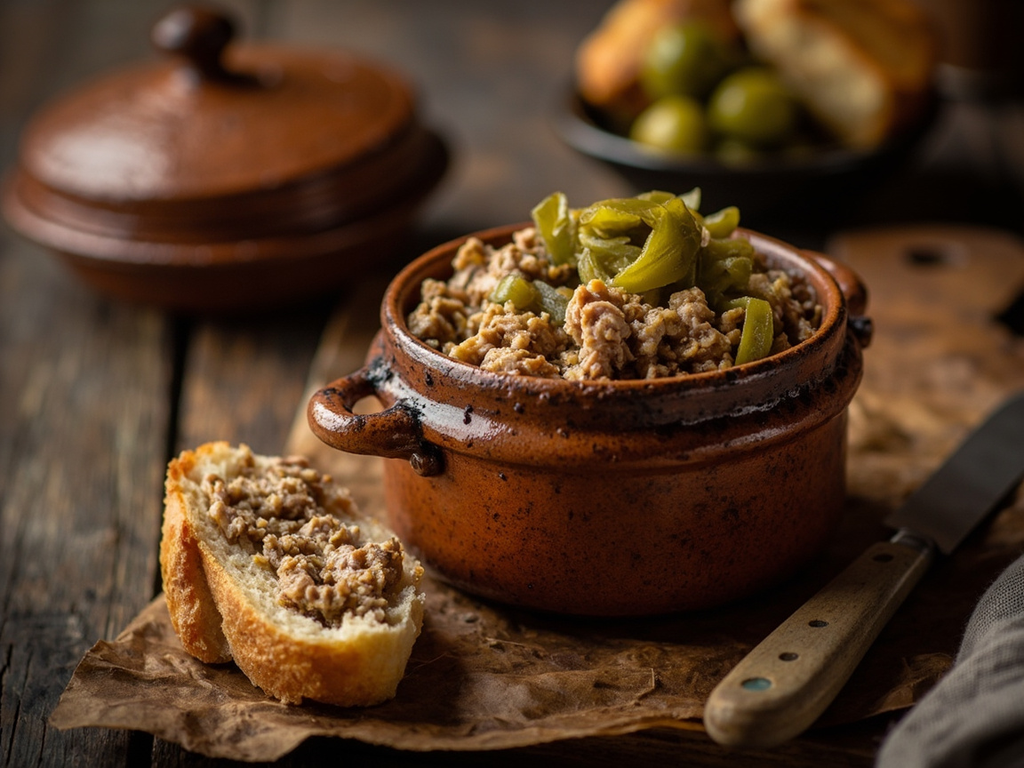
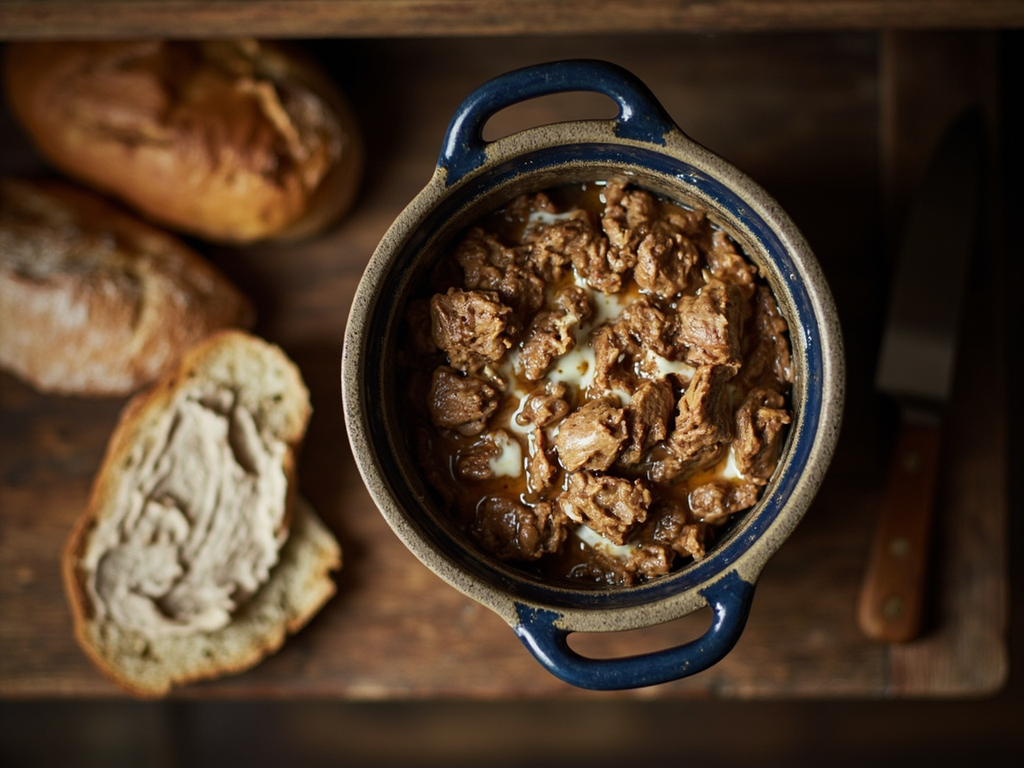
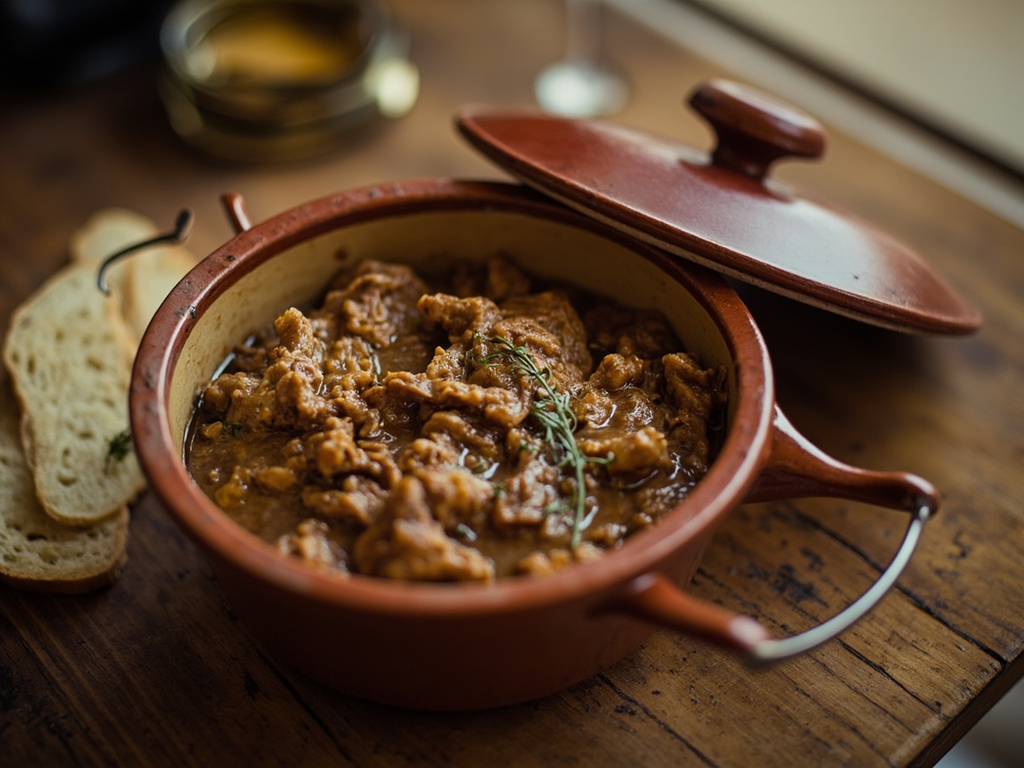
Pork meat cooked for hours in its own fat, shredded, then packed into a pot. Once the layer of fat solidifies on top, the pot keeps for a long time: spread on country bread.
People think I am all Parisian, but I come from Poitiers, and there the pot of rillettes waits in the pantry like a promise. The gesture matters: you cook the pork very slowly, for hours, until it shreds by itself, then you pour the fat on top to seal the pot. It's a preservation technique as old as the prudence of the countryside. Spread it generously on a firm bread, pepper it, and you'll hold a piece of provincial childhood.
- •Pork shoulder and belly — a good amount (meat)
- •Lard — as needed (cooking and sealing fat)
- •Salt — generous (preservation and flavor)
- •Thyme, bay leaf — a bouquet (flavor)
- •Pepper — to taste (seasoning)
Poitou Rillettes
Pork meat cooked for hours in its own fat, shredded, then packed into a pot. Once the layer of fat solidifies on top, the pot keeps for a long time: spread on country bread.
Why this dish? Foucault was a native of Poitiers: rillettes, the fatty and robust glory of the entire West, are the peasant cuisine of his childhood land, found on family tables and in provincial charcuteries.
People think I am all Parisian, but I come from Poitiers, and there the pot of rillettes waits in the pantry like a promise. The gesture matters: you cook the pork very slowly, for hours, until it shreds by itself, then you pour the fat on top to seal the pot. It's a preservation technique as old as the prudence of the countryside. Spread it generously on a firm bread, pepper it, and you'll hold a piece of provincial childhood.
Ingredients (period version)
- Pork shoulder and belly — a good amount (meat)
- Lard — as needed (cooking and sealing fat)
- Salt — generous (preservation and flavor)
- Thyme, bay leaf — a bouquet (flavor)
- Pepper — to taste (seasoning)
Ingredients
- Pork shoulder — 800 g (lean meat)
- Pork belly — 400 g (fatty meat)
- Lard — 200 g (cooking and sealing fat)
- Coarse salt — 1 tbsp (preservation and flavor)
- Thyme and bay leaf — 1 bouquet (flavor)
- Black pepper — to taste (seasoning)
- Water — 1 glass (initial moisture)
Method
- Cut the meat into large cubes, salt, and mix with the aromatics.
- Melt the lard in a Dutch oven, add the meat and a glass of water.
- Cook covered over very low heat for 3 to 4 hours, stirring occasionally, until the meat falls apart.
- Remove the thyme and bay leaf, shred the meat with a fork, mixing it with its fat.
- Adjust salt and pepper, pack into pots, pour a little melted fat on top to seal, then refrigerate.
How it was made : Before refrigeration, rillettes were a preservation method: the long cooking and insulating layer of fat allowed the meat to keep for several weeks in the cellar. Each family in the West had its own recipe, more or less peppered.
The contemporary twist : Served in individual small pots with a few cornichons and warm toasted bread, as a sharing aperitif board.
Michel Foucault · Charactorium