 flip
flipPotjevleesch (White Meat Terrine in Aspic)
Potjevleesch (White Meat Terrine in Aspic)
Why this dish? Born in Nice but a bacteriologist obsessed with preservation and asepsis, Calmette would have recognized in Flemish potjevleesch the folk art of keeping meat for days: three or four white meats sealed under a vinegary aspic, exactly as one protects a culture medium from contamination.
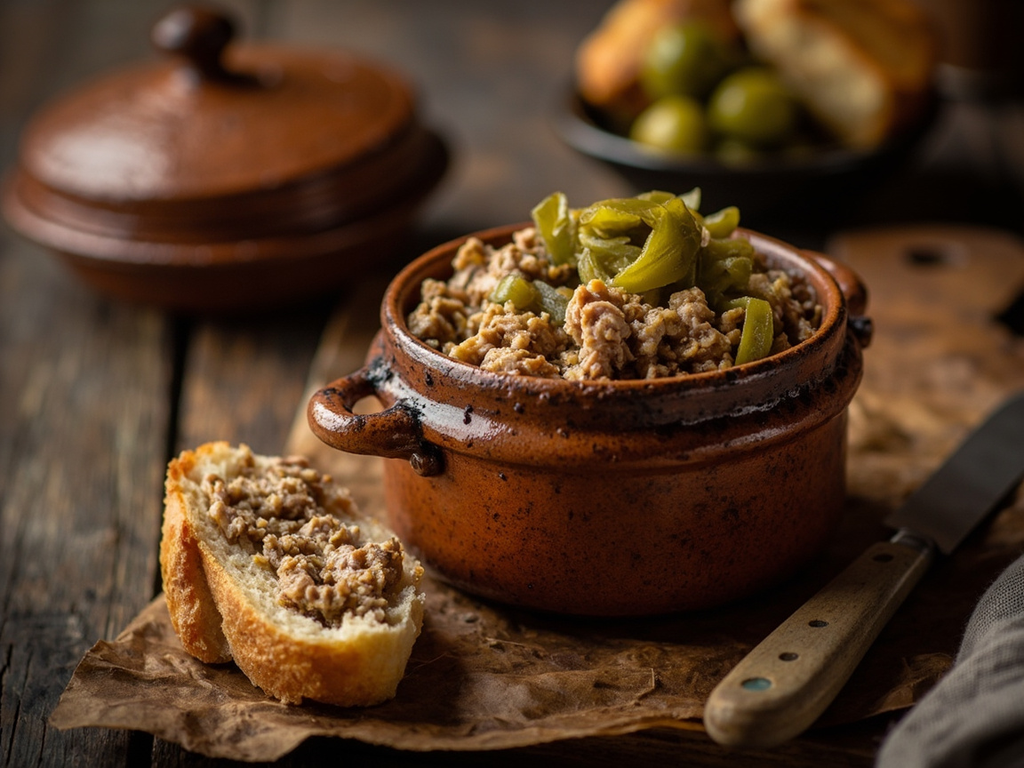
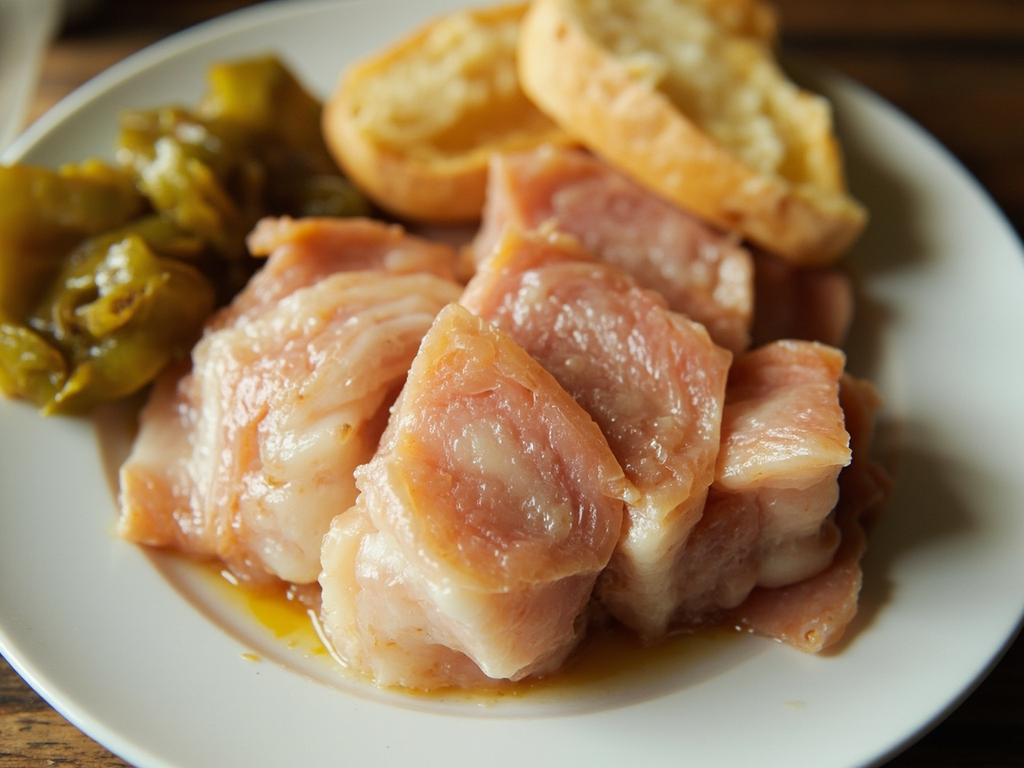
A small pot of chicken, rabbit, veal and bacon set in a tangy vinegar and herb aspic. Eaten cold, sliced, over several days.
You who listen to me, consider that preserving meat is waging war against germs — and our Flemish ancestors had won it long before we could name those invisible enemies. Vinegar and a well-sealed jelly, that was their asepsis. They piled chicken, rabbit, veal and bacon into the pot, covered it with the acidulated broth, and the set jelly formed a barrier. I gladly kept some in the cold: cold, sliced on a heel of bread, it sustains a man who barely has time for lunch.
- •Chicken, rabbit, veal, lean bacon — equal parts (white meats)
- •Vinegar — a dash (acidity and preservation)
- •Onion, bay leaf, thyme, juniper — a bouquet (aromatics)
- •Calf's foot — one (natural gelatin)
- •White wine — a glass (broth)
Potjevleesch (White Meat Terrine in Aspic)
A small pot of chicken, rabbit, veal and bacon set in a tangy vinegar and herb aspic. Eaten cold, sliced, over several days.
Why this dish? Born in Nice but a bacteriologist obsessed with preservation and asepsis, Calmette would have recognized in Flemish potjevleesch the folk art of keeping meat for days: three or four white meats sealed under a vinegary aspic, exactly as one protects a culture medium from contamination.
You who listen to me, consider that preserving meat is waging war against germs — and our Flemish ancestors had won it long before we could name those invisible enemies. Vinegar and a well-sealed jelly, that was their asepsis. They piled chicken, rabbit, veal and bacon into the pot, covered it with the acidulated broth, and the set jelly formed a barrier. I gladly kept some in the cold: cold, sliced on a heel of bread, it sustains a man who barely has time for lunch.
Ingredients (period version)
- Chicken, rabbit, veal, lean bacon — equal parts (white meats)
- Vinegar — a dash (acidity and preservation)
- Onion, bay leaf, thyme, juniper — a bouquet (aromatics)
- Calf's foot — one (natural gelatin)
- White wine — a glass (broth)
Ingredients
- Chicken breasts — 300 g (white meat)
- Boneless rabbit saddle — 300 g (white meat)
- Veal loin — 300 g (white meat)
- Lean bacon — 150 g (fat and structure)
- Dry white wine — 25 cl (broth)
- White vinegar — 4 tbsp (acidity and preservation)
- Gelatin (or calf's foot) — 6 sheets (aspic)
- Onion, 2 bay leaves, thyme, juniper berries — 1 bouquet (aromatics)
- Salt, pepper — to taste (seasoning)
Method
- Cut the meats into thick strips. Layer them tightly in a terrine, alternating types and inserting the bacon.
- Intersperse sliced onion, bay leaf, thyme and juniper berries; season each layer with salt and pepper.
- Pour in the white wine and vinegar to halfway, add a little water to just cover the meats.
- Cover and cook in a low oven (150 °C) for about 3 hours, until the meats are very tender.
- Strain the juice, heat it, and dissolve the softened gelatin; pour back over the meats.
- Refrigerate for 24 hours to set. Unmold or slice in the pot; serve cold with cold fries or a salad and bread.
How it was made : A dish from the ports of Flanders (Dunkirk, Cassel), potjevleesch arose from the need to preserve leftovers of several poultry. The acidulated jelly and tightly closed pot allowed it to keep for one to two weeks in the cellar, before refrigerators.
The contemporary twist : Present it in clear verrines to show the layers of meats set in jelly — a 'histological section' that the bacteriologist would not have disowned.
Albert Calmette · Charactorium