
Mo Yan, the pen name of Guan Moye, is a Chinese novelist and short story writer born in 1955 in Shandong. A major figure in contemporary Chinese literature, he received the Nobel Prize in Literature in 2012 for a body of work blending magic realism, folk tales, and the history of rural China.
Mo Yan(1955 — ?)
Mo Yan
République populaire de Chine
6 min read
Frequently asked questions
Key Facts
- Born in 1955 in Gaomi, in Shandong Province (China)
- Published “Red Sorghum” in 1986, adapted for the screen by Zhang Yimou (Golden Bear 1988)
- Author of major novels such as “Big Breasts and Wide Hips” (1996) and “Frog” (2009)
- Received the Nobel Prize in Literature in 2012, the first writer of Chinese nationality residing in China to win it
- His work is praised for having merged “folk tales, history and the contemporary” (Nobel Committee, 2012)
Works & Achievements
An epic spanning three generations of a peasant family confronting the Japanese invasion; the novel that brought **Mo Yan** to fame and inspired a film that won an award in Berlin.
A film by **Zhang Yimou** based on the novel, winner of the Golden Bear in Berlin in **1988**, which made **Mo Yan** known abroad.
A sweeping novel that follows a mother and her children across the whole of twentieth-century China, from the wars to political upheavals.
A historical novel about the Boxer Rebellion, blending cruelty, folk opera, and resistance to foreign powers.
A teeming tale in which an executed landlord is reincarnated as various animals to observe half a century of rural Chinese history.
A novel about a midwife caught up in the one-child policy; it won the **Mao Dun** Prize in **2011**.
Anecdotes
The name "Mo Yan" is a pen name that means "don't speak" in Chinese. The writer chose it in memory of his parents' warnings: under the Cultural Revolution, it was better to hold one's tongue, because a careless word could bring serious trouble. So it is a man who "does not speak" who became one of China's greatest storytellers.
Around the age of eleven, during the Cultural Revolution, the young Guan Moye had to leave school and herd the family's cattle in the countryside of Shandong. Alone for entire days in the fields, he watched nature and listened to the villagers' tales: those long hours of solitude and those folk stories would later nourish his whole body of work.
His novel "Red Sorghum Clan" was adapted for the screen in 1987 by the director Zhang Yimou. The film "Red Sorghum" won the Golden Bear at the Berlin festival in 1988 and made Mo Yan known far beyond China, launching the director's international career at the same time.
Mo Yan invented an imaginary territory, "Northeast Gaomi Township," inspired by his native region, where many of his stories take place. He said he drew on the American William Faulkner, who had created a fictional county for his novels, and on the Colombian Gabriel García Márquez and his magical realism.
In 2012, Mo Yan received the Nobel Prize in Literature. In his Stockholm lecture, titled "Storytellers," he spoke above all of memories of his mother, a poor peasant woman, and declared that he was, at heart, simply "a man who tells stories."
Primary Sources
To Mo Yan, who with hallucinatory realism merges folk tales, history and the contemporary.
I am a person who tells stories. It is because of storytelling that I was awarded the Nobel Prize in Literature.
The narrative opens with the narrator's family memory, evoking his father as a child joining the fighters against the Japanese invaders, in the red sorghum fields of Gaomi township.
Key Places
Rural region in eastern China where Mo Yan was born in 1955. It inspired the “Northeast Gaomi Township,” the imaginary setting of most of his novels.
Capital of China where Mo Yan pursued his military career, studied writing, and became a leading figure in the China Writers Association.
Capital of Sweden where Mo Yan received the Nobel Prize in Literature in December 2012 and delivered his lecture “Storytellers.”
Typical Objects

Mo Yan first wrote his long novels by hand, in notebooks, before switching to a computer. The manuscript embodies the patient labor of the storyteller turned writer.
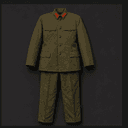
Having enlisted in 1976, Mo Yan long wore the uniform of the Chinese army, which gave him education and stability. It was as a soldier that he began to publish.
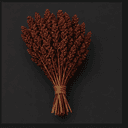
This red cereal grown in Shandong gives its title to Mo Yan's most famous novel. It symbolizes the land, rural memory, and the lives of Chinese peasants.
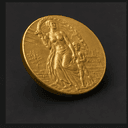
Awarded in Stockholm in 2012, the gold Nobel Prize medal honors Mo Yan's entire body of work. It crowns the worldwide recognition of contemporary Chinese literature.

Novels and short-story collections circulated in China and then translated worldwide. They introduced the “Northeast Gaomi Township” to millions of readers.
School Curriculum
Vocabulary & Tags
Key Vocabulary
Daily Life
Morning
As a child, Mo Yan would rise early to help with the fieldwork and tend the livestock in the countryside of **Shandong**. Once he became a writer, he often devoted his mornings to writing, in the quiet, before the demands of the day began.
Afternoon
In his youth, he worked in the fields and then in a petroleum-products factory before joining the army. Later, his afternoons were filled with reading, revising his manuscripts, and the meetings and interviews of a celebrated writer.
Evening
In his childhood, evenings in the village were a chance to listen to the tales and stories of the elders by the faint glow of the lamps. These folk narratives, heard at night, would become the raw material of his novels.
Food
The food of his childhood was that of the poor peasants of **Shandong** during the years of scarcity: grains such as sorghum and maize, sweet potatoes, and little meat. The memory of hunger often returns in his books.
Clothing
As a child, he wore the simple, patched clothing of peasant families. When he joined the army, he donned the green uniform of the **People's Liberation Army**, and later, as a famous writer, ordinary civilian clothes.
Housing
He grew up in a modest village house of earth and brick, shared by a large family. As an adult, he would live mainly in **Beijing**, in urban housing tied first to the army and then to his life as a writer.
Historical Timeline
Period Vocabulary
Liens externes & ressources
Références
Œuvres
Beaux seins, belles fesses
1996
La Dure Loi du karma (Quarante et un coups)
2006
Grenouilles
2009