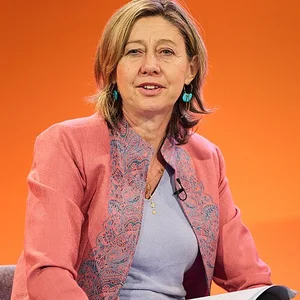

Christina Lamb is a British journalist and writer, born in 1965, specializing in war reporting. A renowned foreign correspondent, she has covered Afghanistan, Pakistan, and many other conflicts, and co-wrote the memoir 'I Am Malala' with Malala Yousafzai.
Christina Lamb(1965 — ?)
Christina Lamb
Royaume-Uni
6 min read
Frequently asked questions
Key Facts
- Born in 1965 in London, she began as a correspondent in Pakistan and Afghanistan in the late 1980s
- Named Foreign Correspondent of the Year several times by the British Press Awards
- Co-author with Malala Yousafzai of 'I Am Malala' (2013), a memoir read around the world
- Chief Foreign Correspondent for the Sunday Times
- Author of several books, including 'Our Bodies, Their Battlefield' (2020) on sexual violence in wartime
Works & Achievements
Lamb's first book, on Pakistan's struggle for democracy, drawn from her years reporting in the region.
The story of a British colonist in Zambia, broadening her work beyond South Asia.
An investigation into Afghanistan and women's resistance under the Taliban regime, one of her best-known works.
A portrait of Zimbabwe through the intertwined fates of two families, one black and one white, under Mugabe's rule.
Co-written with Malala Yousafzai, a global bestseller about the fight for girls' education.
A critical assessment of Western intervention in Afghanistan and Pakistan after September 11.
An investigation into rape as a weapon of war, told through the testimonies of survivors around the world.
Decades of front-line war reporting that earned her the title of Foreign Correspondent of the Year five times.
Anecdotes
In 1987, at the age of 21, Christina Lamb was invited to a wedding in Pakistan where she met Benazir Bhutto. She let herself be drawn across the border into Afghanistan to follow the mujahideen fighting the Soviet army. That same year, this adventure earned her the title of Young Journalist of the Year in the United Kingdom.
During the Taliban regime, women in Herat would gather under the pretext of sewing classes — the “Golden Needle Sewing School” — when in reality they were secretly reading and studying banned literature. Christina Lamb recounts these clandestine circles in her book *The Sewing Circles of Herat*.
In 2012, the Pakistani teenager Malala Yousafzai was gravely wounded by Taliban gunfire for defending girls' right to an education. Christina Lamb co-wrote her memoir, *I Am Malala*, which became a global best-seller and helped make Malala the youngest-ever Nobel Peace Prize laureate in 2014.
Christina Lamb has been named Foreign Correspondent of the Year five times (British Press Awards), a record reflecting decades spent covering the most dangerous conflict zones, from Afghanistan to Zimbabwe by way of Iraq and Syria.
In *Our Bodies, Their Battlefield* (2020), she investigates rape as a weapon of war, gathering the testimonies of survivors in Rwanda, Bosnia, Iraq (Yazidi women) and Nigeria, to break the silence surrounding these crimes.
Primary Sources
I come from a country that was created at midnight. When I almost died, it was just after midday.
Behind closed doors and blacked-out windows, the women of Herat went on teaching and learning, disguising their classes as innocent sewing circles.
Rape is the cheapest weapon of war there is, and yet the one we speak of least: it destroys not only bodies, but entire families and communities.
Pakistan is a country born of an idea, and one that has never stopped searching for what it was meant to be.
Key Places
Christina Lamb's birthplace and home to the major British newspapers she works for, including the Sunday Times.
Where Christina Lamb studied Philosophy, Politics and Economics before launching into journalism.
A city on the Afghan border, a rear base for the mujahideen and the starting point for Lamb's first reports in the 1980s.
The Afghan capital, where Lamb spent decades covering the war, the Taliban regime and the Western intervention.
A city in western Afghanistan where Lamb investigated the secret circles of women living under the Taliban, the subject of one of her books.
Typical Objects
The notebook where the correspondent jots down testimonies, dates, and details in the field, often in a hurry and in danger. It is the basic tool of major reporting before the writing stage.
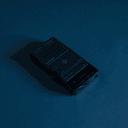
A device used to faithfully record interviews with witnesses and survivors, essential for reproducing their words accurately.
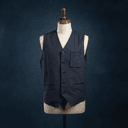
Protective gear marked “PRESS” worn by journalists in conflict zones to shield themselves from gunfire and shrapnel.
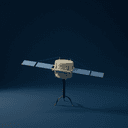
A phone that works via satellites, allowing the reporter to send articles and stay reachable from remote regions with no network coverage.
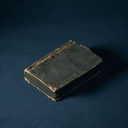
A camera body used to bring back images of conflicts, which accompany and authenticate the written reports.
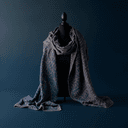
A piece of cloth the journalist wears over her head to respect local customs and blend into her surroundings while reporting in Pakistan or Afghanistan.
School Curriculum
Vocabulary & Tags
Key Vocabulary
Tags
Daily Life
Morning
On assignment, the day starts early with reading the latest news, getting in touch with local sources, and arranging travel, often with an interpreter and a driver. Safety is assessed before every outing.
Afternoon
The afternoon is devoted to field interviews: meeting witnesses, victims, soldiers, or officials, sometimes in dangerous areas. Every detail is noted or recorded for the future article.
Evening
In the evening, she writes and files her articles, often racing against deadlines, by satellite phone or internet. It is also the time to cross-check the information gathered during the day.
Food
In the field, food is simple and depends on what is available locally: tea, rice, bread, dishes shared with the locals. Meals are often eaten at irregular times depending on reporting conditions.
Clothing
She adapts her clothing to the situation: practical and unobtrusive garments, a headscarf or shawl to respect local customs in Pakistan and Afghanistan, and a bulletproof vest marked “PRESS” in combat zones.
Housing
Accommodation ranges from correspondents' hotels to local guesthouses, as well as makeshift lodgings near the front lines, sometimes in precarious conditions.
Historical Timeline
Period Vocabulary
Liens externes & ressources
Références
Œuvres
Waiting for Allah: Pakistan's Struggle for Democracy
1991
The Africa House
1999
The Sewing Circles of Herat
2002
House of Stone
2006
Moi, Malala (I Am Malala)
2013
Farewell Kabul
2015
Our Bodies, Their Battlefield
2020