China
Emperors, philosophers, inventors and strategists — four millennia of Chinese civilisation.
56 characters
56 characters
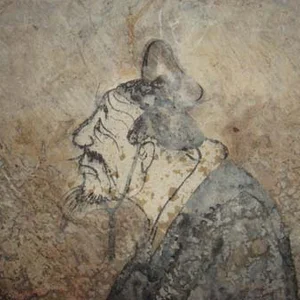
Confucius
550 av. J.-C. — 478 av. J.-C.
A Chinese thinker and philosopher of the 5th century BC, Confucius is the founder of Confucianism. His moral and political teachings, passed down by his disciples in the Analects, have profoundly influenced Chinese civilization and East Asia for more than two millennia.
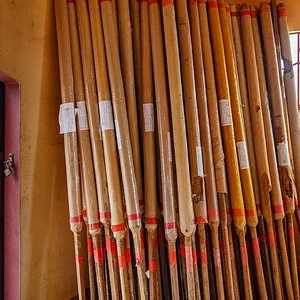
Qilin
A fabulous creature of Chinese mythology, the Qilin is a benevolent chimera with the body of a deer, horse's hooves, and dragon's scales, often nicknamed the “unicorn of the East.” A creature of good omen, it heralds the birth or death of a sage and embodies peace and prosperity.
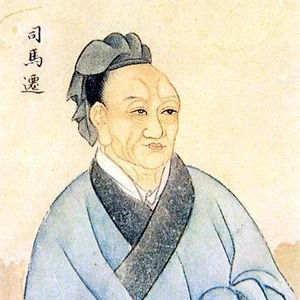
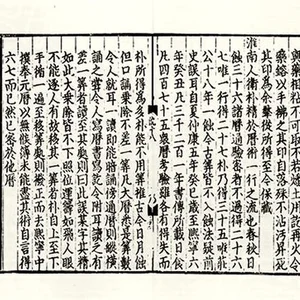
Sima Qian
144 av. J.-C. — 85 av. J.-C.
A historian and annalist of the Han dynasty, Sima Qian is the author of the Records of the Grand Historian (Shiji), considered the first great work of Chinese historiography. Despite disgrace and castration imposed by Emperor Wu, he completed this monumental work covering three millennia of history.
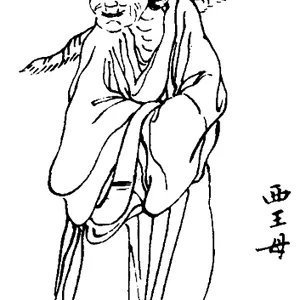
Xiwangmu
Xiwangmu, the Queen Mother of the West, is one of the great deities of Chinese mythology and religion. Guardian of the peaches of immortality, she reigns over Mount Kunlun and presides over the fate of immortals. Her cult, attested as early as the Shang dynasty, spans the entire religious history of China.
Ban Zhao
45 — 116
Ban Zhao (45–116) was China's first great female scholar, a historian and philosopher under the Eastern Han dynasty. She completed the works of her brother Ban Gu, most notably the Book of Han. Her treatise Lessons for Women (Nüjie) profoundly shaped Confucian thought on the role of women.
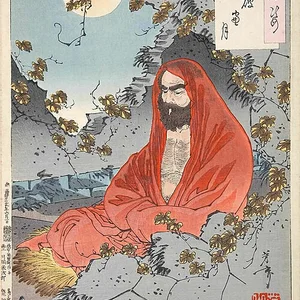
Bodhidharma
440 — 540
Buddhist monk, regarded as the founder of Chan Buddhism in China, from which Japanese Zen derives. According to tradition, he transmitted a form of Buddhism focused on meditation and the direct experience of awakening, beyond the scriptures.
Cai Lun
48 — 121
An official at the imperial court during the Han dynasty, Cai Lun is credited with inventing paper in 105 AD. He refined a process using plant fibers, bark, and rags to produce a lightweight and inexpensive writing material.
Deng Sui
Empress then regent of Eastern Han China (1st–2nd century), she governed the empire for fifteen years with wisdom and firmness. She promoted education, reduced court expenditures, and effectively managed famines, earthquakes, and border tensions.
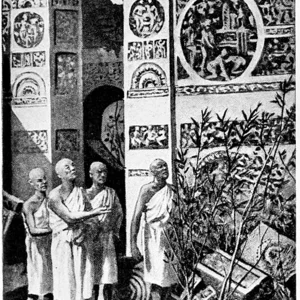
Faxian
337 — 422
A Chinese Buddhist monk of the 4th–5th century, Faxian undertook a long pilgrimage on foot to India to collect sacred texts. His travel account, titled *A Record of Buddhist Kingdoms*, stands as one of the earliest detailed descriptions of India and Central Asia written by a Chinese traveler.
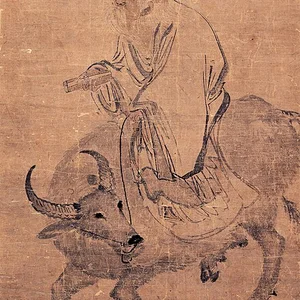
Laozi
vers VIe siècle av. J.-C.
Chinese philosopher, founder of Taoism
Al-Jazari
1164 — 1206
Engineer and inventor of the 12th–13th century active in Mesopotamia (Jazira), al-Jazari is famous for his treatise on automata and hydraulic machines. His major work describes more than fifty ingenious mechanical devices, making him one of the fathers of medieval mechanics.
An Lushan
703 — 757
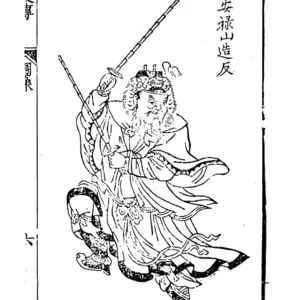
A general of Sogdian and Turkic origin in the service of the Tang dynasty, An Lushan rebelled in 755 against Emperor Xuanzong and proclaimed himself emperor of the short-lived Yan dynasty. His rebellion plunged China into a devastating civil war before his assassination in 757.
Bi Sheng
990 — 1052
Chinese artisan and inventor of the 11th century, Bi Sheng invented movable type printing using baked clay around 1040, under the Song Dynasty. His invention predates Gutenberg's in Europe by four centuries.
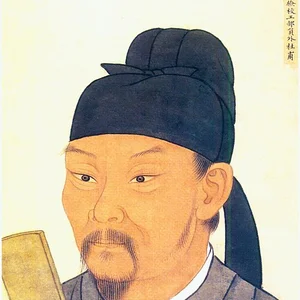
Du Fu
712 — 770
Du Fu (712–770) is considered one of the greatest poets of imperial China, nicknamed the "Sage of Poetry." A contemporary of Li Bai, he lived under the Tang dynasty and witnessed the devastating An Lushan Rebellion. His deeply humanist body of work bears witness to the suffering of ordinary people and the upheavals of his time.
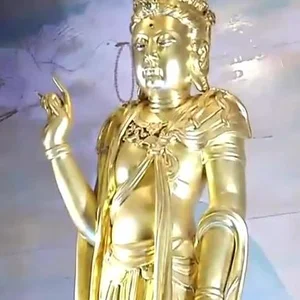
Guan Yin
Guan Yin is the Buddhist goddess of compassion and mercy, venerated throughout East Asia. Originating from the bodhisattva Avalokiteśvara tradition, she gradually took on a feminine form in China between the 7th and 12th centuries. She is one of the most popular religious figures in Mahayana Buddhism.
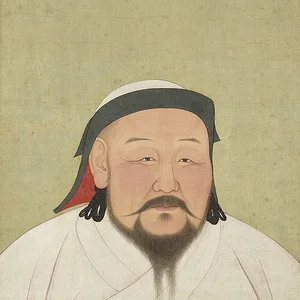
Kublai Khan
1215 — 1294
Grandson of Genghis Khan, Kublai Khan founded the Yuan dynasty in China and ruled from 1260 to 1294. He expanded the Mongol Empire to its greatest extent and opened China to international trade, most notably welcoming Marco Polo.
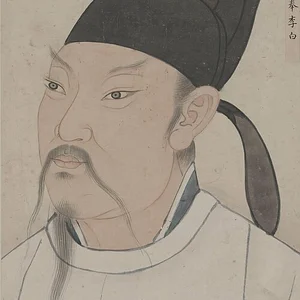
Li Bai
701 — 762
Li Bai (701–762) is considered one of the greatest poets of imperial China, known as the "Drunken Genius" or the "Immortal Poet." He lived during the Tang dynasty, the golden age of Chinese poetry. His work, deeply influenced by Taoism, celebrates nature, friendship, wine, and the moon.
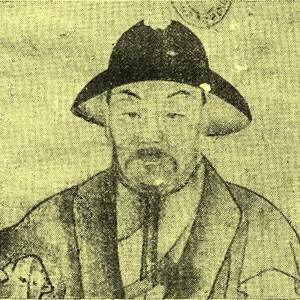
Lý Thường Kiệt
1019 — 1105
General and statesman of Đại Việt (1019–1105), he served under three emperors of the Lý dynasty. Renowned for his preemptive strike against the Song prefectures (1075–1076) and his victory against the Song invasion, he is regarded as one of the greatest military heroes in Vietnamese history.
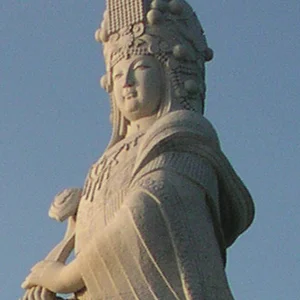
Mazu
960 — 987
Mazu is the protective goddess of sailors in Chinese tradition. According to legend, she was born around 960 CE in Fujian province under the name Lin Mo, and was deified after her death. Her cult spread across all the coasts of China and into Chinese communities throughout Southeast Asia.
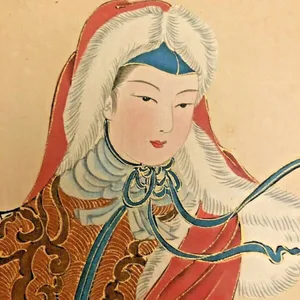
Mulan
Mulan is a legendary figure from Chinese literature — a young woman said to have disguised herself as a man to take her father's place in the army. Her story, popularized by the Disney animated film, embodies the values of filial piety and courage.
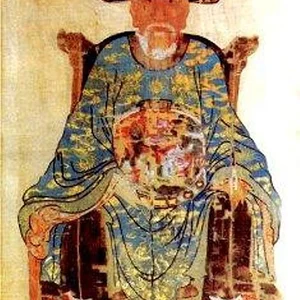
Nguyễn Trãi
Nguyễn Trãi (1380–1442) was a Vietnamese scholar, poet, and statesman, a central figure in the resistance against Ming occupation of Đại Việt. Strategic adviser to Lê Lợi during the Lam Sơn uprising, he is one of the founding fathers of the Hậu Lê dynasty and a cornerstone of classical Vietnamese literature.
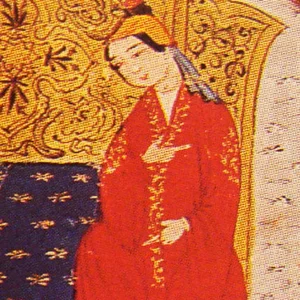
Sorghaghtani Beki
1190 — 1252
Mongol princess, daughter-in-law of Genghis Khan and wife of Tolui. Mother of four sons, including the emperors Möngke and Kublai Khan and the Ilkhan Hulagu, she exerted a decisive political influence on the succession of the Mongol Empire in the 13th century.
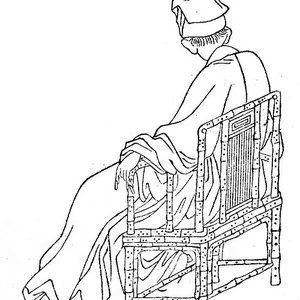
Wang Wei
699 — 759
Wang Wei (701-761) was one of the greatest poets of the Tang dynasty, as well as a painter, musician, and high-ranking official. Deeply influenced by Chan Buddhism, he is celebrated for his landscape poetry in which nature and contemplation merge.
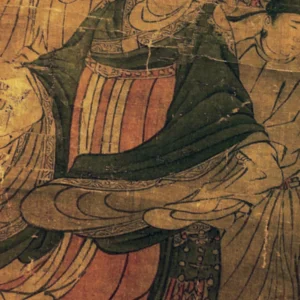
Wu Zetian
624 — 705
Wu Zetian (624–705) is the only woman ever to have ruled as reigning empress of China. A concubine of Emperor Taizong and later wife of Emperor Gaozong, she gradually seized power before founding her own Zhou dynasty in 690. An ambitious reformer, she modernized the imperial administration and championed merit-based examinations.
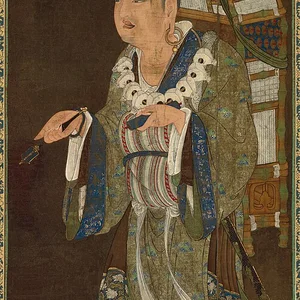
Xuanzang
602 — 664
A 7th-century Chinese Buddhist monk, he undertook a seventeen-year journey to India to collect sacred texts. He translated hundreds of sutras into Chinese and played a major role in the spread of Buddhism in China.
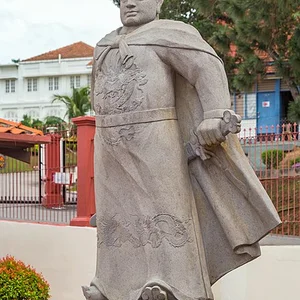
Zheng He
1371 — 1433
Chinese mariner, explorer and diplomat (1371–c. 1434)
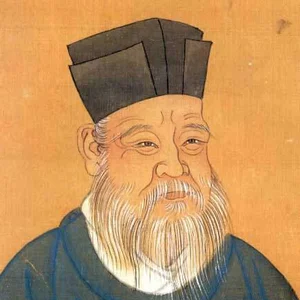
Zhu Xi
1130 — 1200
Zhu Xi (1130–1200) was the greatest Confucian philosopher of medieval China and the founder of Neo-Confucianism. A scholar of the Song dynasty, he synthesized the thought of Confucius and Mencius with metaphysical elements. His work became the official reference for imperial examinations for seven centuries.
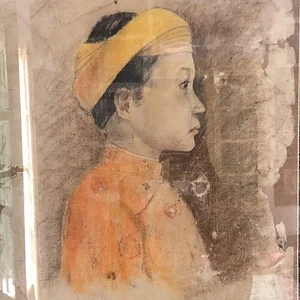
Tu Long
Tu Long (1543-1605) was a Chinese scholar and playwright of the Ming dynasty. Known for his *chuanqi* plays and his essays, he embodies the figure of the scholar-artist of late sixteenth-century China.
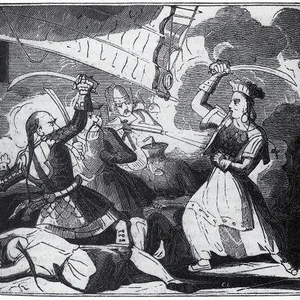
Ching Shih
1775 — 1844
Ching Shih (c. 1775–1844) was a Chinese pirate who became one of the most formidable military commanders in history. She led the Red Flag Fleet, a confederation of over 1,800 ships and 80,000 men, imposing her rule across the South China Sea.
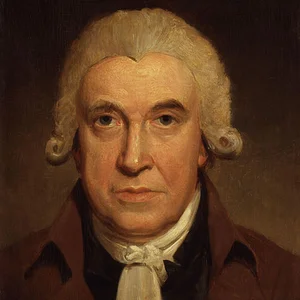
James Watt
1736 — 1819
Scottish engineer and inventor (1736–1819), James Watt greatly improved Newcomen's steam engine in 1769, making it efficient and economical. His invention revolutionized industry and transportation, earning him a place as one of the fathers of the Industrial Revolution.
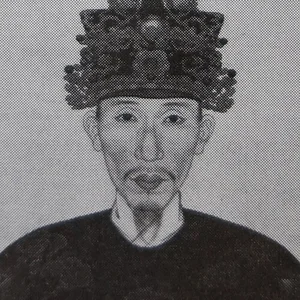
Quang Trung
1752 — 1792
Nguyễn Huệ (1753-1792), known by his reign name Quang Trung, was the second emperor of the Tây Sơn dynasty in Vietnam. An undefeated military commander across twenty years of campaigns, he ended two centuries of north-south division and repelled both Siamese and Qing invasions. A visionary reformer, he promoted Vietnamese script (chữ Nôm) and modernized the economy, education, and army in just three years of reign. [1]

Wang Zhenyi
1768 — 1797
Wang Zhenyi was a Chinese astronomer, mathematician, and poet of the Qing dynasty. Despite the conventions of her time that kept women away from learning, she popularized astronomy and championed intellectual equality between men and women.
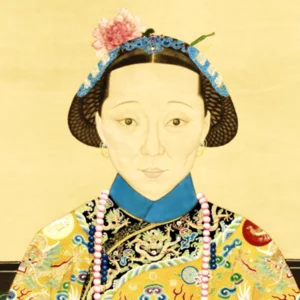
Ci'an
1837 — 1881
Empress dowager of China under the Qing dynasty, Ci'an exercised a joint regency with Ci Xi following the death of Emperor Xianfeng in 1861. Known for her piety and gentleness, she was long overshadowed by the more ambitious Ci Xi in historical accounts.
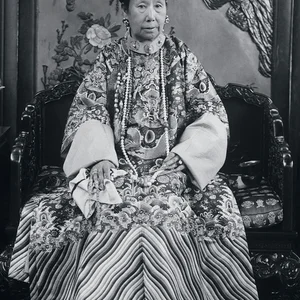
Cixi
1835 — 1908
Cixi, Empress Dowager of China, dominated the politics of the Qing dynasty for nearly fifty years. A shrewd and authoritarian regent, she governed an empire facing Western colonial pressures and internal rebellions, leaving an ambivalent legacy on China's modernization.
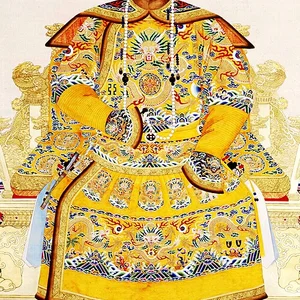
Guangxu
1871 — 1908
Guangxu (1871–1908) was the eleventh emperor of the Qing dynasty. In 1898, he attempted to modernize China through the "Hundred Days' Reform," but Empress Dowager Cixi seized power and placed him under house arrest until his death.
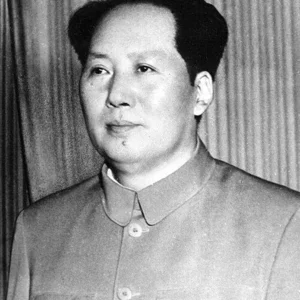
Mao Zedong
1893 — 1976
Chinese statesman (1893-1976) and founder of the People's Republic of China. Leader of the Chinese Communist Party, he established a communist regime and launched the Great Proletarian Cultural Revolution. A major figure of the 20th century, his political legacy remains complex and controversial.
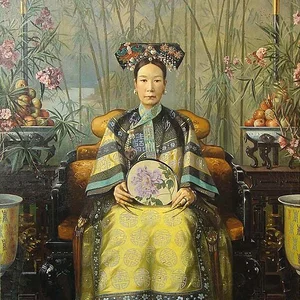
Tzu-Hsi (Cixi)
Cixi was the true ruler of imperial China for nearly fifty years, first as regent and then as the actual holder of power. Born into modest rank, she established herself at the Qing court and profoundly shaped China's destiny in the face of Western imperialism.
Beulah Henry
An American inventor nicknamed "Lady Edison," Beulah Henry filed more than 110 patents between 1912 and 1970, covering household appliances, bobbinless sewing machines, and various practical tools. A pioneer in a field almost exclusively dominated by men, she founded several companies to bring her inventions to market.
Chen-Ning Yang
Sino-American theoretical physicist born in 1922, awarded the Nobel Prize in Physics in 1957 alongside T.D. Lee for the discovery of parity violation in weak interactions. Co-author of Yang-Mills theory, a cornerstone of the standard model of particle physics.
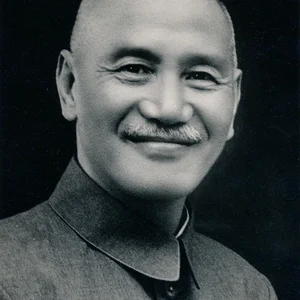
Chiang Kai-shek
1887 — 1975
Chinese military leader and statesman, head of the Kuomintang (Nationalist Party) after the death of Sun Yat-sen. Defeated by Mao Zedong's communists in 1949, he withdrew to the island of Taiwan, where he led the Republic of China until his death.
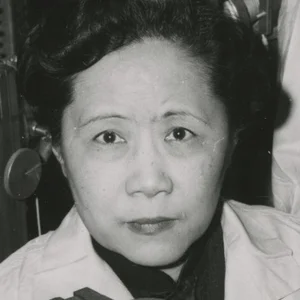
Chien-Shiung Wu
1912 — 1997
Chien-Shiung Wu was a Chinese-American experimental physicist, nicknamed "the First Lady of Physics." Her 1956 experiment disproved the law of conservation of parity, upending particle physics. Unjustly passed over for the Nobel Prize awarded to Lee and Yang for that discovery, she remains one of the most important figures in twentieth-century physics.
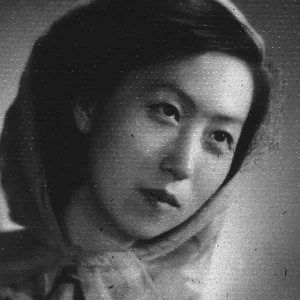
Eileen Chang
1920 — 1995
Chinese novelist born in Shanghai in 1920, Eileen Chang is considered one of the greatest voices in modern Chinese literature. Her works explore with remarkable subtlety the romantic relationships and Shanghainese society of the first half of the twentieth century.
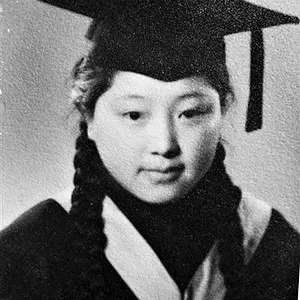
He Zehui
1914 — 2011
He Zehui was a Chinese nuclear physicist and a pioneer of particle physics in China. Together with her husband Qian Sanqiang, she studied the fission of uranium and helped found nuclear research in China. She is sometimes called the “Marie Curie of China.”
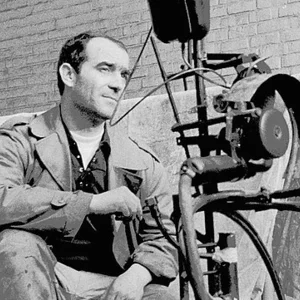
Jean Tinguely
1925 — 1991
Jean Tinguely (1925–1991) was a pioneering Swiss sculptor of kinetic art and the Nouveau Réalisme movement. His famous absurd machine-sculptures, such as the Méta-Matics, questioned industrial society and the role of the machine in art.
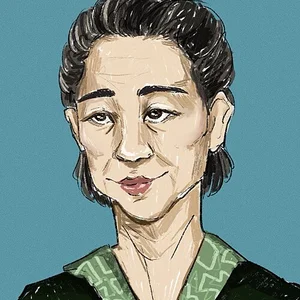
Lin Lanying
1918 — 2003
Lin Lanying was a Chinese engineer and scientist specializing in semiconductor materials. A pioneer of microelectronics in China, she is nicknamed the “mother of Chinese semiconductor materials” for developing the country's first single crystals of silicon and gallium arsenide.
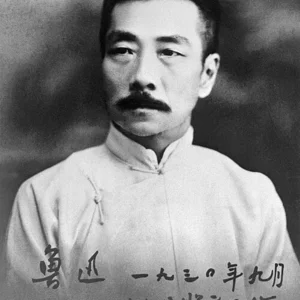
Lu Xun
1881 — 1936
Lu Xun (1881-1936) was the Chinese writer and essayist regarded as the father of modern Chinese literature. Author of satirical short stories and pamphlets, he denounced the archaisms of traditional society and campaigned for a literary language in vernacular Chinese.
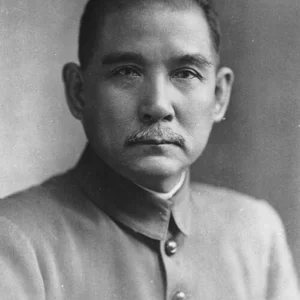
Sun Yat-sen
1866 — 1925
Chinese revolutionary and statesman, founder of the Kuomintang nationalist party and first president of the Republic of China in 1912. Regarded as the “father of the nation” by the Chinese for his role in overthrowing the Manchu Qing dynasty.
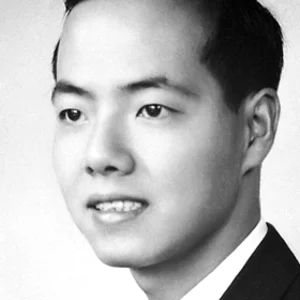
Tsung-Dao Lee
1926 — 2024
American theoretical physicist of Chinese origin. With Chen Ning Yang, he demonstrated in 1956 the non-conservation of parity in weak interactions, which earned them the Nobel Prize in Physics in 1957.
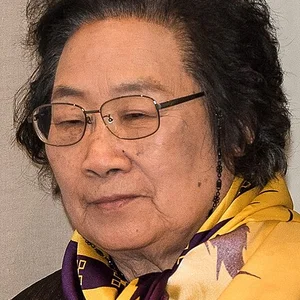
Tu Youyou
1930 —
Chinese pharmaceutical researcher

Xie Xide
1921 — 2000
Xie Xide (1921-2000) was a Chinese physicist, a pioneer of solid-state physics and semiconductors in China. The first woman to serve as president of Fudan University in Shanghai, she played a major role in the development of modern Chinese physics.
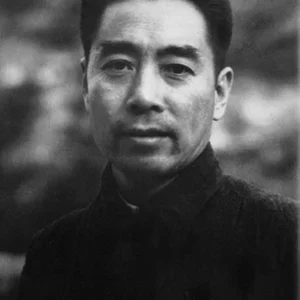
Zhou Enlai
1898 — 1976
Zhou Enlai was the first Premier of the People's Republic of China, from its founding in 1949 until his death in 1976. A skilled diplomat and loyal companion of Mao Zedong, he played a central role in Chinese foreign policy and tempered some of the excesses of the Cultural Revolution.
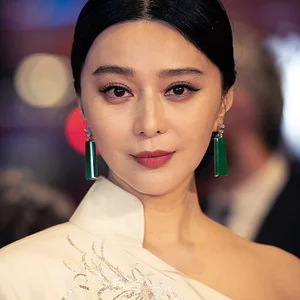
Fan Bingbing
1981 — ?
Fan Bingbing is a Chinese actress and film producer, considered one of the most famous and highest-paid stars in Asia. She rose to meteoric fame before becoming embroiled in a tax scandal in 2018.
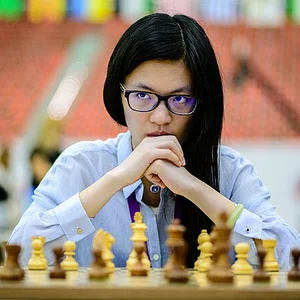
Hou Yifan
1994 — ?
Hou Yifan is a Chinese chess player born in 1994, considered the best female player of her generation. Having become an international grandmaster at 14, she won the Women's World Championship title several times, becoming the youngest world chess champion in history.
Li Ling
1985 — ?
Li Ling is a Chinese artistic gymnast specializing in apparatus events. She represented China in high-level international competitions in the early 21st century.
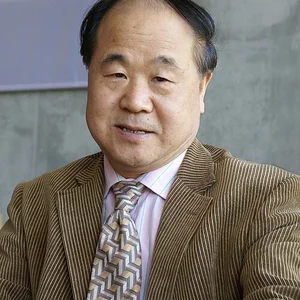
Mo Yan
1955 — ?
Mo Yan, the pen name of Guan Moye, is a Chinese novelist and short story writer born in 1955 in Shandong. A major figure in contemporary Chinese literature, he received the Nobel Prize in Literature in 2012 for a body of work blending magic realism, folk tales, and the history of rural China.
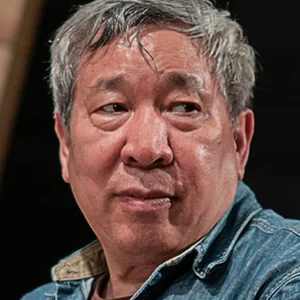
Yan Lianke
1958 — ?
Yan Lianke is a contemporary Chinese novelist born in 1958 in Henan province. A leading figure of social satire, he is known for his critical works—often censored in China—that blend raw realism with grotesque absurdity.