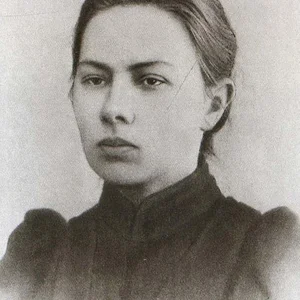

Russian revolutionary and educator (1869–1939), wife of Lenin and Bolshevik activist. She played a central role in Soviet educational policy after 1917, particularly in mass literacy campaigns and the reform of public schooling.
Nadezhda Krupskaya(1869 — 1939)
Nadezhda Krupskaya
république socialiste fédérative soviétique de Russie, Union soviétique, Empire russe
8 min read
Frequently asked questions
Famous Quotes
« "Education is a weapon whose effect depends on who holds it in his hands and at whom it is aimed."»
Key Facts
- 1869: born in Saint Petersburg into an impoverished noble family
- 1896: arrested and exiled to Siberia for revolutionary activities; joins Lenin in exile
- 1917: returns to Russia after the October Revolution and becomes a central figure in Bolshevik power
- 1920–1929: heads the department of extra-scholastic education and oversees the national literacy campaign
- 1939: dies in Moscow, one day after her 70th birthday
Works & Achievements
A major theoretical work in which Krupskaya analyzes the educational systems of Dewey, Pestalozzi, and Spencer to develop a Marxist pedagogy. This book laid the foundations for the principles of the Soviet labor school.
A massive literacy campaign targeting the Soviet population, led by Krupskaya through the Narkompros. Over twenty years, tens of millions of adults learned to read and write through a network of 'Likbez centers' spread across the country.
An intimate political memoir written after Lenin's death, blending personal recollections with analysis of his revolutionary thought. An essential source for historians, despite the pressure Stalin exerted over its writing.
Krupskaya oversaw the creation of thousands of public libraries across the USSR and established cataloging standards accessible to non-specialists. She conceived of the library as a tool for popular emancipation as much as for political education.
A founding text defining the pedagogical and ideological goals of the Soviet Pioneer organization. Krupskaya argues for an education combining collective work, contact with nature, and the development of civic awareness.
A posthumous publication collecting all of Krupskaya's pedagogical writings, covering preschool education, adult learning, teacher training, and the role of the school in socialist society.
Anecdotes
Nadezhda Krupskaya met Vladimir Lenin in 1894 in the revolutionary circles of Saint Petersburg. Arrested in 1896 and sentenced to exile in Siberia, she was reunited there with Lenin, who had requested to be sent to the same region. They married in 1898 in Shushenskoye, in the village church, to satisfy the requirements of the tsarist authorities.
During the years of exile in Europe (1900–1917), Krupskaya secretly managed all correspondence between the Bolshevik Party and its underground cells in Russia. She developed a system of invisible ink and coded messages hidden inside seemingly ordinary letters, allowing them to evade the surveillance of the tsarist secret police, the Okhrana.
After 1917, Krupskaya launched a national literacy campaign known as the 'likbez,' as roughly 70% of Russians could neither read nor write on the eve of the revolution. She organized thousands of 'illiteracy elimination centers' across the country, training volunteer instructors and overseeing the printing of millions of basic reading primers.
In 1929, Krupskaya publicly opposed the censorship of certain children's books, including those of Korney Chukovsky, whose whimsical fairy tales were deemed 'ideologically incorrect.' She defended the freedom of imagination in children's literature against the Party's dogmatic demands, highlighting her growing tensions with Stalin.
After Lenin's death in January 1924, Krupskaya wished for his body to be buried in a simple ceremony, in keeping with his own convictions. Stalin insisted on having the body embalmed and put on permanent display in the Mausoleum on Red Square, overriding the widow's explicit wishes. Krupskaya publicly denounced this cult of personality, but was powerless to stop it.
Primary Sources
Lenin loved ordinary people — workers, peasants. He could talk for hours with an old peasant or a factory worker, trying to understand their daily lives, their hopes, their hardships.
Education cannot be separated from social life. A school that ignores the reality of the working class does not produce free citizens, but instruments in the service of an oppressive order.
We live here very modestly, but we work without rest. Volodia reads and writes all day; I translate, copy his texts, and teach the village peasant children to read.
Libraries are not warehouses for dead books. They must be living centers of popular culture, open to all — from the illiterate peasant to the engineer. Our task is to bring books to the last village in Russia.
Children must not only learn to read from books. They must learn to observe nature, to work collectively, to develop their critical thinking and their sense of solidarity with their fellow comrades.
Key Places
Krupskaya's birthplace and the cradle of her revolutionary commitment. It was here that she taught workers, met Lenin, and was arrested by the Okhrana in 1896.
A village in eastern Siberia where Krupskaya and Lenin were exiled between 1897 and 1900. It was here that they married and Krupskaya began writing her first texts on popular education.
The couple's main European exile base between 1900 and 1905, and again from 1907 to 1917. Krupskaya coordinated the Bolshevik underground network there and wrote 'Public Education and Democracy'.
After 1917, Krupskaya settled in Moscow, working at the People's Commissariat of Education (Narkompros). There she led major school reforms and the literacy campaign until her death in 1939.
Krupskaya and Lenin lived in Paris from 1908 to 1912. She frequented libraries, followed European pedagogical debates, and observed the French labor movement.
Typical Objects

Krupskaya used a typewriter to draft and reproduce clandestine Bolshevik Party correspondence during the years of exile. This tool allowed her to quickly produce multiple copies of leaflets and coded letters.

A symbol of her entire educational mission, these simple illustrated booklets were at the heart of the 'Likbez' campaign. Krupskaya personally oversaw the design of these primers aimed at illiterate adults in both cities and rural areas.

A central fixture of Russian domestic life, the samovar had a place of honor in every home shared by Krupskaya and Lenin — whether in exile or in Moscow. Working meetings and political discussions often took place over a glass of tea.

An avid reader and self-taught scholar, Krupskaya carried her books everywhere — Marx, Engels, Pestalozzi, Spencer. These heavily annotated works were her permanent working tools for developing her pedagogical theories.

As the driving force behind Soviet library reform, Krupskaya insisted on the accuracy of catalogues and lending records. She viewed organized access to books as a fundamental right of the working class.

Krupskaya suffered from Graves' disease (hyperthyroidism), which gave her a distinctive appearance and affected her eyesight. Her round metal-framed glasses are visible in most of her photographs from her later years.
School Curriculum
Vocabulary & Tags
Key Vocabulary
Tags
Daily Life
Morning
Krupskaya rises early, at dawn — a habit formed during the years of Siberian exile, where the short winter days made it essential to work by daylight. She begins by reading the Party press and correspondence, annotating key documents before colleagues arrive at the office.
Afternoon
At the Narkompros, she receives delegations of teachers, library administrators, and literacy activists from across the Soviet republics. She drafts circulars, pedagogical directives, and replies to the countless field reports that make their way up to her desk.
Evening
Evenings are often devoted to reading and personal writing — her memoirs of Lenin, her pedagogical essays. In the early revolutionary years, late-night political meetings were frequent; later, her declining health forces her into quieter evenings.
Food
Krupskaya eats simply, true to the frugal habits of her underground years. In exile, meals typically consisted of soup, black bread, and kasha (porridge). After 1917, her meals in Moscow remain modest — she pointedly refuses the food privileges reserved for the nomenklatura.
Clothing
She wears dark, long, austere dresses in wool or cotton, with no adornment. During exile, her clothes are worn and patched. After the revolution, she adopts a plain civil servant's attire — black skirt, white or grey blouse — rejecting all sartorial luxury on ideological grounds.
Housing
In Siberia, the couple share a small izba (a peasant log house) with a peasant landlady. During the European exile, modest two- or three-room apartments in working-class neighborhoods of Geneva or Paris. In Moscow after 1917, an apartment in the Kremlin, then in a government building — always simply furnished and overflowing with books.
Historical Timeline
Period Vocabulary
Visual Style
Esthétique de la Russie révolutionnaire : intérieurs austères, lampes à pétrole, affiches constructivistes rouge et noir, et la silhouette sobre de Kroupskaïa à son bureau, entourée de livres et de dossiers.
Sound Ambience
Ambiance sonore de la Russie révolutionnaire : le cliquetis de la machine à écrire et le bouillonnement du samovar côtoient les bruits de la rue pétersbourgeoise, des usines et des premières classes d'alphabétisation.
Liens externes & ressources
Références
Œuvres
Narodnoe obrazovanie i demokratiya (L'Éducation populaire et la démocratie)
1915
Campagne 'Likbez' (Liquidation de l'analphabétisme)
1920-1939
Vospominaniya o Lenine (Souvenirs sur Lénine)
1925-1933
Réforme du réseau des bibliothèques soviétiques
1918-1930
O zadachakh pionerskogo dvizheniya (Sur les tâches du mouvement des pionniers)
1923
Écrits pédagogiques (recueil en 11 volumes)
1957-1963
See also
Related Characters
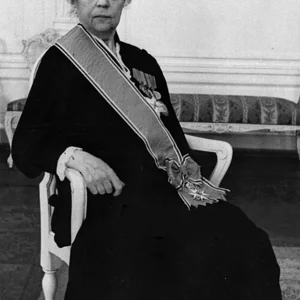
Alexandra Kollontai
1872 — 1952
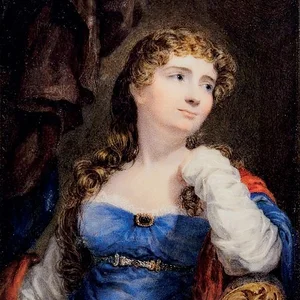
Annabella Milbanke
1792 — 1860
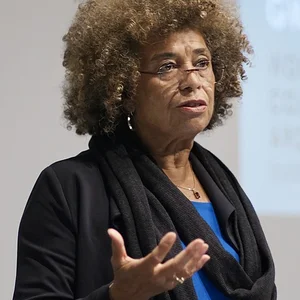
Angela Davis
1944 — ?
Anne Thérèse de Marguenat de Courcelles, marquise de Lambert
Betty Friedan
1921 — 2006
Cornelia
190 av. J.-C. — 100 av. J.-C.