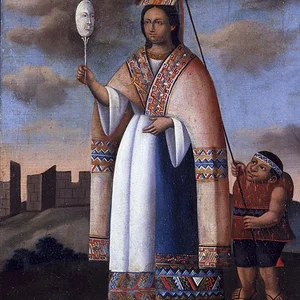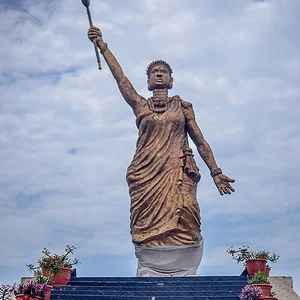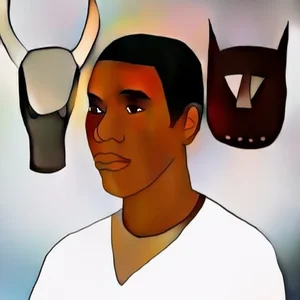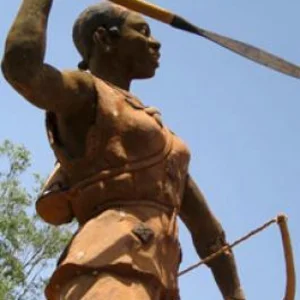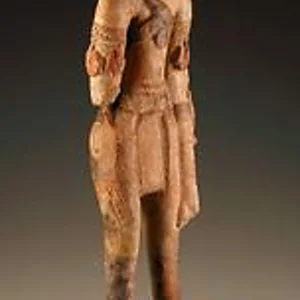

Sister of Sundiata Keita, a figure from the 13th-century Mande epic. According to griot oral tradition, she accompanied her brother into exile and played a decisive diplomatic role in the reconquest of the Mande against Soumaoro Kante.
Nana Triban
Nana Triban
8 min read
Frequently asked questions
Key Facts
- According to Mande oral tradition, Nana Triban is the half-sister of Sundiata Keita, founding hero of the Mali Empire
- She accompanied Sundiata during his exile, a period recounted in the epic preserved by the griots
- Tradition attributes to her a role as diplomatic intermediary with Soumaoro Kante, the sorcerer-king of the Sosso
- Her character illustrates, within the griot tradition, the place of women of the royal lineage in Mande political strategies
- The Epic of Sundiata, in which she is a central figure, was passed down orally for centuries before being written down (notably by D.T. Niane in 1960)
Works & Achievements
A diplomatic mission and act of espionage at the heart of the Sosso court, allowing the identification of Soumaoro's magical secret. This act is considered the founding moment of Sundiata's victory.
Nana Triban maintained the family unity and symbolic cohesion of the Keïta lineage through twenty years of wandering, preserving the dynastic legitimacy necessary for the reconquest.
According to certain griot variants, Nana Triban helped forge alliances between Sundiata and several allied kings, facilitating the coalition that faced Soumaoro at Kirina.
Her role has been sung and passed down for seven centuries by Kouyaté griots, making her an emblematic figure of feminine resistance and strategic intelligence in Mande culture.
Anecdotes
According to the Manding epic transmitted by the griots, Nana Triban seduced and betrayed the sorcerer-king Soumaoro Kanté by stealing his magical secret — the tana, the untouchable totemic animal. By revealing to her brother Sundiata that the white spur was Soumaoro's tana, she made it possible to forge the arrow that shattered the tyrant's invincibility at the Battle of Kirina around 1235.
During the long years of exile that took the royal family of Manden all the way to the kingdom of Mema, Nana Triban accompanied her mother Sogolon and her brother Sundiata. The griots emphasize that she was one of the few who never doubted the destiny of her lame brother, keeping the memory of their lineage alive and quietly weaving alliances at foreign courts.
In some versions of the epic, Nana Triban was given as a wife or hostage to Soumaoro Kanté, thus gaining entry into the fortress of Sosso. Far from being a passive victim, she became a patient spy within its walls, observing the king's rituals, fetishes, and weaknesses until she found the right moment to pass decisive intelligence to Sundiata.
After the death of Sundiata Keita, griot traditions name Nana Triban among the figures of the royal circle whose memory was preserved by the Kouyaté, the great family of hereditary griots of the Keita. Her name is sometimes sung during founding ceremonies as a symbol of feminine loyalty and diplomatic intelligence in service of the community.
Primary Sources
Nana Triban, Sundiata's sister, went to Soumaoro and said: 'I know your tana, I know what you cannot touch...' She had learned the secret of the white spur and warned her brother.
The griots sing that Nana Triban accompanied Sogolon and Sundiata through all their exiles, from Djedeba to Tabon, from Tabon to Mema, keeping alive the thread of the Keïta royal lineage.
Her name is invoked alongside Sogolon Condé and Kolonkan in sung genealogies, as a feminine pillar of resistance and the reconquest of Mande.
The woman who drew Soumaoro's secret from him is identified in several variants as Nana Triban, sister of the lion of Mande, sent or infiltrated into Sosso.
Key Places
The royal city of the Manden, cradle of the Keïta family and probable birthplace of Nana Triban. It was conquered by Soumaoro before being liberated and restored to glory after the victory at Kirina.
The impregnable fortress of the sorcerer-king Soumaoro, where Nana Triban is said to have stayed according to the epic. It was there that she uncovered the secret of his tana and set in motion the tyrant's downfall.
Site of the decisive battle of around 1235 between Sundiata and Soumaoro. Nana Triban's revelations about Soumaoro's tana found their military outcome here.
A kingdom in what is now northern Mali that sheltered the Keïta family during their exile. Nana Triban lived there alongside Sundiata during the years leading up to the reconquest.
The site where, after the victory of 1235, Sundiata gathered the Manding chiefs to proclaim the founding charter of the Mali Empire. Nana Triban was likely present as a member of the royal inner circle.
Typical Objects

Symbol of the tana — the untouchable animal — of Soumaoro Kanté. Nana Triban identified this bird as the secret of his invincibility and informed Sundiata, making his defeat possible.

Crafted based on Nana Triban's revelations, this ritual arrow was shot at Soumaoro during the Battle of Kirina, breaking his magical shield and forcing him to flee.

A prestigious garment worn by noblewomen of the 13th-century Mandinka nobility, it marked Nana Triban's royal rank even during the years of exile.

Shells used as currency and divination objects in medieval Manden. They adorned the hairstyles and jewelry of noblewomen and served as offerings during rituals.

A wooden-keyed musical instrument, regarded as a magical fetish in the epic. Nana Triban, at the heart of the Sosso court, is said to have observed the rituals performed around this instrument.

An essential vessel in daily Mandinka life, used to store water, grains, and food preparations. A symbol of the hearth and the nurturing role of women in Manden society.
School Curriculum
Vocabulary & Tags
Key Vocabulary
Daily Life
Morning
Nana Triban rises before dawn in the women's quarters of the palace. She performs her ritual ablutions and tends to the offerings for the ancestors, placing cowrie shells and honey on the family altar. She then oversees the preparation of breakfast — millet porridge (tô) — for the royal household.
Afternoon
She takes part in the informal councils of noblewomen, spaces for exchanging information and quiet diplomacy. During periods of exile, she builds alliances by visiting the wives of local chiefs and bringing symbolic gifts such as cloth and cowrie shells. She carefully observes the rituals and the surrounding court, committing every useful detail to memory.
Evening
In the evening, Nana Triban listens to the griots' stories around the central fire. She joins family discussions about the strategy for returning to Manden. Together with her mother Sogolon, she keeps the memory of the Keïta ancestors alive by reciting their names, preserving the legitimacy of the royal lineage.
Food
The staple food is tô — a thick porridge made from millet or sorghum — served with sauces made from baobab leaves, okra, or peanuts. Beef or mutton is reserved for feast days and formal receptions. Fermented milk (dégué) and shea nuts round out the daily meals.
Clothing
Nana Triban wears boubous made from hand-woven cotton, dyed in indigo or ochre depending on the season and her rank. Copper, cowrie shell, and gold-thread jewelry adorns her wrists and braids. For ceremonies, she dons a fabric with geometric patterns reserved for women of royal lineage.
Housing
She lives in the women's quarters of a banco palace — built from mud plaster and palmyra wood. The rooms are arranged around an interior courtyard containing a sacred baobab or kapok tree. During exile, the family stays in guest quarters offered by allied kingdoms, always preserving a dedicated ritual space for the ancestors.
Historical Timeline
Period Vocabulary
Visual Style
Palette terracotta et indigo inspirée des textiles mandingues médiévaux, avec des motifs géométriques et une lumière chaude de savane au crépuscule.
Sound Ambience
Ambiance sonore d'un village royal mandingue du XIIIe siècle, mêlant percussions, chants griottiques et sons de la savane ouest-africaine.
Liens externes & ressources
Références
Œuvres
Révélation du tana de Soumaoro Kanté
vers 1233
Accompagnement de l'exil royal
vers 1210–1230
Alliance et médiation diplomatique
vers 1230–1235
Transmission mémorielle dans l'épopée mandingue
XIIIe siècle–aujourd'hui