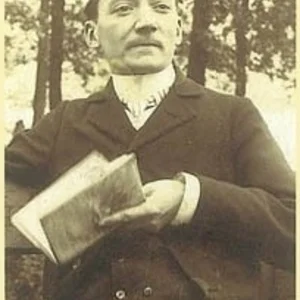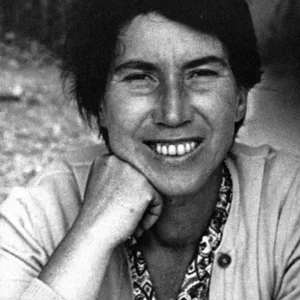

Italian writer (1916–1991), a major figure of twentieth-century literature. Author of *Lessico famigliare* (1963), she explores family memory, identity, and everyday life with spare prose. Committed to fighting fascism, she lived through exile and the Resistance.
Natalia Ginzburg(1916 — 1991)
Natalia Ginzburg
Italie, royaume d'Italie
8 min read
Frequently asked questions
Famous Quotes
« The words of our family were few, stark, and peremptory.»
« Life is full of mistakes, but also of corrections.»
Key Facts
- Born in Palermo in 1916, grew up in Turin in a Jewish intellectual family
- Her first husband Leone Ginzburg, an anti-fascist resistance fighter, died under torture in 1944
- Publication of *Lessico famigliare* in 1963, Premio Strega the same year
- Worked as an editor at Einaudi alongside Pavese and Calvino
- Elected to the Italian Parliament in 1983 as an independent left-wing candidate
Works & Achievements
Her debut novel, published under the pseudonym Alessandra Tornimparte to circumvent the racial laws. A short story about a young provincial woman drawn to the city, it already foreshadows the spare prose that would become Ginzburg's hallmark.
A novel narrated in the first person by a woman who has killed her husband. Ginzburg explores guilt, disappointed love, and the failure of communication within a couple, in a taut, unadorned language.
A choral novel about the war years and the Resistance in Italy, seen through several bourgeois families in northern Italy. One of Ginzburg's most ambitious works in terms of scope and historical panorama.
A novel of provincial Piedmontese life, centered on an industrial family and its relationships with their employees across generations. The writing here achieves a masterful command of ellipsis and the unspoken.
A collection of autobiographical essays on education, writing, love, and memory. The essay on the virtues one should not teach children has become a landmark text in twentieth-century educational thought.
Her autobiographical masterpiece and winner of the 1963 Premio Strega, reconstructing the history of her Turinese family through the expressions and phrases that were uniquely theirs. This novel profoundly renews the memoir genre and remains Ginzburg's most widely translated and read work in the world.
An epistolary novel following an Italian family through the "years of lead" via letters exchanged between a mother and her son. A meditation on the breakdown of family bonds and the political violence of 1970s Italy.
A novelized biography of the family of the great writer Alessandro Manzoni, reconstructed from letters and period documents. Ginzburg deploys her art of bringing an era to life through the intimacies of everyday existence.
Anecdotes
In 1938, Natalia Levi married Leone Ginzburg, an anti-fascist intellectual and co-founder of the Einaudi publishing house in Turin. This union brought together two major figures of Italian cultural resistance to fascism. Together, despite the regime's persecutions, they would have three children.
Between 1940 and 1943, the fascist regime sent Leone and Natalia into *confino* — forced internal exile — in the village of Pizzoli, in the Abruzzo region. It was in this rural isolation, surrounded by her children and the cold of the mountains, that Natalia wrote her first novel. She signed it under the pseudonym Alessandra Tornimparte to circumvent the racial laws that barred her from publishing.
In November 1943, Leone Ginzburg was arrested by the Gestapo in Rome while secretly running the resistance newspaper *Italia Libera*. Tortured in the Regina Coeli prison, he died on February 5, 1944, at the age of 35. Natalia, widowed at 27 with three young children, would carry this loss at the heart of her entire body of work.
In 1963, *Lessico famigliare* won the Premio Strega, Italy's most prestigious literary prize. The novel reconstructs the history of her Turin family through the expressions and phrases that were uniquely theirs — a secret family language elevated into collective memory. Ginzburg would say that the book wrote itself almost on its own, like a dictation from memory.
In 1983, at the age of 67, Natalia Ginzburg was elected to the Italian Parliament on an independent left-wing ticket. True to her lifelong commitments, she defended civil rights and freedom of expression until her final years, carrying into the political sphere the struggle she had waged her whole life through writing.
Primary Sources
The words and phrases of our family… were like a map of our lives, like an imprint of everything we had lived through together. Those who did not know them understood nothing about us.
We must not teach our children the small virtues, but the great ones: not thrift, but generosity and an indifference to money; not caution, but courage and contempt for danger.
I shot my husband. [...] He had told me he didn't love me anymore, and then it seemed to me that my life had no more meaning, and so I did what I did.
I have always written about what I knew: my family, the houses I lived in, the people I loved. I cannot invent. I only know how to remember.
Key Places
Natalia Levi was born here on July 14, 1916. Her family quickly left for Turin, but Palermo remains the starting point of a family journey that spans the entire history of twentieth-century Italy.
The city of Natalia Ginzburg's childhood, education, and early literary years. It was here that her father taught at the university, that the Einaudi publishing house was based, and that the antifascist intellectual circle that shaped her was formed.
A mountain village where Natalia and Leone Ginzburg were placed under house arrest by the fascist regime from 1940 to 1943. In this isolation, she wrote her first novel and developed her relationship with austerity and creative solitude.
The Roman prison where Leone Ginzburg was imprisoned and tortured by the Gestapo following his arrest in November 1943. He died there on February 5, 1944, at the age of 35, leaving Natalia a widow with three children.
Natalia Ginzburg settled permanently in Rome after the Liberation. There she worked for Einaudi, wrote the majority of her body of work, and pursued her public engagement until her death on October 7, 1991.
Liens externes & ressources
Références
Œuvres
La strada che va in città
1942
È stato così
1947
Tutti i nostri ieri
1952
Le voci della sera
1961
Le piccole virtù
1962
Lessico famigliare
1963
Caro Michele
1973