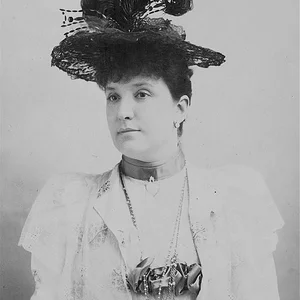

Nellie Melba (1861-1931) was the most celebrated Australian coloratura soprano of her time. Triumphing at Covent Garden and the Paris Opera, she embodied the prestige of bel canto and the grand operatic tradition of the Belle Époque.
Frequently asked questions
Key Facts
- Born in 1861 near Melbourne (Australia); her stage name "Melba" is a tribute to her city
- Made her debut in Brussels in 1887 in Rigoletto, launching an international operatic career
- Became the star of Covent Garden in London and sang at the Paris Opera from 1889
- Lent her name to creations by chef Auguste Escoffier: the Peach Melba (1893) and Melba toast
- Made a Dame Commander of the British Empire (DBE) in 1918; died in 1931
Works & Achievements
Her signature role: the “mad scene” showcased her limpid coloratura and virtuosity, becoming famous around the world.
The role of her international debut in Brussels, which revealed the purity of her voice and launched her European career.
A remarkable interpretation of the Verdi repertoire that made her one of the most admired Violettas of the Belle Époque.
A French role she performed at the Paris Opera and Covent Garden, prized for its vocal delicacy.
Among the first great commercial successes of the record, they turned her voice into a sound heritage preserved to this day.
An account of her life and career, a valuable testimony to the world of opera during the Belle Époque.
Anecdotes
The famous chef Auguste Escoffier created a dessert for **Nellie Melba** at the Savoy in London in the 1890s, made with peaches, vanilla ice cream and raspberry coulis: the “peach Melba.” He also created for her the thin “Melba toasts,” those almost transparent slices of toasted bread.
Her stage name was not her real name: born Helen Porter Mitchell near Melbourne in Australia, she chose “Melba” as a tribute to her hometown in order to conquer the European stages under a memorable name.
Her coloratura soprano voice was so pure and so wide-ranging that she became one of the first great recording stars: her records, cut from **1904** onward, sold all over the world, making her a global celebrity even before the age of radio.
At her farewell to Covent Garden in **1926**, at the age of 65, she gave a farewell speech so moving that the audience wept; the expression *more farewells than Nellie Melba* entered the English language to mock those who keep returning to the stage.
During the First World War, having stayed in Australia, she organised countless charity concerts and raised considerable sums for the Red Cross and the war effort, which earned her the title of Dame of the British Empire in **1918**.
Primary Sources
I was born in a little house in Richmond, near Melbourne, and music has always been as natural a part of my life as breathing.
Arrange the peaches poached in vanilla syrup on a layer of vanilla ice cream, and coat with sweetened fresh raspberry purée.
Mad Scene from Lucia di Lammermoor, performed by Madame Melba, Covent Garden Opera.
Key Places
Birthplace of Helen Porter Mitchell, in the British colony of Victoria. It was here that she received her first musical education.
Melba's favourite stage for nearly forty years. She made her London debut there in 1888 and gave her legendary farewell in 1926.
Melba triumphed here from 1889 onwards, cementing her European reputation in the great French and Italian operatic repertoire.
She made her debut here in 1893 and won over American audiences, becoming one of the highest-paid singers of her time.
Melba's Australian home, where she retreated between her world tours and welcomed her guests.
The city where Nellie Melba died in 1931. She was given a state funeral, a rare honour for an artist.
Typical Objects

The coloratura roles of Donizetti and Verdi, covered in notes and annotations, were the raw material of her art. Melba honed her technique with extreme rigor.

The recordings cut from 1904 onward broadcast her voice around the world. They made her one of the first international stars of recorded sound.

Sumptuous costumes and sparkling jewels accompanied her appearances, symbols of the prestige of the Belle Époque divas. Her stage wardrobe was part of the show.

A dessert created in her honor by Escoffier, made of peaches, vanilla ice cream and raspberry coulis. A symbolic token of her worldwide fame, still served today.

The large posters announcing “Madame Melba” drew crowds to Covent Garden, Paris and New York. They embodied the birth of modern international celebrity.
School Curriculum
Vocabulary & Tags
Key Vocabulary
Daily Life
Morning
Melba often devoted her mornings to vocal work: vocalises, breathing exercises, and rehearsals, for she believed that technique demanded daily discipline. She jealously guarded her voice and avoided speaking too much in the morning before a performance.
Afternoon
Her afternoons were taken up with orchestra rehearsals, costume fittings, and correspondence with opera directors. While on tour, she received journalists and admirers in her hotel apartments.
Evening
On performance nights, she prepared at length before stepping onto the stage in front of packed houses at Covent Garden, Paris, or New York. After the performance, society suppers and receptions often stretched well into the night.
Food
Mindful of her voice, Melba watched her diet and favored light dishes; it was for her that Escoffier invented Melba toast and peach Melba. Before singing, she avoided foods thought to be bad for the throat.
Clothing
Offstage, she wore the elegant and costly attire of the great ladies of the Belle Époque: long gowns, furs, gloves, and feathered hats. Onstage, her sumptuous costumes and jewels were part of her legend.
Housing
At the height of her fame, Melba lived in luxury: suites in prestigious hotels during her tours and, in Australia, her residence of Coombe Cottage near Melbourne, where she retreated between opera seasons.