 flip
flipUmngqusho (samp and beans)
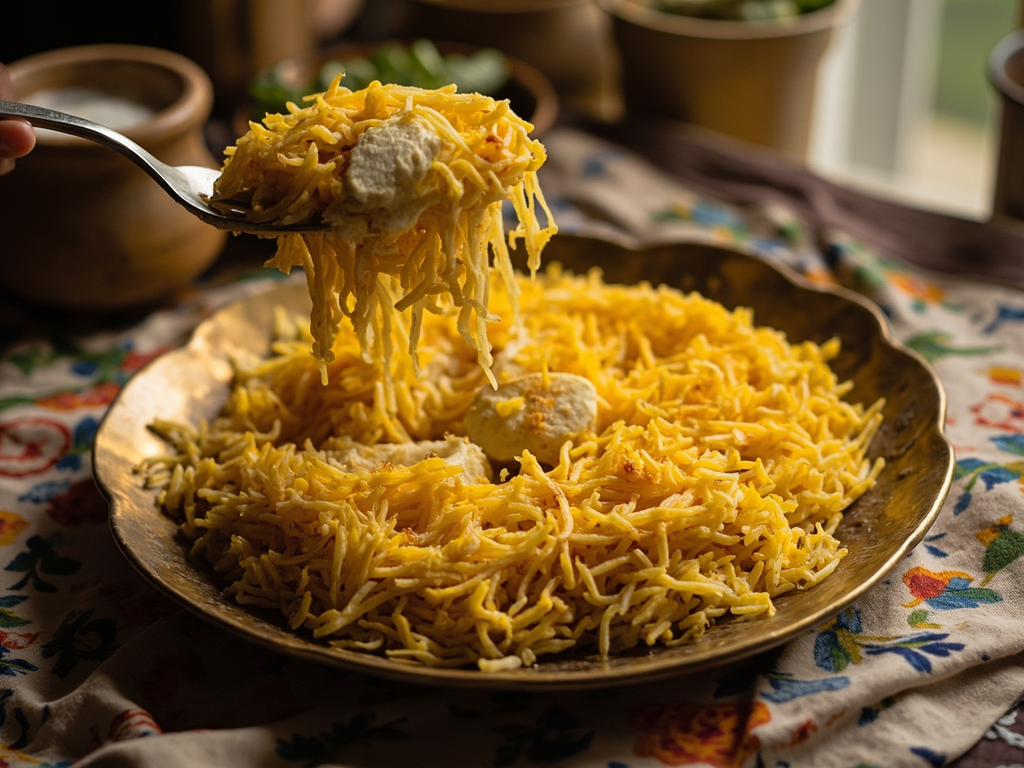
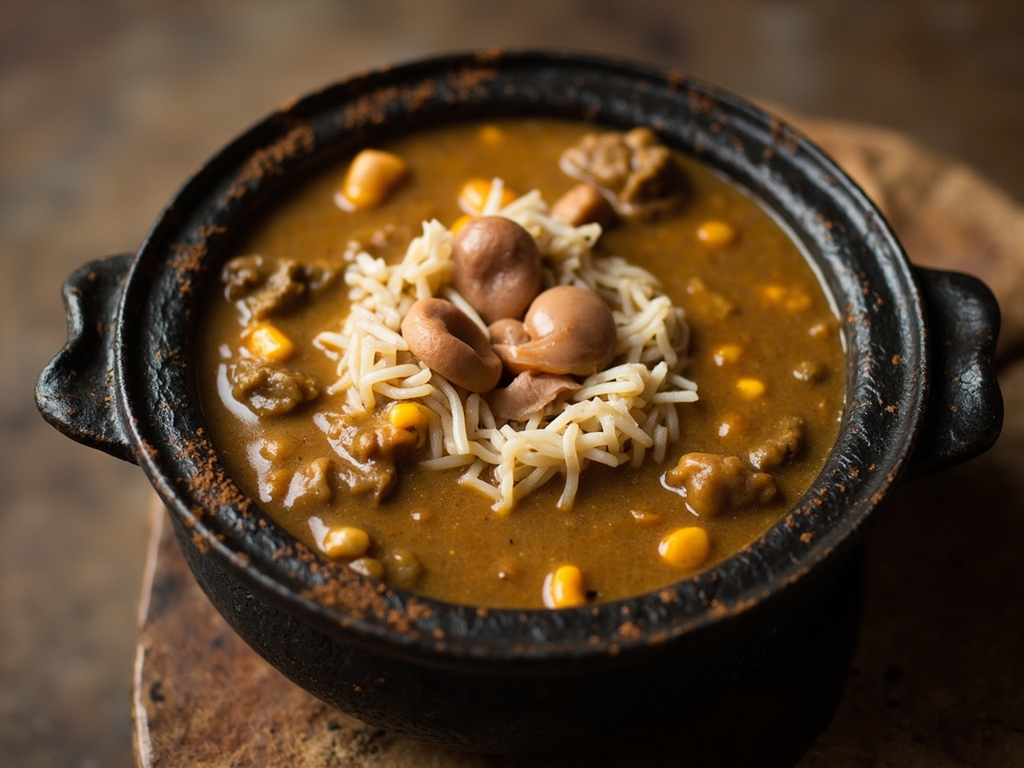
Umngqusho (samp and beans)
Why this dish? This was Mandela's favorite dish, from his childhood in Qunu to his presidency. He still requested it at his head-of-state table: a simple, peasant dish that always brought him back to the Transkei.
Coarsely crushed white maize kernels (samp) slowly simmered with beans, an onion, and a little fat until soft and nourishing. The everyday meal, generous and comforting.
Let me tell you something, my friend: a man can endure twenty-seven winters in prison, but he never forgets the taste of his mother's umngqusho. In Qunu, we would soak the samp the night before, then let it sing on the fire for most of the day, without hurrying — patience is also an ingredient. When I became president, I still asked for it, and my guests were surprised that such a humble dish was served at the head of state's table. I would tell them: it is precisely because it is humble that I love it.
- •Samp (crushed white maize) — two good handfuls per person (starchy base)
- •Dried beans (sugar beans) — one handful (protein, binder)
- •Onion — one (aromatic base)
- •Fat or butter — a knob (softness)
- •Salt — to taste (seasoning)
Umngqusho (samp and beans)
Coarsely crushed white maize kernels (samp) slowly simmered with beans, an onion, and a little fat until soft and nourishing. The everyday meal, generous and comforting.
Why this dish? This was Mandela's favorite dish, from his childhood in Qunu to his presidency. He still requested it at his head-of-state table: a simple, peasant dish that always brought him back to the Transkei.
Let me tell you something, my friend: a man can endure twenty-seven winters in prison, but he never forgets the taste of his mother's umngqusho. In Qunu, we would soak the samp the night before, then let it sing on the fire for most of the day, without hurrying — patience is also an ingredient. When I became president, I still asked for it, and my guests were surprised that such a humble dish was served at the head of state's table. I would tell them: it is precisely because it is humble that I love it.
Ingredients (period version)
- Samp (crushed white maize) — two good handfuls per person (starchy base)
- Dried beans (sugar beans) — one handful (protein, binder)
- Onion — one (aromatic base)
- Fat or butter — a knob (softness)
- Salt — to taste (seasoning)
Ingredients
- Samp (or crushed maize / hominy) — 300 g (starchy base)
- Red or borlotti beans — 200 g (protein, binder)
- Chopped onion — 1 large (aromatic base)
- Butter — 40 g (softness)
- Vegetable stock cube — 1 (umami)
- Salt, pepper — to taste (seasoning)
Method
- The night before, soak the samp and beans separately in cold water.
- Drain, place the samp in a large pot of water and cook over low heat for 1 hour, skimming.
- Add the beans and continue for about 1 hour, adding hot water if needed: the grains should swell and soften.
- Melt the butter, brown the onion in it, then stir into the pot with the stock.
- Mix, salt, and let simmer for another 20-30 minutes until thick and tender.
How it was made : In the Transkei countryside, umngqusho cooked for hours in a three-legged pot (potjie) set on the embers, often without meat as it was scarce. The long cooking time gave the dish all its softness.
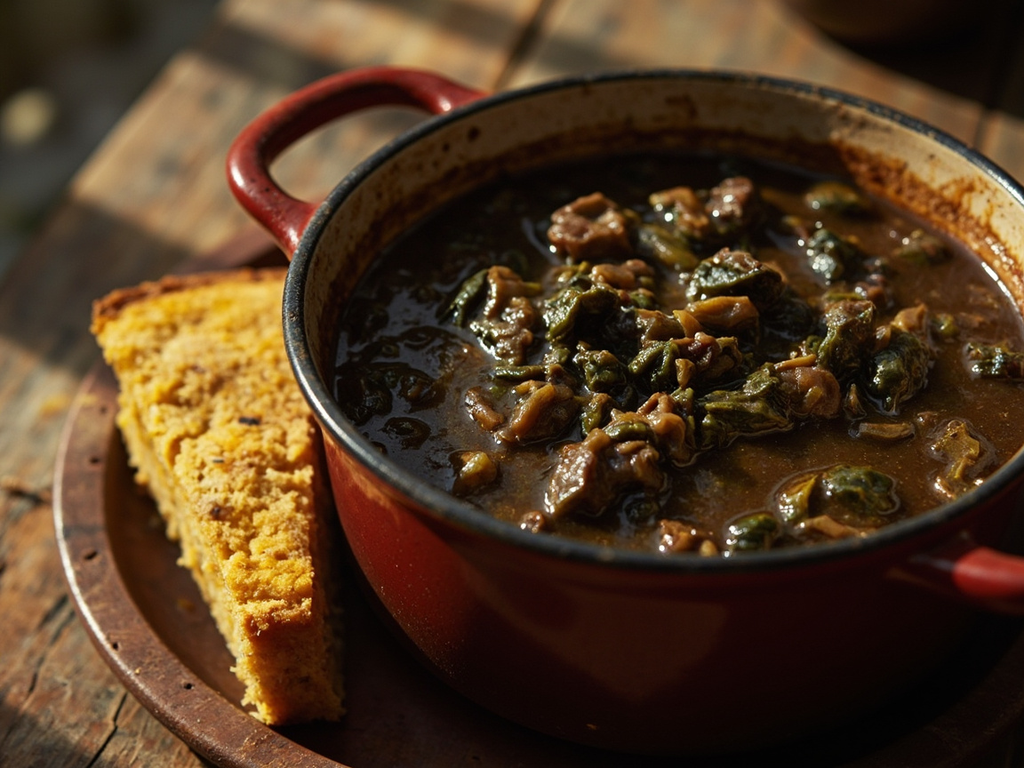
The contemporary twist : Serve it "Madiba-style" in a cast-iron casserole at the center of the table, where everyone helps themselves — like a shared meal rather than individual plates.
Sources : Nelson Mandela, Long Walk to Freedom (1994) · Anna Trapido, Hunger for Freedom: The Story of Food in the Life of Nelson Mandela (2008)
Nelson Mandela · Charactorium