 flip
flipPap & Morogo (Maize Porridge and Wild Greens)
Pap & Morogo (Maize Porridge and Wild Greens)
Why this dish? Tutu, born in Klerksdorp and raised in modest homes, grew up on pap. A self-confessed foodie, he openly enjoyed this simple, convivial food: a bowl of white maize shared with the family, plainly, an image of the humble communion he preached.
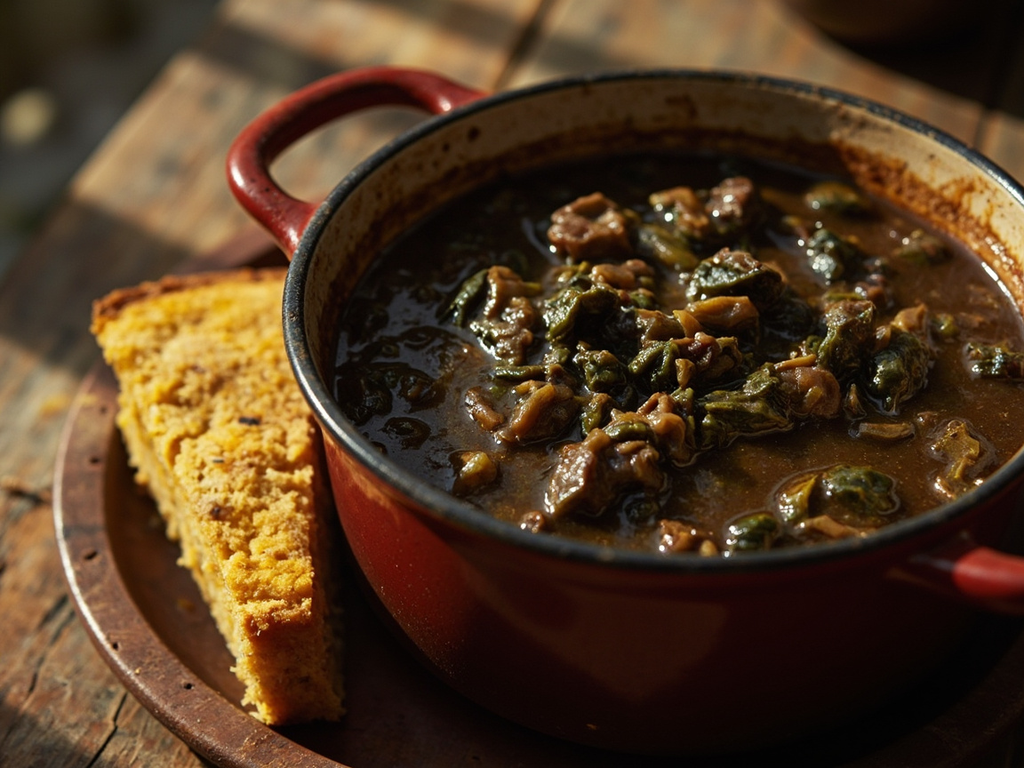
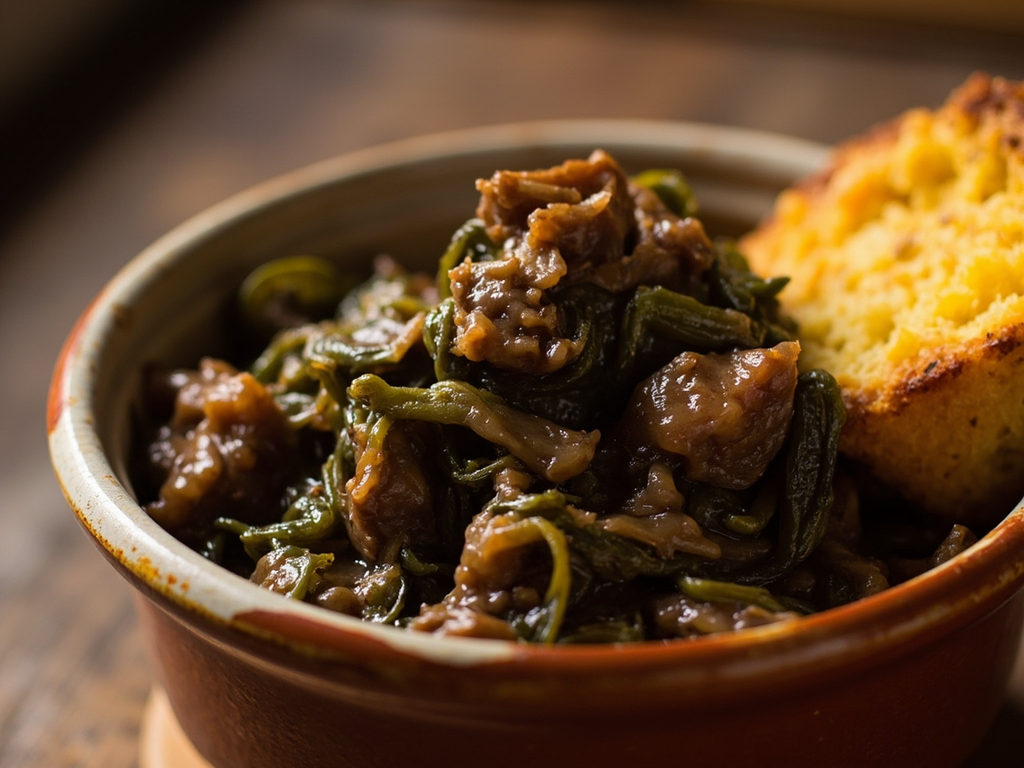
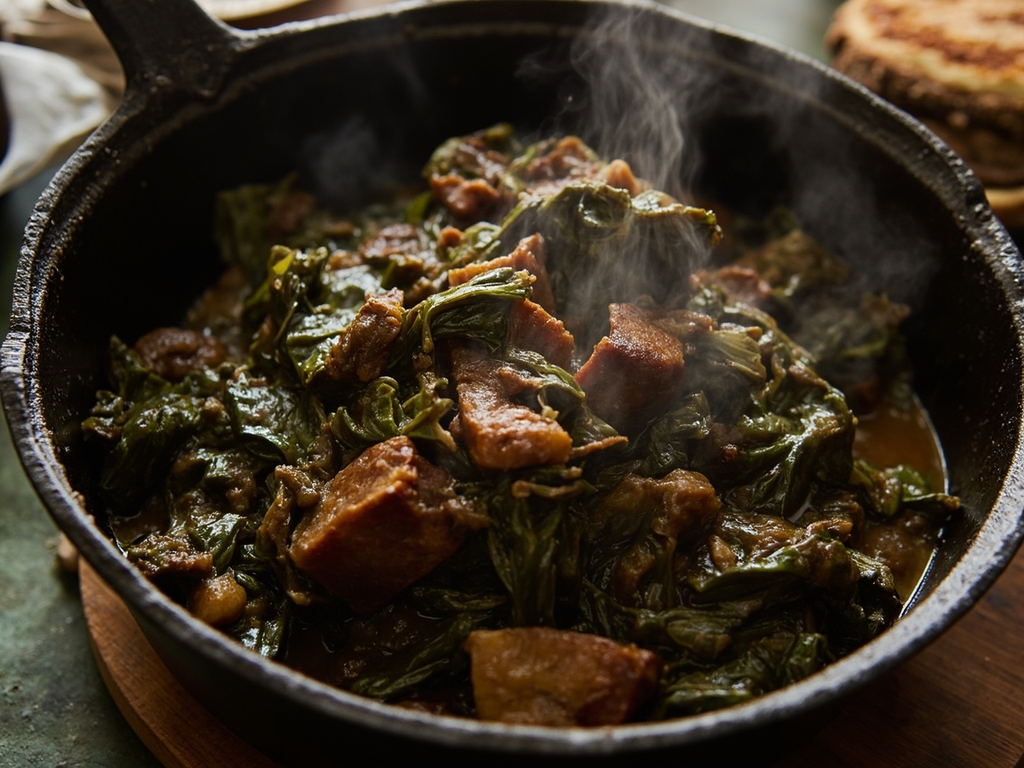
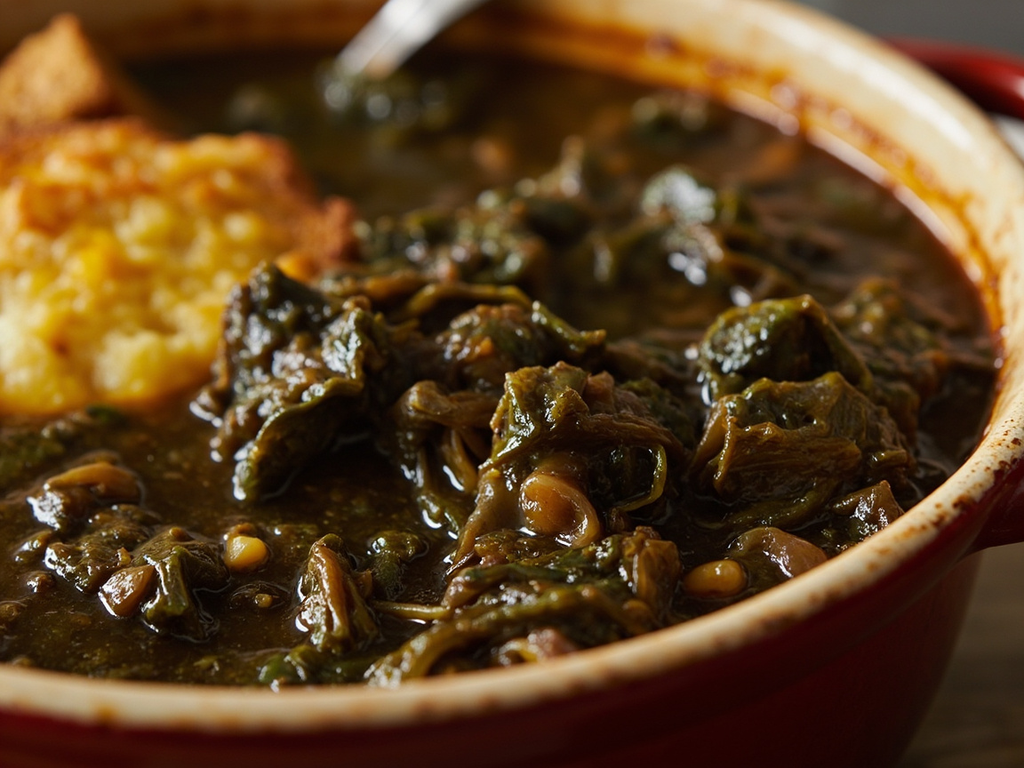
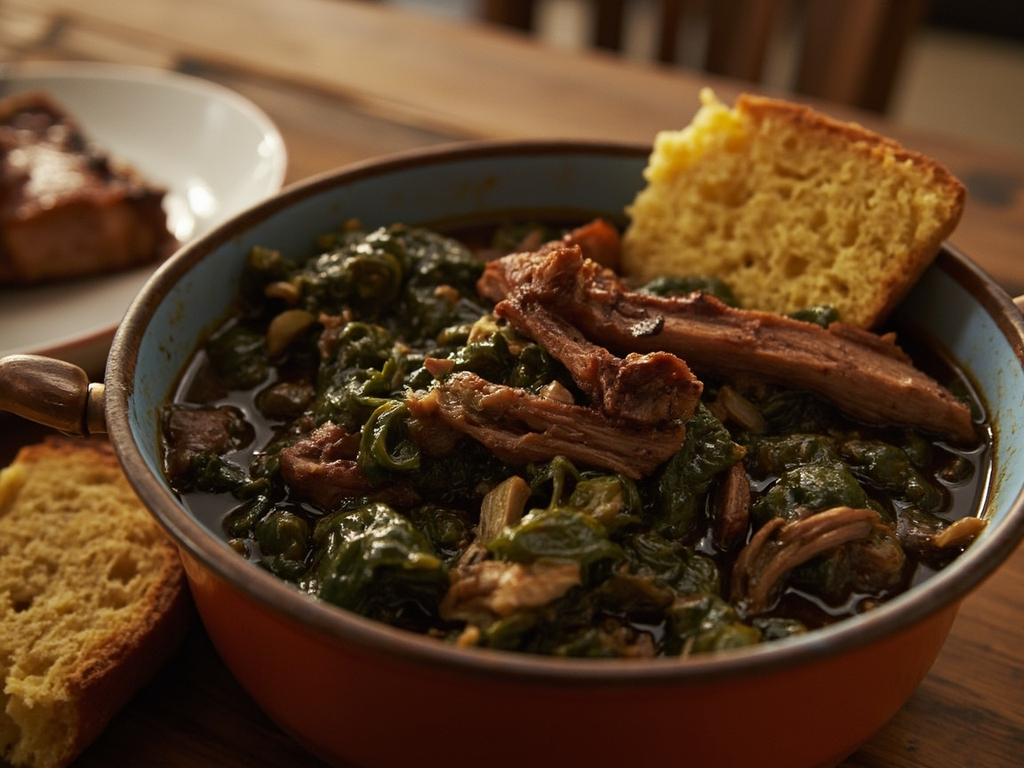
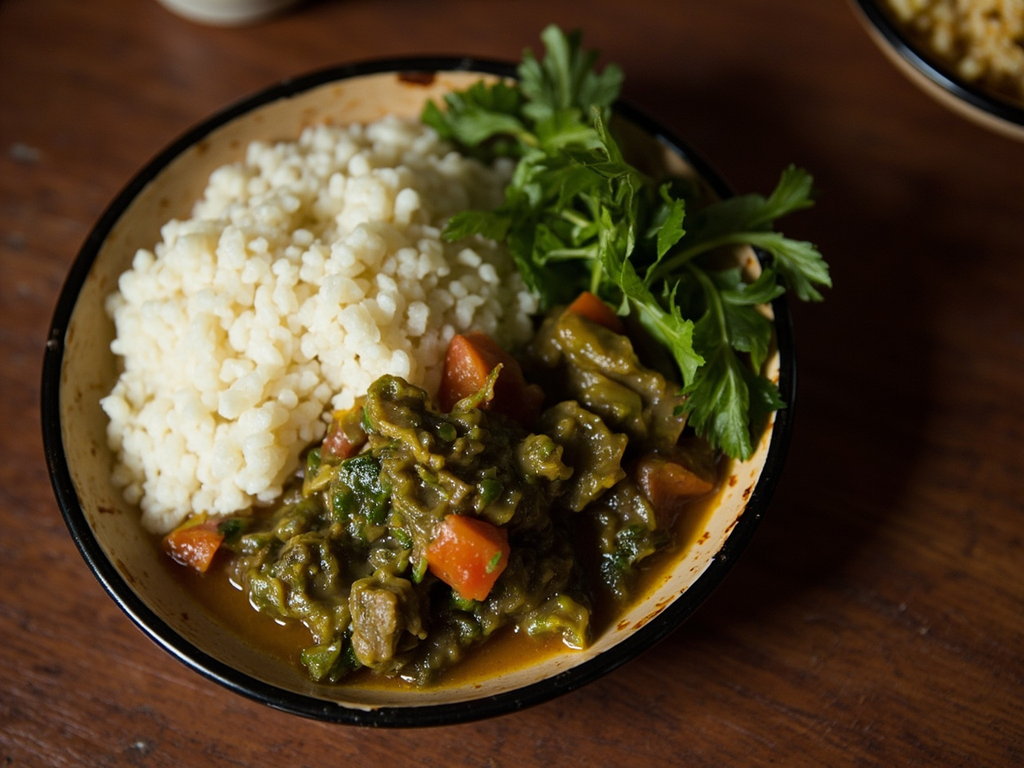
A thick, neutral, comforting white maize porridge served with morogo — a relish of wild green leaves (amaranth, pumpkin leaves, or spinach) simmered with onion and tomato. The daily staple of millions of South African households.
My child, don't talk to me about fancy cooking! Give me a good bowl of hot pap, firm under the spoon, and a bit of morogo on the side, those green leaves my mother gathered and cooked down with an onion. We'd roll a ball between our fingers, dip it in the green, and laugh at the table — oh, how we laughed. That's it, you see: God doesn't ask us for a king's feast, He asks us to share the bowl. And I, a glutton before the Lord, never left a single crumb.
- •Ground white maize (mealie meal) — two handfuls per person (starch base)
- •Water — as needed (cooking porridge)
- •Salt — a pinch (seasoning)
- •Wild green leaves (amaranth, pumpkin leaves) — one large bunch (relish)
- •Onion — one (aromatic base)
- •Tomato — two (binder for relish)
Pap & Morogo (Maize Porridge and Wild Greens)
A thick, neutral, comforting white maize porridge served with morogo — a relish of wild green leaves (amaranth, pumpkin leaves, or spinach) simmered with onion and tomato. The daily staple of millions of South African households.
Why this dish? Tutu, born in Klerksdorp and raised in modest homes, grew up on pap. A self-confessed foodie, he openly enjoyed this simple, convivial food: a bowl of white maize shared with the family, plainly, an image of the humble communion he preached.
My child, don't talk to me about fancy cooking! Give me a good bowl of hot pap, firm under the spoon, and a bit of morogo on the side, those green leaves my mother gathered and cooked down with an onion. We'd roll a ball between our fingers, dip it in the green, and laugh at the table — oh, how we laughed. That's it, you see: God doesn't ask us for a king's feast, He asks us to share the bowl. And I, a glutton before the Lord, never left a single crumb.
Ingredients (period version)
- Ground white maize (mealie meal) — two handfuls per person (starch base)
- Water — as needed (cooking porridge)
- Salt — a pinch (seasoning)
- Wild green leaves (amaranth, pumpkin leaves) — one large bunch (relish)
- Onion — one (aromatic base)
- Tomato — two (binder for relish)
Ingredients
- White maize meal (mealie meal, or white polenta) — 250 g (starch base)
- Water — 750 ml (cooking)
- Salt — 1 tsp (seasoning)
- Spinach or Swiss chard (if amaranth unavailable) — 400 g (morogo relish)
- Onion — 1 large (aromatic base)
- Tomatoes — 2 ripe (binder)
- Oil — 2 tbsp (cooking)
Method
- Bring salted water to a boil. Sprinkle in the maize meal while whisking to avoid lumps.
- Reduce heat, cover, and cook for 30–40 minutes, stirring regularly, until a firm dough forms that holds together.
- Meanwhile, sweat the chopped onion in oil, add crushed tomatoes, and let simmer.
- Stir in the washed and roughly chopped green leaves, season with salt, cover, and let wilt for 10–15 minutes.
- Serve a generous spoonful of pap alongside the morogo. Eat by hand, rolling pap into balls.
How it was made : Pap was cooked over a wood fire in a three-legged pot (potjie), stirred for a long time with a flat stick. Morogo referred to any wild greens gathered near villages and townships — a free, nutritious, and essential food when meat was scarce.
The contemporary twist : Shape the pap into a smooth quenelle and place the morogo as a bright green mirror, with a drizzle of sunflower oil and a few toasted pumpkin seeds for crunch.
Desmond Tutu · Charactorium